The Sunset Myth
Review of Amiri Spring 2027 Men’s Fashion Show
By Mackenzie Richard Zuckerman
For much of fashion history, Los Angeles has occupied a complicated place in the luxury imagination.
It has given fashion cinema, celebrity, music, beauty, and desire, while Paris has long held the authority of luxury itself. California offered freedom. Europe offered legitimacy. Designers have often borrowed the former while seeking approval from the latter.
Mike Amiri has spent nearly a decade working against that hierarchy.
What began as a label rooted in distressed denim and rock-and-roll glamour has steadily evolved into something more ambitious: a proposal for Los Angeles as a genuine luxury language. Spring 2027 felt like the season that idea came into sharper focus.
Presented against a cinematic backdrop of sun-faded California landscapes, the collection unfolded with the rhythm of a slow-moving film. Men and women moved through the space with easy confidence, dressed in softly tailored suiting, shimmering eveningwear, languid silks, embroidered knits, polished leather, and fluid separates that seemed to carry them from late afternoon into the first hours of morning. Amiri was clearly thinking about Hollywood, though the collection worked best when it moved past the obvious image of it and into the atmosphere around it.
The strength of the collection was in how he handled that atmosphere. Hollywood has long been one of fashion’s most familiar references, and often one of its easiest. It can quickly become nostalgia, celebrity dressing, or a mood board of beautiful people in beautiful clothes. Amiri approached it with more feeling. His world was populated by producers, musicians, collectors, artists, lovers, and strangers who belong to Los Angeles after the cameras stop rolling. The result was a collection built around presence, ease, and the seductive pull of a city that knows how to mythologize itself.
THE COLLECTION
THE VIBE
The real achievement of Spring 2027 was that Mike Amiri seemed to trust his own language more fully.
Previous collections have sometimes felt eager to prove luxury through abundance. Sequins, embroidery, exotic skins, distressed denim, crystals, graphics, and rock references could all arrive at once, each one making its case. The ambition was always clear, as was the desire to demonstrate that Los Angeles could operate on a global luxury stage.
This season, restraint carried the point.
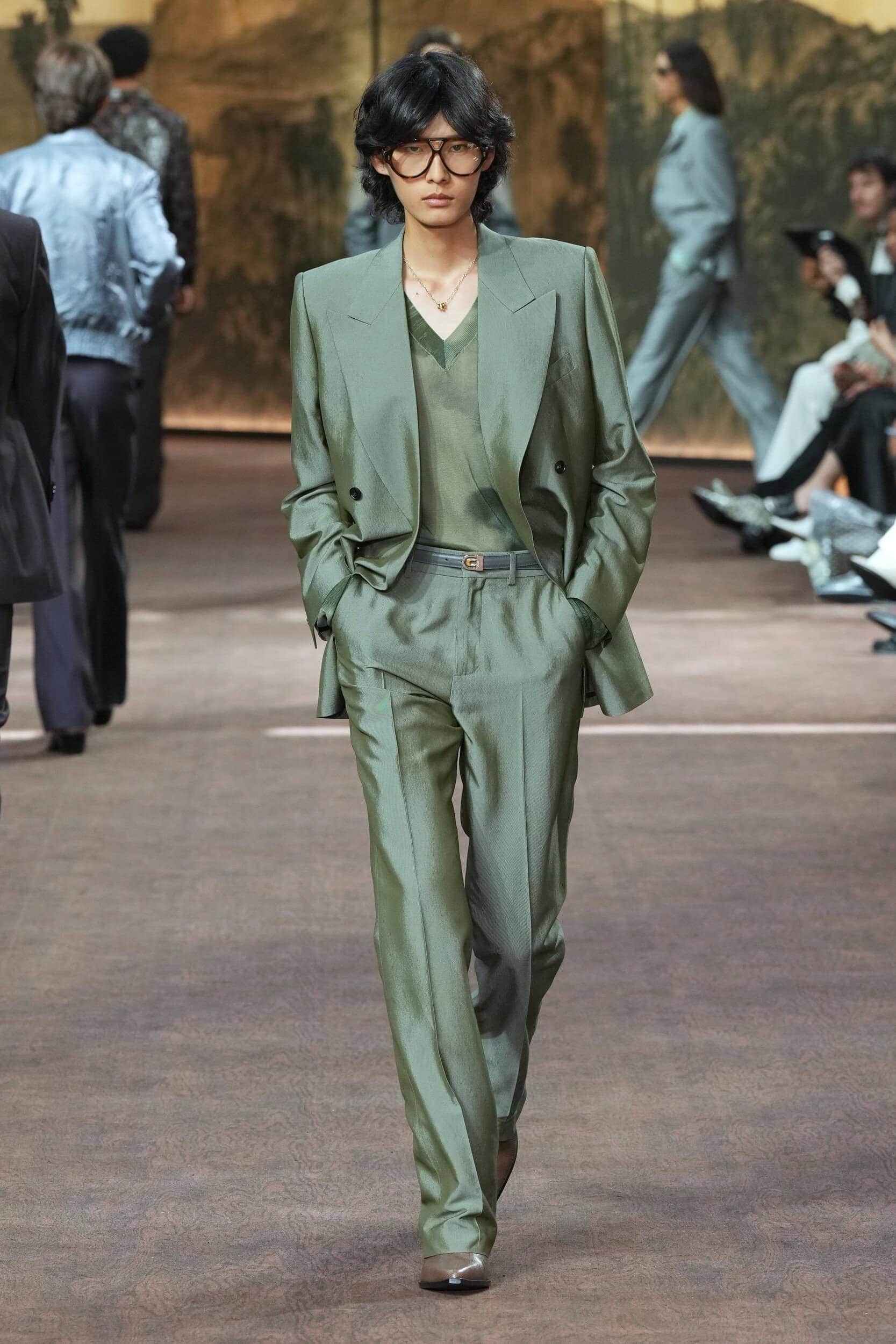
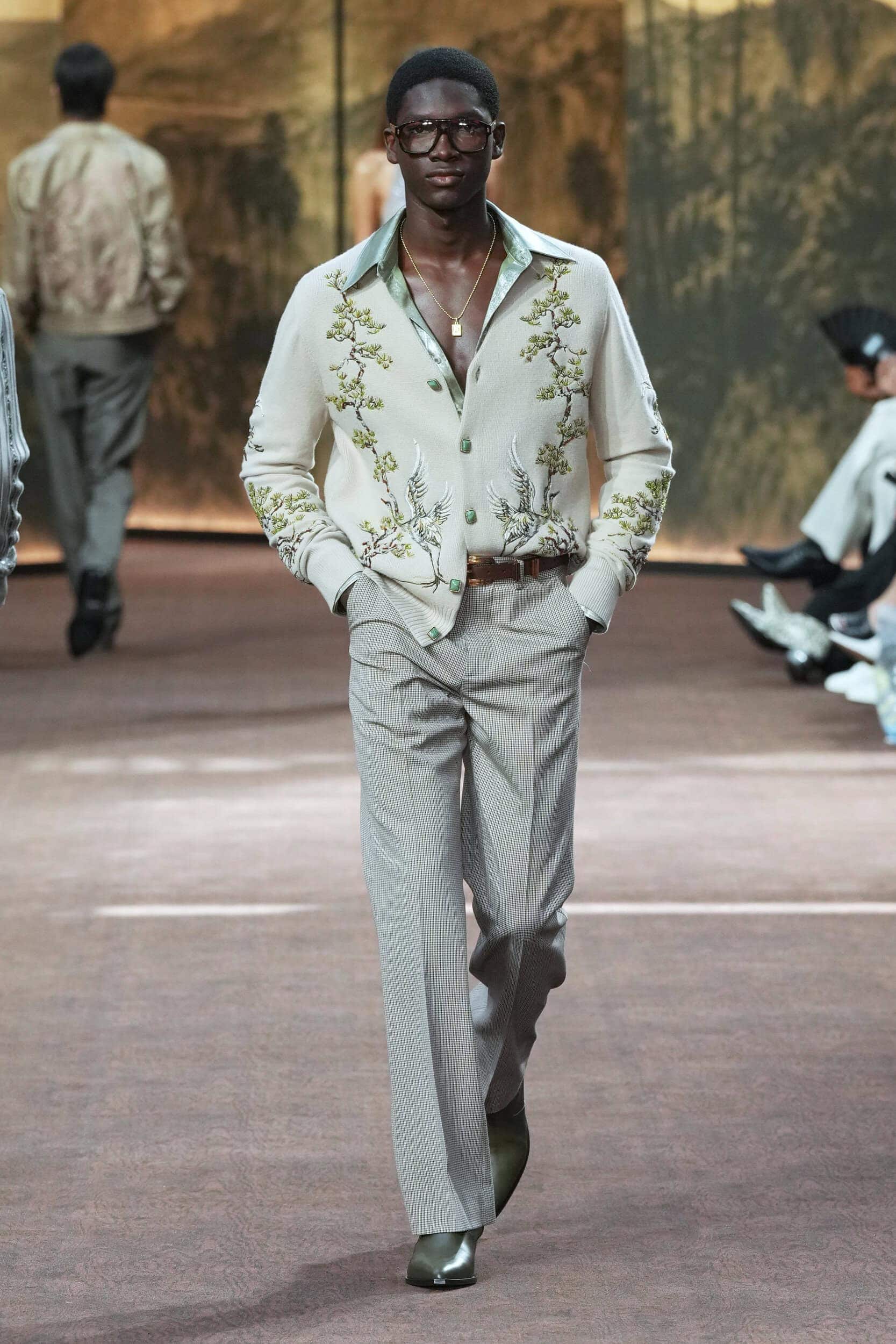
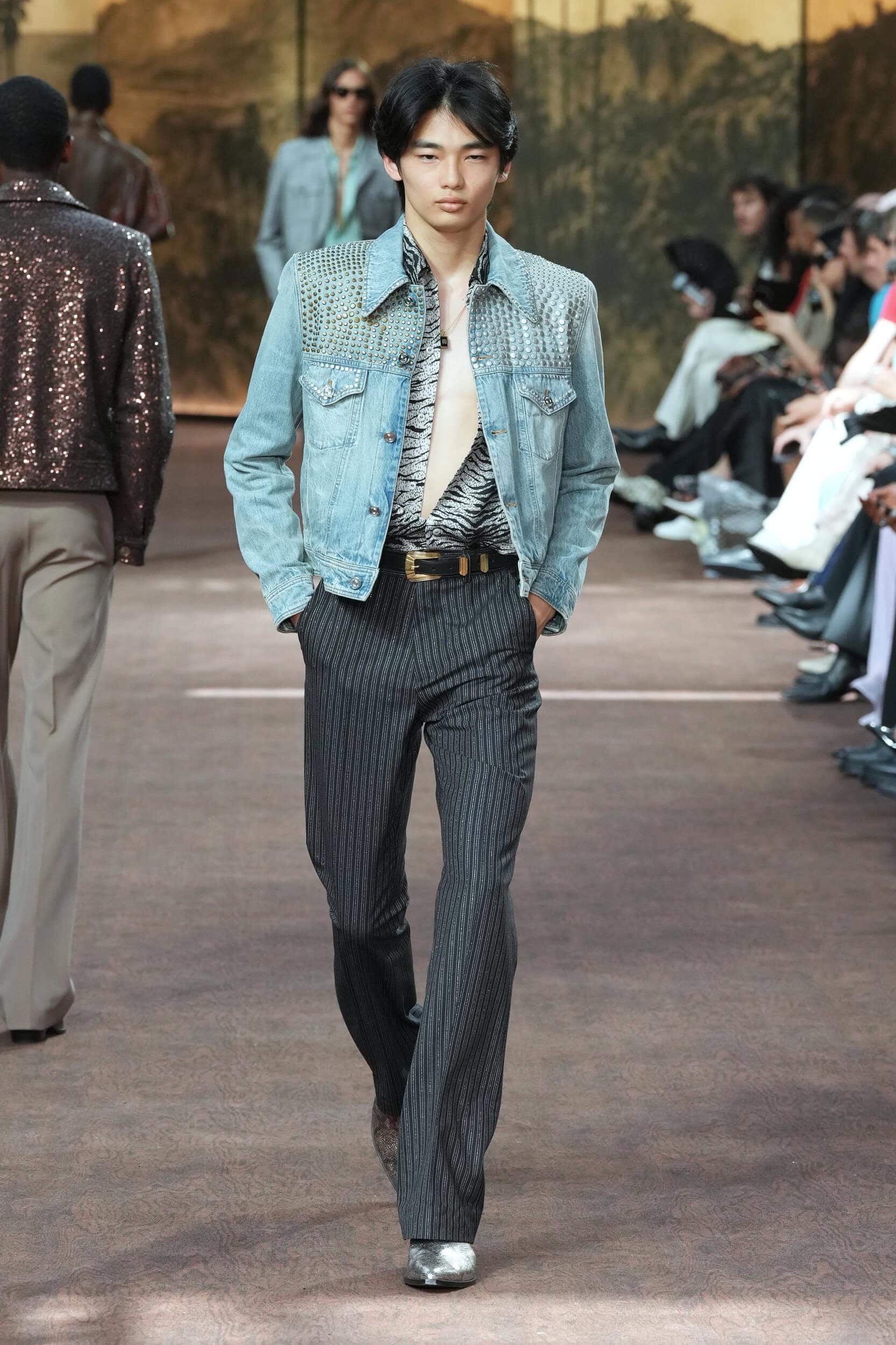
Tailoring established that confidence immediately. Double-breasted jackets had broad, assured shoulders without feeling rigid, while elongated trousers broke softly over pointed boots, creating silhouettes that floated instead of marched. The construction recalled the relaxed glamour of American cinema, allowing movement to define the elegance.
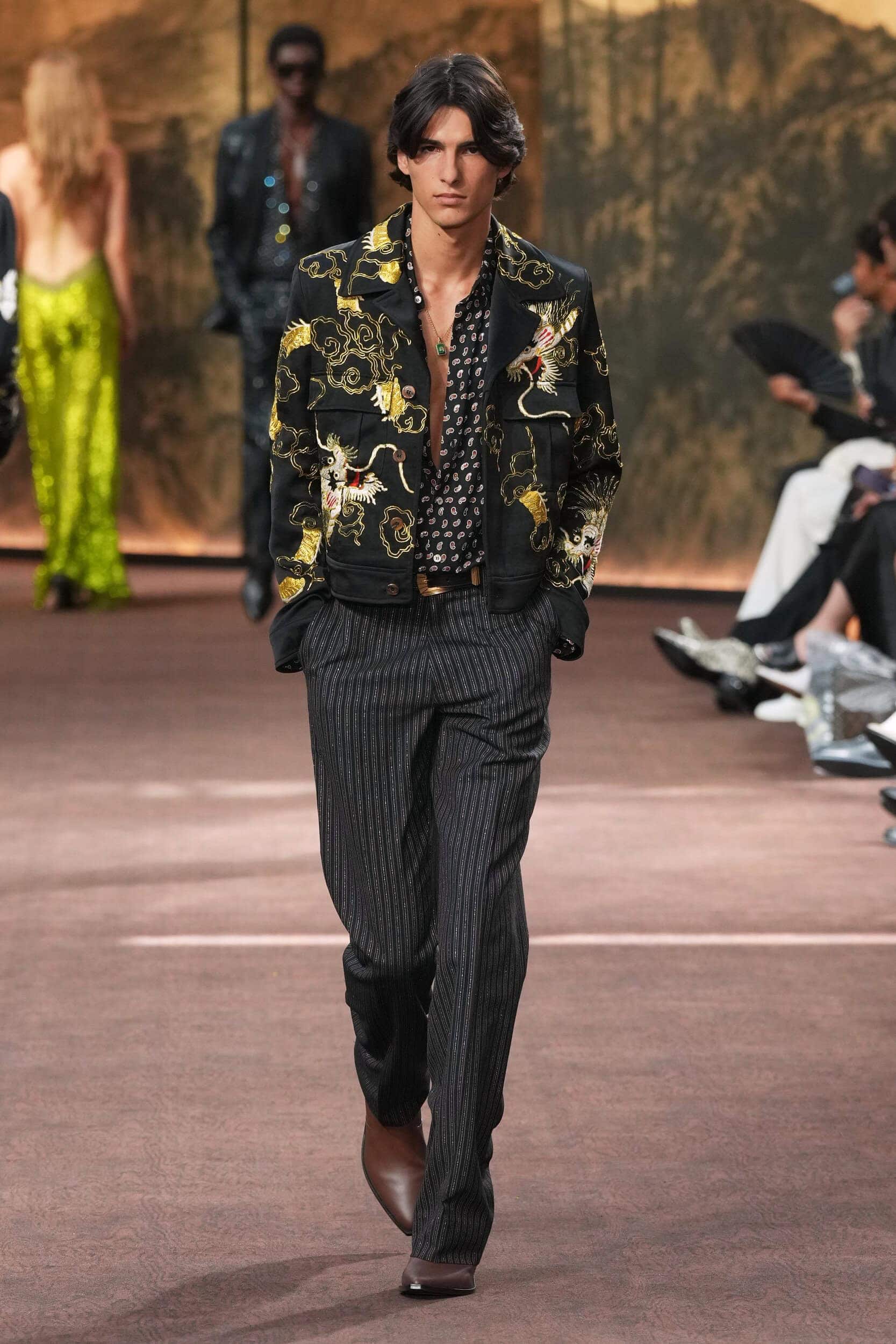
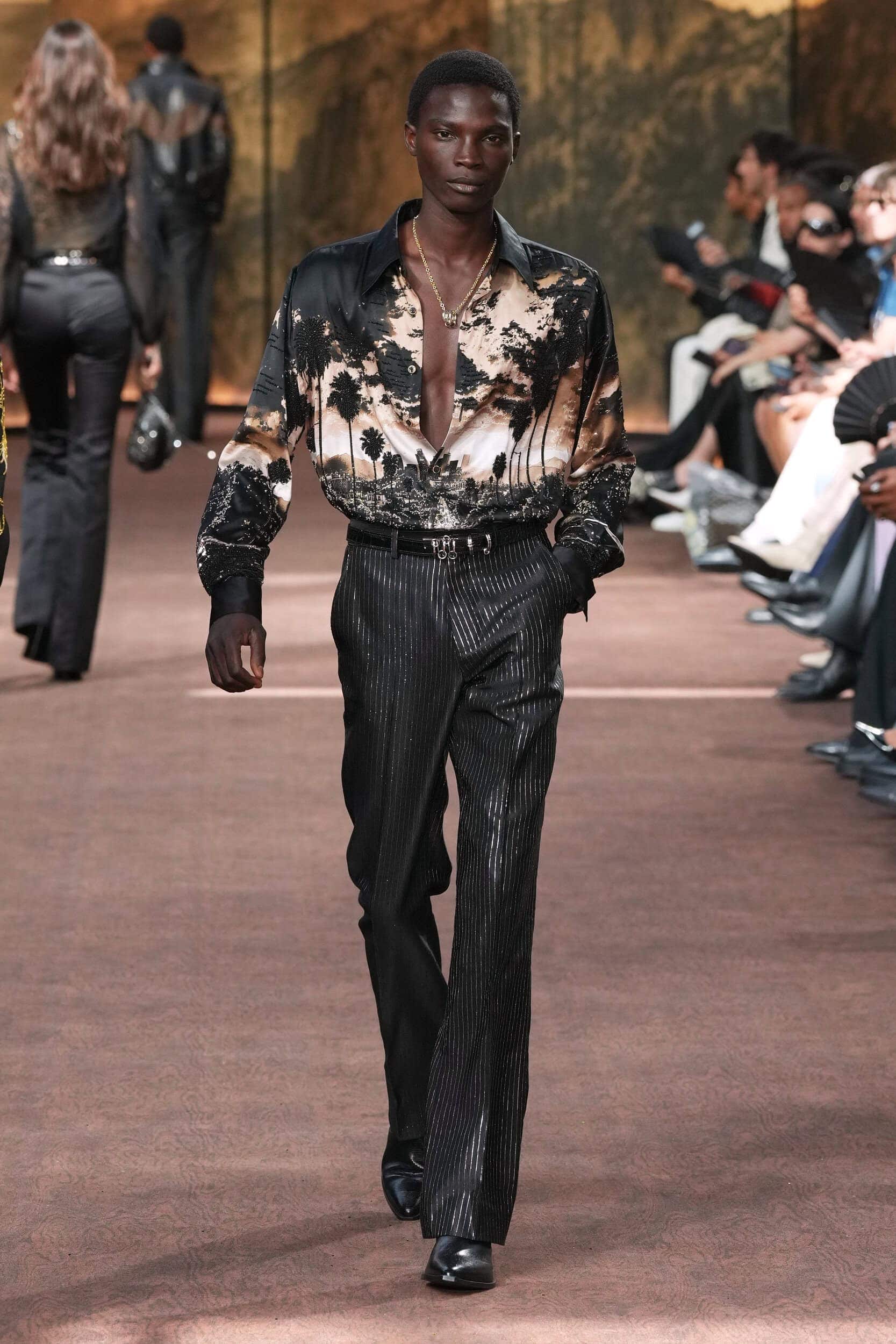
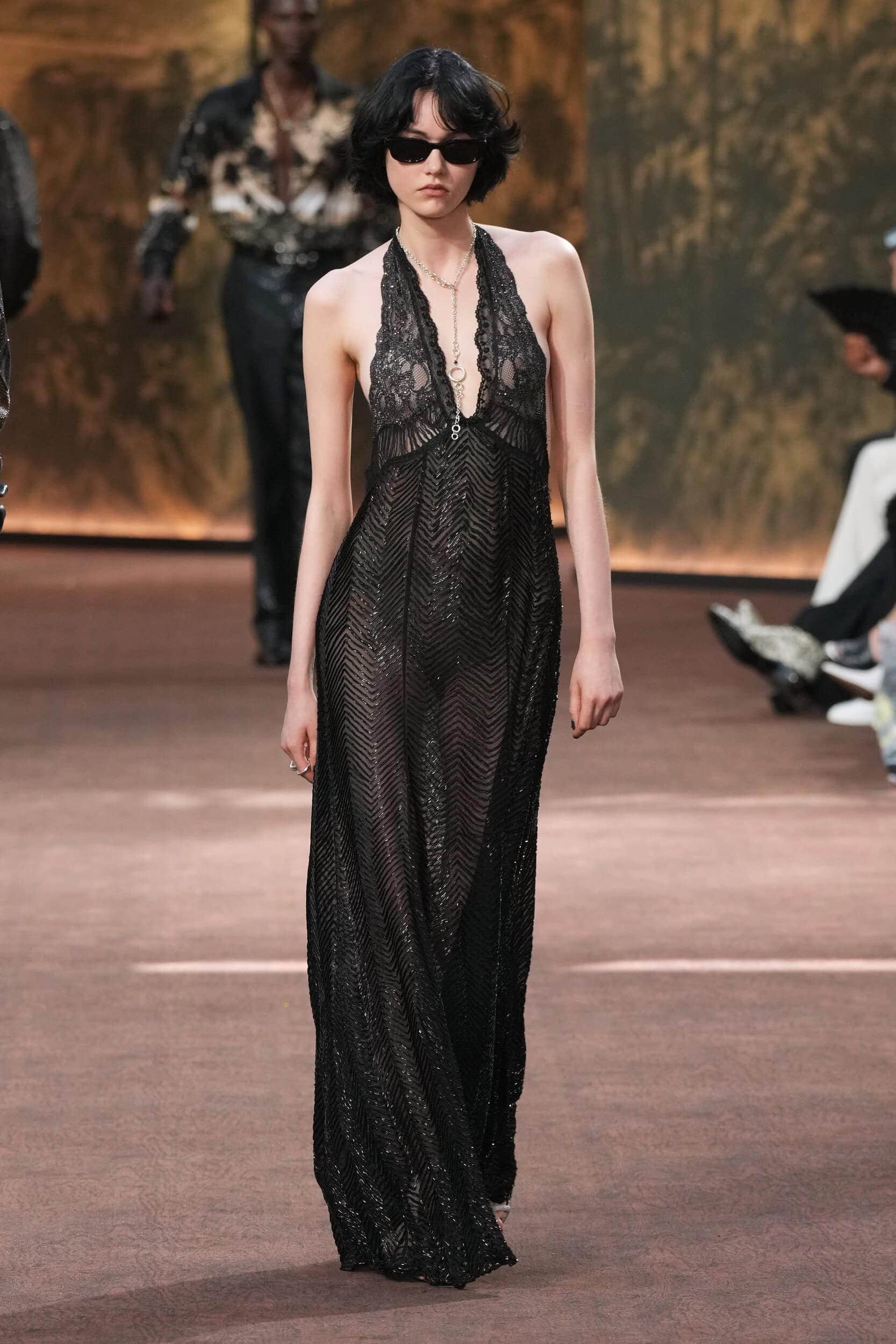
Fabrication was one of the collection’s quiet strengths. Metallic plaids shimmered without tipping into costume. Fine pinstripes turned classic business tailoring into something more sensual. Lightweight silks, washed satins, and open-weave knits caught the light almost incidentally, allowing texture to do much of the work.
The strongest looks were often built around a single clear idea. A striped knit carried an entire outfit through proportion and color. An embroidered dragon jacket gained authority because it was grounded by understated tailoring. Crystal evening pieces sparkled because the silhouettes stayed clean. Even the more decorative garments felt edited, which has not always been the case in Amiri’s world.
That editing extended to the styling. Open collars, layered necklaces, tinted eyewear, relaxed belts, and unhurried proportions created a kind of ease that many luxury brands try very hard to manufacture. Here, it felt natural. The collection understood that confidence usually works best when it does not announce itself too loudly.
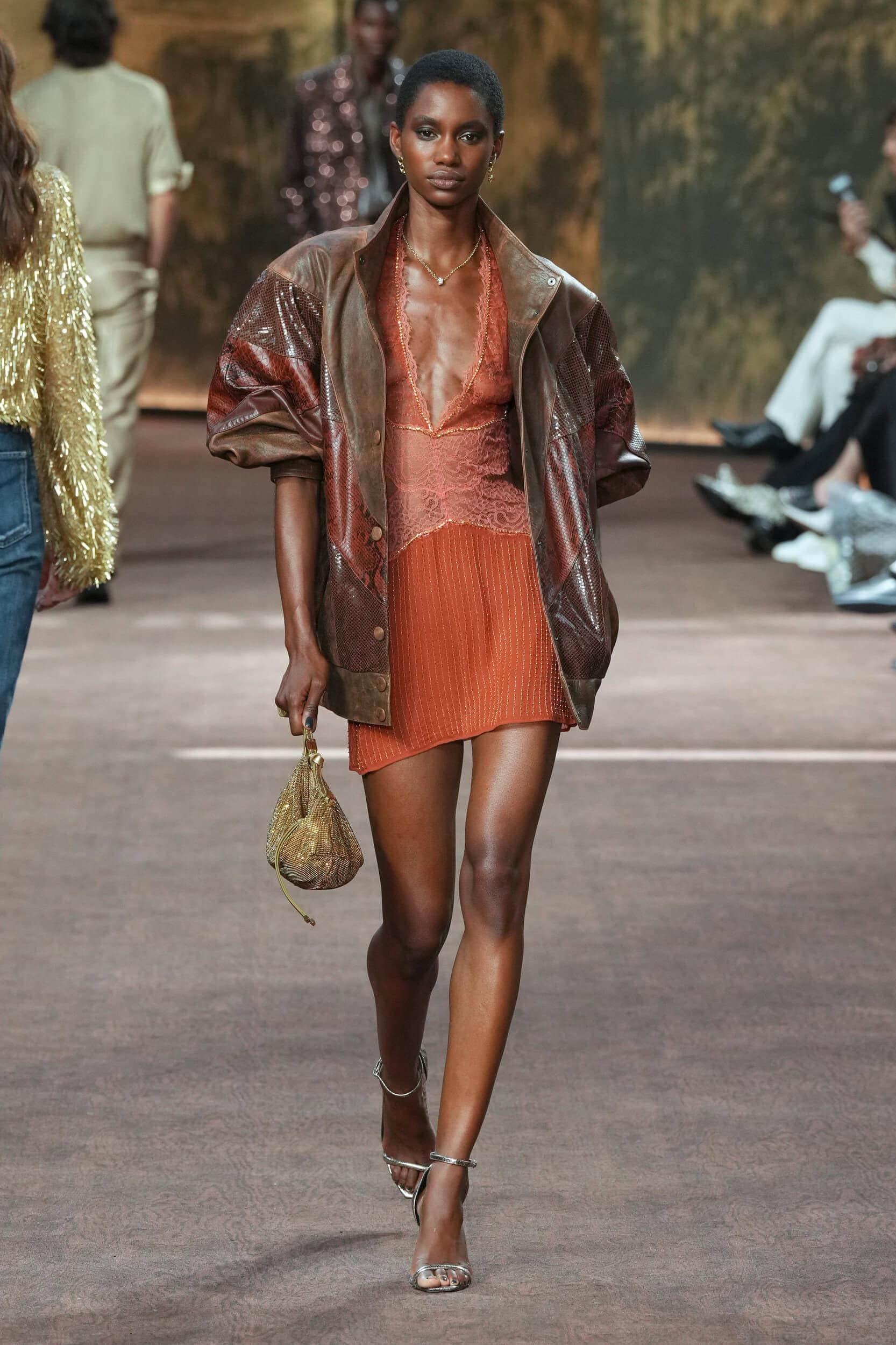
One of the most convincing developments came through the relationship between menswear and womenswear. The two sides of the collection inhabited the same narrative. Lace slip dresses, shimmering halter gowns, crystal jackets, and abbreviated evening looks shared the same languid sensuality as the men’s fluid tailoring and silk shirting. They belonged to the same city, the same evening, the same cast of characters.
The runway reinforced that cohesion. The pacing was deliberately measured, giving the clothes room to breathe. Models moved with calm assurance, underscoring a collection built around atmosphere and character.
As Amiri explained backstage, “My strength is that I bring what I have from Los Angeles here, and I execute it at the level that’s expected on these platforms.”
It was a useful key to the collection.
For years, Amiri’s challenge has been bigger than building a recognizable aesthetic. It has been convincing the broader luxury industry that Los Angeles can be understood as more than casualwear, celebrity dressing, or entertainment culture. Spring 2027 suggested that argument no longer needs to be made quite so forcefully. The collection simply assumed its place.
Where the show left room for further evolution was in its occasional reliance on surface shine. Metallic fabrics, sequins, and reflective finishes sometimes carried visual weight that the tailoring had already earned. The quieter looks — a pale green suit, a fluid pinstripe ensemble, an embroidered cardigan, a softly cut bomber — were often the most persuasive. They pointed toward an even more distilled future, one where silhouette and attitude can command the room on their own.
THE WRAP UP
Spring 2027 clarified Mike Amiri.
The collection showed a designer growing more comfortable presenting Los Angeles as its own luxury vocabulary, instead of translating it into a European one. That is an important shift. American fashion has often been framed between pragmatic sportswear and celebrity spectacle, leaving European houses to define aspiration. Amiri is proposing another path, rooted in place, atmosphere, sensuality, and cultural mythology.
There is still room for the work to become quieter, sharper, and more disciplined. Yet that feels like the next stage of an evolution already well underway.
The strongest luxury houses eventually stop chasing legitimacy because they begin creating their own. With Spring 2027, Mike Amiri looked closer than ever to doing just that.
For the first time, he seemed less like a designer borrowing from Hollywood and more like one building its modern wardrobe.