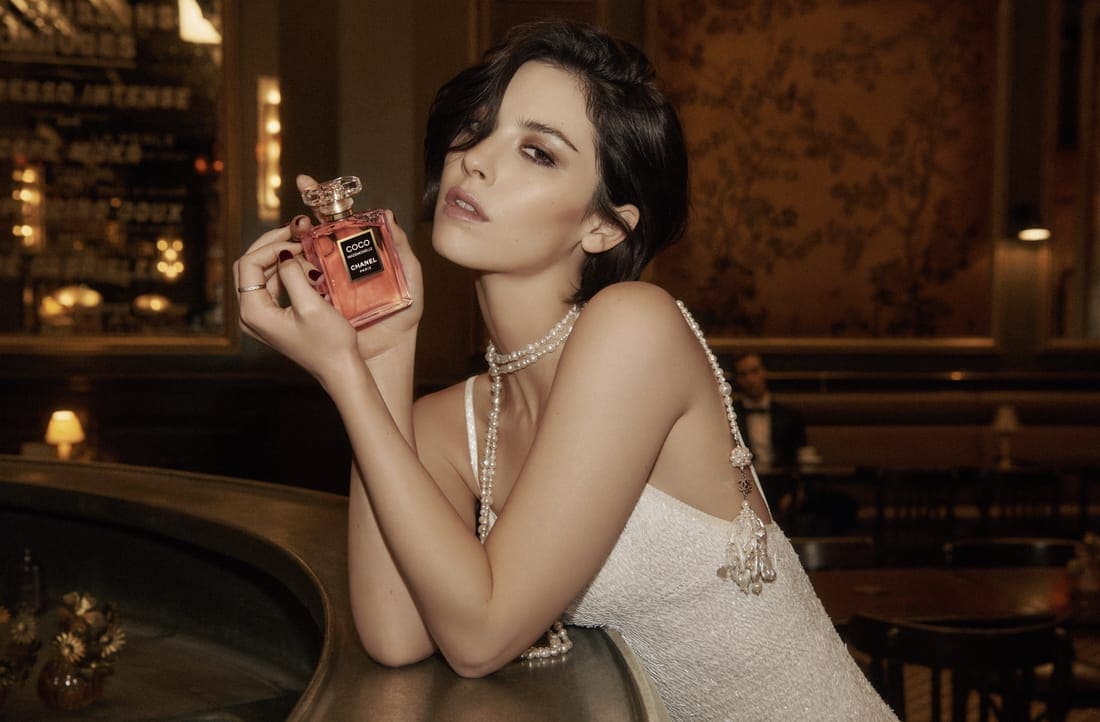
Gracie Abrams brings a new energy to Coco Mademoiselle in a cinematic celebration of movement, freedom, and Paris after dark
Chanel introduces a new chapter of Coco Mademoiselle with Crush Absolu, starring Gracie Abrams in a cinematic campaign directed by Joe Wright. Set against a nocturnal vision of Paris, the film returns to one of the fragrance franchise’s defining ideas: the tension between established codes and the woman determined to move beyond them.
Abrams’ Coco Mademoiselle begins within a world of convention. Dressed, adorned, and driven through Haussmannian Paris, she abruptly abandons the car and its accumulation of fabrics and possessions, keeping only her fragrance as she runs into the city. With bare legs, a white dress, dark eyes, and a sharply cropped hairstyle, the character becomes progressively stripped of ornament, establishing freedom not through escape alone but through subtraction. The visual language cleverly echoes Chanel’s own history, where masculine and feminine codes, restraint and sensuality, and simplicity and luxury have long existed in productive tension.
That journey eventually leads to an Art Deco café, where the campaign shifts from solitary flight to collective release. Abrams’ arrival awakens the room: bodies loosen, hands clap, and an increasingly kinetic dance takes shape under choreography by Sidi Larbi Cherkaoui. Candi Staton’s “Young Hearts Run Free,” remixed by Breakbot, gives the sequence an appropriately buoyant pulse. Rather than positioning fragrance as an object to admire, the film imagines it as an invisible catalyst, with Coco Mademoiselle’s presence spreading through the space until individual movement becomes communal celebration.
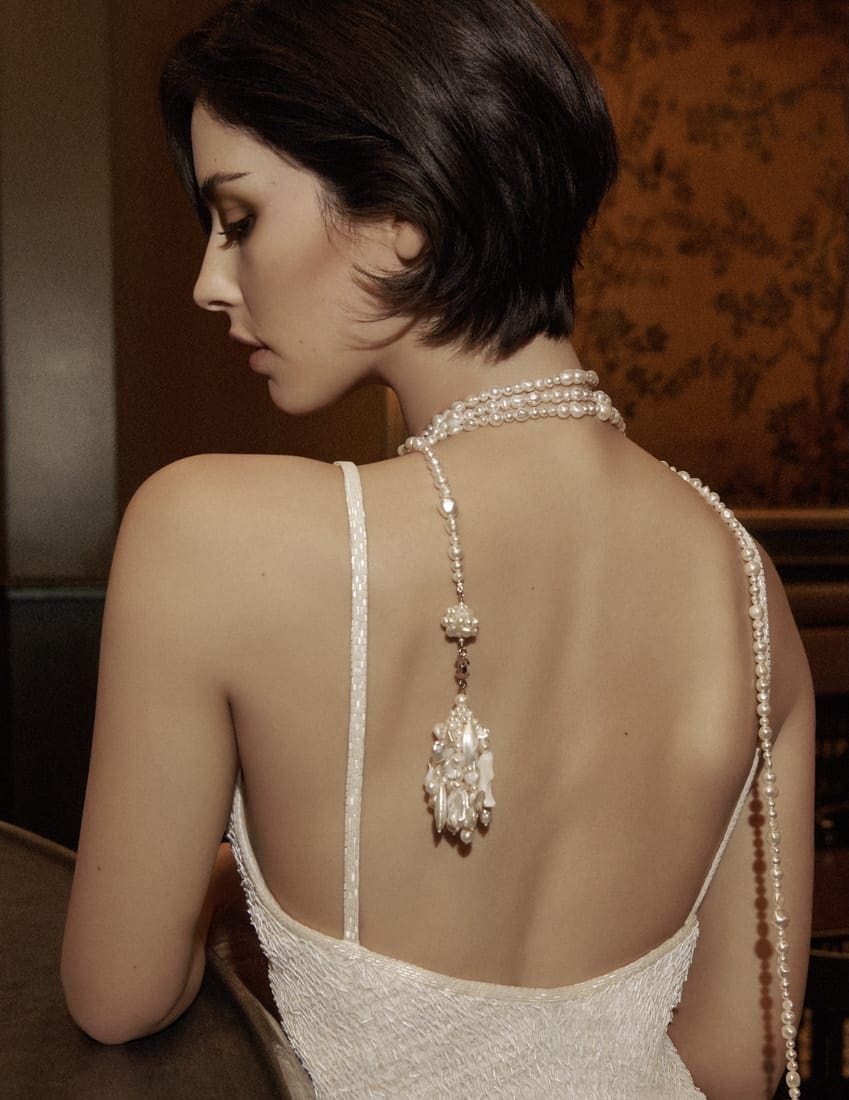
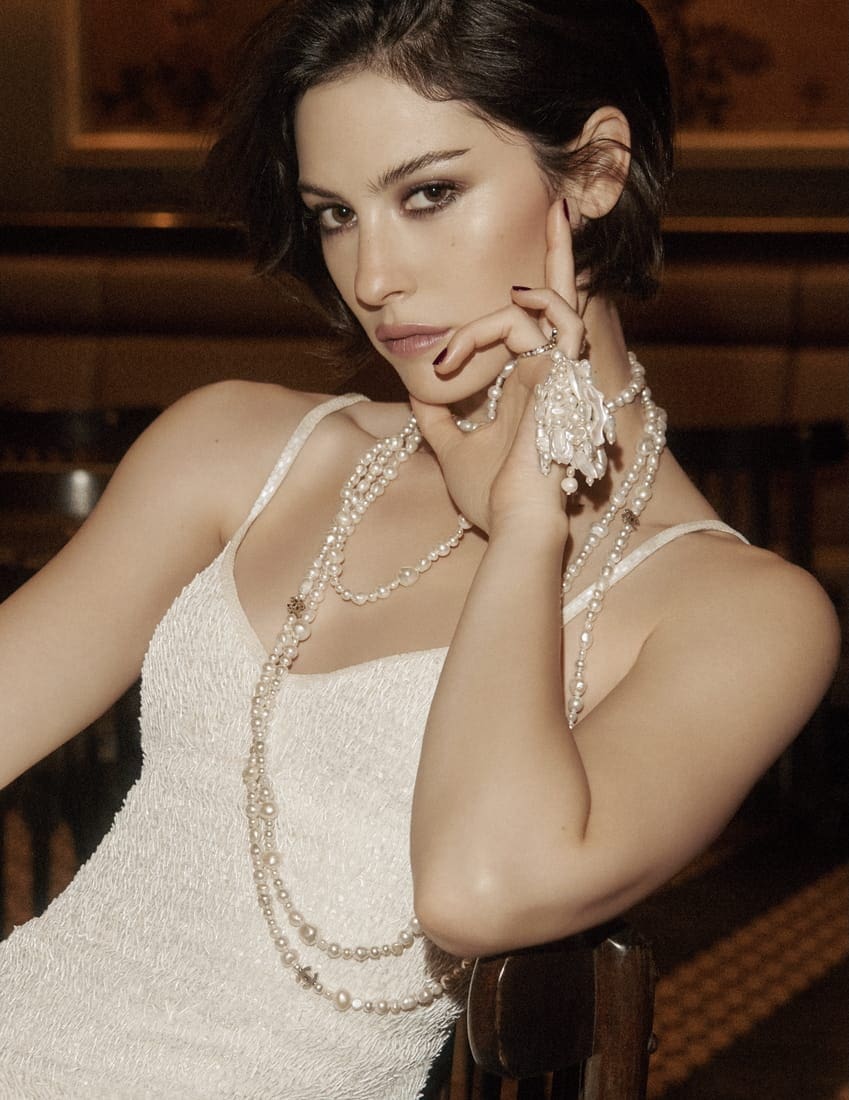
The accompanying imagery takes a quieter approach while maintaining the film’s interplay of classicism and modernity. Abrams appears in a white, delicately textured dress draped with long strands of pearls, photographed against warm wood and amber-toned interiors. The styling immediately invokes familiar Chanel codes, but their looseness keeps the references from feeling overly reverential: pearls tumble down her back, coil around her hands, and fall asymmetrically across the body rather than sitting neatly in place. Against Abrams’ cropped dark hair and restrained makeup, the effect feels intimate and slightly undone.
There is a certain familiarity to the broader Coco Mademoiselle vocabulary—Paris, rebellion, femininity, movement, and the liberated young heroine are well-established territory for the fragrance. What gives Crush Absolu its distinction is the commitment to translating those ideas through physical energy. Wright’s cinematic framing and Cherkaoui’s choreography turn independence into something visible and contagious, while Abrams brings a quieter, contemporary presence that prevents the character from becoming pure theatrical archetype.
Ultimately, the campaign understands that Coco Mademoiselle does not need an entirely new mythology so much as a convincing new inhabitant. By moving Abrams from the carefully constructed façade of Paris into a world she effectively creates through her own momentum, Chanel gives an enduring fragrance narrative another turn on the dance floor—and this Mademoiselle has no intention of waiting for an invitation.