Dream Factory
Review of Dior Cruise 2027 Fashion Show
By Mackenzie Richard Zuckerman
Jonathan Anderson did not arrive in Los Angeles looking to recreate old Hollywood. He arrived looking to reconstruct its emotional machinery.
Beneath the sweeping concrete curves of LACMA, Dior Cruise 2027 unfolded through drifting fog, vintage Cadillacs, dim streetlamps, and the strange glow of cinematic anticipation. Guests including Sabrina Carpenter, Miley Cyrus, and Mikey Madison settled into their seats beneath cozy Dior wool blankets, atop a mock screenplay titled Wilshire Boulevard, a fictional project Anderson created as the conceptual framework for the evening. Around them echoed the sounds of a film set warming into motion — directors shouting instructions, distant chatter, the low hum of production. By the time the first model emerged to the sound of crooning 1940s love songs, the audience had already been transported somewhere between couture salon, noir film, and Hollywood fever dream.
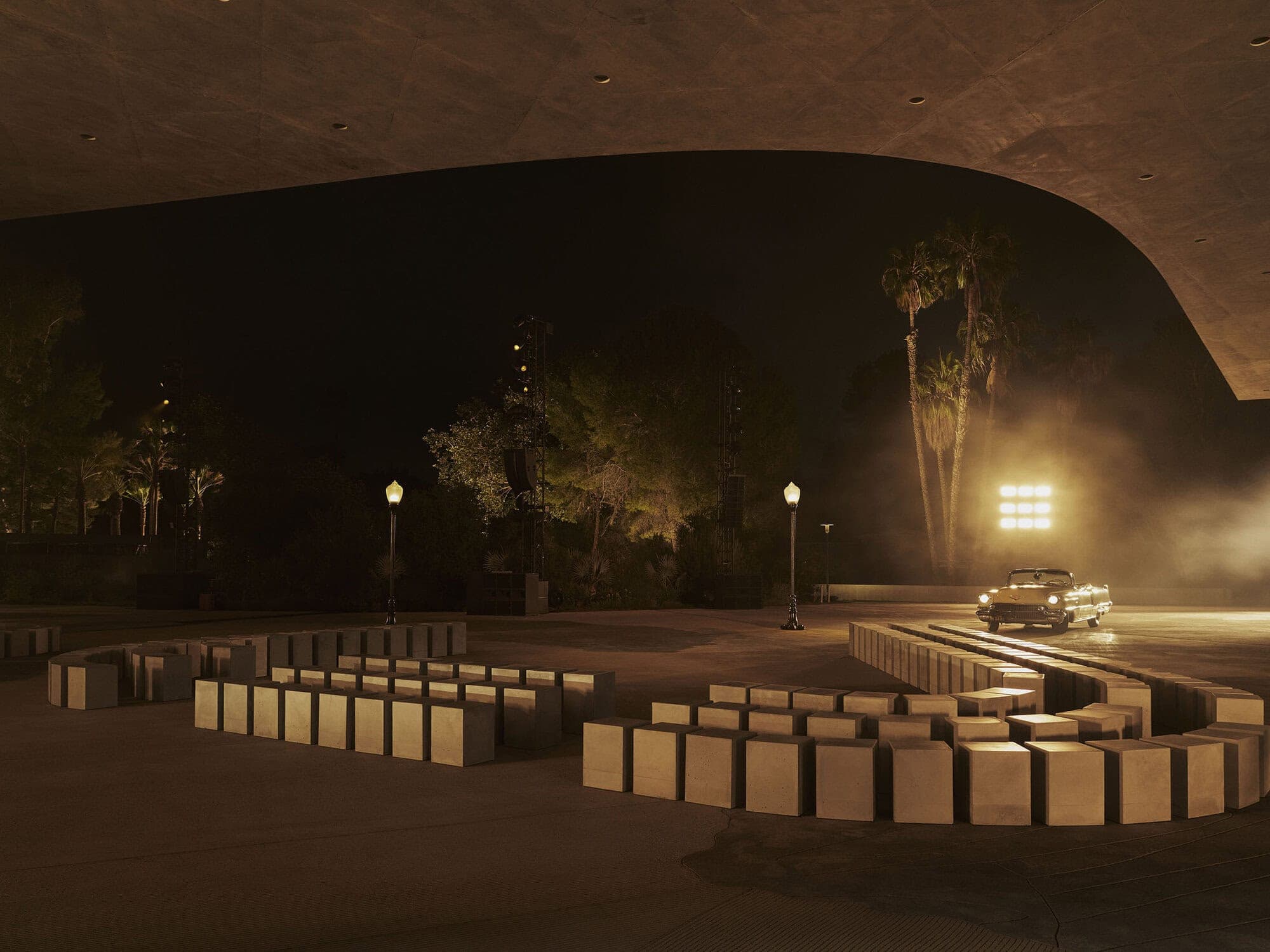
The setting carried deeper resonance than simple destination spectacle. Dior has long occupied a privileged place within Hollywood mythology. Christian Dior understood early that cinema and couture were driven by the same seductive forces: aspiration, transformation, fantasy. Marlene Dietrich famously declared “No Dior, no Dietrich” while negotiating costumes for Hitchcock’s Stage Fright, helping cement the house’s relationship with the silver screen almost immediately after the New Look reshaped postwar fashion in 1947.
Anderson understood that history well enough not to romanticize it.
Instead of nostalgia, he offered atmosphere. Instead of costume, he offered tension. The collection explored not just Hollywood glamour, but the instability beneath it — the collision between performance and reality, polish and unraveling, seduction and artifice. One of Anderson’s inspirations was Scotty Bowers’ infamous memoir detailing the hidden sexual undercurrents of old Hollywood society. “He was sleeping with most of Hollywood,” Anderson remarked matter-of-factly. “I thought that was an interesting starting point for a collection.”
That underlying sense of beautiful disorder gave the evening much of its electricity.
THE COLLECTION
THE VIBE
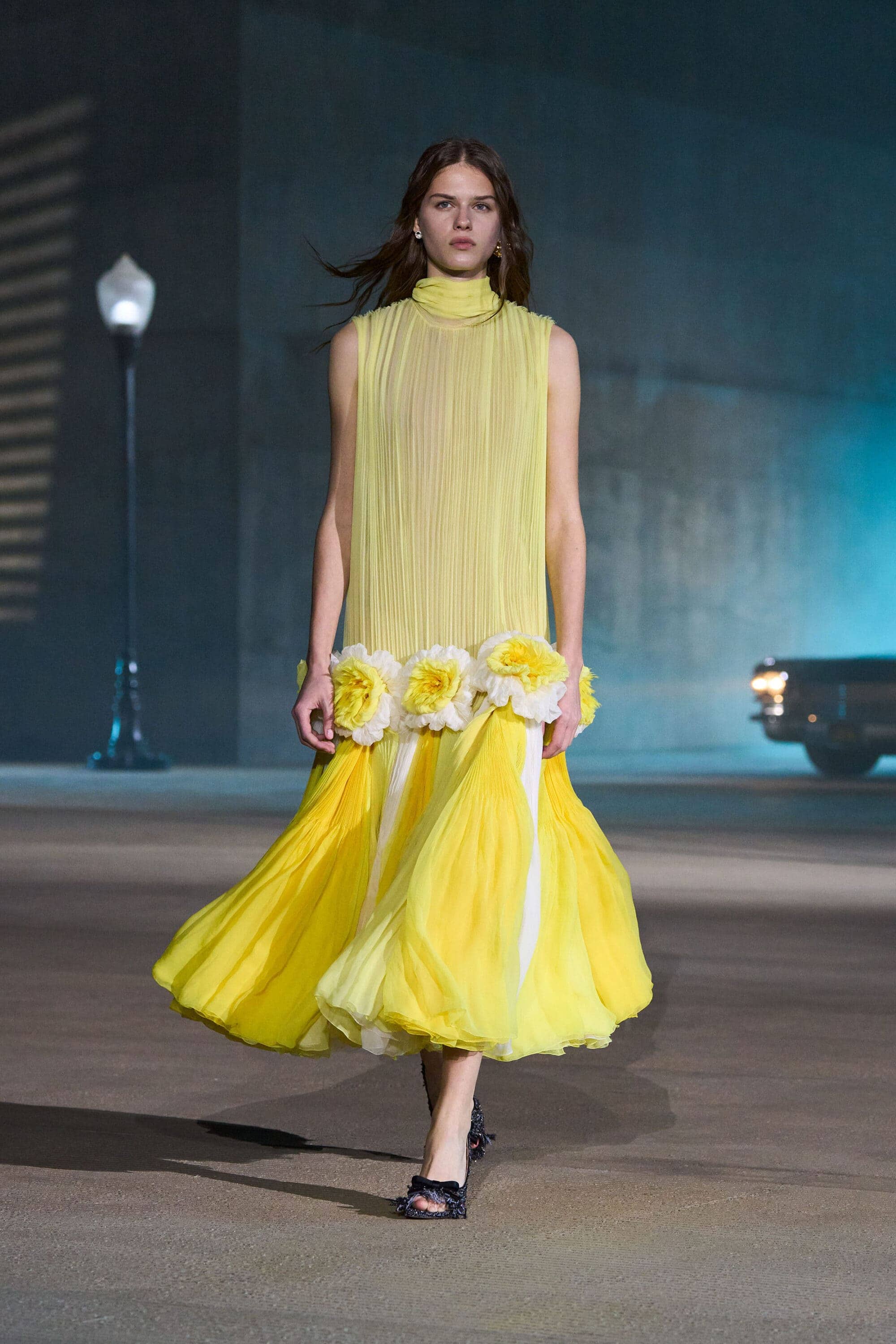
What Jonathan Anderson is beginning to build at Dior feels increasingly important because it avoids the two extremes currently flattening luxury fashion: heritage preservation masquerading as relevance, and aggressive reinvention masquerading as vision.
Many designers approach legacy houses as either museums or demolition sites. Anderson seems to understand that Dior functions best as neither. Instead, he is treating the house as something fluid — an emotional and cultural language capable of absorbing contradiction without losing coherence.
Cruise 2027 pushed that philosophy further than his previous outings.
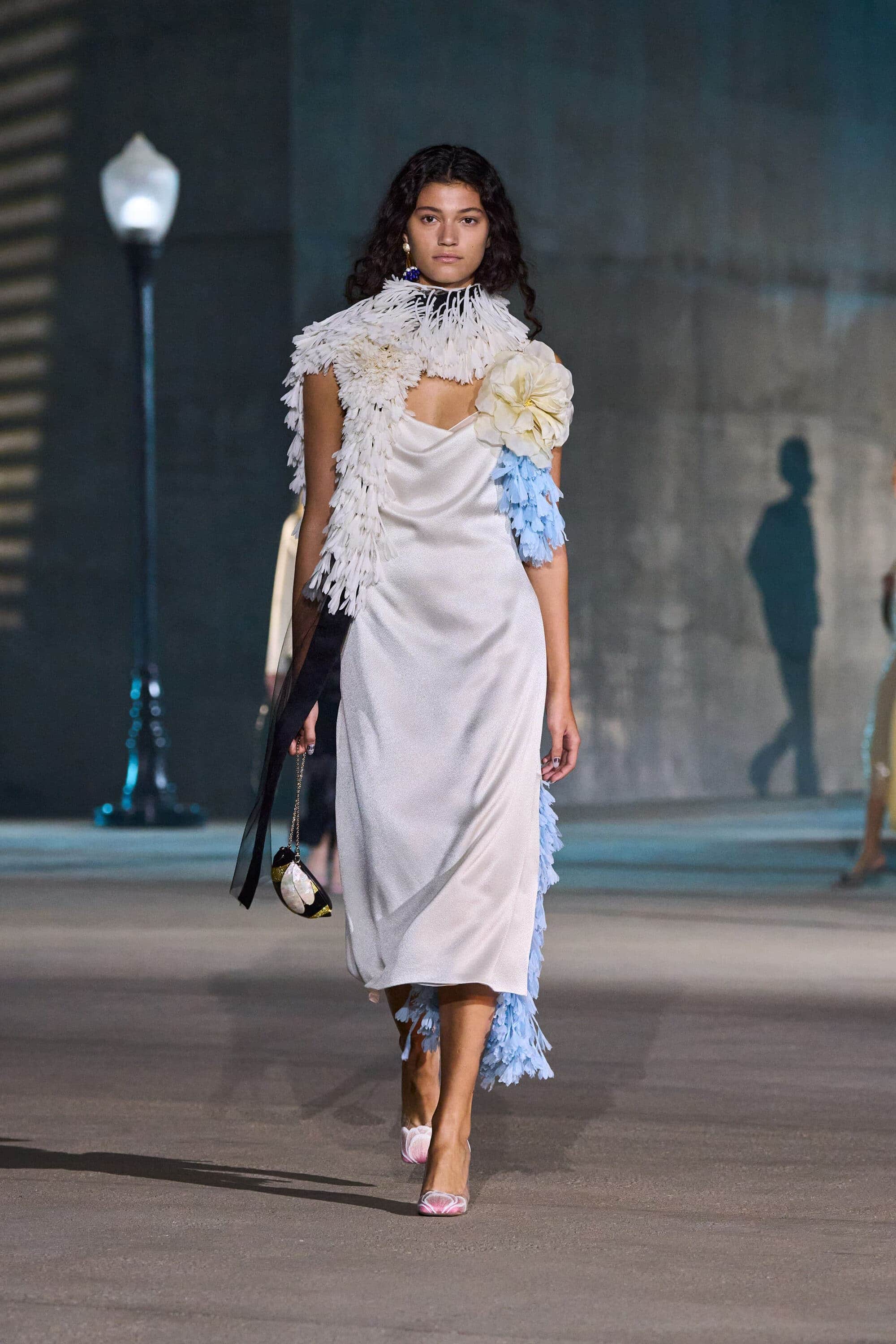
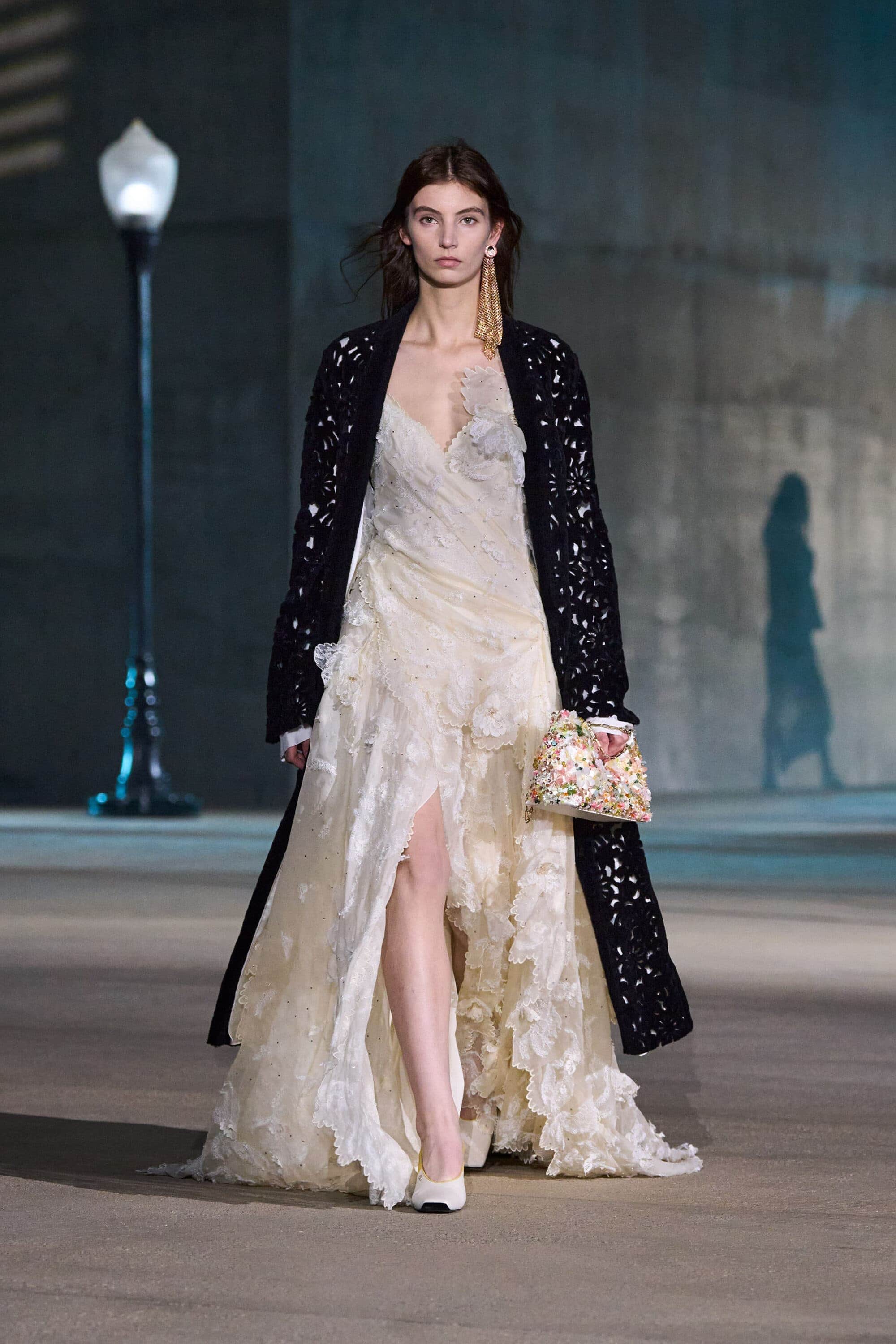
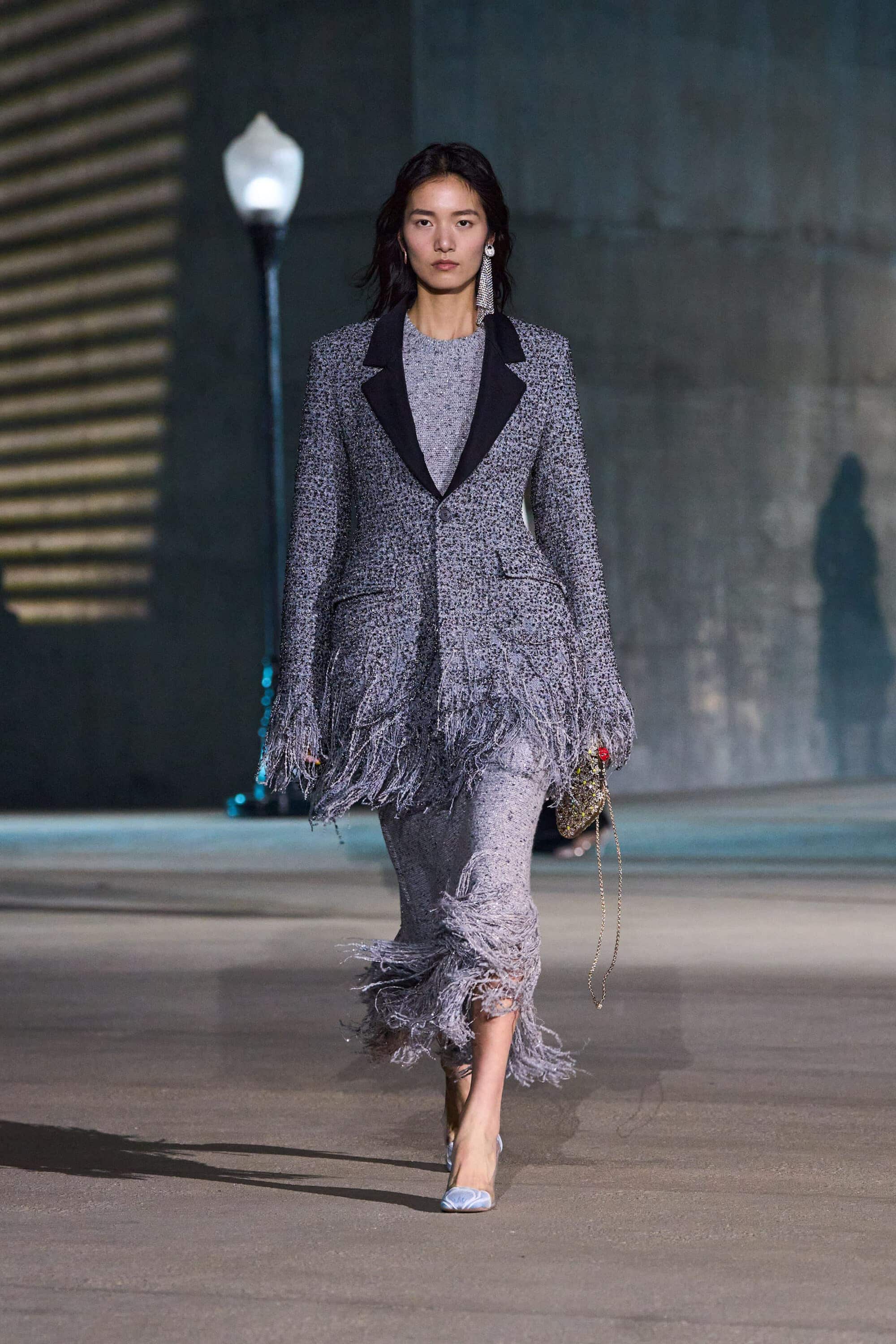
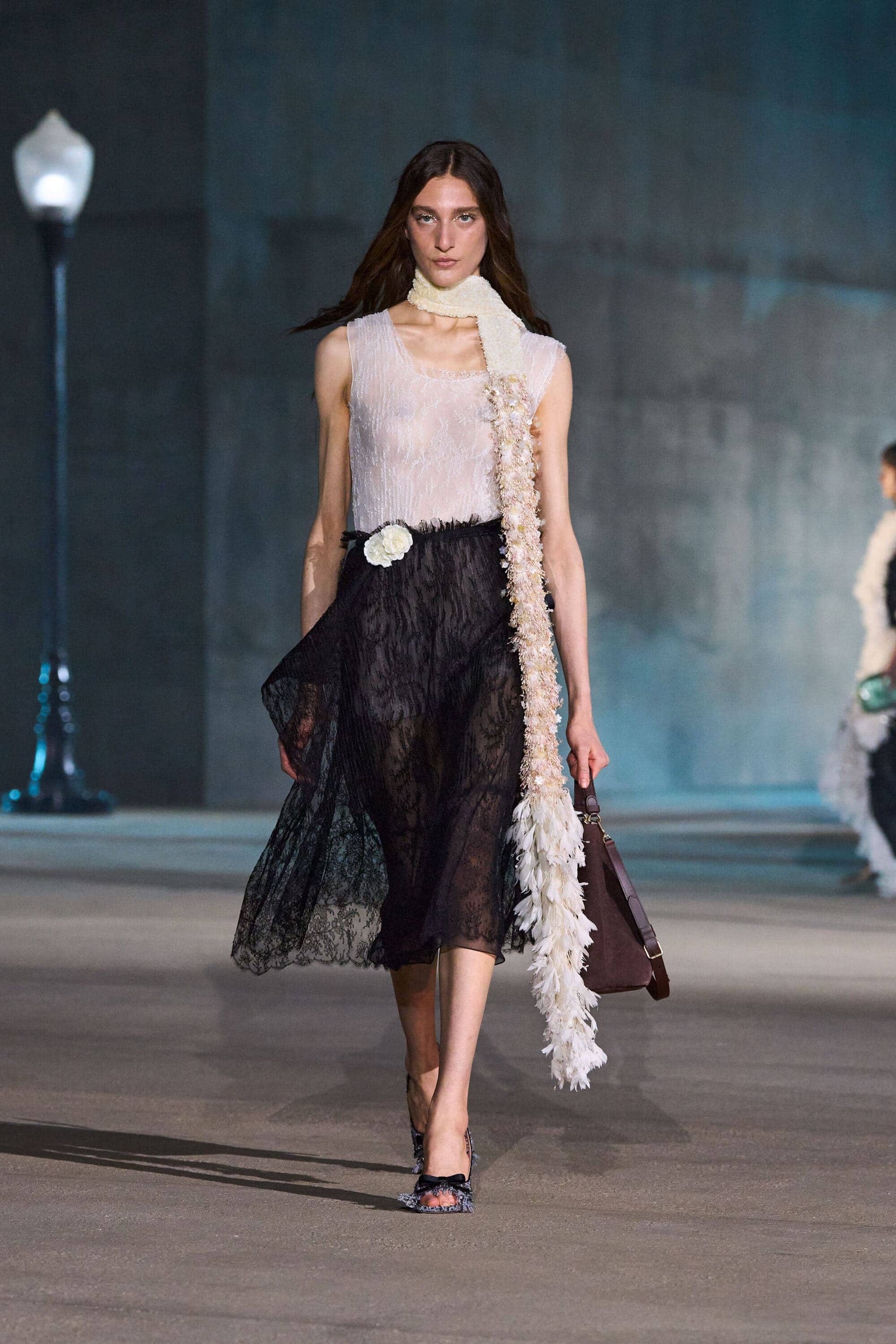
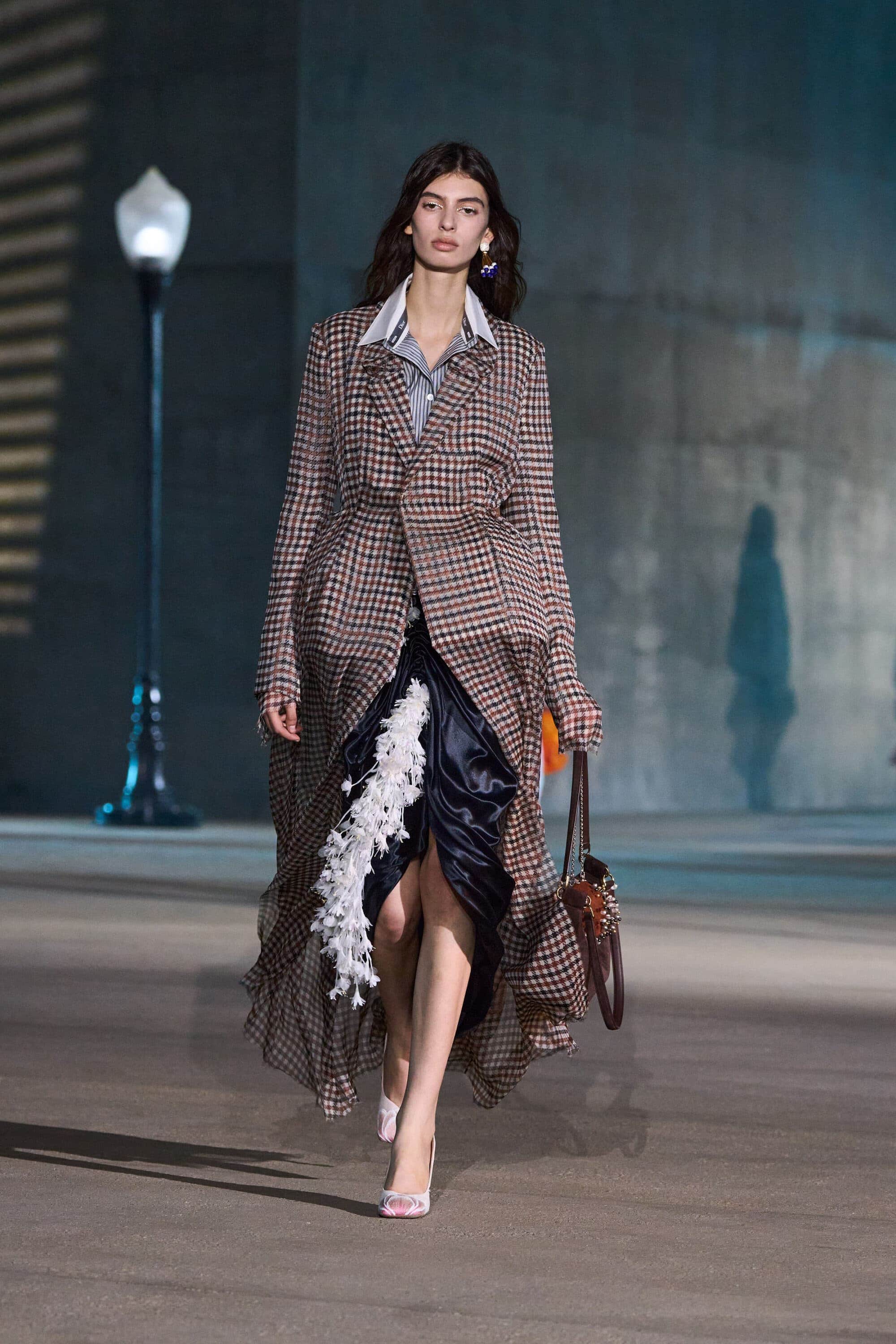
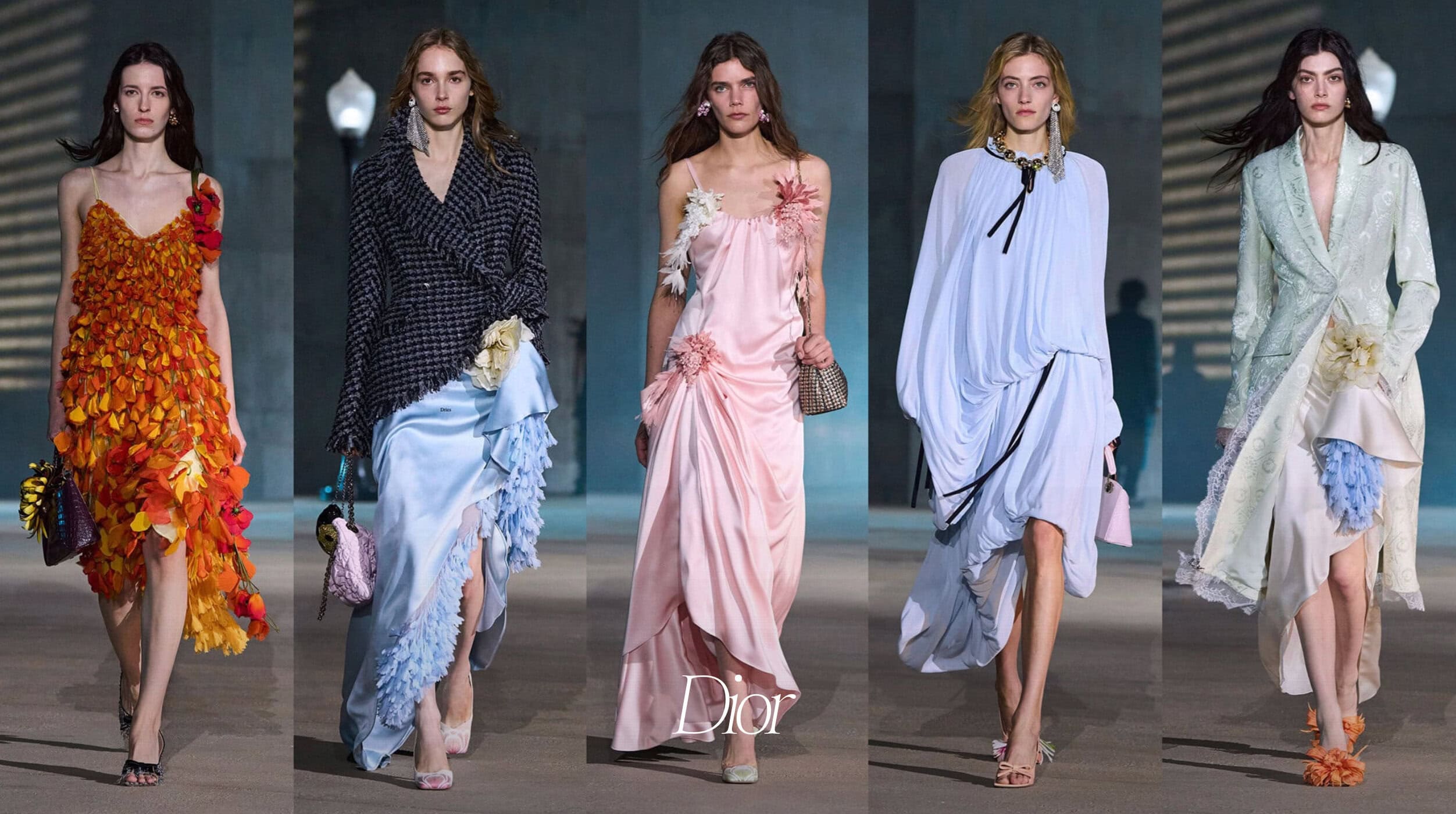
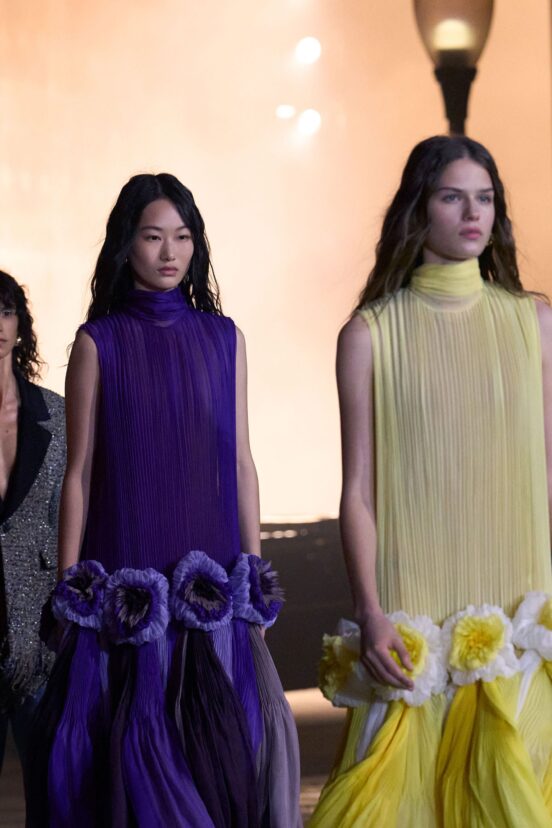
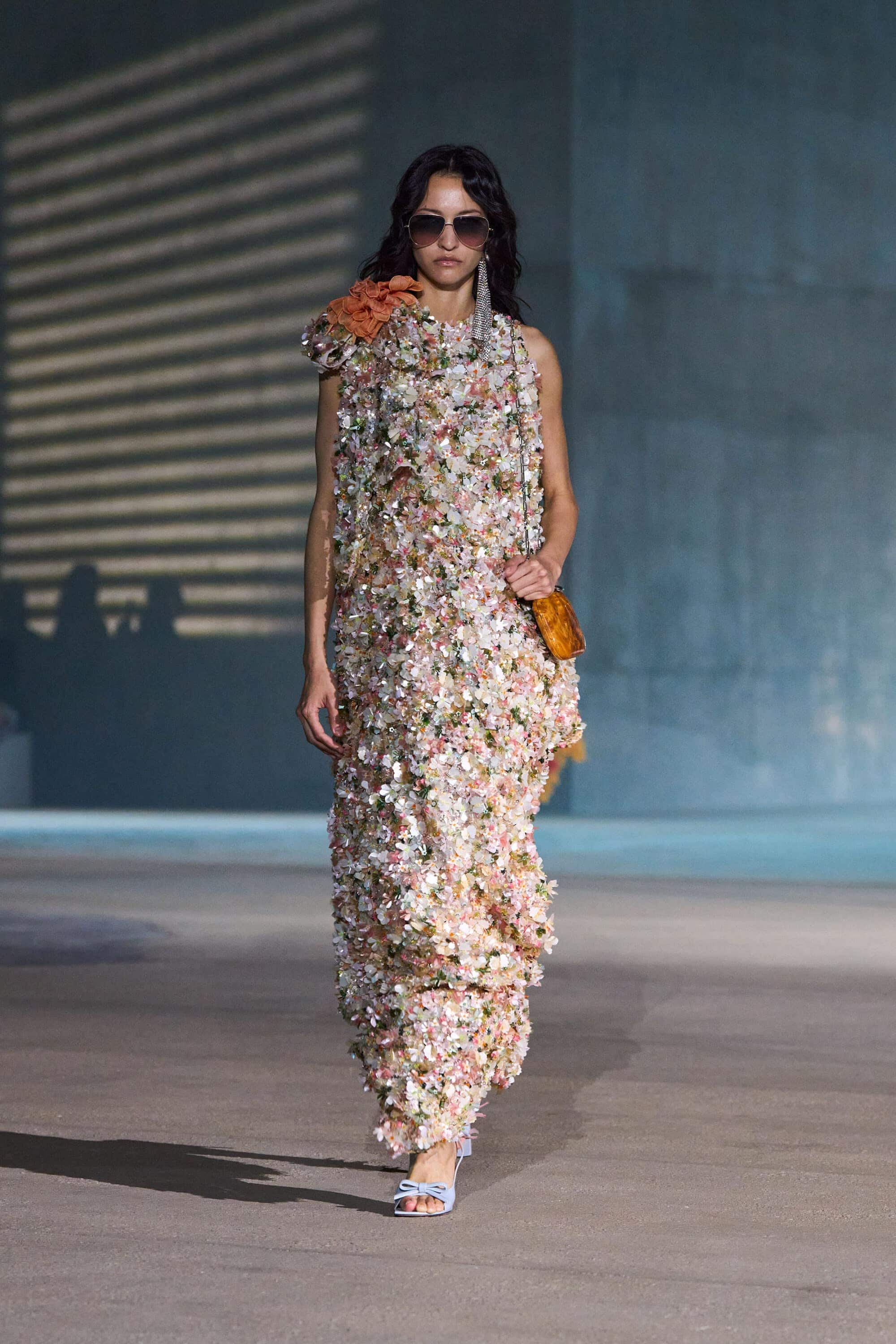
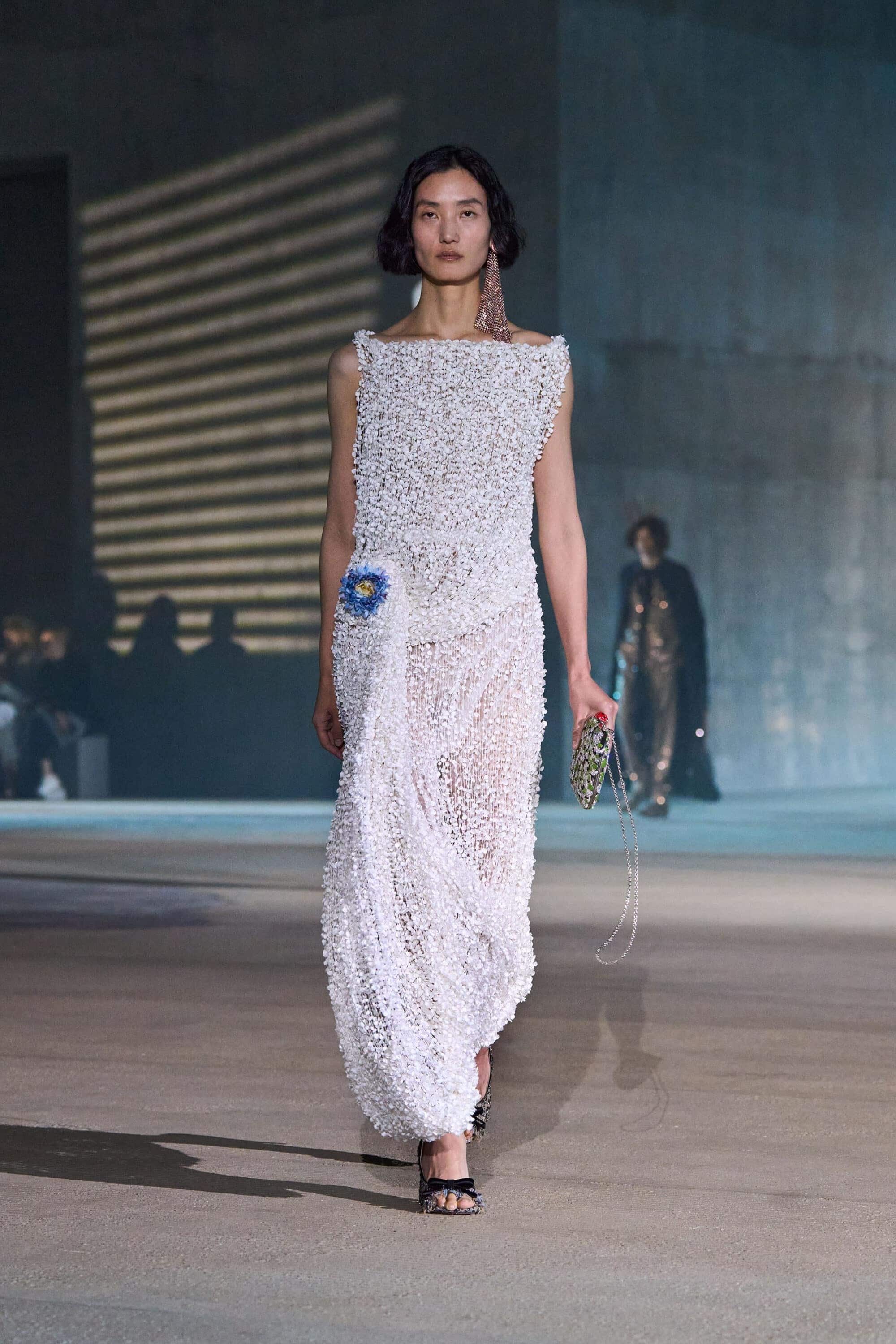
The opening pleated gowns in citron yellow and deep violet carried echoes of Mariano Fortuny’s Delphos dresses, yet their movement felt entirely contemporary — elongated, fluid, slightly undone. Throughout the collection, couture precision constantly collided with softness and ease. Bias-cut slips floated beside glittering tailoring. Sequined eveningwear dissolved into fringe. Floral embellishment appeared almost hyperreal beneath the lights, while slouch entered silhouettes traditionally associated with rigid glamour.
Importantly, the collection never felt trapped inside one decade or one reference point. Galliano-era Dior surfaced occasionally in flashes of cinematic sensuality, but Anderson wisely resisted turning the collection into archival tribute. His instincts are too restless for straightforward revivalism. Instead, he filters Dior history through his own vocabulary: exact tailoring interrupted by awkwardness, couture softened by movement, glamour complicated by imperfection.
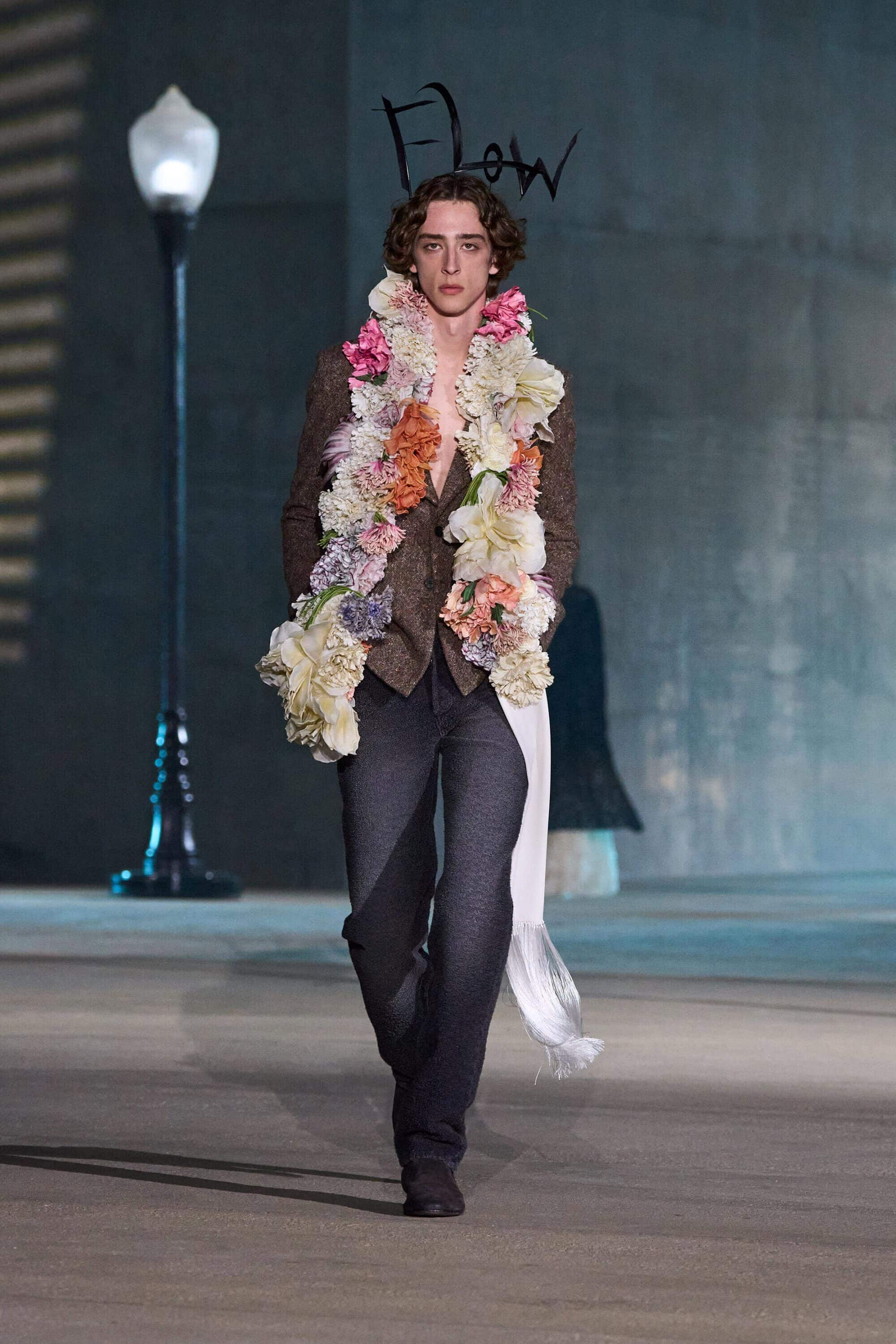
Even the more theatrical gestures worked because they acknowledged fashion’s absurdity instead of pretending otherwise. Philip Treacy’s feathered headpieces spelling “DIOR,” “FLOW” and “STAR” nodded to Treacy’s legendary collaborations with Isabella Blow while simultaneously poking at the mechanics of celebrity itself. Elsewhere, Anderson brought artist Ed Ruscha into the collection through graphic shirting stamped with fragmented phrases and dry Americana wit, subtly reconnecting the show to both Los Angeles and Anderson’s own Northern Irish sensibility.
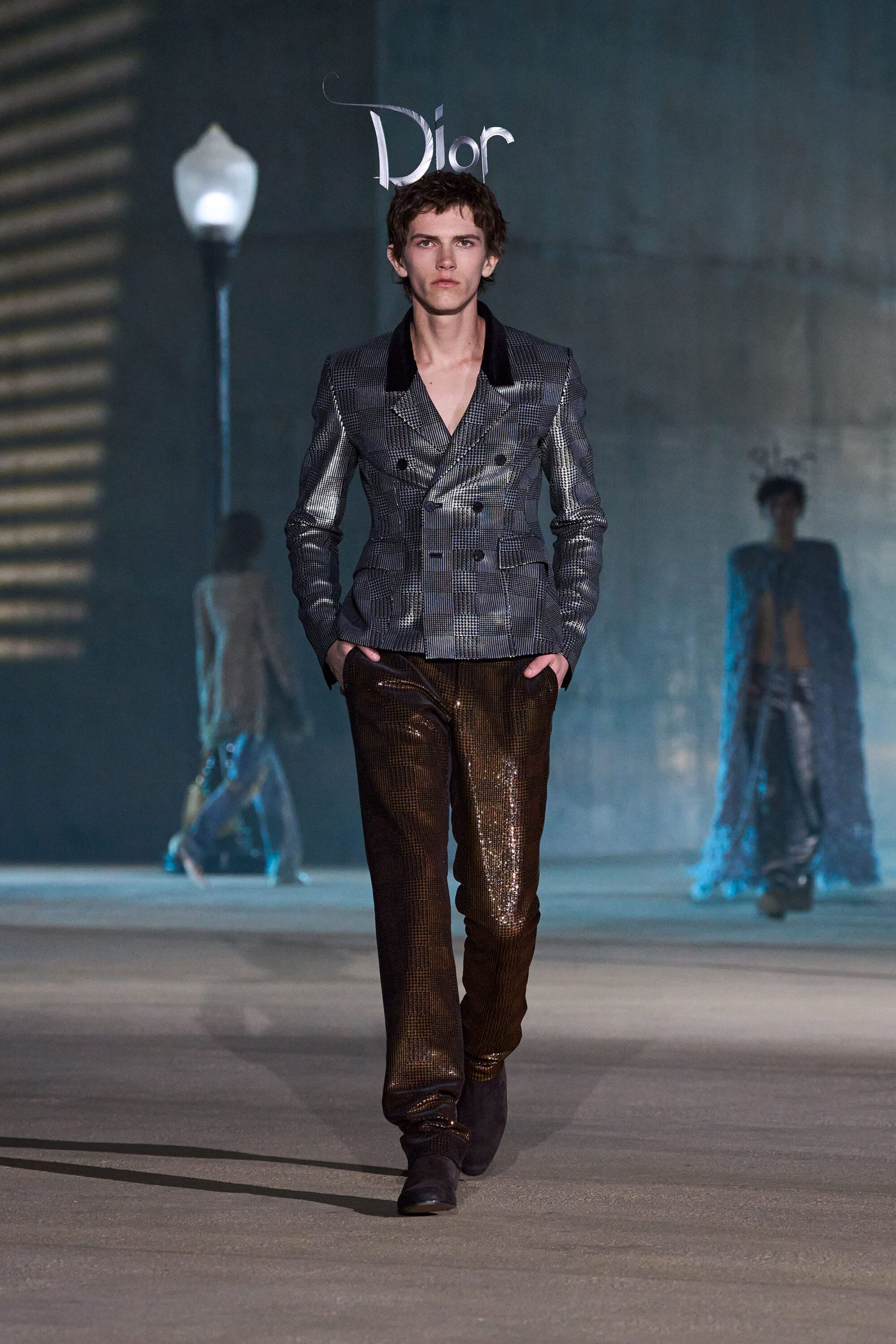
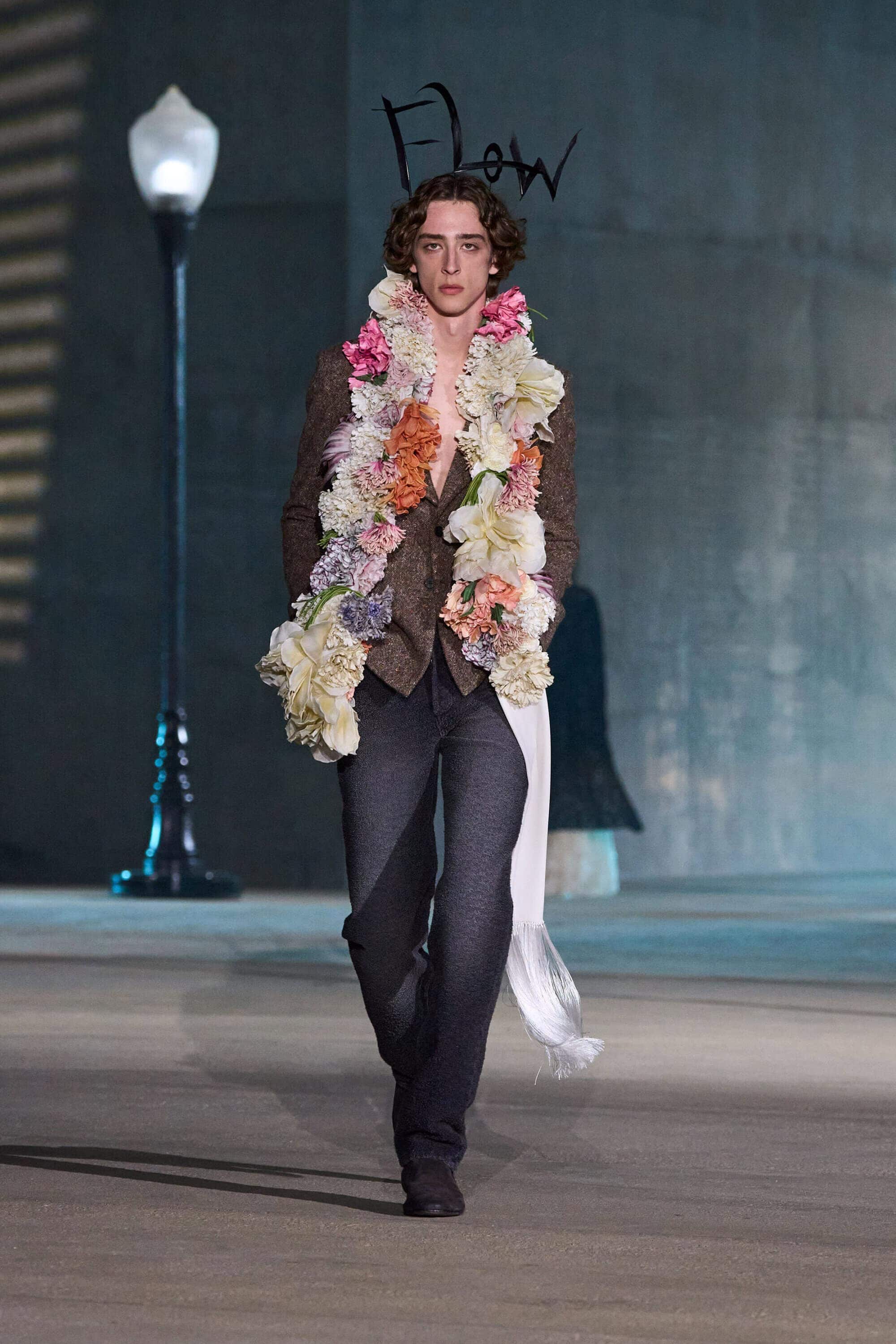
What makes this Dior compelling is that Anderson is not attempting to create immediate certainty. In fact, the collection occasionally threatened to collapse beneath the sheer accumulation of ideas. References surfaced quickly, sometimes before the previous one had fully settled. Yet even those moments felt productive rather than confused. One sensed a designer allowing the house to evolve publicly instead of force-feeding it premature clarity.
That patience matters.
Luxury fashion has become addicted to instant readability — collections engineered backward from social media traction and market positioning before they are even emotionally formed. Anderson appears uninterested in that approach.
“I am still learning and I am not in a rush,” he said before the show, and Cruise 2027 suggested he means it.
The strongest looks emerged when he allowed emotion and silhouette to carry the weight of the idea. A black sequined jacket collapsing delicately into fringe. A slinky crimson gown that sliced through the collection like a flash of Technicolor warning. Pleated dresses moving through haze with the ghostly elegance of actresses leaving a studio lot after midnight. In those moments, Anderson achieved something increasingly rare in fashion: clothes that create atmosphere rather than simply content.
THE WRAP UP
By the finale, Dior’s Hollywood had become less about nostalgia than projection — not a recreation of the past, but an examination of why glamour continues to seduce us in the first place. The fog thickened, the lights softened, and the models disappeared into the California night like characters exiting a film before the credits fully roll.
What lingered afterward was the growing sense that Jonathan Anderson understands something fundamental about Dior’s future. The house does not need another preservationist carefully polishing its mythology, nor does it need shock tactics disguised as modernity. It needs someone capable of reconnecting Dior to emotion, fantasy, tension, and cultural desire without severing it from its foundations.
Cruise 2027 suggested Anderson may be uniquely equipped to do exactly that.
There are still moments where the work feels unresolved, where the layering of references risks overpowering the silhouette itself. But even that incompleteness feels strangely refreshing in today’s luxury landscape, where so many collections arrive over-calibrated, over-explained, and emotionally vacant. Anderson’s Dior feels alive because it is still evolving in public. One senses not a designer delivering conclusions, but one actively discovering what this house can become.
And increasingly, that process itself is becoming the spectacle.
What Anderson delivered at LACMA was not simply a Cruise collection. It was a reminder that fashion, at its best, still has the ability to construct entire emotional worlds — worlds built from glamour, contradiction, fantasy, cinema, and desire. Dior has always understood the power of dreams. Jonathan Anderson is simply teaching the house how to dream differently again.