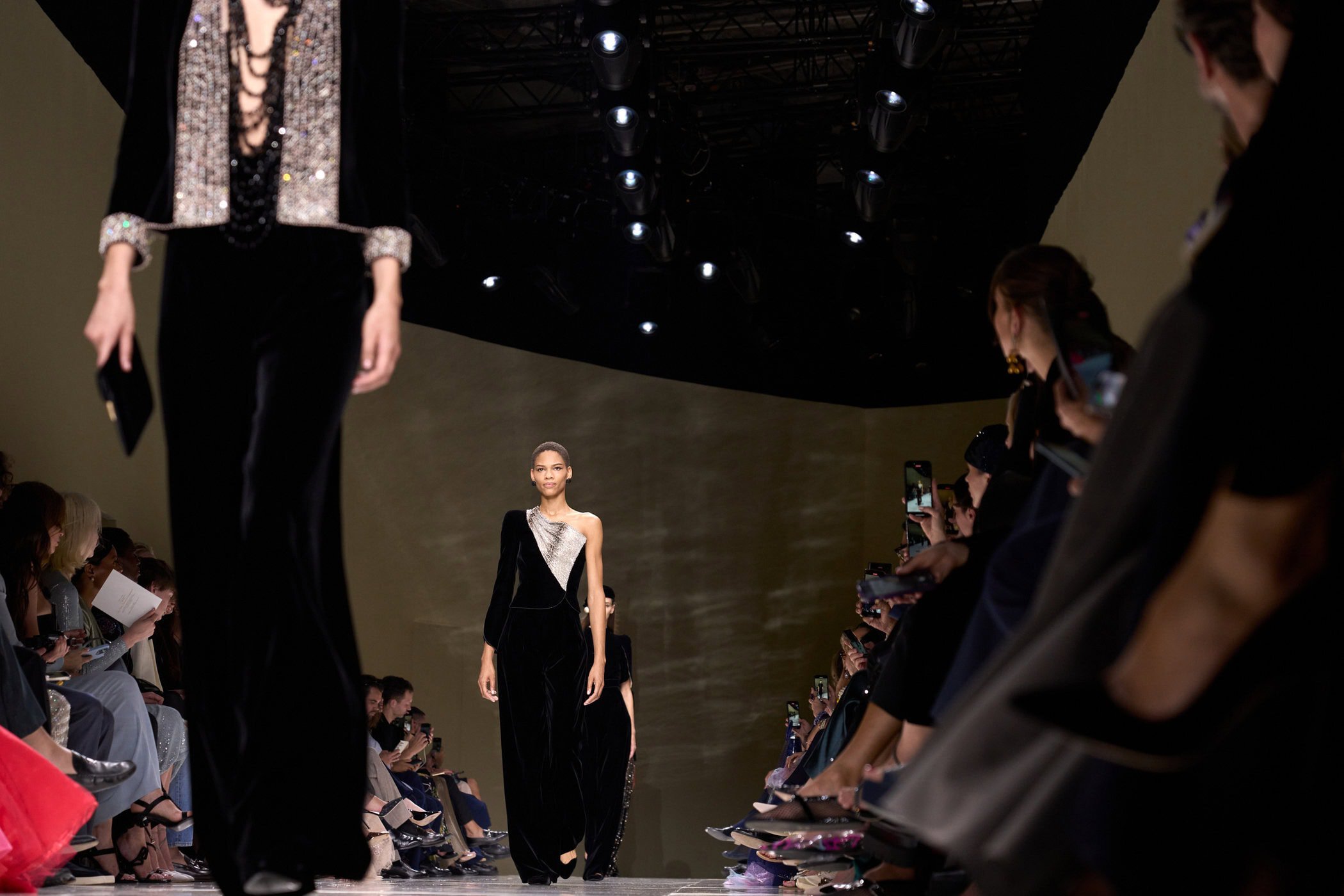
The Italian luxury group maintained profitability, continued investment, and outlined long-term ownership plans
The Giorgio Armani Group reported resilient 2025 results while navigating the first year following the death of founder Giorgio Armani in September at age 91. Speaking on the company’s performance, chief executive officer Giuseppe Marsocci said the business continued to follow the strategic direction established by its founder, emphasizing continuity, disciplined investment, and long-term decision-making during a period of leadership transition.
Consolidated revenues declined 4.6 percent at current exchange rates to 2.19 billion euros, compared with 2.3 billion euros the previous year. At constant currency, sales were down 2.8 percent. Despite broader market headwinds, profitability improved, with earnings before interest, taxes, depreciation and amortization rising 3.2 percent to 152.7 million euros. Operating profit increased 2.5 percent to 52.6 million euros. Consolidated net equity stood at 1.99 billion euros, while the group reported a net cash position of 529 million euros, or 596 million euros including treasury investments.
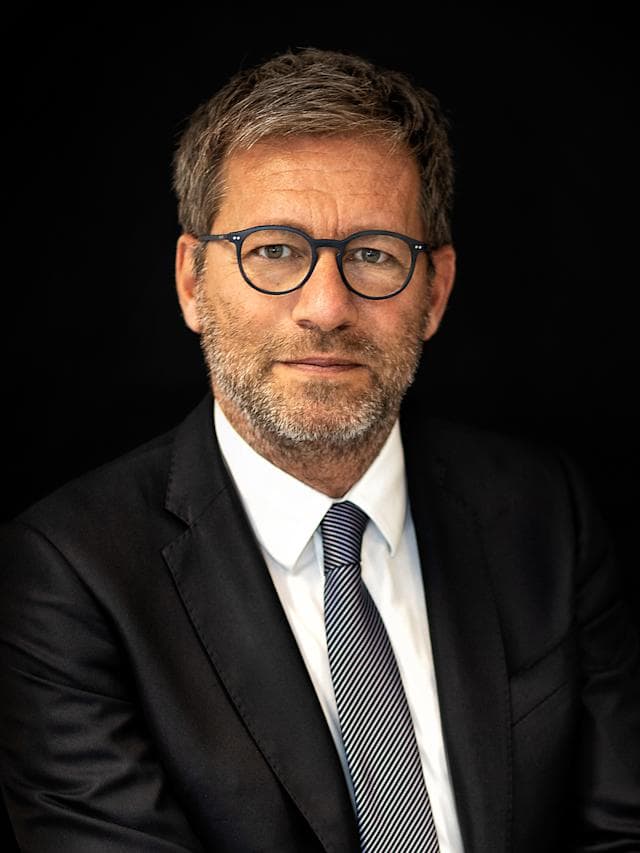
Marsocci said the company continued to self-finance strategic spending, investing around 100 million euros in retail and innovation during the year. That followed 332 million euros in investments in 2024, underscoring the group’s long-standing preference for reinvesting profits while limiting debt exposure. He described the company’s fundamentals as solid despite geopolitical uncertainty, currency fluctuations, tariffs, and rising energy costs.
The group’s retail channel increased 2 percent at constant currency in 2025, while wholesale declined 7 percent, reflecting caution among distributors. Lifestyle categories including home, hospitality, and food and beverage posted double-digit growth, reinforcing Armani’s broader positioning beyond apparel. Marsocci added that Europe, Asia, and the Americas each account for roughly one-third of sales outside Italy, giving the business balanced geographic exposure. Early 2026 trading was described as in line, with stronger momentum in Asia, particularly China and Japan.
A new board was appointed in November, with longtime executive Leo Dell’Orco named chairman. Other members include Silvana Armani, Andrea Camerana, Marsocci, Marco Bizzarri, John Hooks, Federico Marchetti, and Angelo Moratti. Silvana Armani was also named women’s creative director. Marsocci said governance changes had been executed according to plans outlined in Armani’s will, which also allows for the potential future sale of an initial 15 percent stake to a strategic investor or, in later phases, a larger transaction or public listing while preserving foundation control.
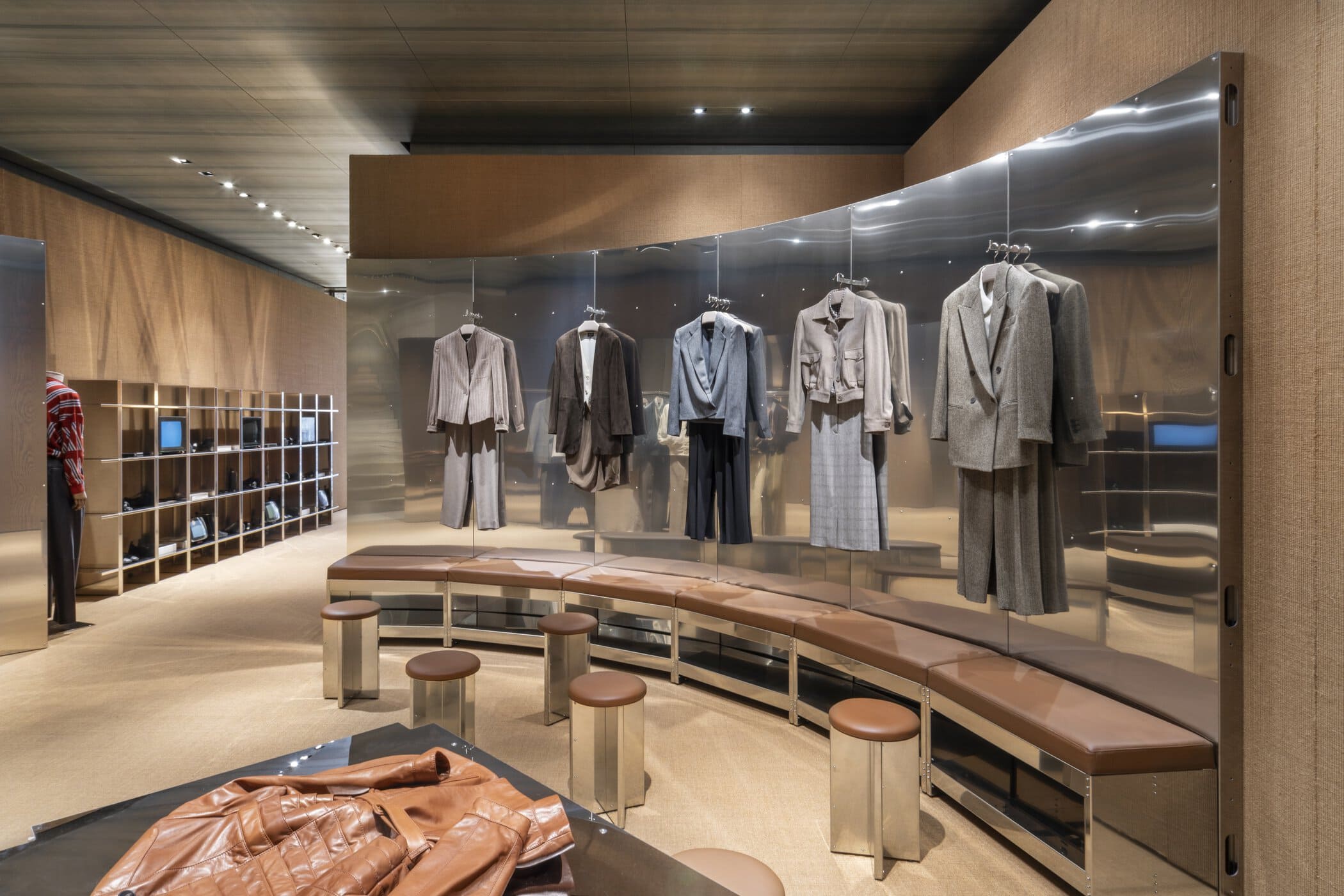
The company continued to expand its retail footprint, with new or planned stores in Bangkok, Taiwan, Wuhan, Beijing, Korea, Mykonos, Sydney, and Las Vegas. It currently operates 138 Giorgio Armani stores and 308 Emporio Armani stores worldwide. Marsocci also cited strong performance for Giorgio Armani full-price business, Armani Privé, and the ARMANI/Archivio heritage initiative, while noting that Emporio Armani sales have increased over the past two years.
Outside fashion, Armani/Casa recorded double-digit growth in 2025, while the group advanced hospitality projects through a joint venture with Symphony Global. Renovations are underway at the Armani Hotel Dubai, updates are planned for the Milan property, and a new hotel is set to open in Diriyah, Saudi Arabia. Expanded exhibitions in Milan dedicated to Armani’s career and couture legacy also reflect continued public and cultural interest in the brand.
The 2025 results suggest that Armani’s post-founder era is beginning with continuity rather than disruption, as the group balances succession planning, measured expansion, and adherence to the principles that defined one of luxury’s last major independent houses.