Timeless Traveler
Review of Louis Vuitton Trunks Spring 2026 Ad Campaign by Creative Director Pharrell Williams
Louis Vuitton turns its most enduring object into a vehicle for imagination with its hardsided trunks, a new expression of the house’s trunk-making heritage that connects more than a century of Monogram history with contemporary craft. First introduced by Pharrell Williams during the Men’s Spring-Summer 2027 collection, the project takes the Courrier Lozine 110 as its starting point, transforming its familiar architecture through leather marquetry, mother of pearl, sculpted chrome, and other experimental materials.
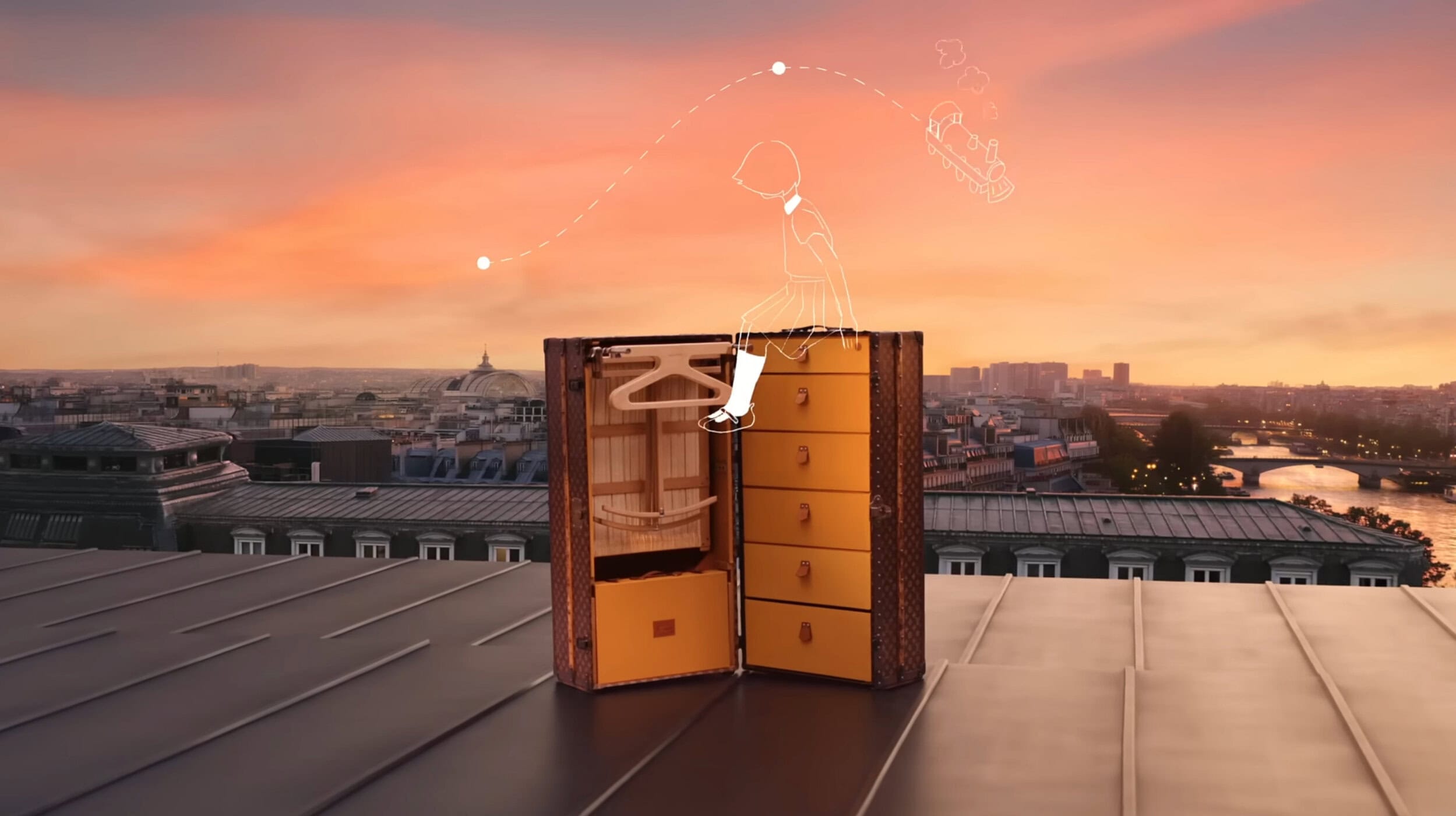
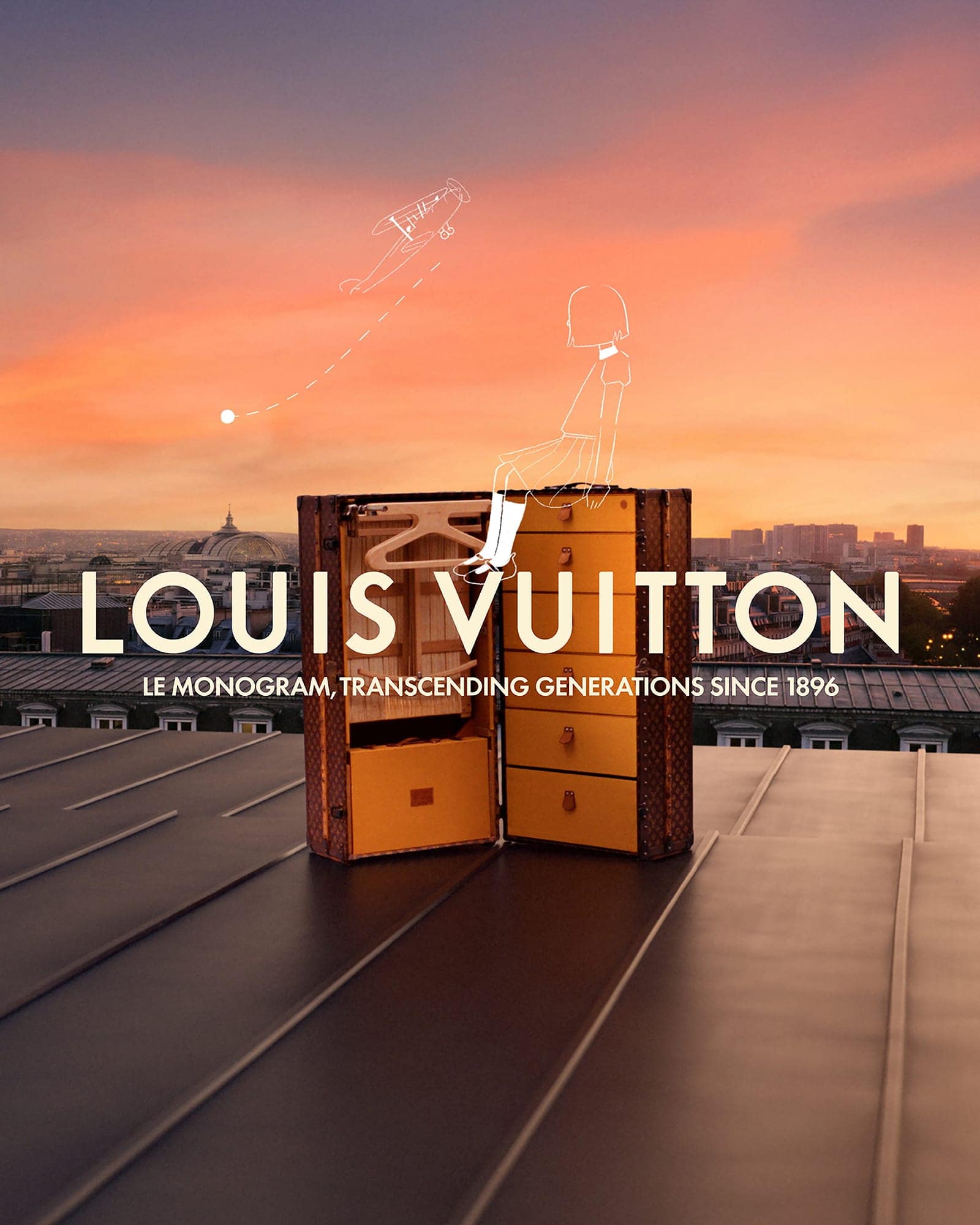
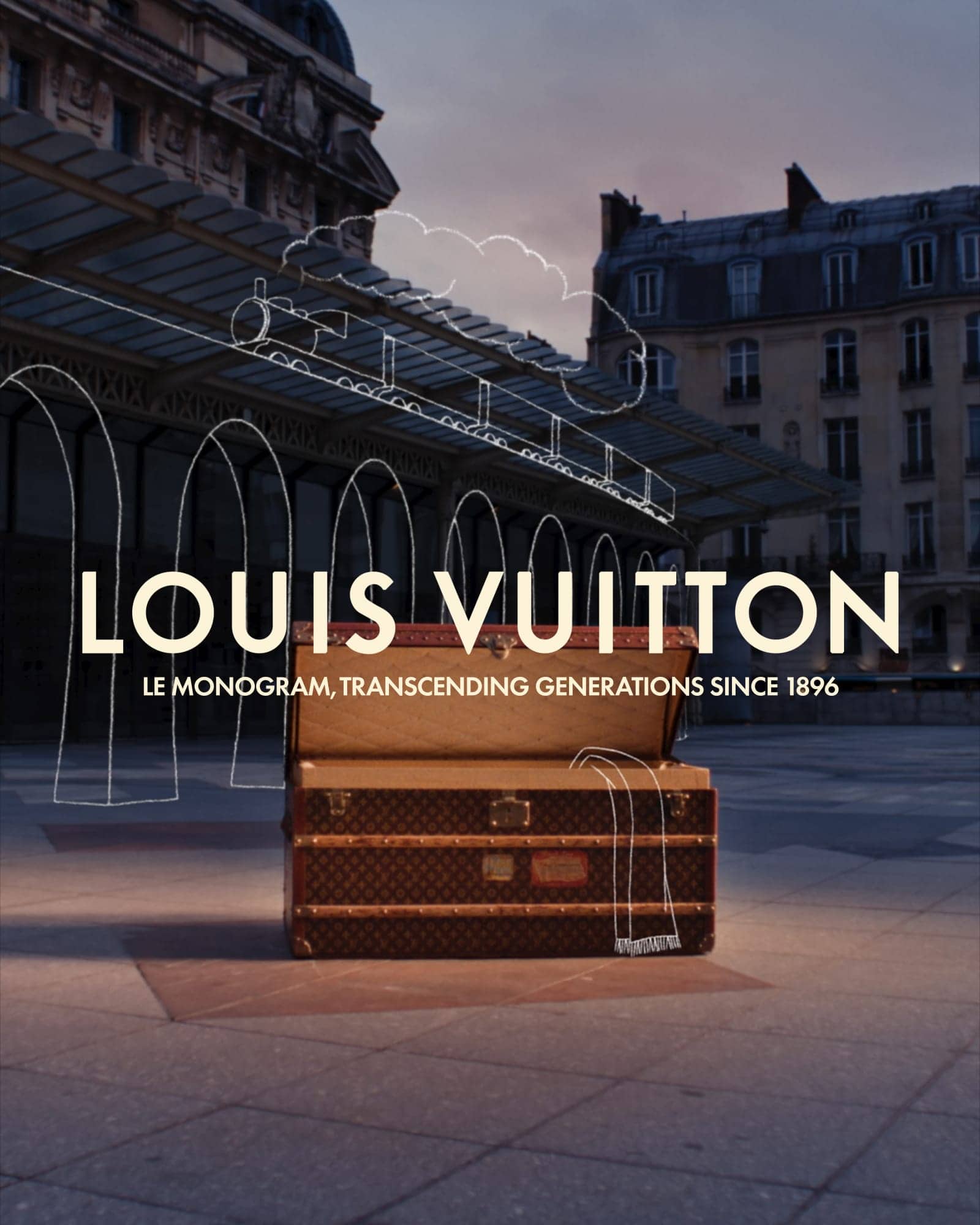
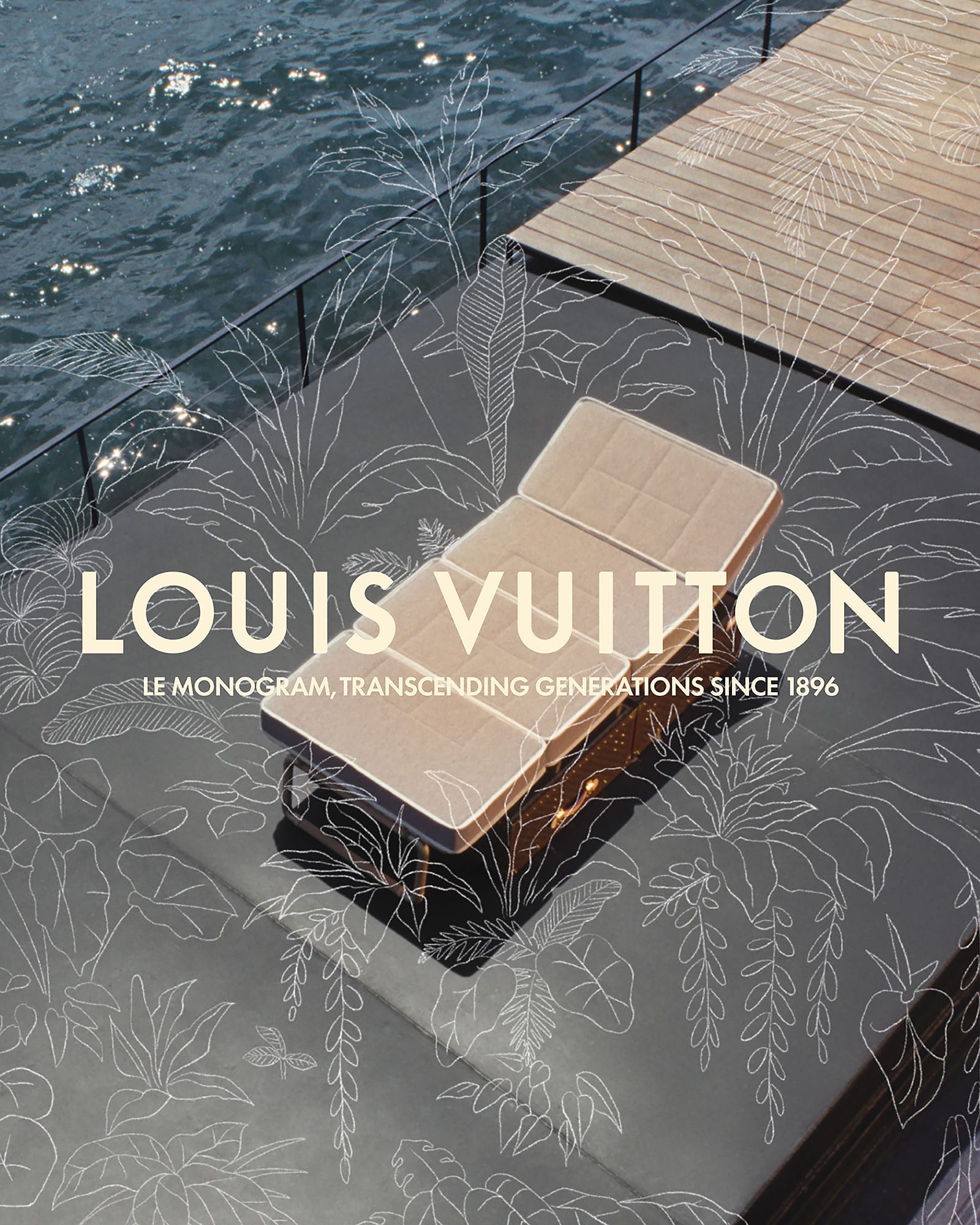
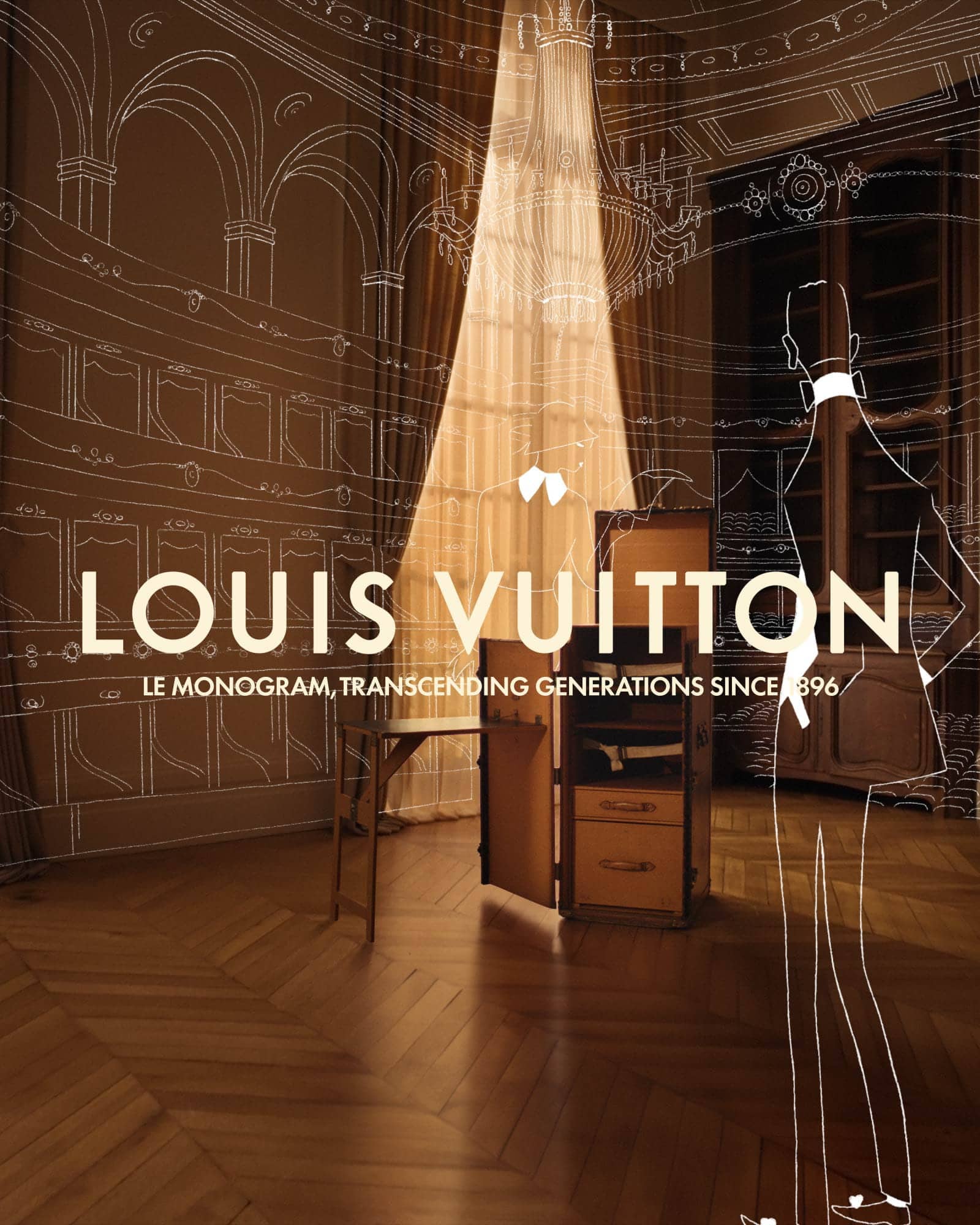
The accompanying imagery approaches that history with a welcome sense of lightness. Historic trunks appear throughout Paris and other evocative settings, while delicate white illustrations drift across the photographs: a steam train passes above a stack of luggage, a figure sits atop an open trunk as an airplane takes flight, and hand-drawn foliage seems to grow around another transformed into a lounge chair. Elsewhere, past and present meet more explicitly as an illustrated traveler encounters an archival Georges Vuitton advertisement. Rather than treating heritage as something fixed behind glass, the campaign imagines it as a living world that can be continuously drawn, redrawn, and expanded.
That visual language neatly reflects the philosophy behind the trunks themselves. Louis Vuitton’s 1905 Monogram patent allowed variations in color, size, and material, establishing flexibility within one of luxury’s most recognizable signatures. More than a century later, the new pieces push that principle toward its technical limits, treating the Monogram not as a fixed motif but as a framework for experimentation. The Leather Marquetry Under the Sea Courrier Lozine 110 uses more than 1,500 individually cut elements from over 35 leathers to construct an aquatic panorama, translating the collection’s oceanic inspiration into an intricate exercise in texture, color, and craft. Another iteration assembles more than 2,000 pieces of mother of pearl within smoked larch wood, allowing the familiar pattern to shift subtly with the light. The Chrome Wave version moves further into sculptural territory, reshaping transparent acrylic into an undulating form before engraving and coating it in reflective silver chrome. Across each interpretation, traditional trunk-making techniques meet materials and processes that feel decidedly contemporary, demonstrating how a century-old design language can evolve without severing its connection to the house’s history.
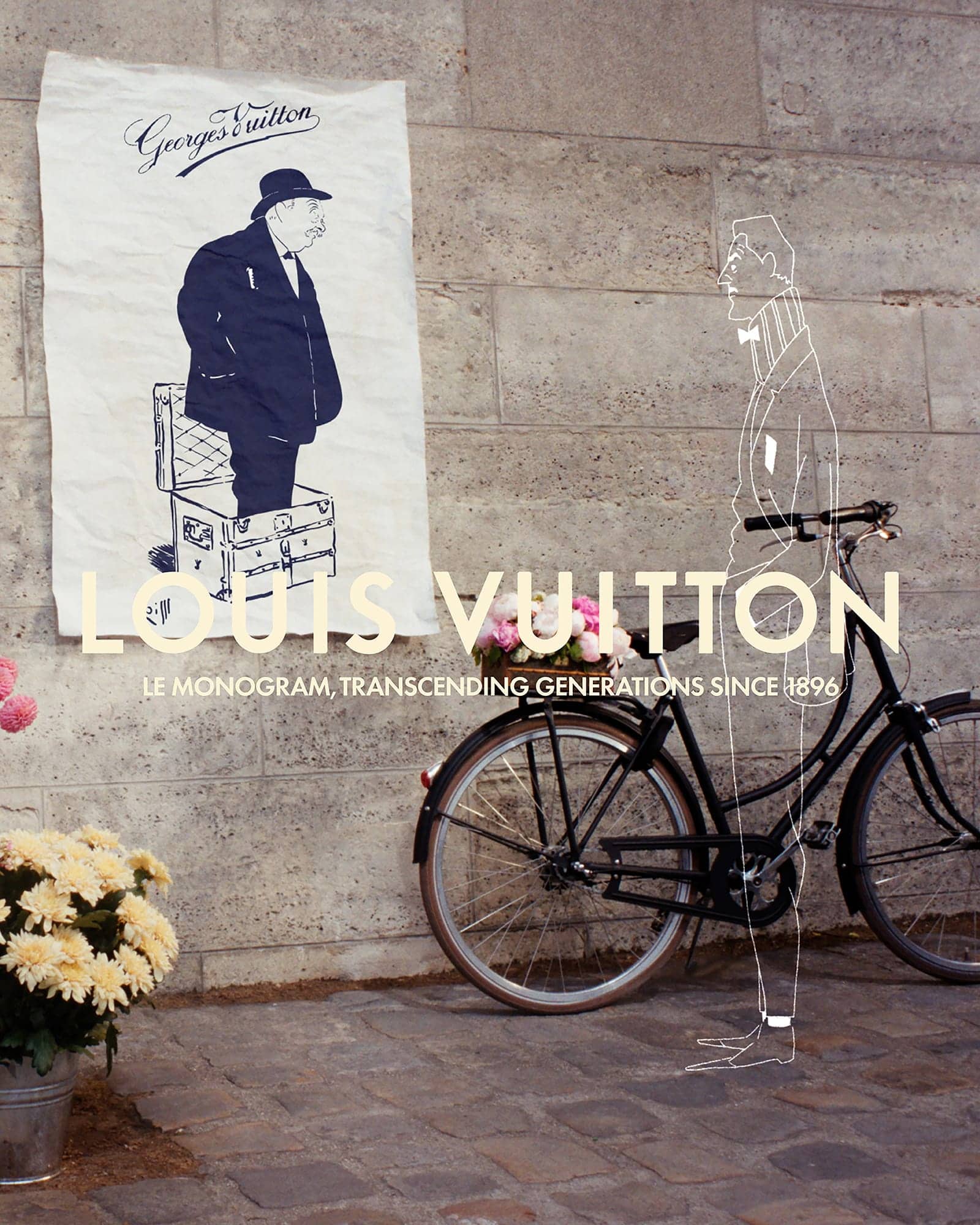
There is an appealing tension between the campaign’s almost childlike drawings and the extraordinary complexity of the objects they represent. The illustrations strip travel down to its most romantic symbols – trains, airplanes, distant landscapes, elegant travelers – while the trunks embody painstaking technical precision. That contrast keeps an intensely heritage-driven story from becoming overly reverential. Even the Monogram itself feels less like an untouchable emblem than a recurring character, capable of moving from nineteenth-century luggage to mother of pearl, python, acrylic, and mirrored surfaces without losing its identity.
The broader collection extends the idea through Liquid Python, Summer Captions, the LV Turtle Trunk, Neo Briefcase Trunk, and Mini Malle Bijoux, demonstrating just how elastic Louis Vuitton’s original travel vocabulary can be. But the campaign’s strongest idea is also its simplest: longevity does not have to mean standing still. By placing archival codes inside a whimsical visual world of journeys imagined and remembered, Louis Vuitton makes its history feel less like a destination than a point of departure. After 130 years of Monogram, there are apparently still plenty of places left to go.
Louis Vuitton Men’s Creative Director | Pharrell Williams