A Collaboration With Apartamento Turns Jil Sander’s Milan Headquarters Into A Quiet Study Of Influence, Intention, And Time
At Salone del Mobile, where velocity is the default and spectacle often the currency, Jil Sander proposes something quieter—and, in its own way, more subversive: stillness.
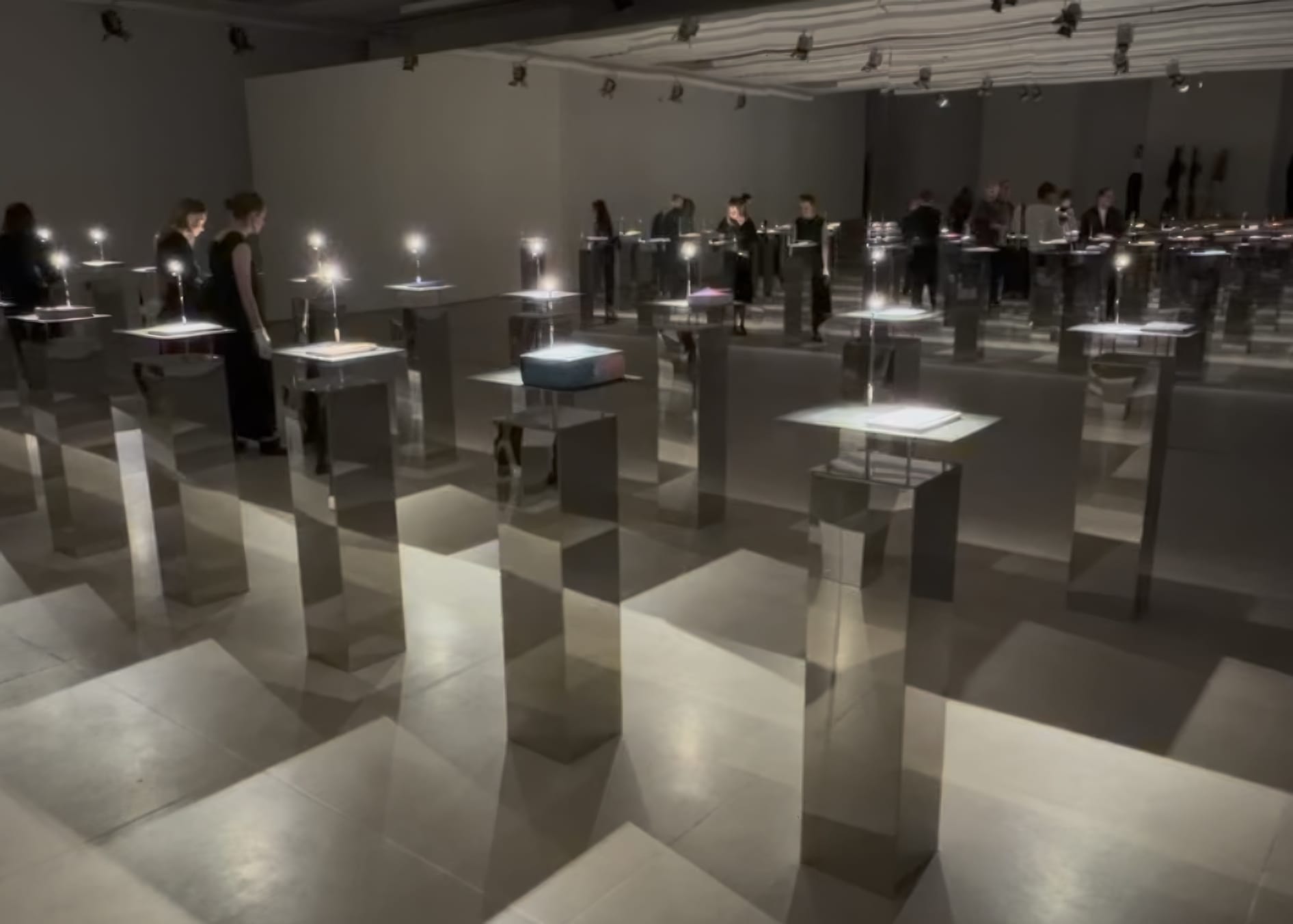
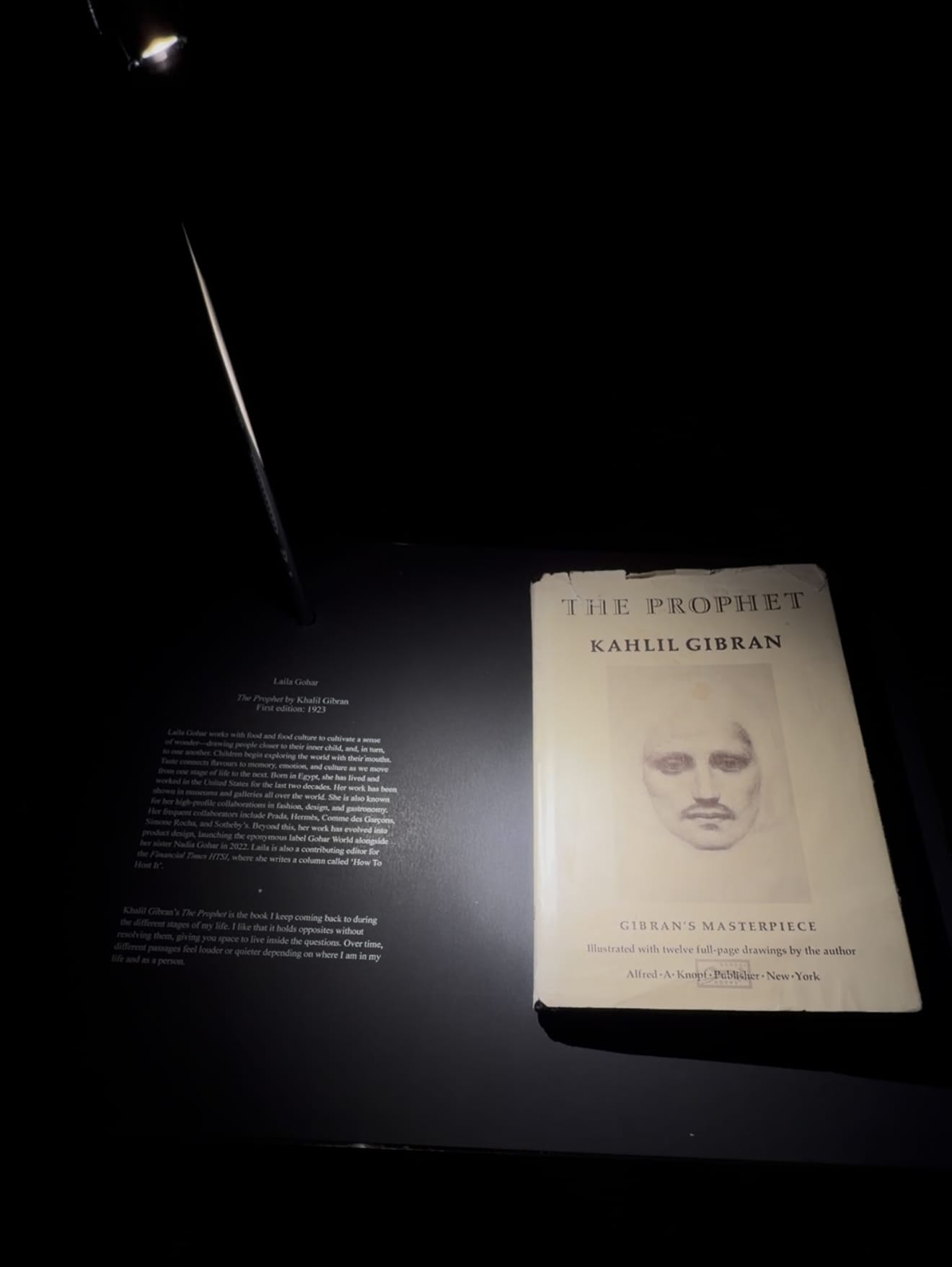
Under the direction of Simone Bellotti, the brand’s Milan headquarters is stripped back to a near-monastic rhythm of chrome plinths and isolated pools of light, each one holding a single book. Sixty in total, drawn from a cross-disciplinary network of creatives spanning art, design, literature, and film. The installation, titled Reference Library, is developed in collaboration with Apartamento founders Nacho Alegre and Marco Velardi, and it resists the expected grammar of design week. There are no products to launch, no objects to decode—only sources.
Bellotti traces the origin of the project to a conversation last September. “It started with the guys from Apartamento—Marco and Marco Velardi and Nacho Alegre,” he explains. “They told me about this idea, and I thought it was very interesting. We have been working on it since that moment, and I’m very happy now to see the result.” What has emerged is less an exhibition than a recalibration of attention.
Visitors move through the space with a kind of enforced patience, each book positioned on its own pedestal, illuminated by a solitary reading lamp. The gesture is deliberate. In a week defined by movement, Jil Sander asks for pause.

It’s really great to see how people are curious about something that looks so normal—something that was part of our life. Now it feels extraordinary.
– Simone Bellotti
The premise is deceptively simple: a library. But the execution reframes it as a human system of discovery—an analogue counterpoint to digital saturation. “It’s like a search engine, but made by humans,” Bellotti says. “You can take your time, go deeper, be curious. You might discover something new, or maybe find the book of your favorite artist.” The comment lands with quiet precision. In an industry increasingly mediated by speed and surface, the proposition is almost radical.
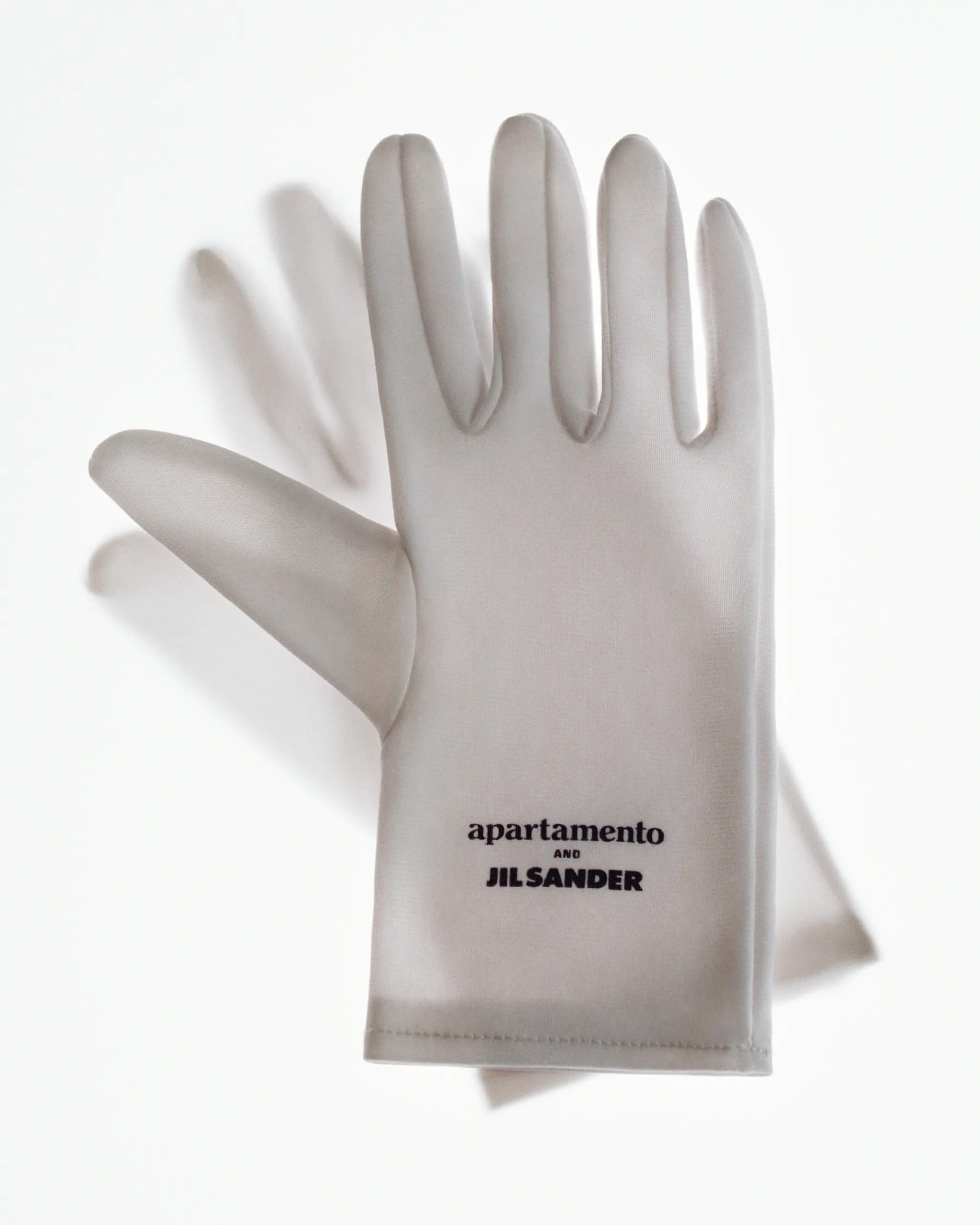
The ritual extends to the details. The ritual extends to the details. Visitors are admitted in measured intervals, and given white gloves—part precaution, part punctuation—turning the simple act of reading into something closer to ceremony, before approaching the books—an understated nod to both preservation and reverence. The act of reading becomes physical again, slowed down, slightly ceremonial. Even the gloves, which visitors keep, function less as merchandise than as a trace of participation.
What distinguishes Reference Library is not just its restraint, but its alignment with Jil Sander’s broader cultural positioning. For Bellotti, the project is not a departure but a return. “The brand was always connected to culture—literature, photography, architecture, design,” he says. “So it feels natural to start this kind of conversation again.” It is a statement that reframes minimalism not as aesthetic reduction, but as intellectual focus.
There is, too, a subtle recalibration of what a fashion house can offer during Salone. While others present outcomes, Jil Sander turns to origins—the references, influences, and personal canons that shape creative work before it becomes visible. It is less about authorship than about lineage.
In practice, the effect is disarming. A room of books—familiar, unassuming—rendered with the same precision and care as a runway collection. And in that shift, Bellotti exposes a quiet tension: what was once ordinary now reads as rare.
In a week built on acceleration, Jil Sander slows the room down—and, for a moment, that is the most compelling gesture of all.