Review of Zimmermann High Summer 2026 Ad Campaign by Creative Director Nicky Zimmermann with Photographer Lachlan Bailey with models Rosalieke Fuchs
There is a temptation, when a collection draws heavily from vintage references, to judge it by the accuracy of its nostalgia. Zimmermann’s High Summer 2026 campaign resists that impulse. Rather than reconstructing the 1970s, the campaign filters the decade through the brand’s distinctly contemporary lens, creating images that feel remembered rather than replicated.
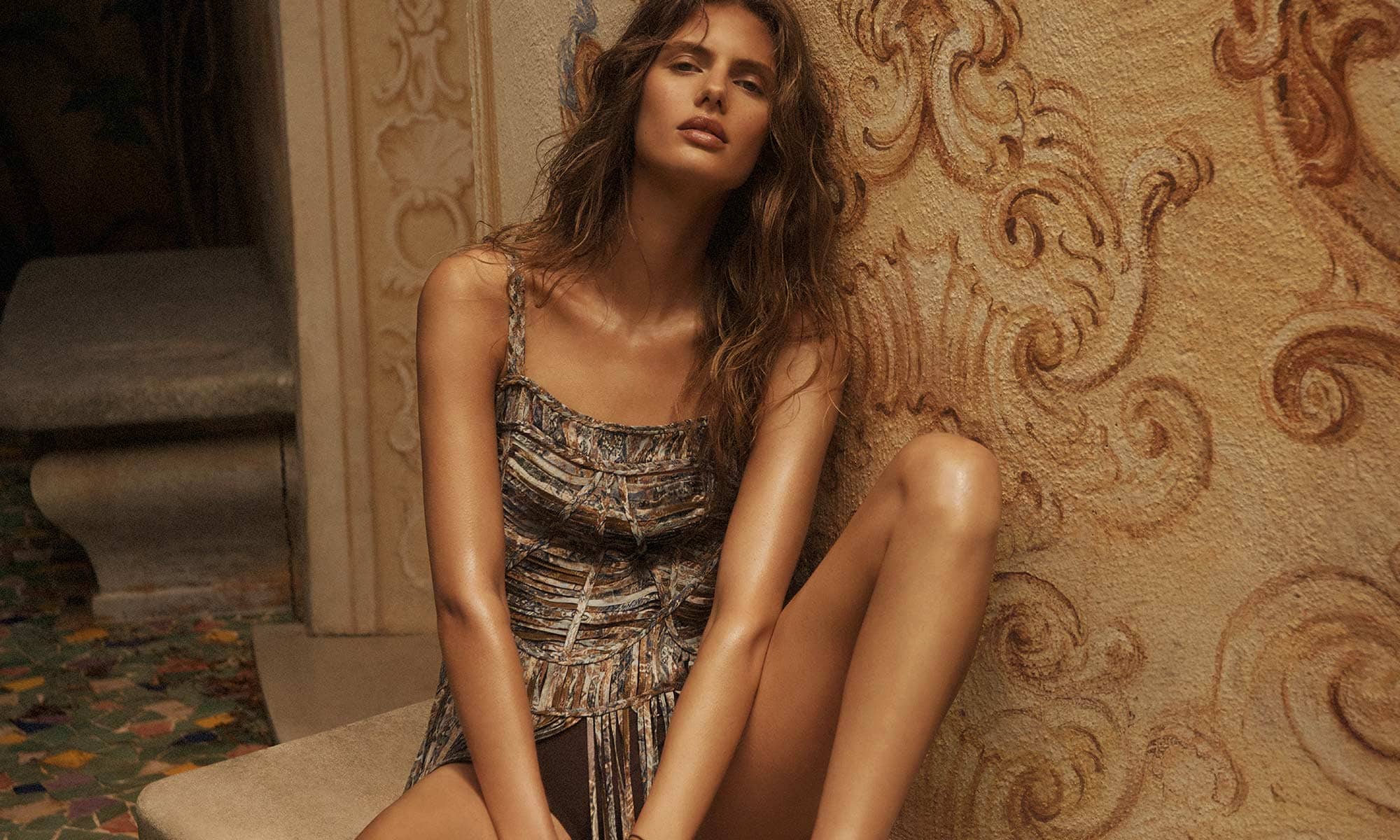
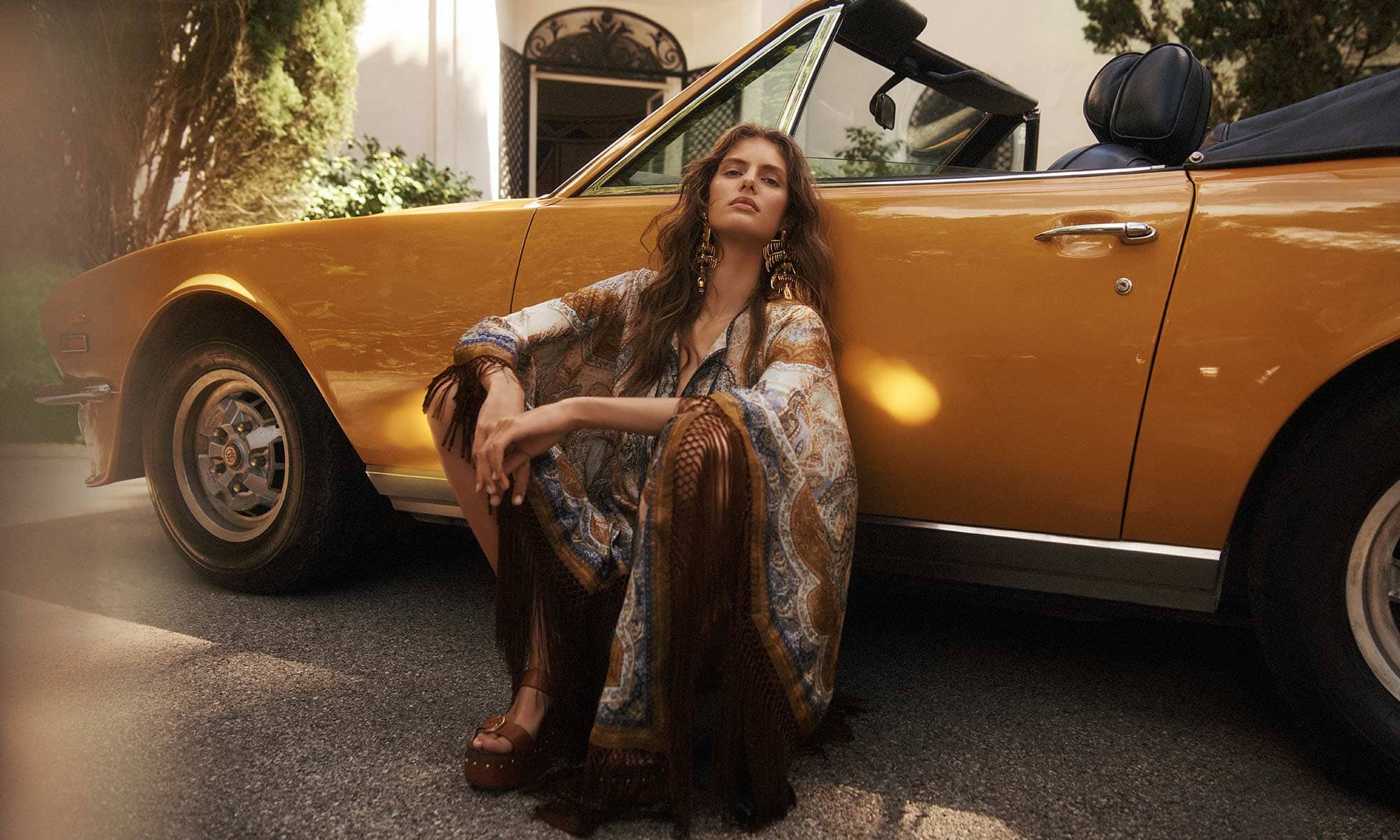
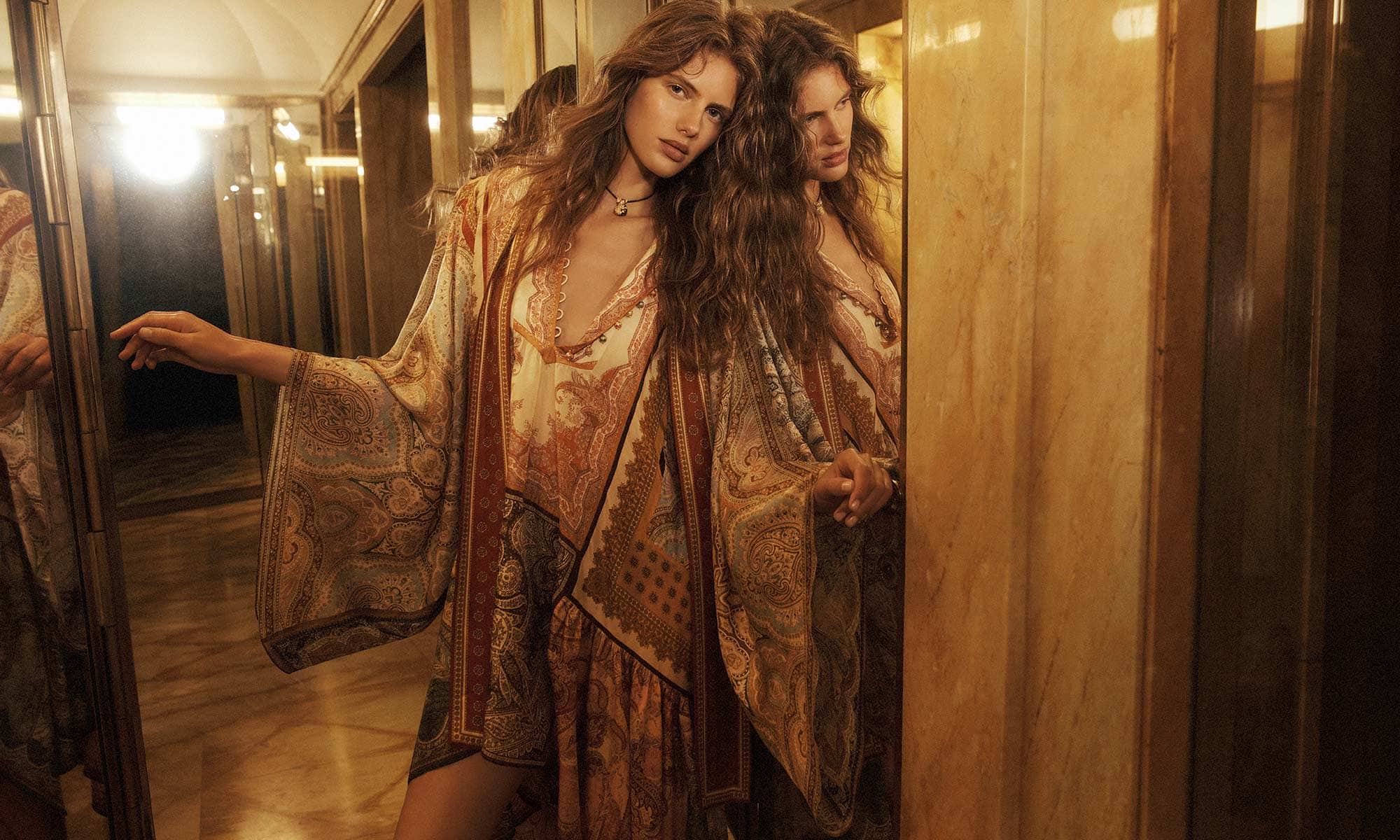
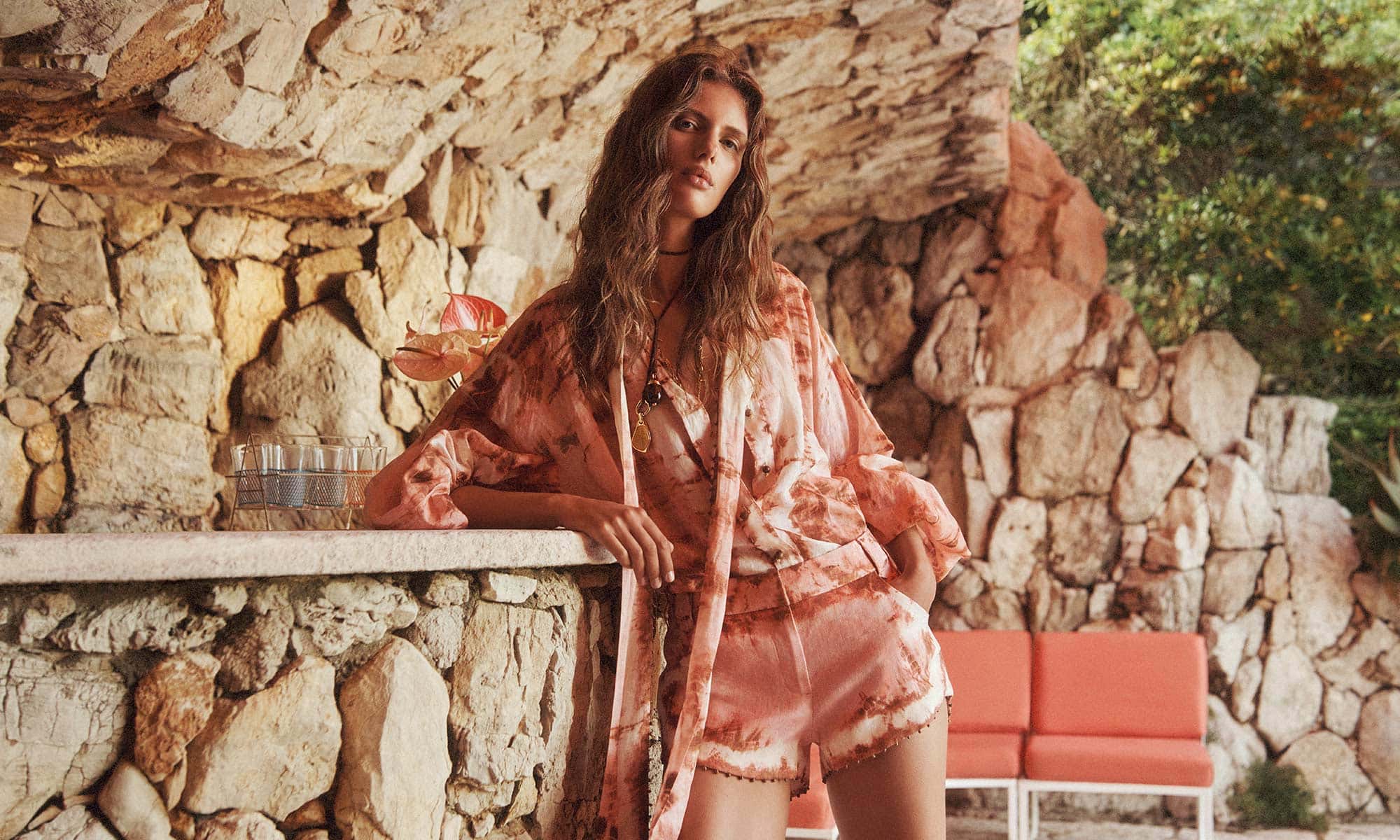
Photographed by Lachlan Bailey, the campaign unfolds across a Mediterranean villa where warm interiors, sunlit courtyards, textured stone walls, and a mustard-yellow vintage convertible establish an atmosphere suspended between holiday memory and cinematic fiction. Bailey avoids postcard romanticism. Instead, his images possess a quiet intimacy, allowing architecture, natural light, and carefully controlled color to support the clothing without overwhelming it. Every frame feels inhabited rather than staged, as though the viewer has entered a private moment rather than a constructed fashion narrative.
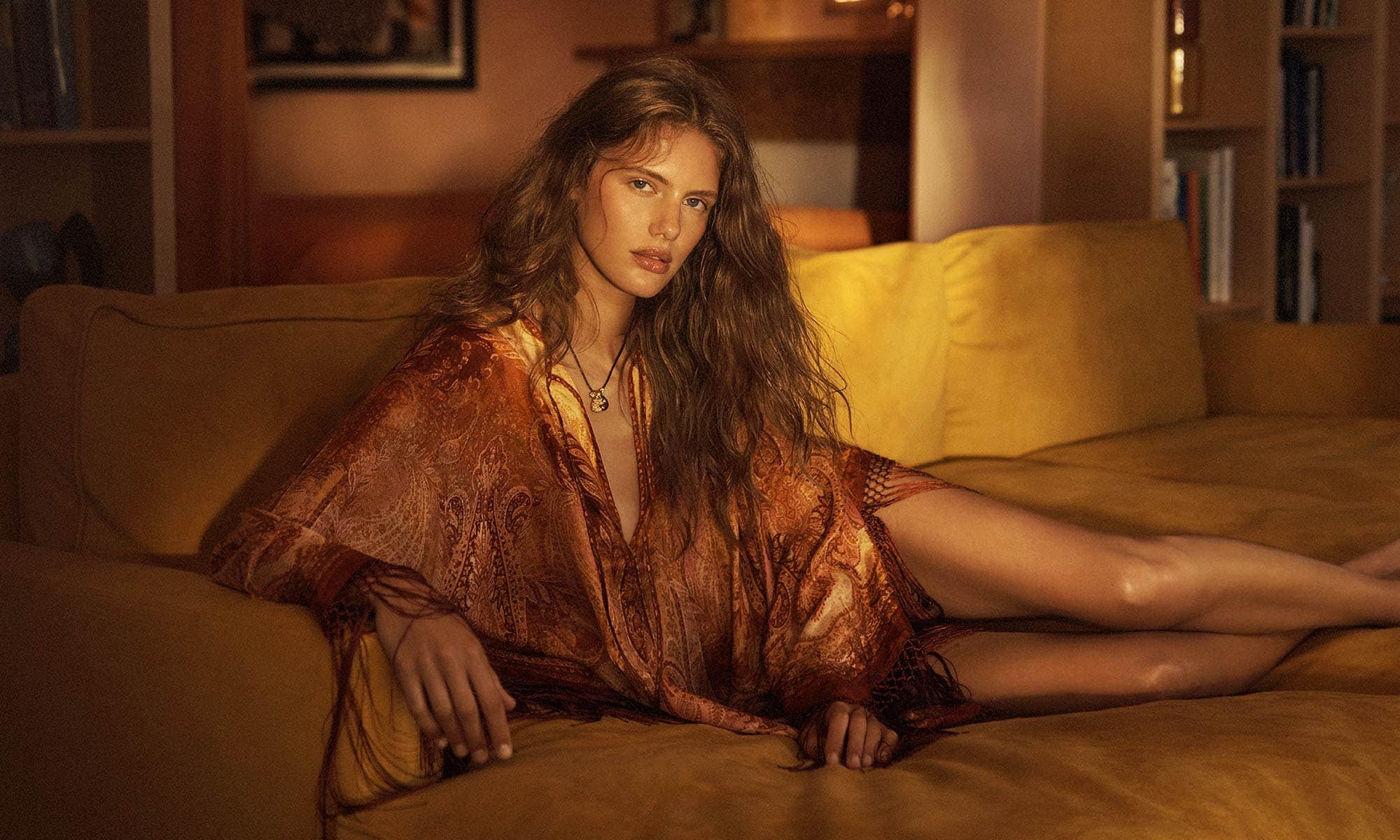
At the center of the campaign is Raffaela Consentino, whose restrained performance gives the imagery its emotional coherence. She rarely projects toward the camera. Instead, her gaze drifts beyond it, her posture remains relaxed, and her movement feels instinctive rather than choreographed. This absence of overt performance reinforces one of Zimmermann’s enduring strengths: femininity is communicated through ease rather than spectacle. Consentino does not perform glamour; she simply occupies it.
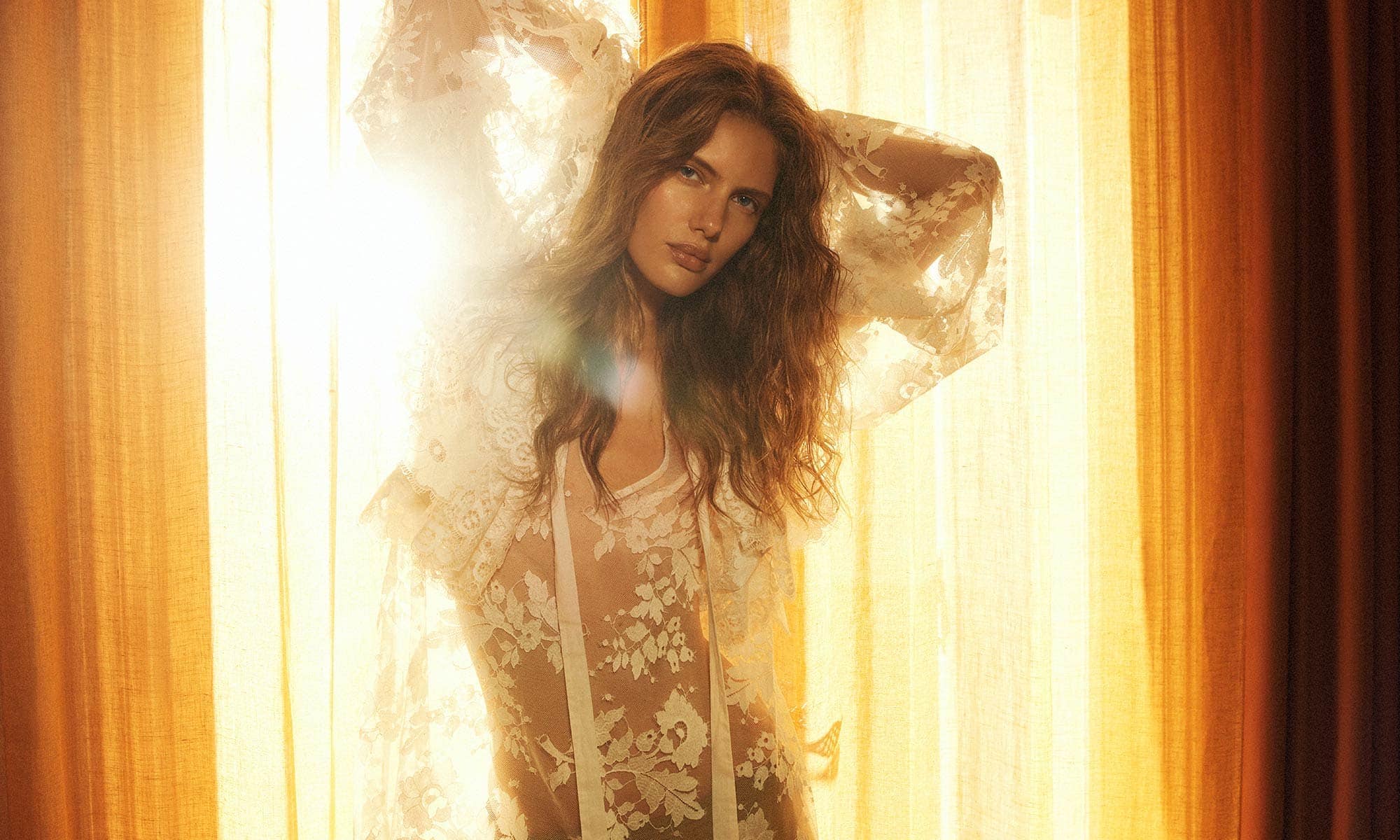
That sense of ease allows the collection itself to become the protagonist. Flowing silk scarf prints, washed tie-dyes, dramatic fringe, airy patchworks, and handcrafted macramé evoke the free-spirited vocabulary of 1970s dressing without becoming overly referential. The styling resists obvious period cues, instead balancing vintage motifs with clean silhouettes and lightweight construction that keep the collection grounded in the present. Nostalgia functions as texture rather than destination.
The campaign’s visual rhythm reinforces that balance. Warm amber interiors transition to bright Mediterranean exteriors before returning to intimate domestic spaces, creating a sequence that mirrors the pace of an endless summer day. Mirrors quietly double the model’s presence without introducing psychological tension, while the recurring golden automobile becomes less a symbol of luxury than one of movement and escape. Even when photographed indoors, the images feel open, suggesting that freedom exists not through dramatic landscapes but through atmosphere.
Color plays an equally important role. Bailey works almost exclusively within a palette of sun-faded terracottas, honey golds, soft corals, sand, and muted blues. The resulting warmth creates remarkable consistency across the campaign, allowing every image to feel part of the same visual memory. Nothing appears overly saturated or aggressively polished. Instead, the photographs carry the softness of late afternoon light, reinforcing the campaign’s emotional rather than documentary quality.
What ultimately distinguishes the campaign is its confidence in restraint. Contemporary luxury campaigns often compete through increasingly elaborate concepts, cinematic narratives, or unexpected casting. Zimmermann chooses a quieter approach. There is no dramatic storyline, no overt symbolism, and little attempt to surprise. Instead, the campaign builds its identity through consistency. Every creative decision—from Bailey’s understated photography to Consentino’s natural presence and the carefully curated environment—supports the same emotional proposition.
That consistency is also where the campaign encounters its only limitation. Because every image operates within a similar emotional register, moments of genuine tension or visual disruption are largely absent. The photographs are consistently elegant, but rarely unexpected. For a brand whose aesthetic language is already so clearly established, introducing a single image that challenged the campaign’s otherwise serene rhythm might have created a stronger sense of progression without compromising its identity.
Even so, Zimmermann understands something increasingly valuable about contemporary luxury: nostalgia resonates most powerfully when it feels lived rather than performed. High Summer 2026 is not interested in recreating another era with historical precision. Instead, it distills the emotional qualities associated with it—freedom, warmth, ease, and escape—into a visual language that feels unmistakably contemporary. The result is a campaign that demonstrates that looking backward does not require abandoning the present. Sometimes the most convincing form of nostalgia is the one that feels as though it never left.
Creative Director | Nicky Zimmermann
Photographer | Lachlan Bailey
Videographer | Thibault Della Gaspera
Models | Rosalieke Fuchs
Stylist | Romy Frydman
Hair | Stephane Lancien
Makeup | Jodie Boland
Casting Director | Anita Bitton