The Chief Executive Officer Told Shareholders Early Response To Demna’s Gucci Vision Has Been Encouraging While Jewelry Remains A Key Growth Opportunity Across The Group
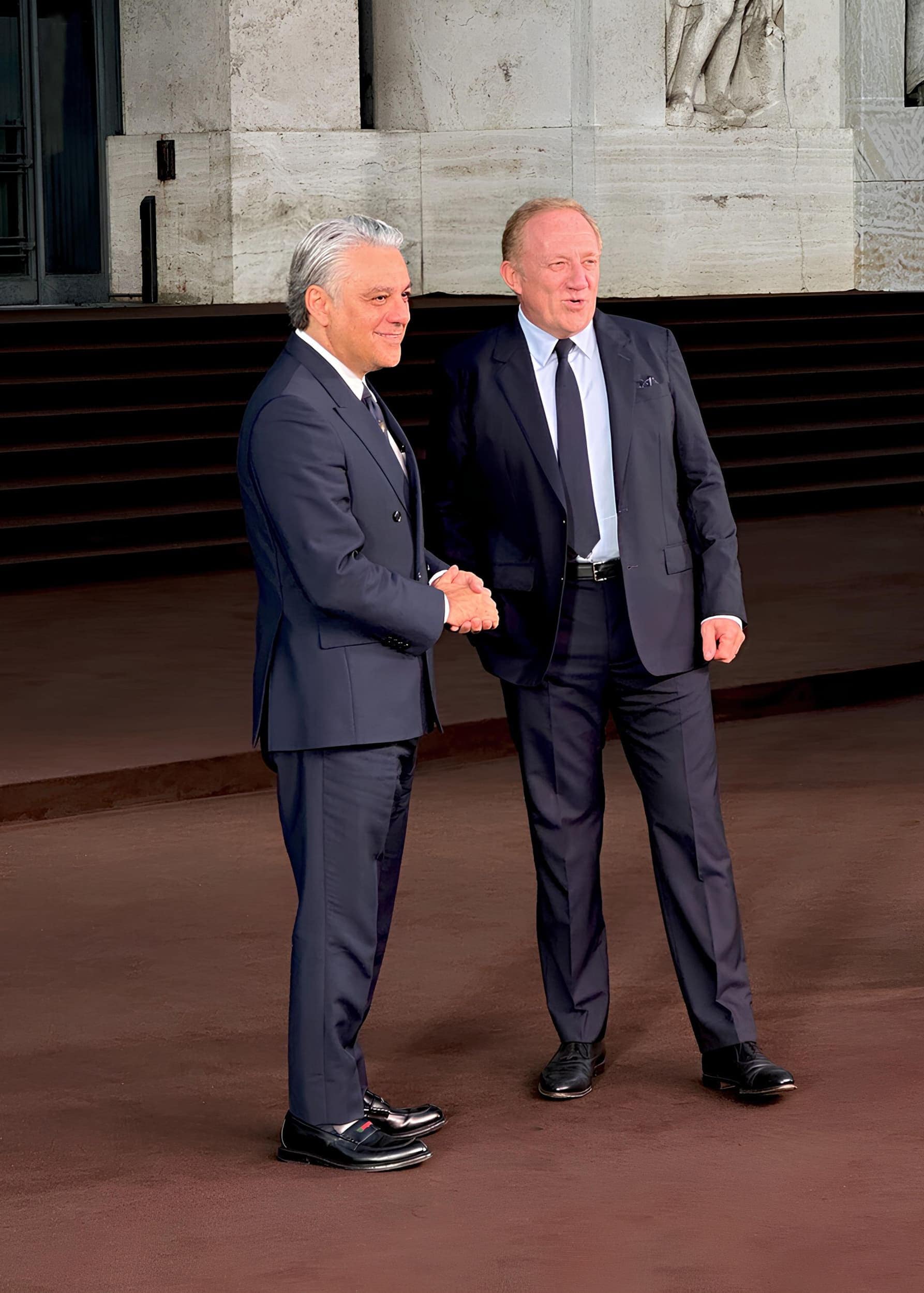
At Kering’s annual general meeting in Paris, Chief Executive Officer Luca de Meo used the nearly three-hour session to reinforce the strategic priorities he first outlined at the group’s Capital Markets Day in Florence, emphasizing Gucci’s turnaround, the expansion of jewelry, and a simplified operating structure designed to position the company for what he described as the “future luxury” landscape.
Less than a year into his tenure at the French luxury group, de Meo projected confidence in Kering’s long-term prospects despite ongoing challenges at Gucci and a broader luxury market slowdown. He argued that Kering’s streamlined organization, agility, and challenger mentality provide a competitive advantage as the sector evolves.
Gucci remains at the center of that strategy. De Meo reiterated plans to renovate more than two-thirds of the brand’s store network, with redesigned interiors intended to simplify product presentation, reinforce brand codes, and introduce dedicated spaces for fine jewelry. The initiative reflects a broader effort to elevate Gucci’s value proposition while creating new opportunities in categories that have proven more resilient than fashion.
The executive offered an optimistic assessment of Gucci’s creative reset under Artistic Director Demna, whose arrival has become one of the most closely watched transitions in luxury fashion.
“Above all, we’ve returned to the essence of the house, to what makes it immediately recognisable and culturally pertinent,” de Meo told shareholders.
According to de Meo, early reactions to Demna’s Famiglia and Primavera collections have been “very encouraging,” particularly among influential clients. He pointed to strong engagement surrounding Demna’s February runway debut in Milan and Gucci’s recent Times Square takeover in New York, both of which generated significant visibility for the brand.
“For the first time in years, Gucci’s fashion show was number one,” de Meo said, referring to the collection’s media impact performance.
Beyond creative direction, Kering is also reviewing Gucci’s industrial processes, focusing on product quality, operational efficiency, and speed to market. The company plans to continue reducing Gucci’s store footprint from approximately 600 locations to around 450 while investing heavily in remaining flagship locations. Future store concepts, currently under development with Demna’s involvement, are expected to feature a distinctly Italian identity and expanded experiential elements.
Jewelry emerged as another central theme of the meeting. De Meo described the category as highly resilient, emotionally driven, and underexploited within Kering’s broader portfolio. The group owns Boucheron, Pomellato, DoDo, and Qeelin, and executives see significant opportunity to leverage that expertise across its fashion houses.
A new jewelry division overseen by Chief Operating Officer Jean-Marc Duplaix is intended to pool resources and manufacturing capabilities across brands. De Meo suggested dedicated jewelry departments could eventually be introduced into roughly 120 Gucci flagship stores worldwide.
“We already have the locations, we already have the rental contract, we’ve already paid for it, we already have the traffic — what we’re missing is the collection,” he said.
The Chief Executive Officer also addressed speculation surrounding Kering’s future growth initiatives. The appointment of Laurent Kleitman, Group Chief Executive Officer of Mandarin Oriental, to Kering’s Board prompted questions about potential branded hospitality ventures for Gucci or Saint Laurent. De Meo dismissed the idea, arguing that higher-growth opportunities currently exist elsewhere.
Instead, he highlighted wellness and longevity as areas of future interest, referencing Kering’s recently announced partnership with L’Oréal as part of the broader 4 billion euro transaction between the two companies.
Financially, the meeting offered few new metrics beyond those presented in Florence. De Meo nevertheless reaffirmed his ambition to more than double Kering’s profitability by 2030. The goal follows a period in which recurring operating margin declined from 27 percent in 2022 to 11 percent in 2025 as both Gucci and the Chinese market lost momentum.
The executive also discussed Gucci’s recently announced title sponsorship of the Alpine Formula One team beginning in 2027, a partnership he helped facilitate through his previous leadership role at Renault. Beyond branding visibility, de Meo said the relationship offers valuable opportunities for client engagement across key markets including Miami, Singapore, and Milan.
“I think we negotiated a pretty good contract, that’s going much further than putting a sticker on a car,” he said.
While acknowledging continued macroeconomic uncertainty, de Meo’s message to shareholders remained focused on rebuilding desirability, strengthening brand identities, and restoring profitability across Kering’s portfolio. For now, much of that effort rests on Gucci’s ability to convert renewed cultural relevance into sustained commercial momentum.