At Pitti Uomo, The Designer Reflects On Her First Standalone Menswear Collection, The Characters That Shaped It, And The Lasting Influence Of Her Father John Rocha
By Kenneth Richard
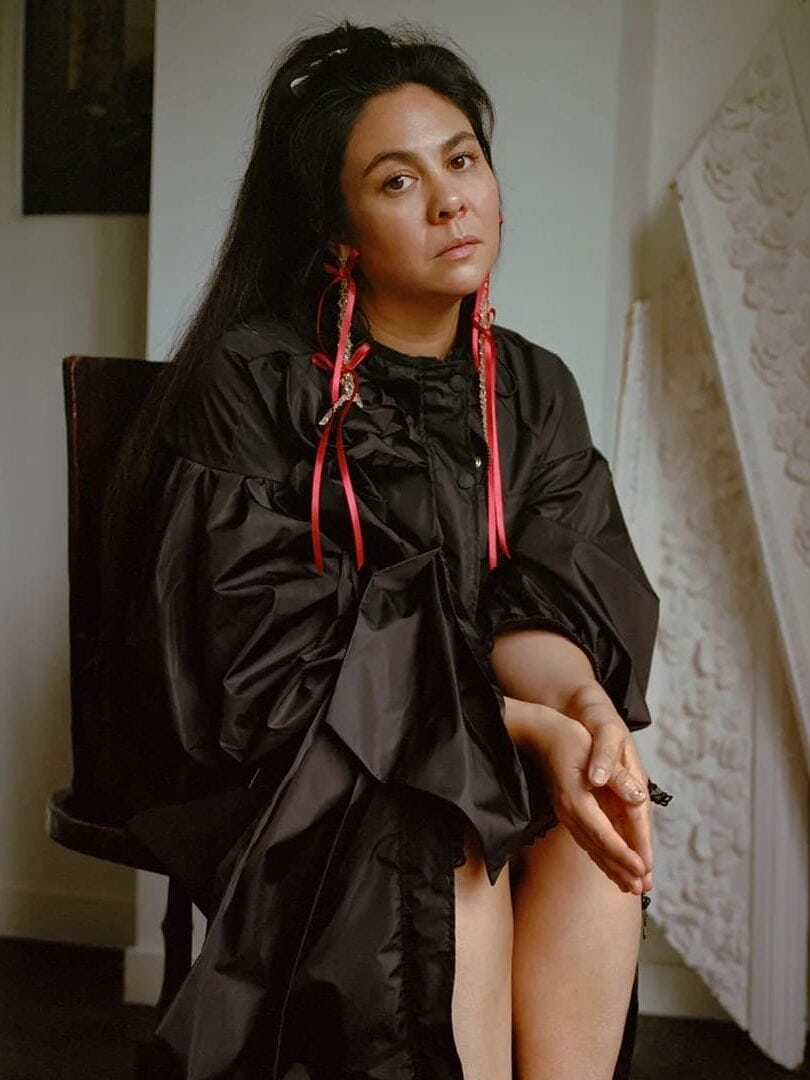
For more than a decade, Simone Rocha has built one of fashion’s most distinctive worlds. Through collections that blend romance with rebellion, delicacy with strength, and tradition with subversion, she has developed a visual language instantly recognizable as her own.
Menswear has been part of that universe for several seasons. But in Florence this week, during Pitti Uomo, Rocha gave it a stage entirely of its own.
Presenting her first standalone menswear collection at Teatro della Pergola, one of Italy’s oldest and most storied theaters, the designer transformed the venue into both a runway and a performance. Guests were seated directly on stage, surrounded by the architecture and mechanics of the theater itself, becoming participants in a presentation that blurred the line between audience and performer.
For Rocha, the setting was more than a backdrop. It became part of the collection’s narrative.
“The spotlight is on us, but we’re in the more undone space,” she reflected after the show. “I wanted to bring people onto the stage. There was something about the perversity of that that interested me.”
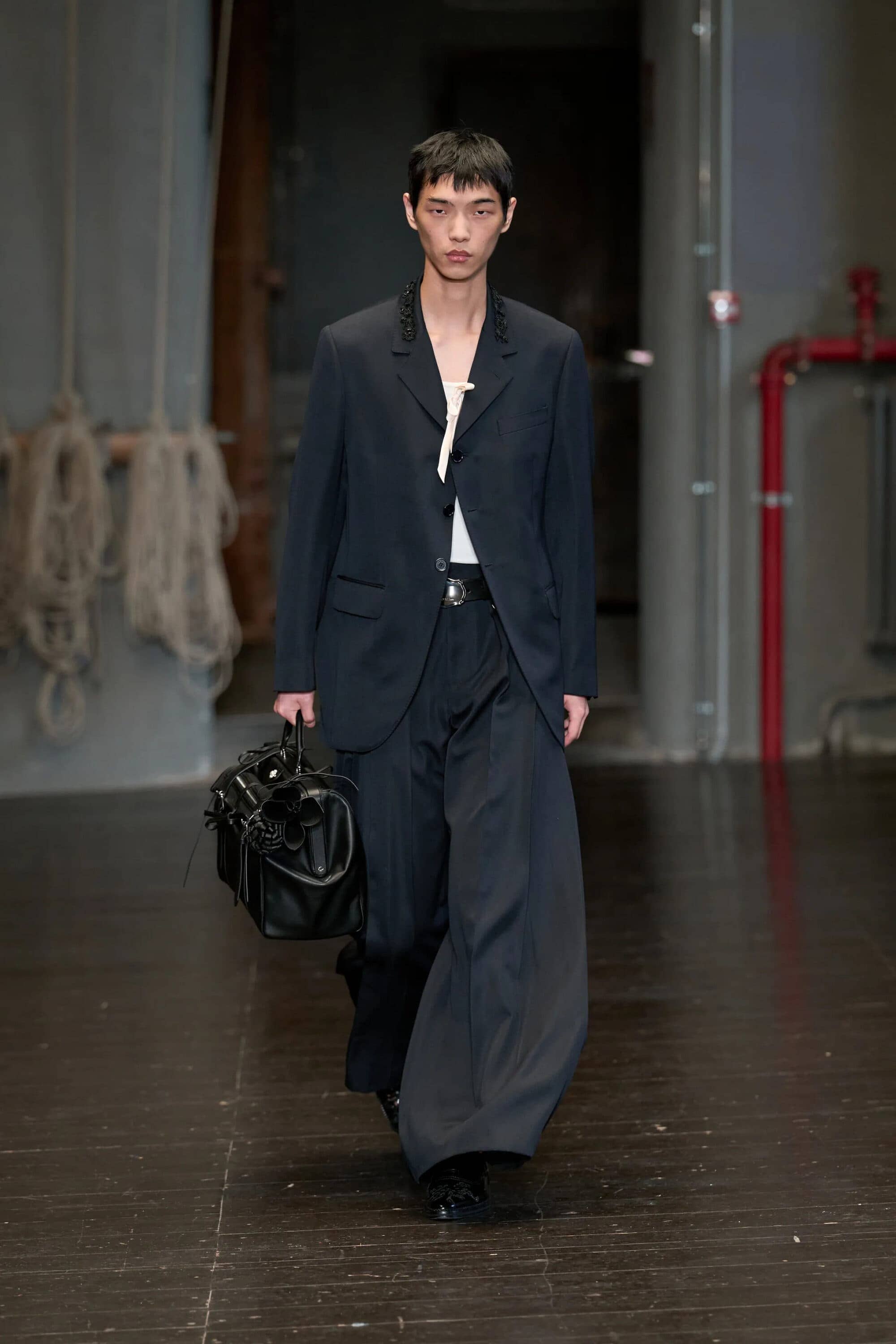
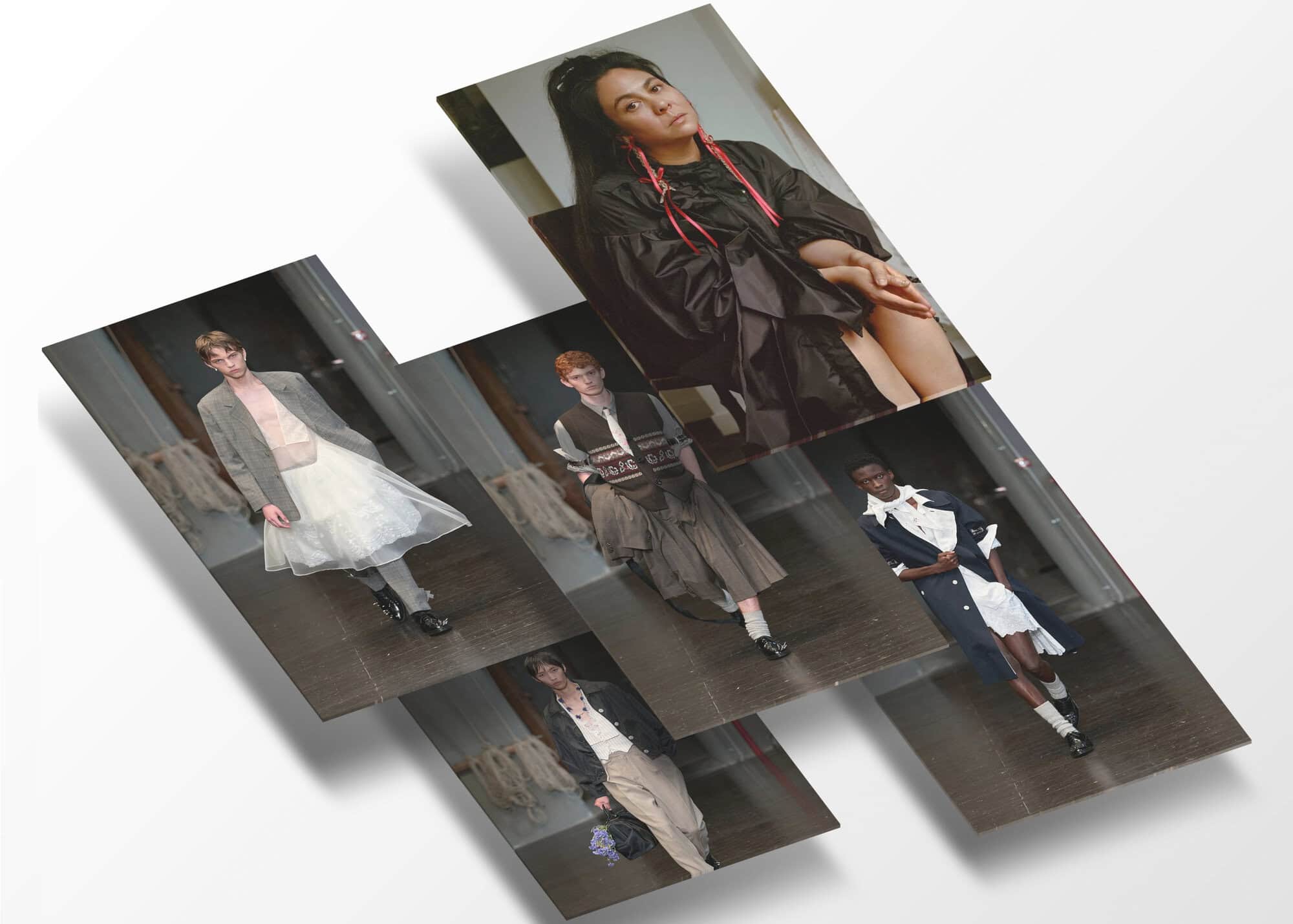
The collection itself emerged from a series of character studies rather than traditional muses. Rocha imagined a cast of men moving through her world: painters, workers, performers, and craftsmen. Each offered a different perspective on masculinity and a different way to explore the possibilities of dress.
I wanted to see who I was and how I would travel here. How the man would be in this center stage.
– Simone Rocha
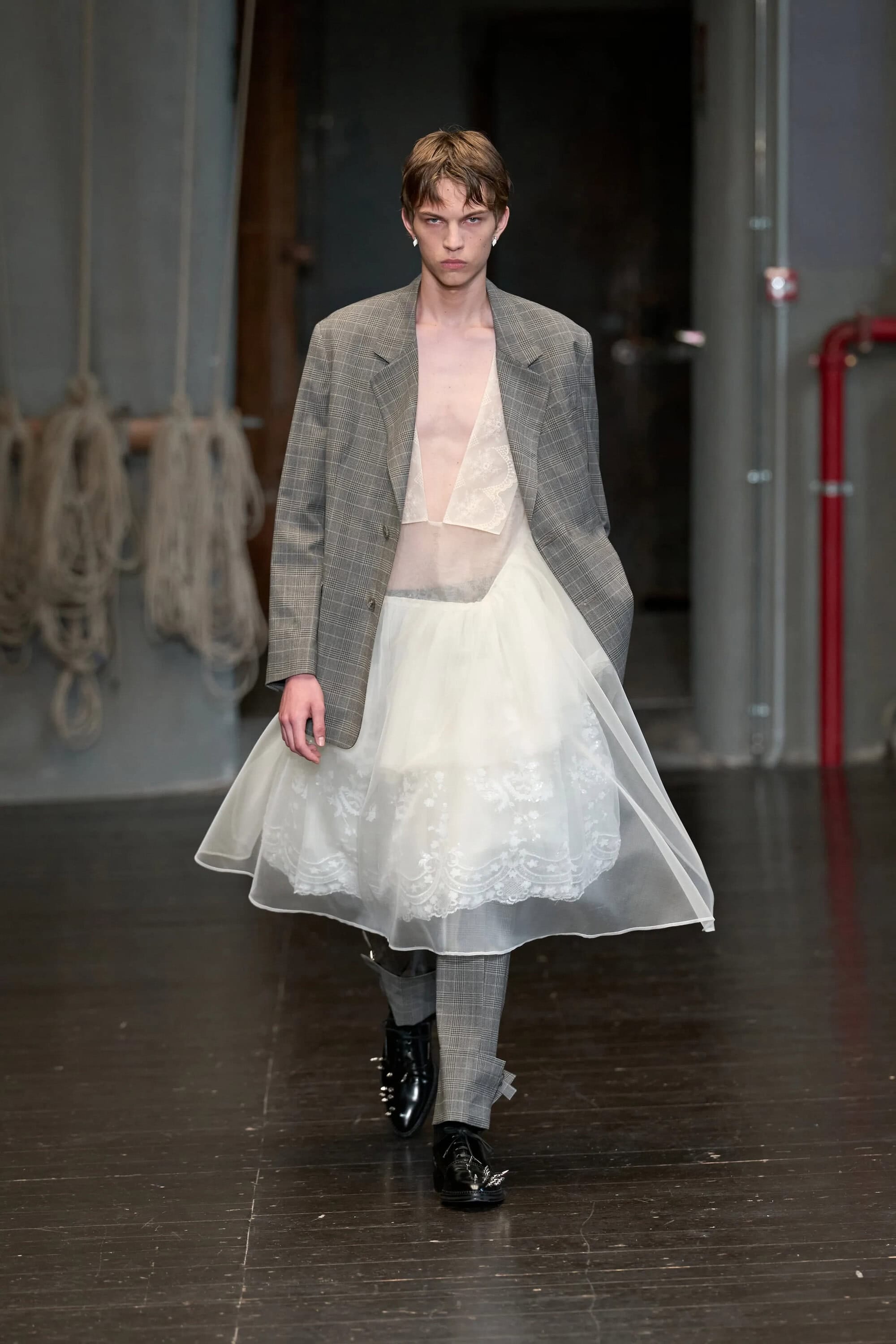
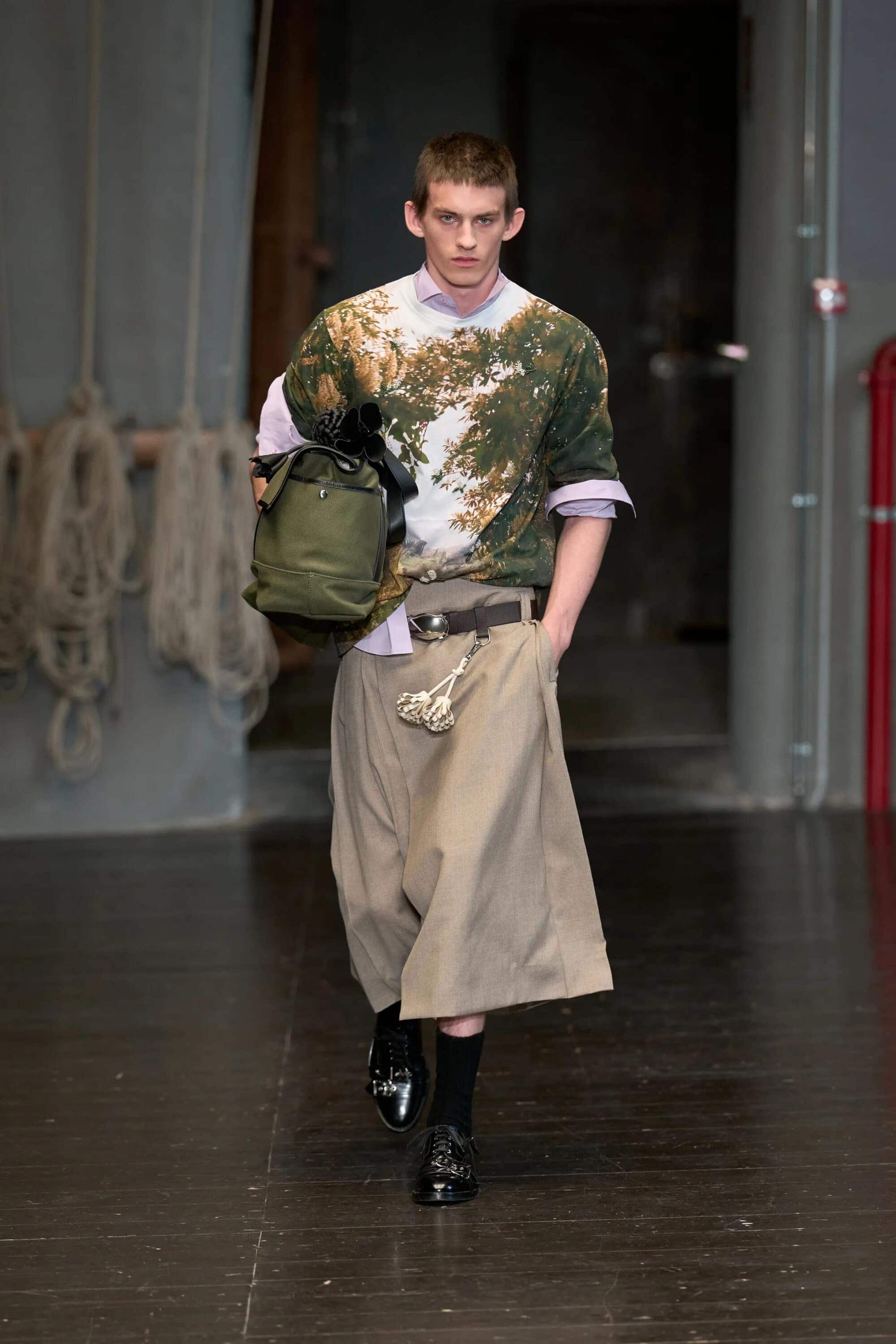
Tailoring became the foundation. Jackets were dissected and reconstructed. Kilts were integrated into shorts. Aprons and pinafores emerged from suiting and workwear references before being transformed through Rocha’s signature lens. Throughout the collection, garments revealed their own construction, exposing linings, underpinnings, and hidden details that became decorative elements in their own right.
The result felt both familiar and new. While unmistakably Simone Rocha, the collection proposed a version of masculinity that was less concerned with convention than with emotion.
I really design clothes with people in mind. Whether they’re men or women, it’s about putting emotion into clothing.
– Simone Rocha
That philosophy has shaped her approach to menswear from the beginning. Rather than simply translating her womenswear codes into another category, Rocha has used the process to examine what she wants to contribute to the menswear conversation and where her voice belongs within it.
“What has been really interesting is forcing myself to slow down and look at what I want to propose as a masculine wardrobe and then carve out space for myself in this place.”
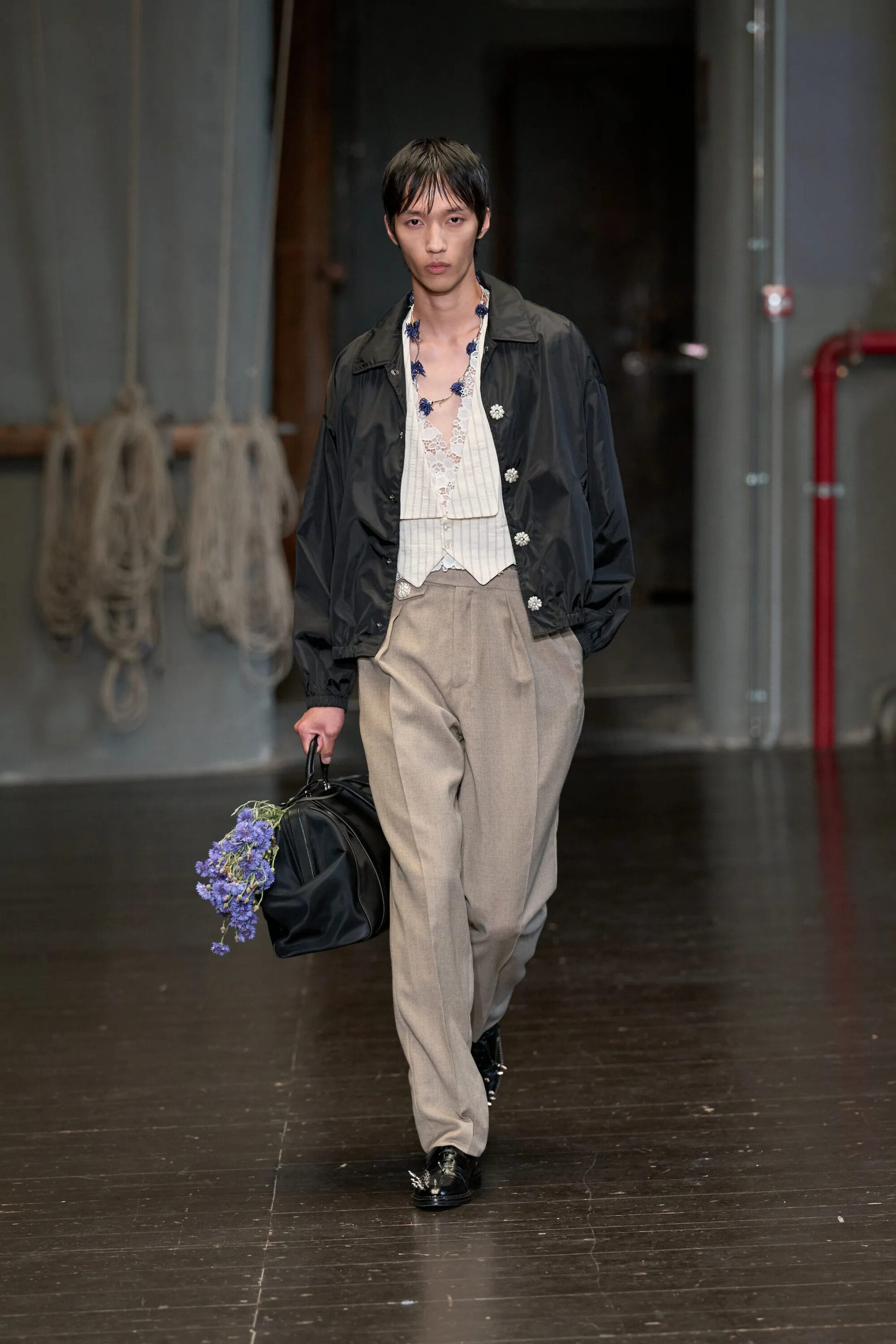
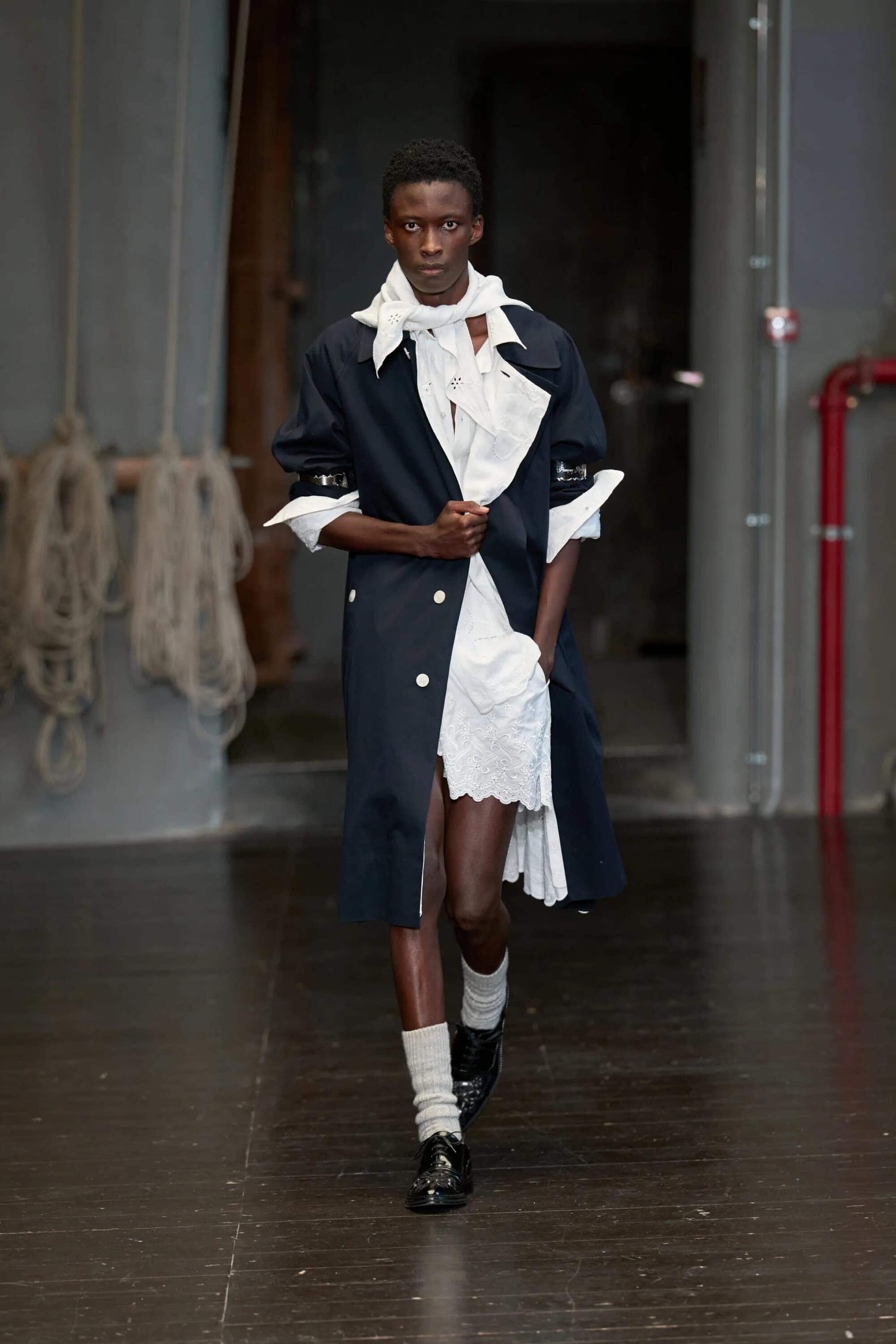
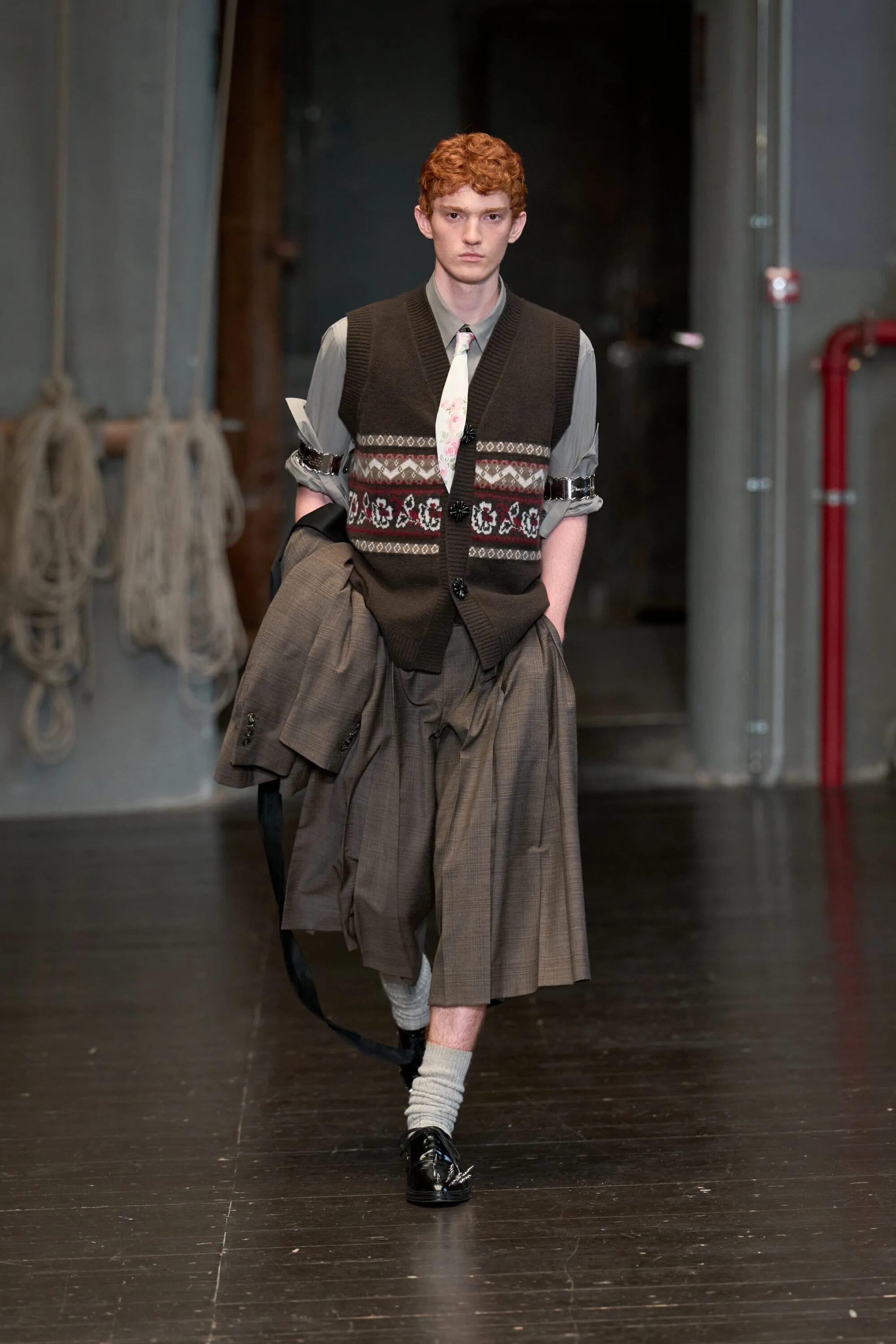
Throughout the collection, intimacy remained a recurring theme. Broderie anglaise appeared as both structure and embellishment. Floral linings referenced the aging costume trunks Rocha discovered while exploring the theater. Cornflowers, inspired in part by Florence itself and by the romantic imagery of A Room with a View, became a motif that appeared fresh, embroidered, beaded, and abstracted across the collection.
The flowers served as a reminder that Rocha’s menswear exists within the same emotional universe as her womenswear while maintaining its own identity.
What’s been so exciting about this is showing another leg of my world. They are connected, but he stands on his own two feet.
– Simone Rocha
Among those watching from the audience were Rocha’s parents, including designer John Rocha, whose own career helped shape her understanding of fashion long before she launched her namesake label.
The influence was particularly resonant in Florence, where Rocha was presenting her first major menswear statement.
“My father used to show menswear in Paris when I was younger, and I used to travel with him and the team,” she recalled. “It was always very strict, but very refined.”
The memories remain vivid. She remembers the models, the discipline, the atmosphere surrounding the collections. More importantly, she remembers the craftsmanship.
There was always a hand. That’s been a big part of his work (John Rocha) and a big thing that I’ve inherited.
-Simone Rocha
It is perhaps the most meaningful connection between the two designers. While their aesthetics are distinct, both have built careers around the belief that clothing should carry evidence of the people who made it. Handwork, texture, and emotion remain central to each of their practices.
That inheritance was visible throughout Rocha’s Florence debut. From the manipulated tailoring to the intricate embellishments and the theatrical staging, the collection balanced precision with humanity.
As the final looks returned to the tailoring that opened the show—now softer, looser, and transformed by the journey—the collection completed the circular narrative Rocha had envisioned from the start. It was a fitting conclusion for a designer who has spent years developing her menswear vocabulary and who arrived in Florence ready to let it speak for itself.
The occasion may have marked a first standalone menswear collection, but it felt less like a departure than an evolution. A new chapter, certainly. Yet one deeply connected to the values that have always defined Simone Rocha’s work: craft, character, emotion, and the belief that fashion’s most compelling stories begin with people.