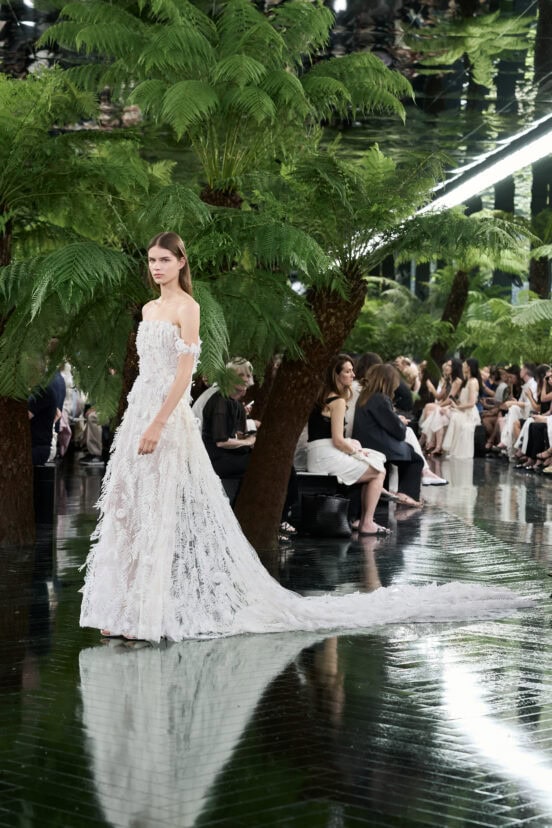
Codes Under Pressure
Review of Christian Dior Fall 2026 Couture Fashion Show
By Mackenzie Richard Zuckerman
There are few designers working today whose hand is as instantly recognizable as Jonathan Anderson’s. At Dior, that is both his advantage and his complication.
After a decade at Loewe, Anderson arrives at Dior with one of the most closely studied design languages in contemporary fashion: we’ve come to know him for surreal craft, softened eccentricity, historical play, object-like garments, and a gift for making the obvious feel strangely desirable. The industry knows that language well. It has celebrated it, absorbed it, and in many ways been reshaped by it. That makes his task at Dior especially delicate. The question is no longer whether Anderson has ideas. The question is whether those ideas can be absorbed deeply enough into Dior’s own codes to create something that feels specific to this house.
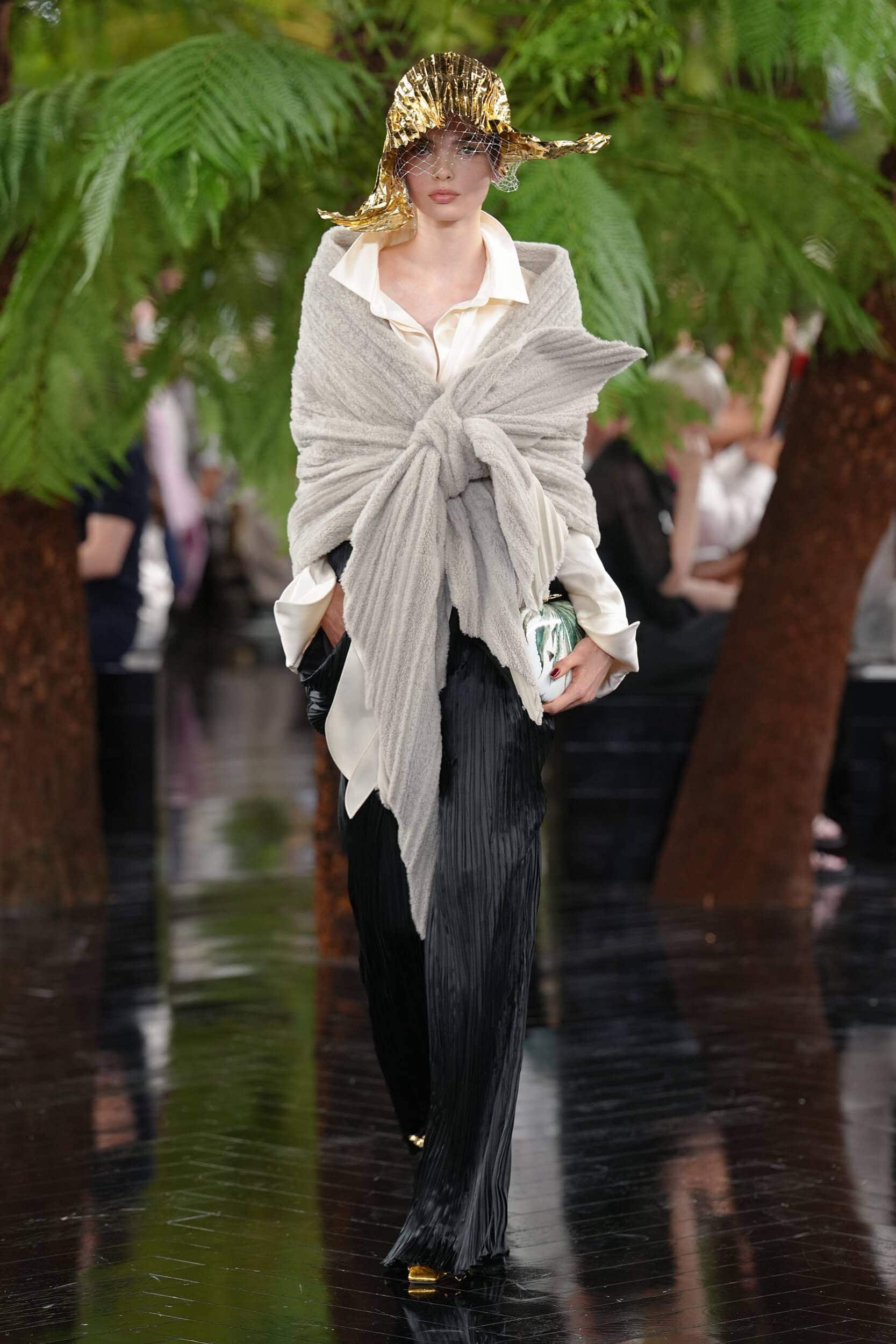
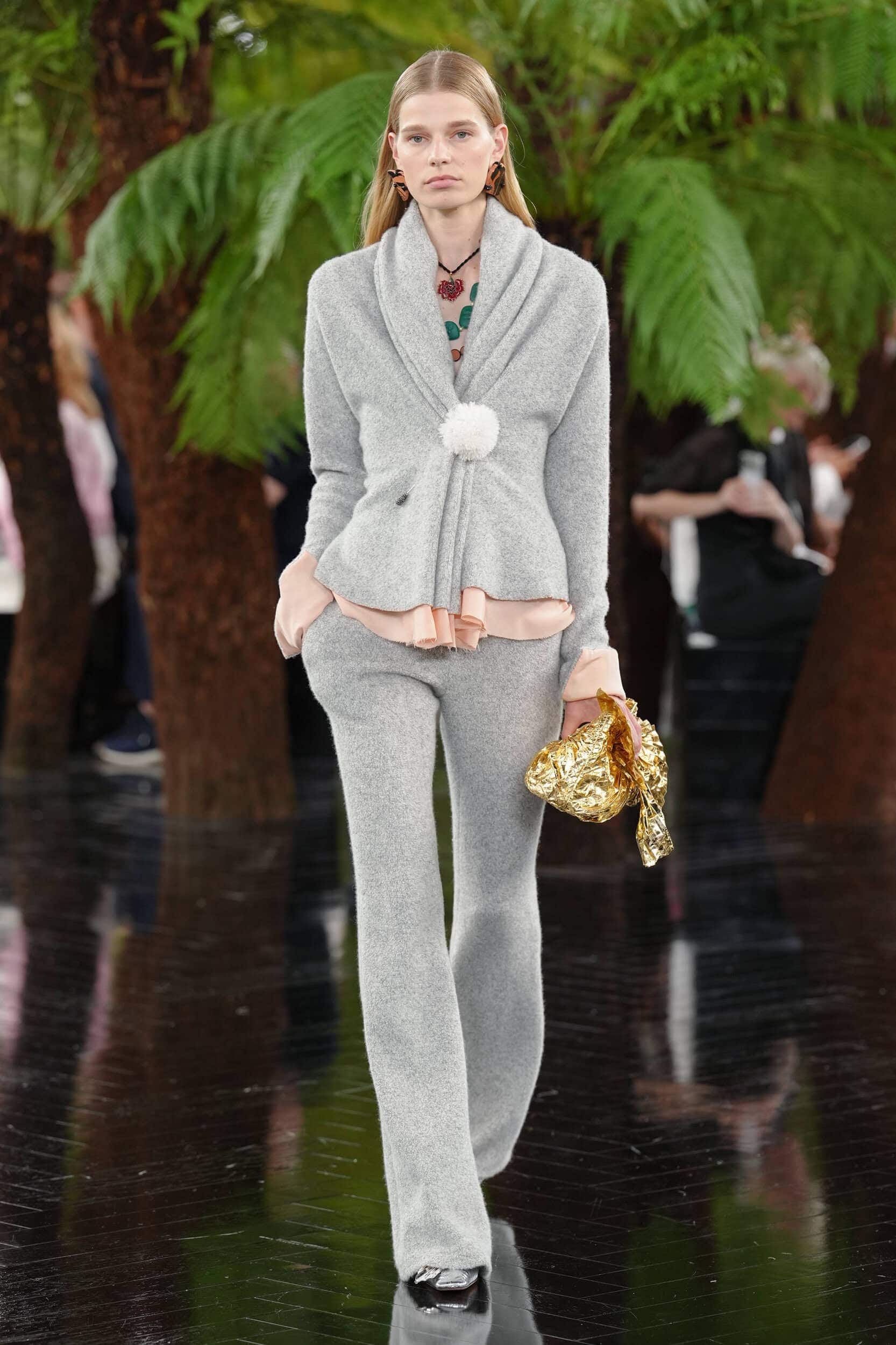
That tension ran through the collection, particularly in Anderson’s repeated return to the Bar jacket. Its presence gave the show a clear Dior anchor, and at times the silhouette became one of the more persuasive sites of exchange between his sculptural instincts and the house’s architecture. Yet repetition alone can only carry the conversation so far. The Bar jacket may establish proximity to Dior, but the larger challenge is whether its structure can generate a fuller design language around it. Here, it sometimes felt like the house code was being cited more often than fully metabolized.
For Fall 2026–2027 Haute Couture, Anderson approached Dior through the work of American sculptor Lynda Benglis, using couture as a laboratory for transformation. The concept was undeniably intelligent. Benglis’s practice, in which two-dimensional materials become sculptural form through knotting, pleating, molding, and surface manipulation, offers a natural parallel to couture. Fabric becomes volume. Surface becomes structure. The body completes the work.
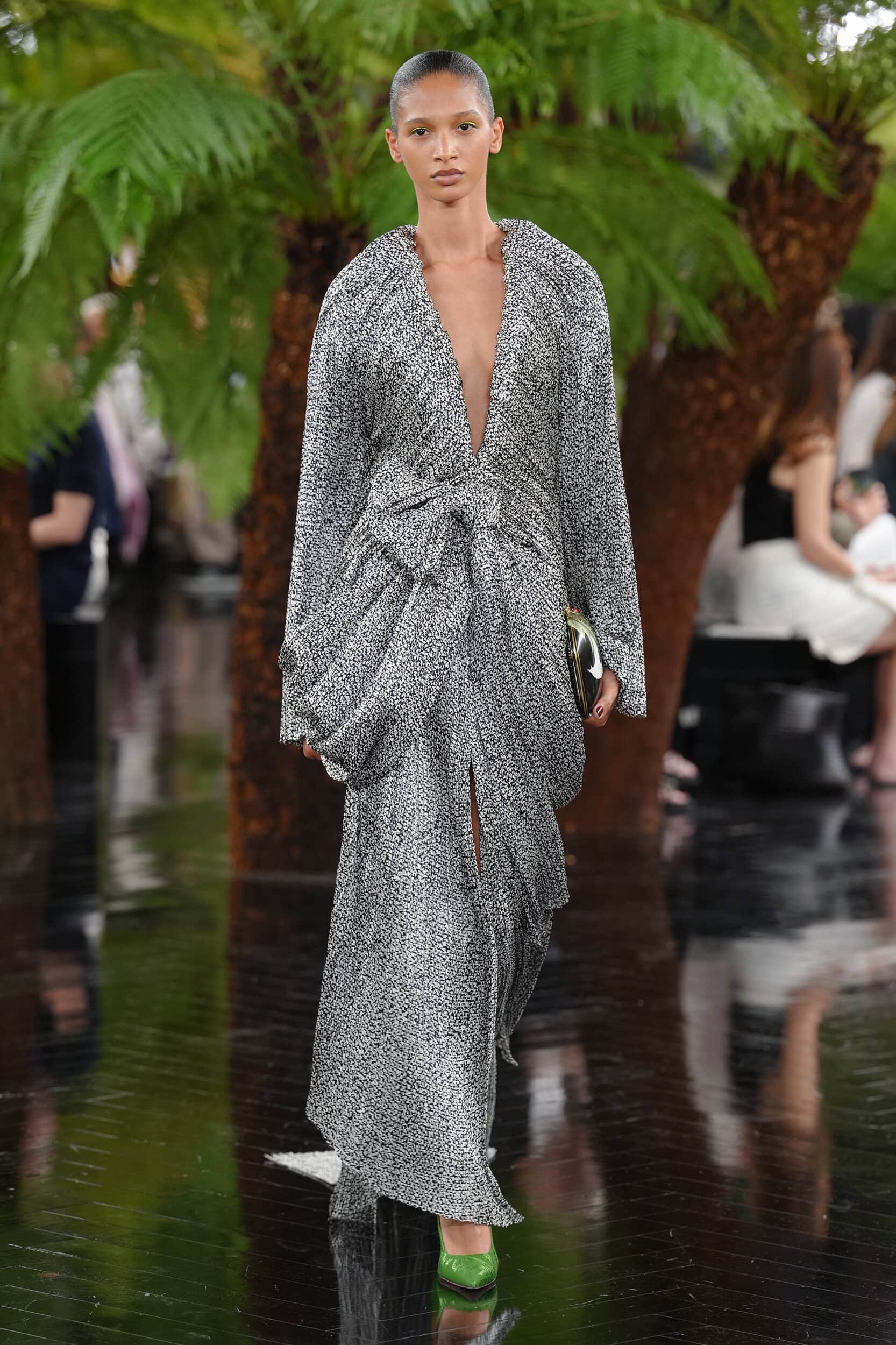
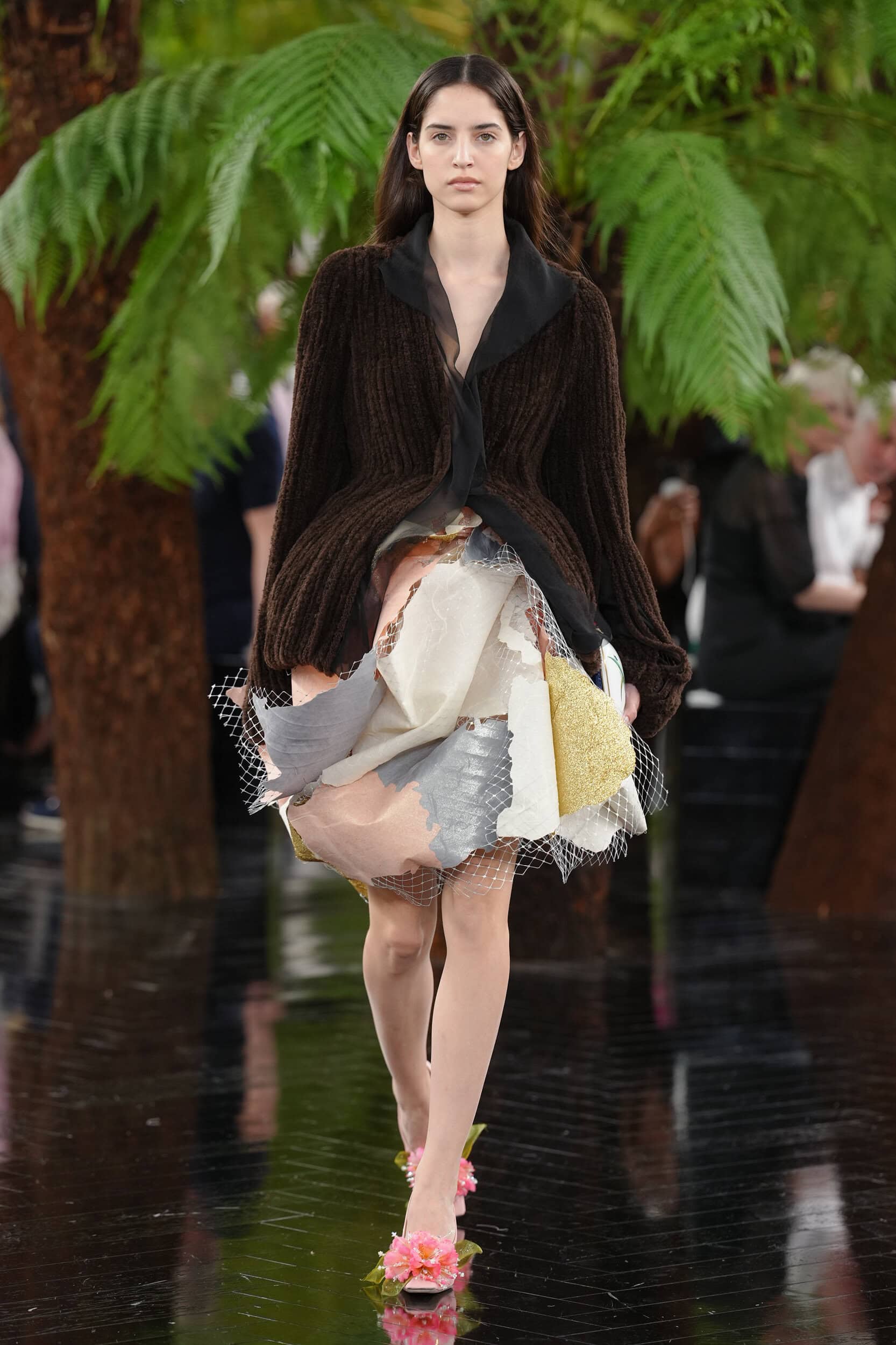
That framework helped explain much of what appeared on the runway: hand-plissé, draped bows, metallic and iridescent surfaces, soft silver netting that suggested chicken wire, and repeated gestures of twisting, knotting, folding, and fraying. The collection also moved through Benglis’s relationship with Ahmedabad, Indian chintz, her Peacock series, and the contrasting landscapes of Gujarat and Santa Fe. On paper, it was a rich and highly considered proposition.
On the runway, the emotional thread was harder to grasp.
That does not mean the collection lacked craft or intelligence. Quite the opposite. The workmanship was often extraordinary, and there were moments of real charm, oddness, and beauty throughout. Yet the collection asked the viewer to work hard to understand what was being proposed. The pieces seemed to belong to the same hand, though the larger story felt jagged. The puzzle pieces connected, but the picture they formed remained difficult to access.
Couture can absolutely reward complexity. It should. Still, it also needs desire, mythology, and emotional clarity. It needs to tell the audience what they are being invited to believe in. Here, the craft was visible. The research was clear. The invitation was more uncertain.
THE COLLECTION
THE VIBE
Couture Laboratory, Sculptural Whimsy, Dior in Translation
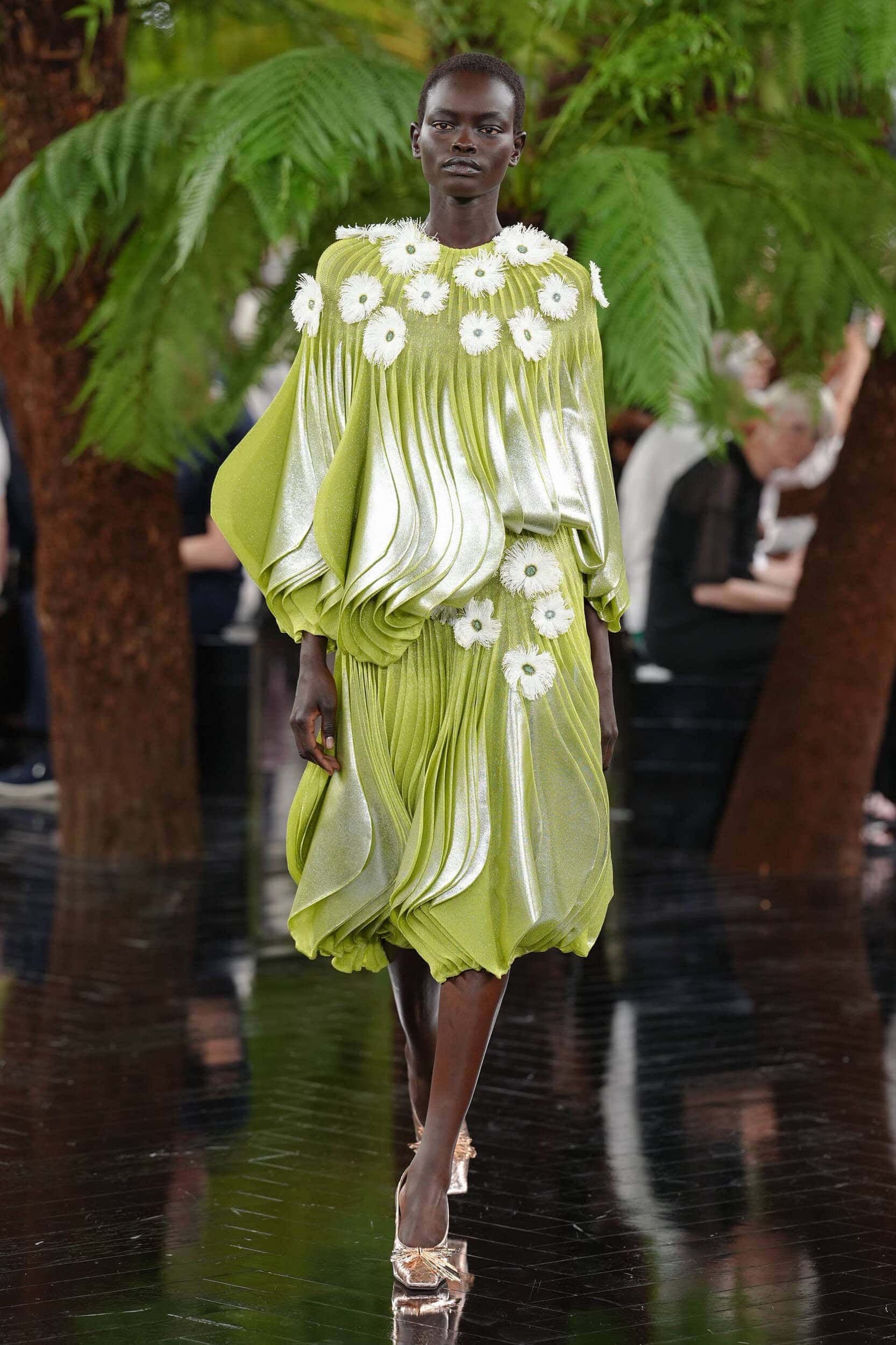
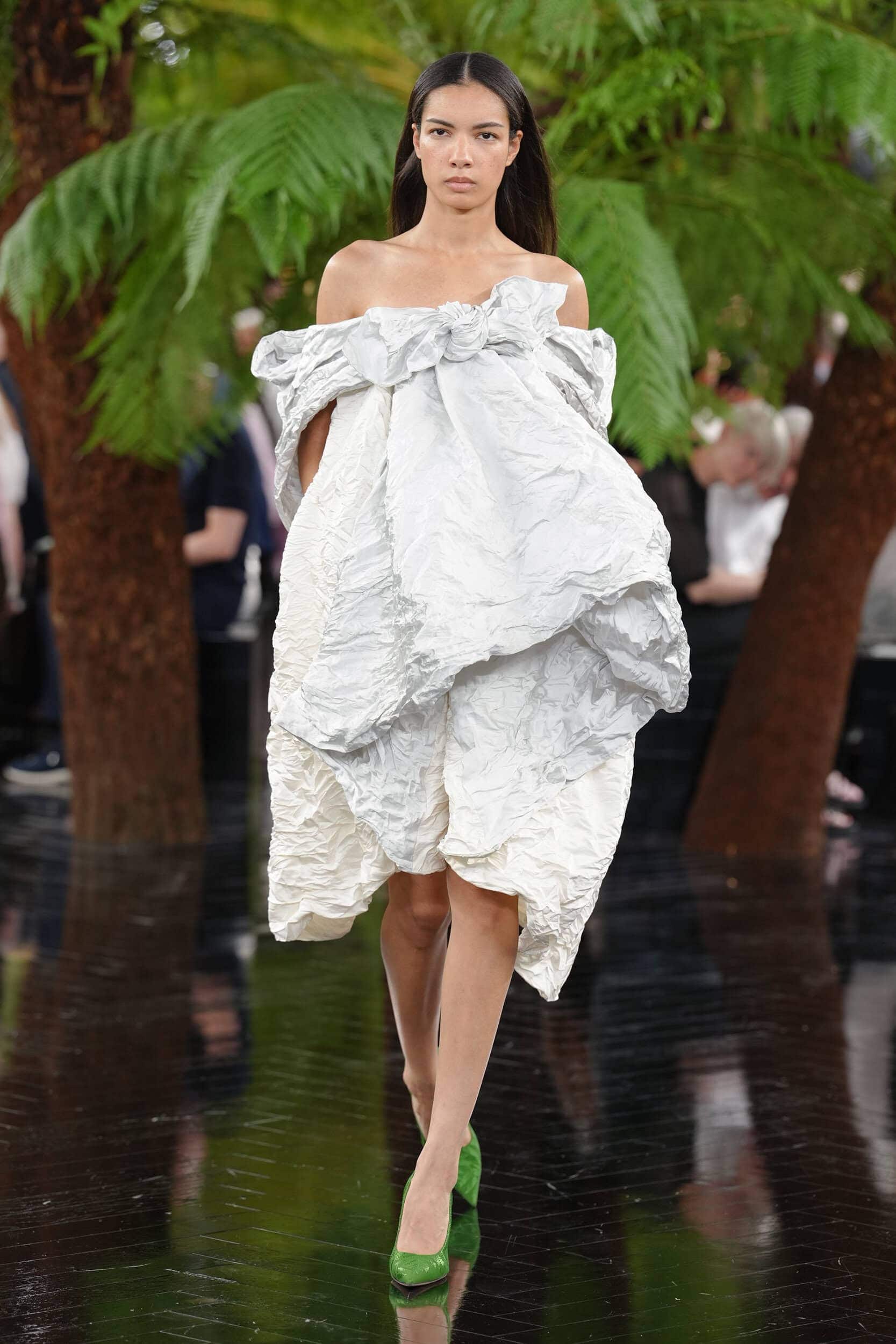
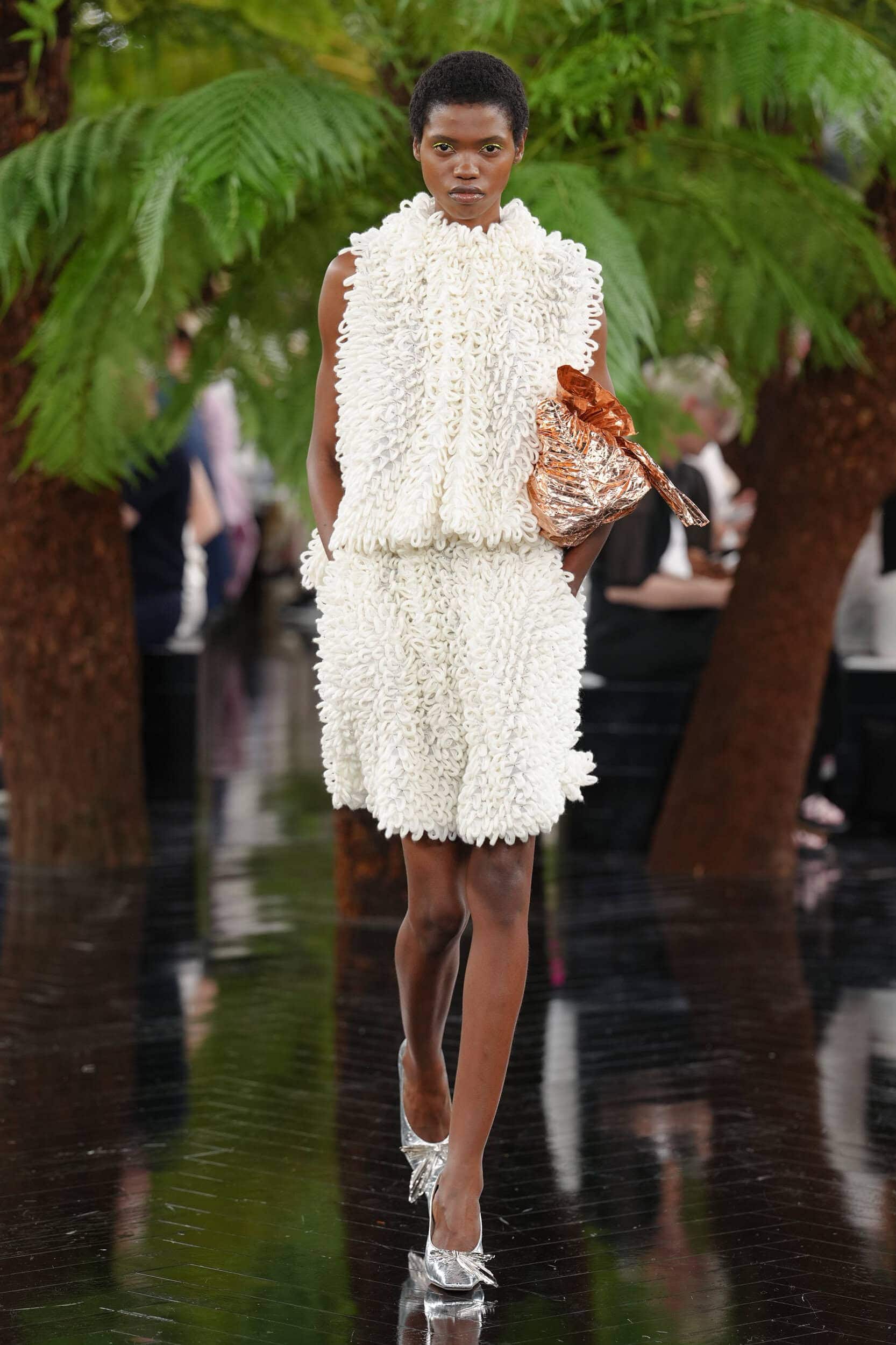
The strongest idea in the collection was Anderson’s interest in couture as a sculptural act. The press notes described the studio as a kind of lab, and that was the most convincing way to understand the show. Fabric was pushed, pleated, knotted, molded, frayed, embroidered, and surfaced until it became something between garment and object.
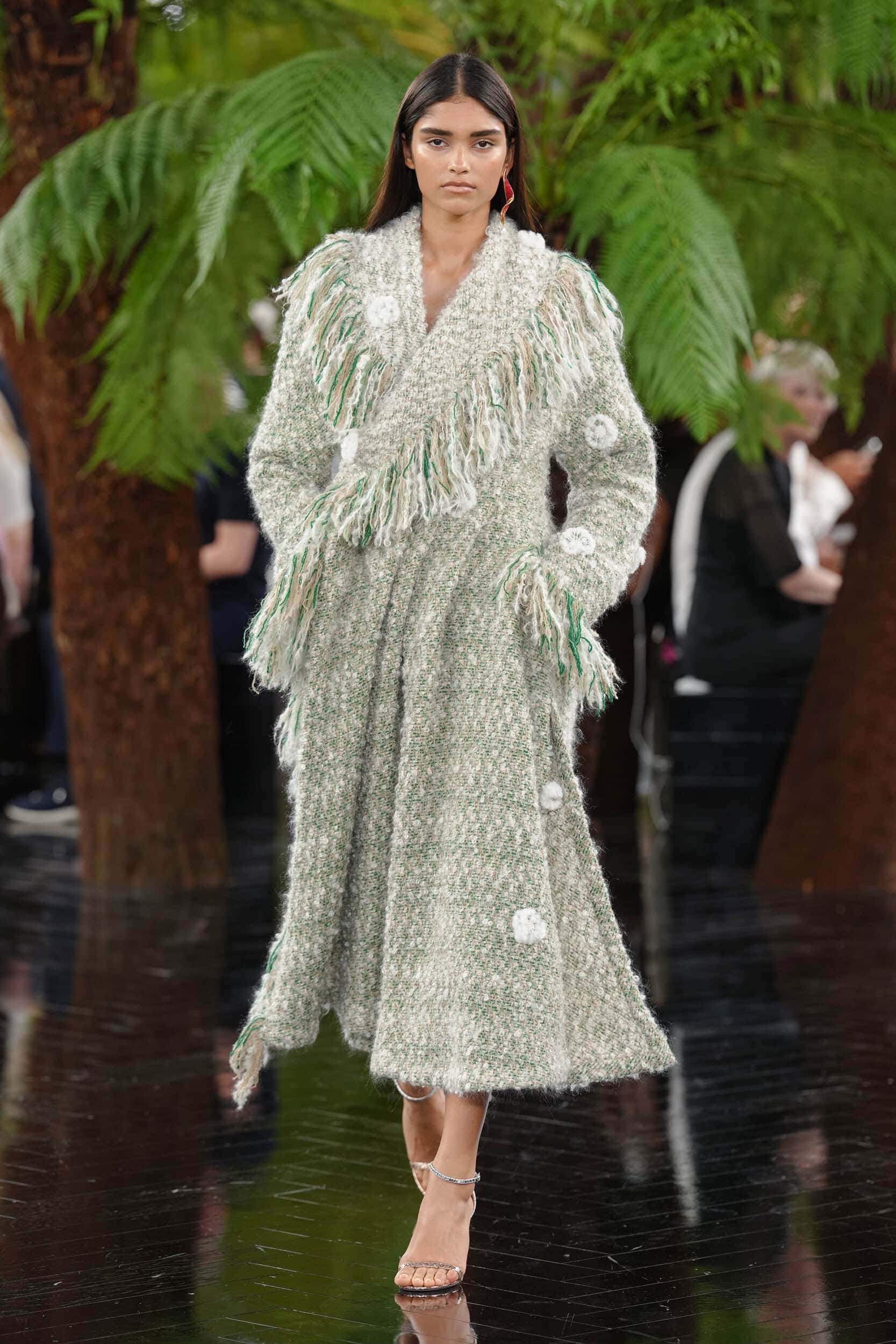
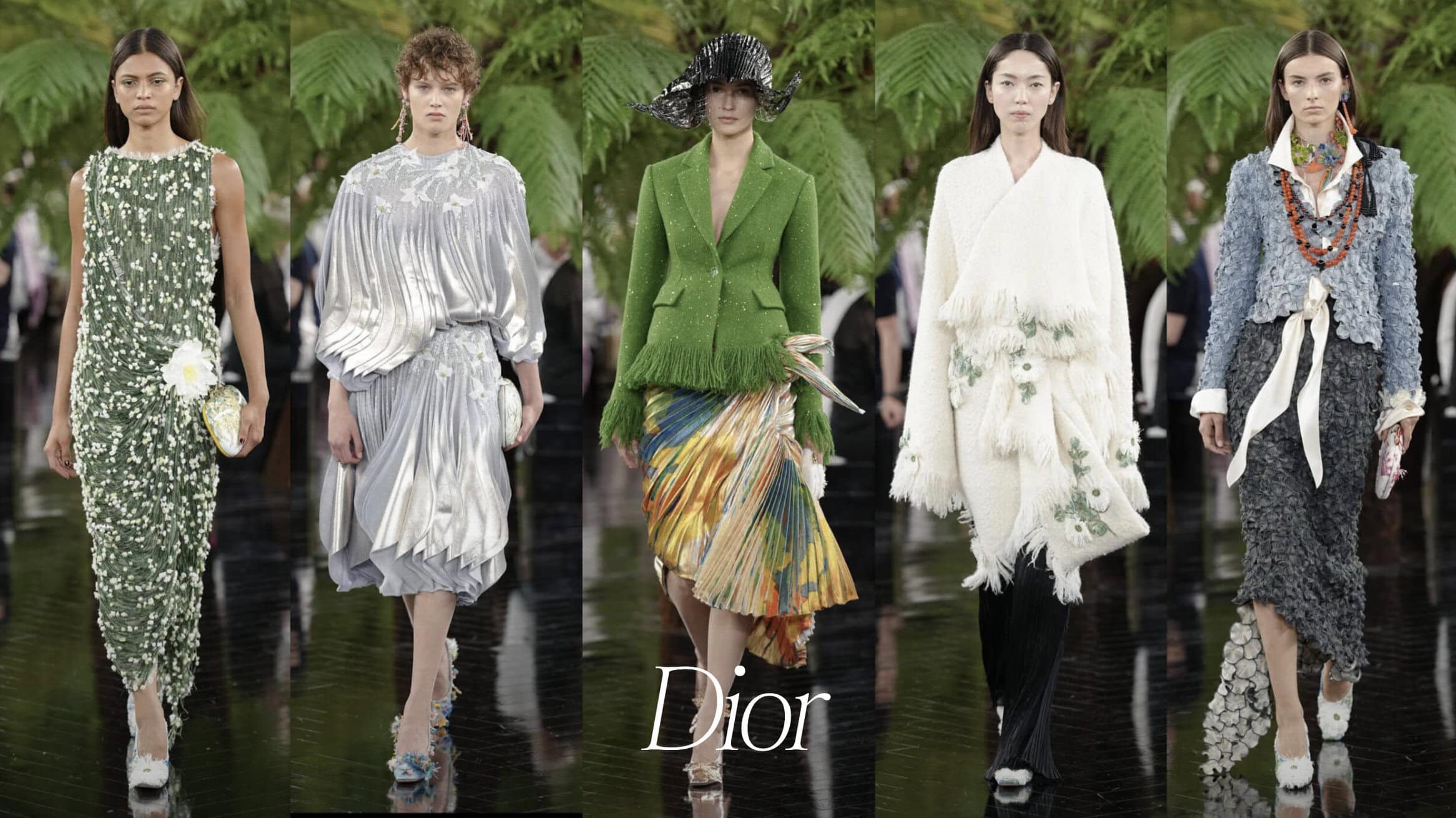
That approach produced some compelling moments. The hand-pleated lamé bustier dresses had a directness that felt strong. The Bar jackets draping into pleated bows created a dialogue between Dior’s architecture and Anderson’s instinct for eccentric form. The revisited Arizona coat from 1948 gave the collection one of its clearest house anchors, while the best millefeuille knits and chiffon pieces had a delicacy that softened the more cerebral nature of the concept.
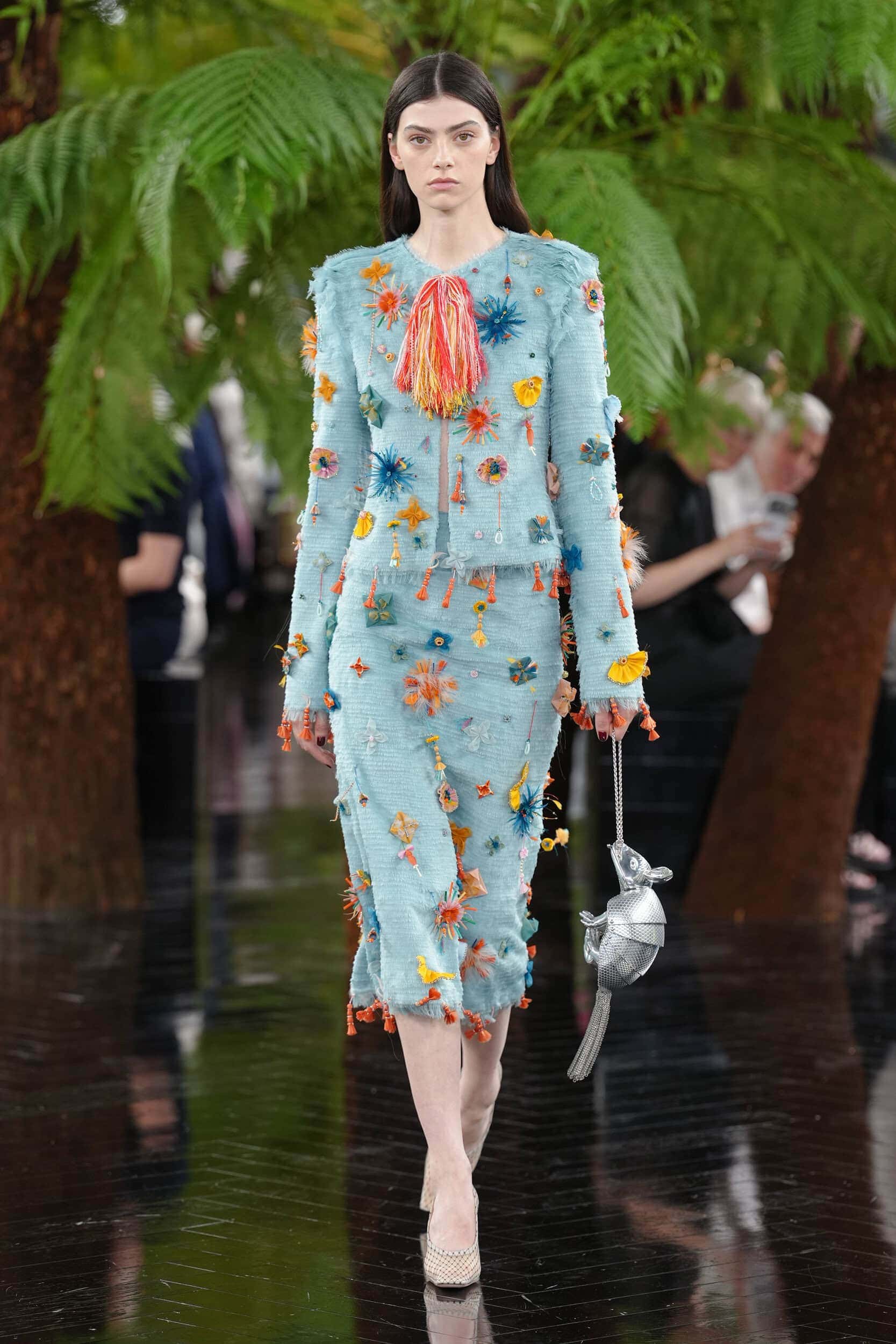
The material language was also persuasive in places. Metallic satins, copper lamé, micro-plissé organza, sequins, feather dandelions, shearling strips, denim flowers, chintz fragments, and embroidered flora created a world of surface experimentation. You could see the ateliers working at a very high level. You could also see Anderson thinking through how couture might behave when treated as sculpture, textile history, and decorative art all at once.
The difficulty was that these ideas did not always build into a cohesive emotional world.
Flowers appeared repeatedly, as did fans, bows, palms, peacock references, cactus blooms, eucalyptus, rhododendron, and chintz. The show notes gave each of these motifs a logic. They were connected to Benglis, Ahmedabad, Santa Fe, Indian craft, antique textiles, and landscape. Yet on the runway, their symbolic role did not always feel fully activated. If the flower was meant to carry the story, the collection needed to make us feel why. Was it about fragility, renewal, heat, ornament, memory, sensuality, or decay? The answer may have existed in the research, but it did not always travel through the clothes with enough force.
The fan motif was especially tricky. At moments, it gave the collection movement and graphic impact. At others, it felt literal in a way that narrowed the mystery around it. Anderson has made obvious motifs feel charming before, especially at Loewe, where directness could become a form of wit because it was carried through an entire world. At Dior, those gestures need a different kind of transformation. They need to feel changed by the house, pressed through its architecture, romance, discipline, and couture history until they become newly necessary.
That is where the Loewe comparison becomes difficult to avoid. Anderson’s design hand is so recognizable that it brings an immediate charge to the collection, but recognition is not the same as renewal. Some gestures here recalled ideas he has already explored with more freedom and, at times, more emotional clarity. At Dior, those instincts require a deeper surrender to the house. The Bar jacket, the archive references, the Lady Dior, the Petit Dîner, and the couture ateliers offered points of grounding. Still, the collection often felt more driven by Anderson’s external research than by Dior’s internal grammar.
The comparison with Matthew Blazy at Chanel is instructive because it points to a broader question facing heritage houses right now. Blazy’s early work at Chanel has felt compelling because his intelligence appears filtered through the house codes with real discipline. The house seems to be shaping the designer’s hand. Anderson’s Dior, at this stage, still feels more like a negotiation between a powerful personal vocabulary and a house that requires deeper absorption.
That tension was made more visible by Dior’s recent high jewelry presentation, which offered a more refined view of couture-level workmanship within the house universe. That work felt precious, elevated, and emotionally resolved in a way this couture collection did not always achieve. Against that backdrop, Fall 2026–2027 Haute Couture landed with a slightly uneven weight. It had ambition and craft, but it did not always reach the same level of inevitability.
The presentation also worked against the clothes. The somber music reportedly weighed the room down, and that mattered. Couture can sustain severity, austerity, and melancholy when those choices sharpen the emotional register of the collection. Here, the soundtrack seemed to mute the moments of whimsy and joy that were present in the clothes. Taken at face value, there were playful, strange, and charming ideas throughout. The mood in the room made the collection feel heavier than it needed to feel.
That heaviness complicated the audience’s read. A collection built around surface, transformation, landscape, flowers, peacocks, craft, and sculptural experimentation needed a sense of wonder. Instead, the atmosphere appeared to emphasize solemnity. For a designer still defining the emotional language of his Dior, that became a meaningful misstep.
The strongest looks were often those where the couture proposition felt distilled: the pleated lamé dresses, the sculptural Bar jackets, the Arizona coat, the best floral embroideries, and the quieter moments where surface and silhouette found balance. When Anderson allowed form, fabric, and Dior architecture to work together, the collection suggested a future with real promise. When the motifs became too literal, or the ideas arrived as a cluster of references, the collection felt harder to enter.
THE WRAP UP
Fall 2026–2027 Haute Couture was an ambitious collection, and that ambition deserves to be taken seriously. Anderson is clearly trying to build a new couture language at Dior through sculpture, surface, global craft, and the experimental possibilities of the atelier. The collection had intelligence, workmanship, and moments of beauty. It also revealed how difficult this assignment will be.
The central issue is emotional clarity. The research was rich. The craft was evident. The house codes were present in places. Yet the collection did not fully become a Dior world. It felt like a laboratory of ideas still searching for its dream.
That may be a natural stage in the early formation of a new era. Anderson does not need to prove that he can make beautiful, clever, desirable things. He has already done that. At Dior, the challenge is more specific. His ideas need to become inseparable from the house, and the house needs to push him somewhere he has not already been.
The most generous read is that this collection showed the scaffolding of a new couture language: sculptural, tactile, eccentric, and globally crafted. The more critical read is that the scaffolding was sometimes easier to see than the finished architecture.
For Dior, couture is never simply about technique. It is about belief. This collection asked us to admire the making. The next one needs to make us feel the myth.