Second Nature
Review of Schiaparelli Fall 2026 Couture Fashion Show
By Mackenzie Richard Zuckerman
Daniel Roseberry’s Fall 2026 Haute Couture Collection Asked Schiaparelli to Imagine a New Body
Haute couture has always been about transformation. At Schiaparelli, Daniel Roseberry pushed that idea into stranger, more bodily territory: what happens when couture does more than dress the body, and begins to imagine a new one?
That question felt especially useful for Roseberry now. Schiaparelli has had several seasons of extraordinary momentum, from the red carpet to the runway to the wider fashion conversation. The house has become one of the rare couture names that can still make an image feel immediately urgent. But success creates its own creative problem. Once a language becomes recognizable, it can also start to become expected.
This collection seemed to understand that risk.
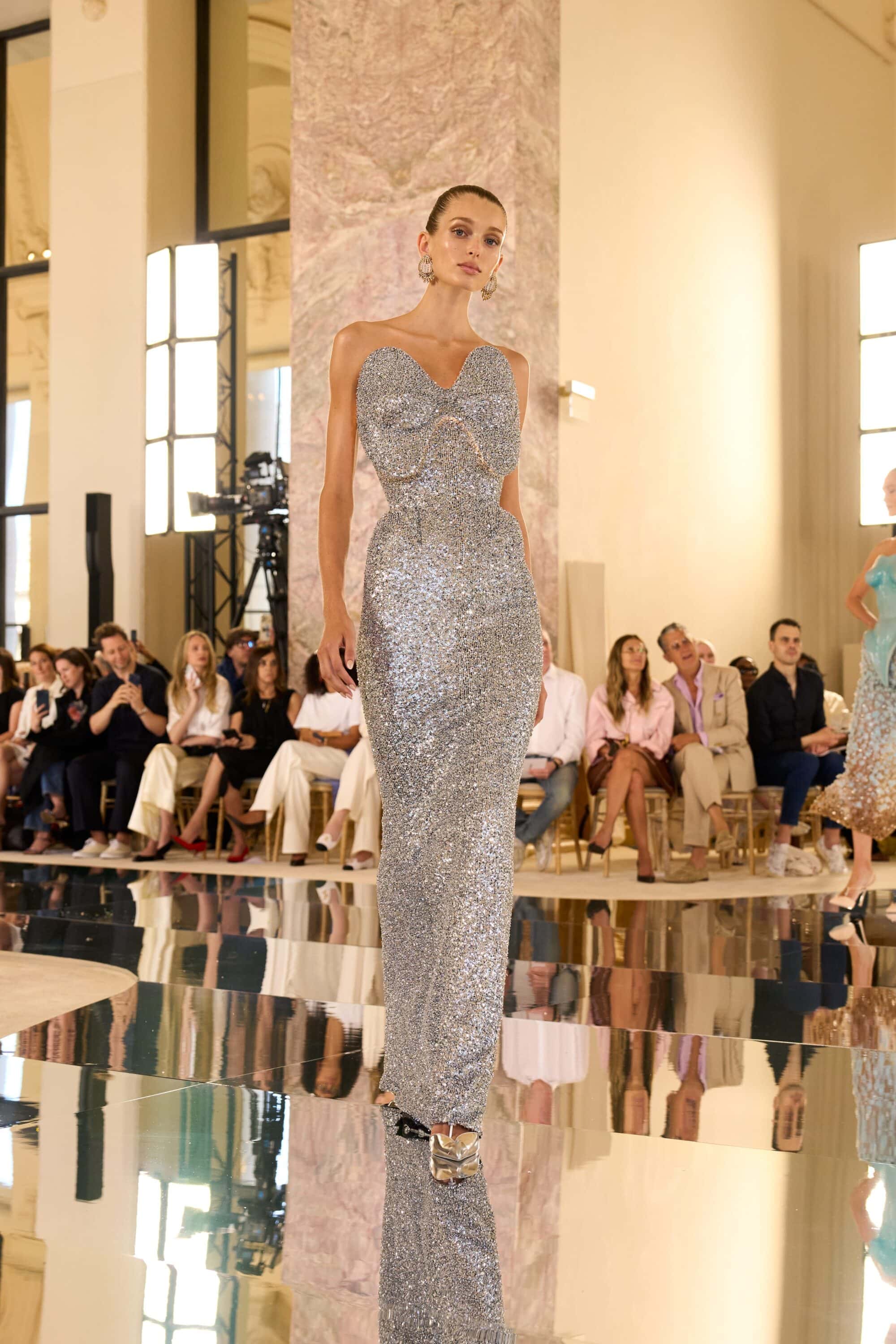
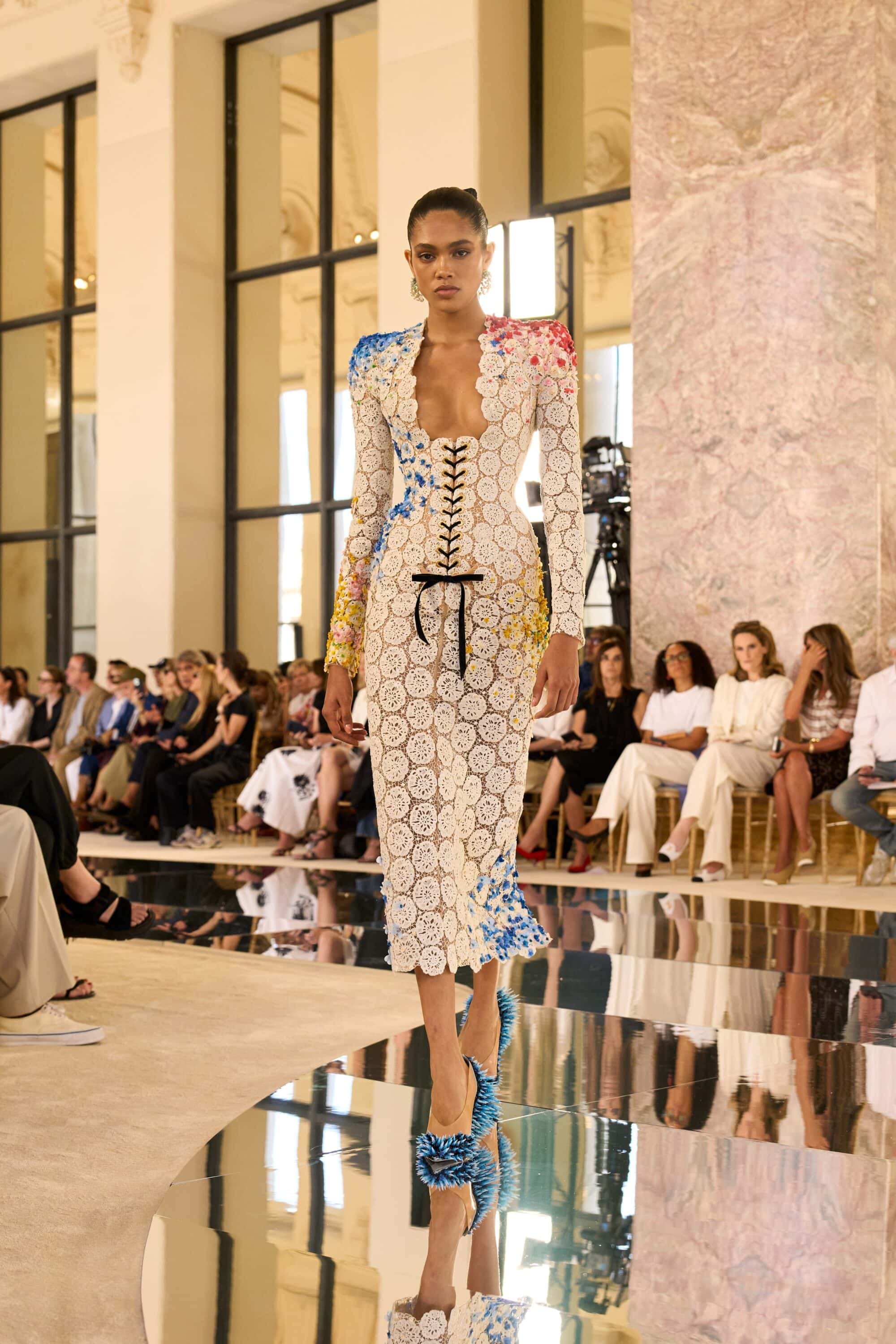
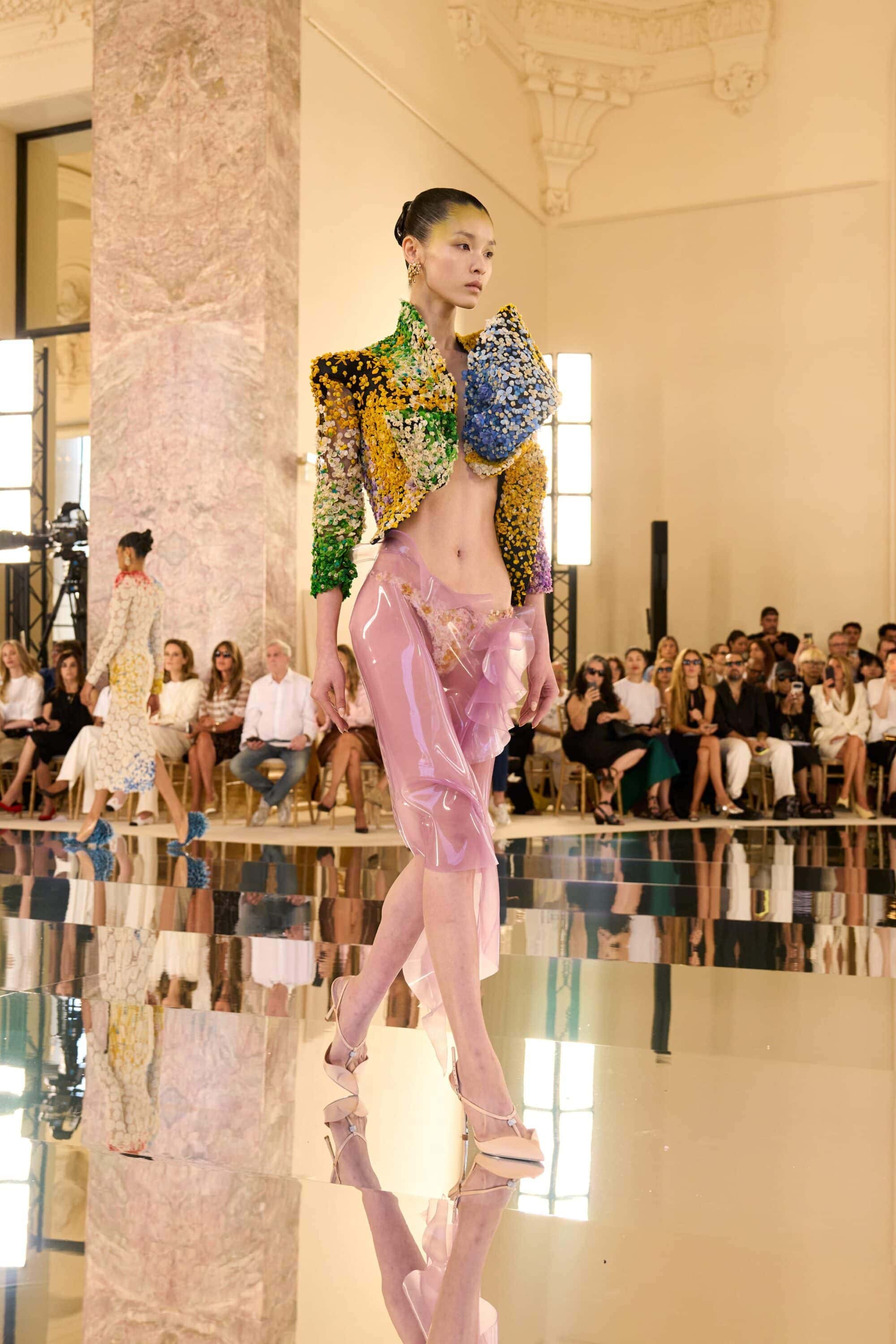
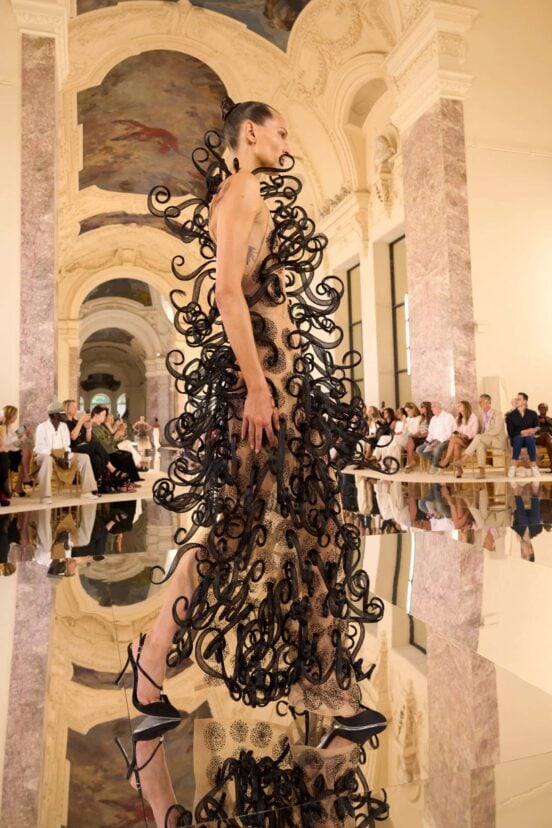
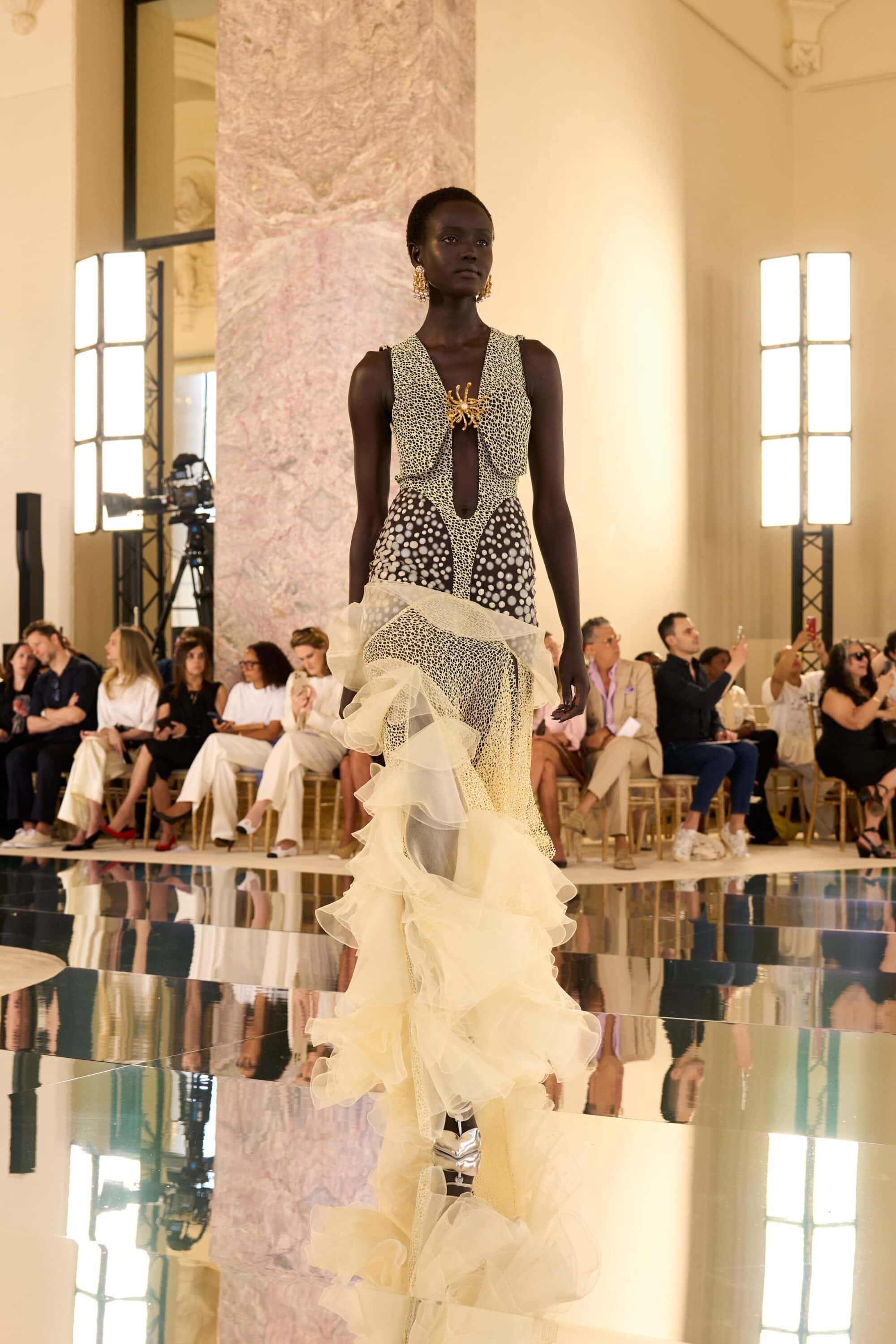
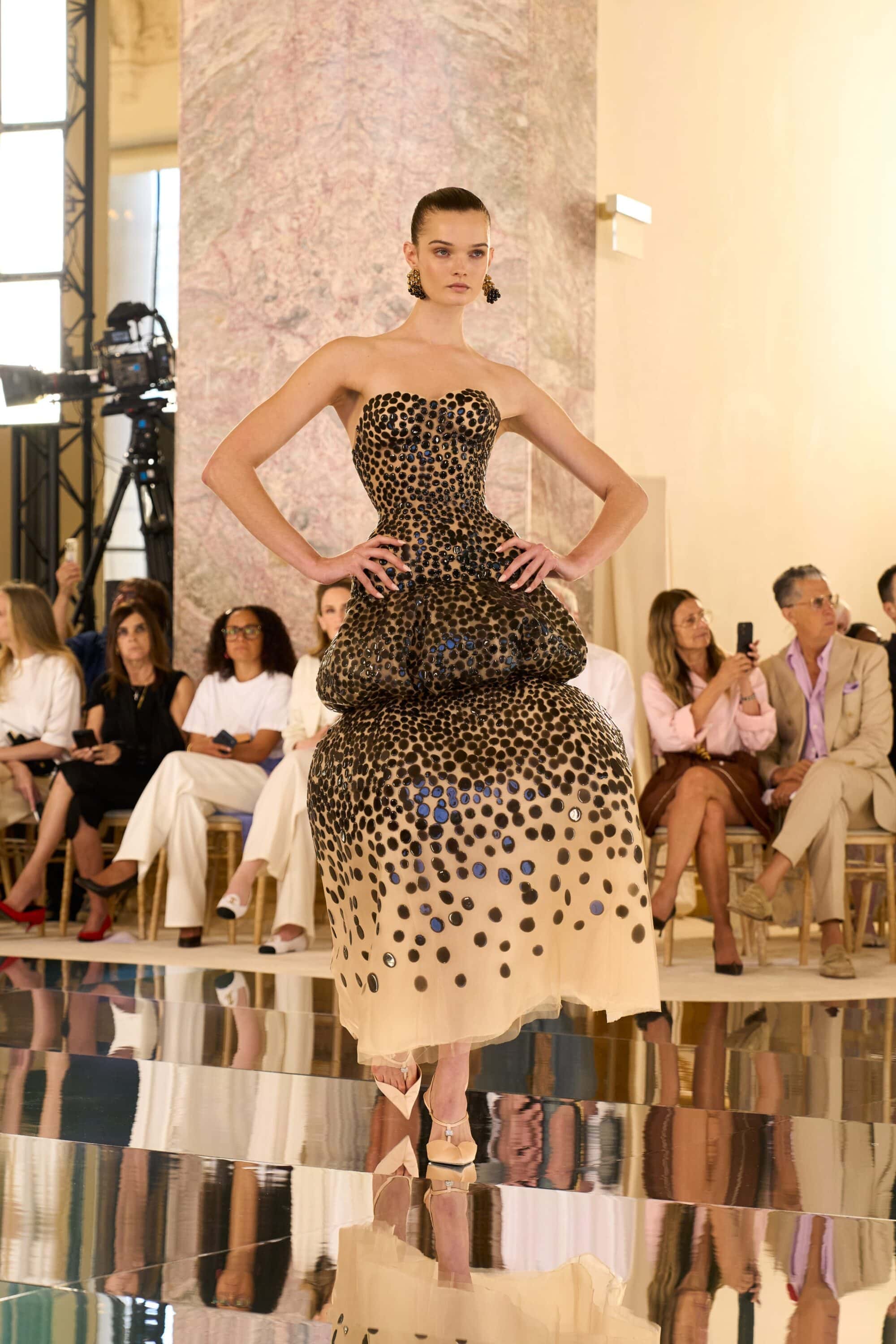
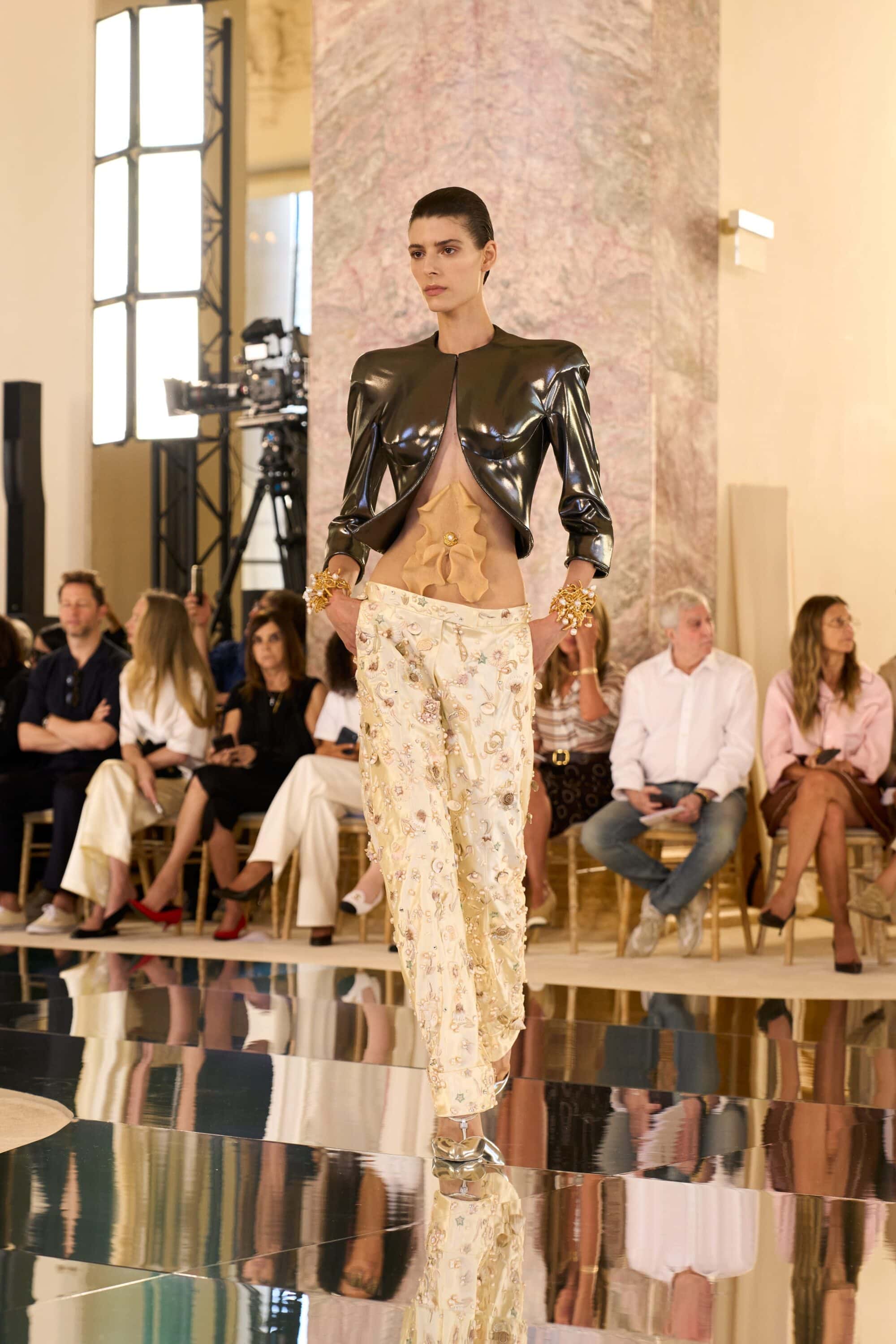
Backstage, Roseberry spoke about beginning the season with a mental block, and finding a way forward by surrendering to processes he and the atelier had never tried before. That led him outside the usual couture vocabulary and toward an atelier near Paris that makes photorealistic silicone babies for cinema. From there, silicone became a kind of new couture skin: poured, sculpted, wrapped, and treated almost like fabric. Real flowers were preserved with sugar water. Natural shells and baked fish scales were worked into the collection. Materials that might usually sit far outside the couture tradition were brought into its most intimate space.
The result was compelling because it did not feel like experimentation for its own sake. Roseberry was not simply adding strange materials to make the collection feel new. He was asking a more interesting question about what Schiaparelli’s surrealism can become when the body itself is the site of transformation.
That matters for this house. Elsa Schiaparelli’s legacy is often reduced to witty objects and surreal motifs, but the deeper inheritance is disruption: a way of making beauty feel unstable, intelligent, and slightly dangerous. Roseberry is strongest when he works from that spirit rather than simply repeating its symbols. Here, he did that with real conviction.
THE COLLECTION
THE VIBE
Second Skin Surrealism, Beautiful Mutation, & The Risk of Surrender
The collection worked because it let Schiaparelli get strange in a way that felt purposeful.
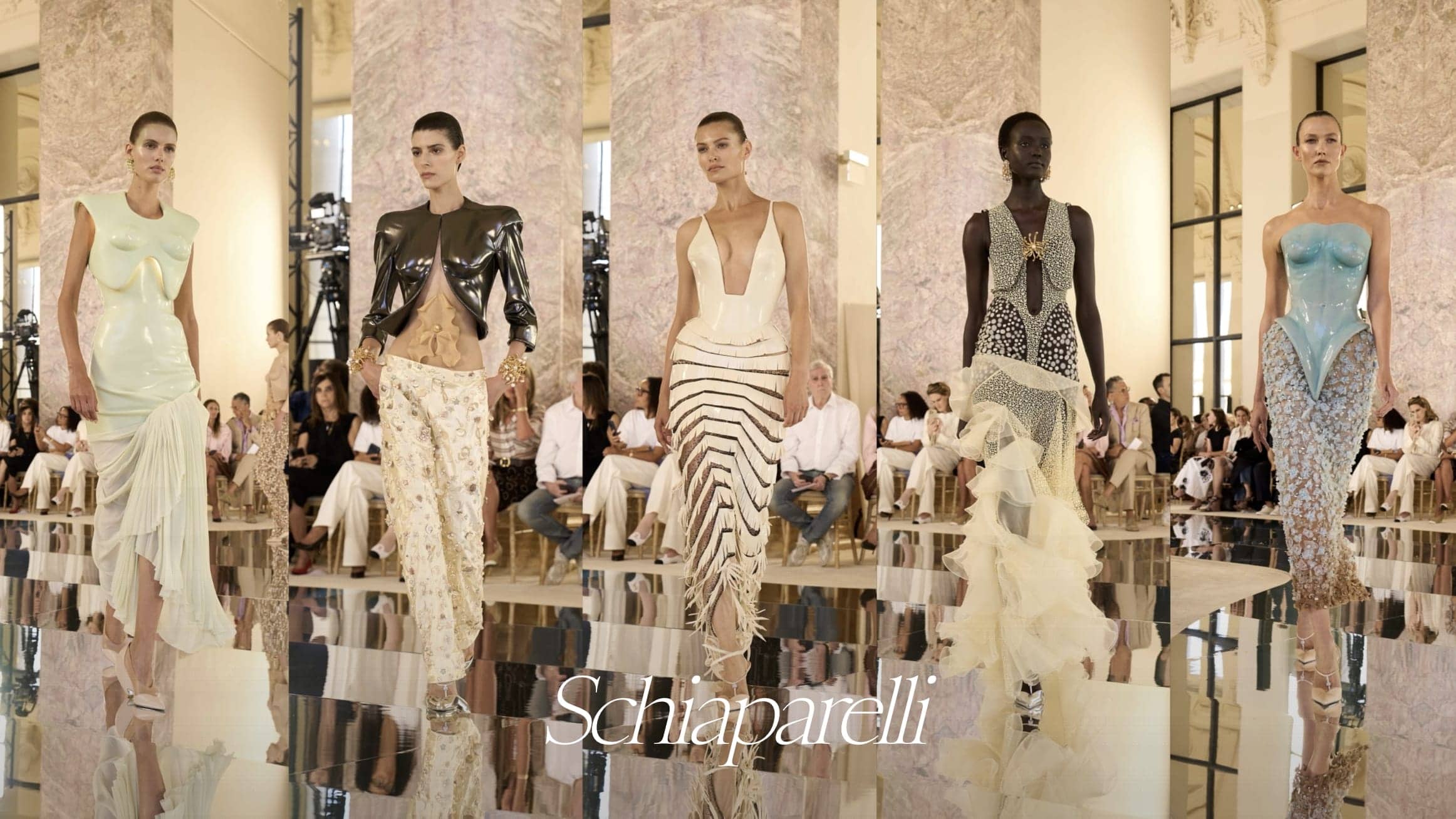
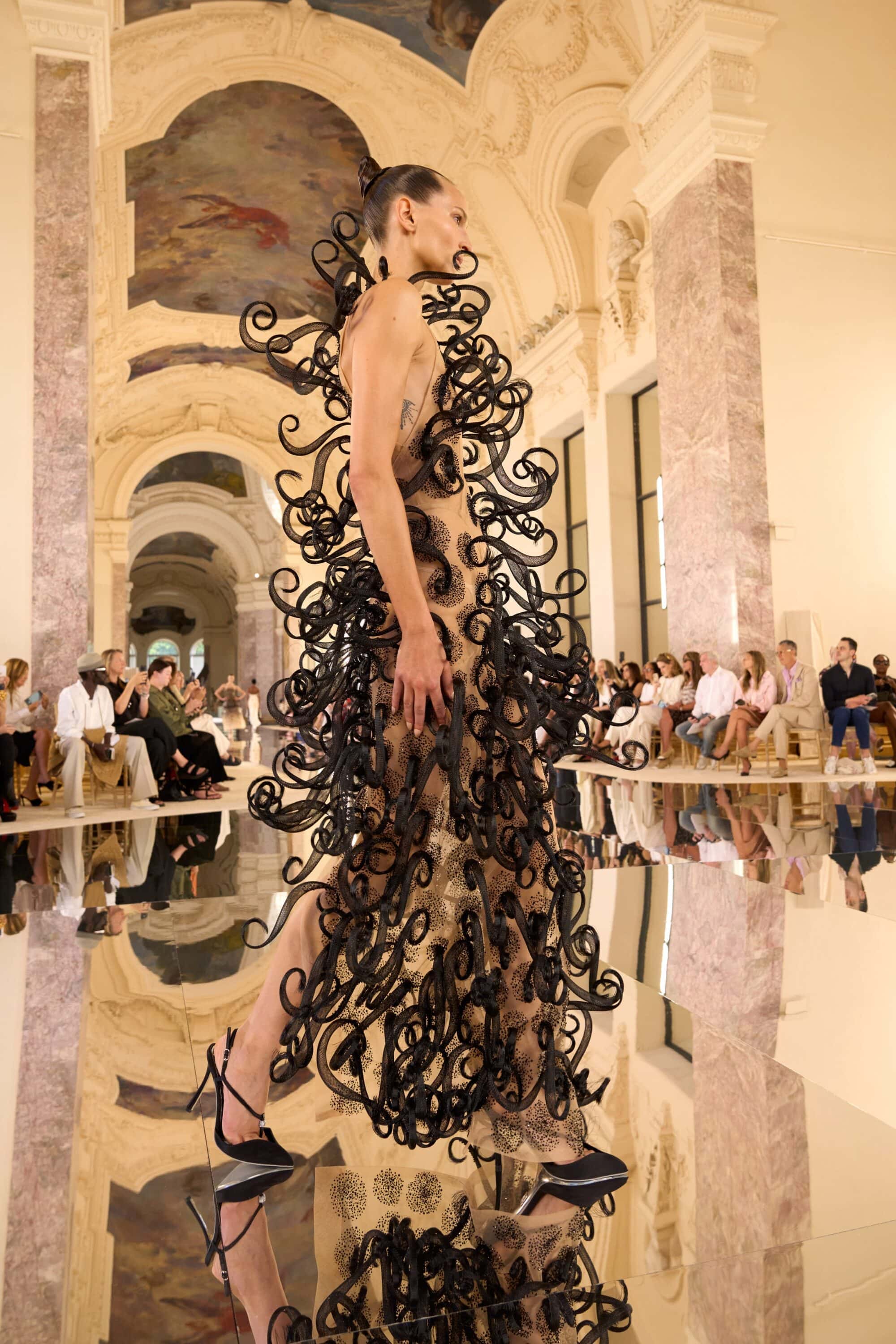
Roseberry pushed couture into the body itself, treating it as something that could be molded, extended, preserved, and reimagined. Silicone became a kind of second skin, appearing beside silk, chiffon, shells, fish scales, preserved flowers, and sculptural surfaces that seemed to hover between the natural and the manufactured. What could have easily read as material experimentation instead felt deeply connected to Schiaparelli’s own history of making beauty unstable.
The strongest looks blurred the line between garment and anatomy. Molded bodices, silicone corsetry, and sculptural dresses carried the uncanny charge of prosthetics, yet they were grounded by couture construction. A pale mint sculpted dress with traditional corset lacing down the back captured that tension especially well. The surface looked futuristic, while the logic beneath it remained rooted in the discipline of the atelier.
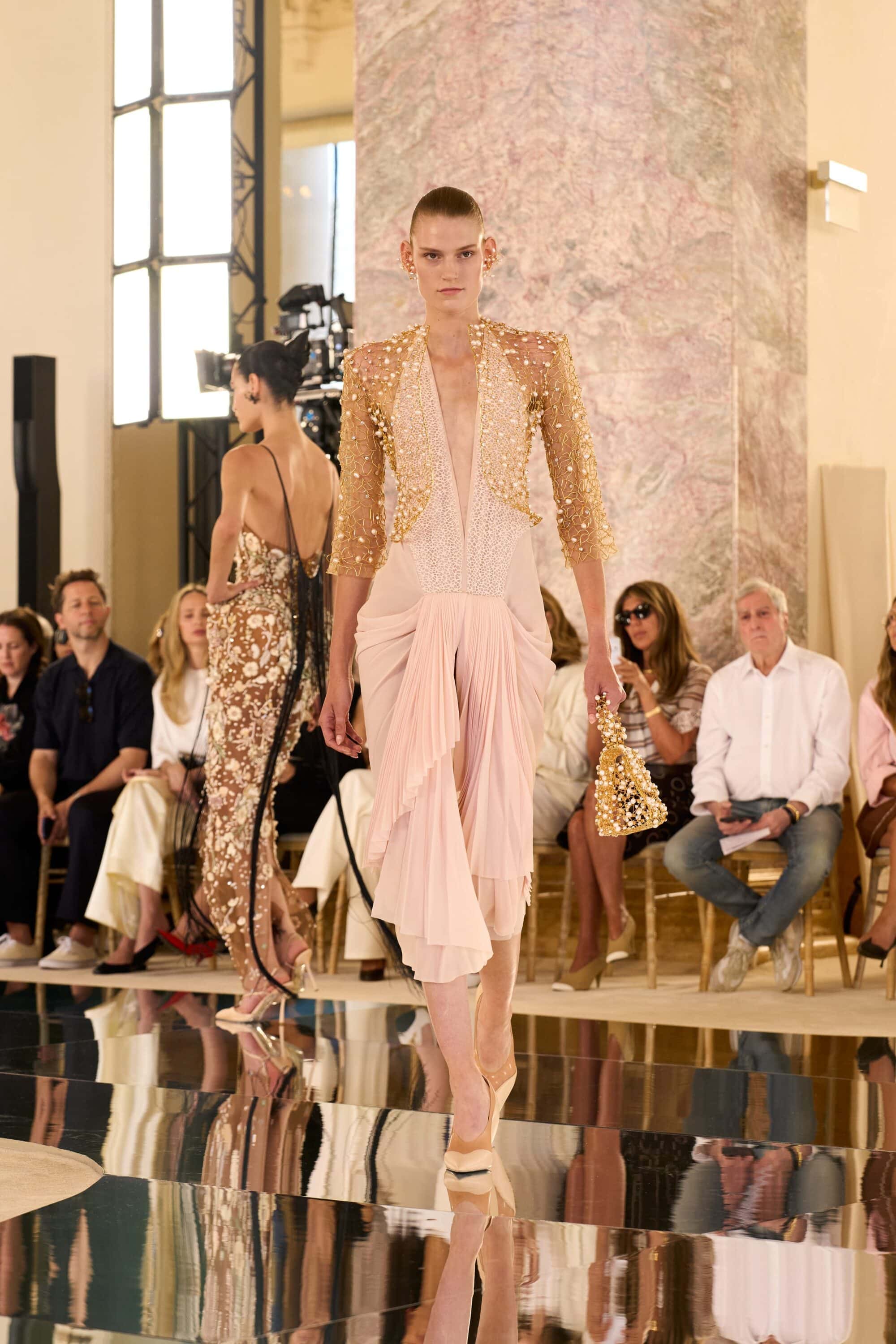
Roseberry also understood that strangeness needs structure. Cropped jackets, strong shoulders, elongated skirts, and fluid trousers gave the collection its frame, allowing the more experimental materials to feel controlled rather than chaotic. The tailoring kept the show from becoming a parade of effects. It gave the body a line, then allowed the surface to mutate around it.
There were moments where the anatomy-driven ideas circled similar territory, and a broader shift in silhouette through the middle of the collection might have sharpened the pacing. Still, the risk felt earned. Roseberry was exploring one clear obsession from multiple angles: how couture can reshape the body, disturb beauty, and still make the viewer want to move closer.
THE WRAP UP
Fall 2026 Haute Couture felt like an important collection for Roseberry because it showed that Schiaparelli’s next chapter does not have to depend on repeating the images that made the house so visible in the first place. The surrealism is still there, though it feels more internal now, closer to skin, sensation, and transformation.
That is a meaningful evolution. Roseberry has already proven that he can create spectacle, generate desire, and make Schiaparelli one of the most watched names in couture. This collection suggested something more valuable: a willingness to risk discomfort in order to keep the language alive. In a fashion climate often pulled toward polish, legibility, and commercial smoothness, Schiaparelli’s advantage may be its ability to remain a little uneasy.
The most convincing part of the collection was its trust in the house’s deeper instinct. Schiaparelli has always been strongest when beauty arrives with wit, disruption, and a slight sting. Roseberry honored that inheritance by moving beyond familiar motifs and testing what surrealism can look like now, in a world shaped by artificial image-making, bodily alteration, and a renewed hunger for the handmade.
The collection was imperfect in places, particularly when its central ideas repeated too closely, but its ambition felt alive. Roseberry was willing to move into less certain territory, and that uncertainty gave the show much of its force. For couture, that kind of risk still matters.
Schiaparelli does not need to become smoother to grow. It needs to stay close to the strangeness that makes people look twice. This season, Roseberry did exactly that.