John Idol Said The Company Has Rebuilt Its Foundation And Is Positioned To Return To Growth Despite Continued Revenue Pressure
Capri Holdings is emerging from a prolonged period of restructuring with renewed confidence in the future of Michael Kors and Jimmy Choo, as Chairman and Chief Executive Officer John Idol declared the company ready to shift from stabilization to growth.
The luxury group reported fourth-quarter revenue of $796 million for the period ended March 28, down 3.7 percent year-over-year, or 7 percent at constant exchange rates. The decline reflected Capri’s ongoing effort to reduce promotions, third-party sales, and exposure to off-price channels, moves the company believes are strengthening the long-term health of its brands despite creating short-term revenue pressure.
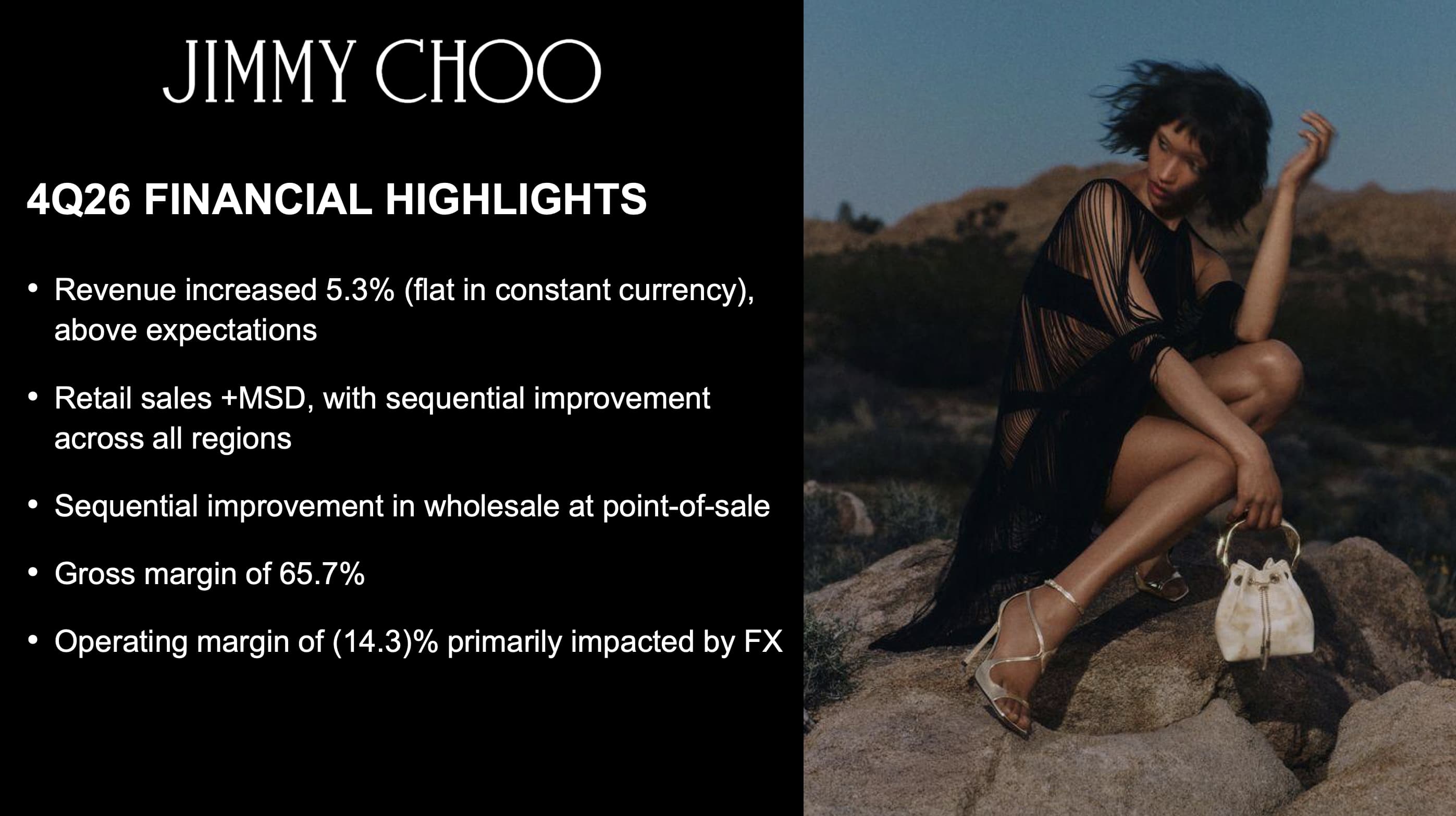
Those efforts helped dramatically improve profitability. Net losses narrowed to an immaterial $4 million compared with a loss of $645 million a year earlier. Capri also benefited from a favorable legal ruling related to IEEPA tariffs, recording approximately $40 million as a reduction in cost of goods sold during the quarter. The company said it is still owed roughly $65 million in total.
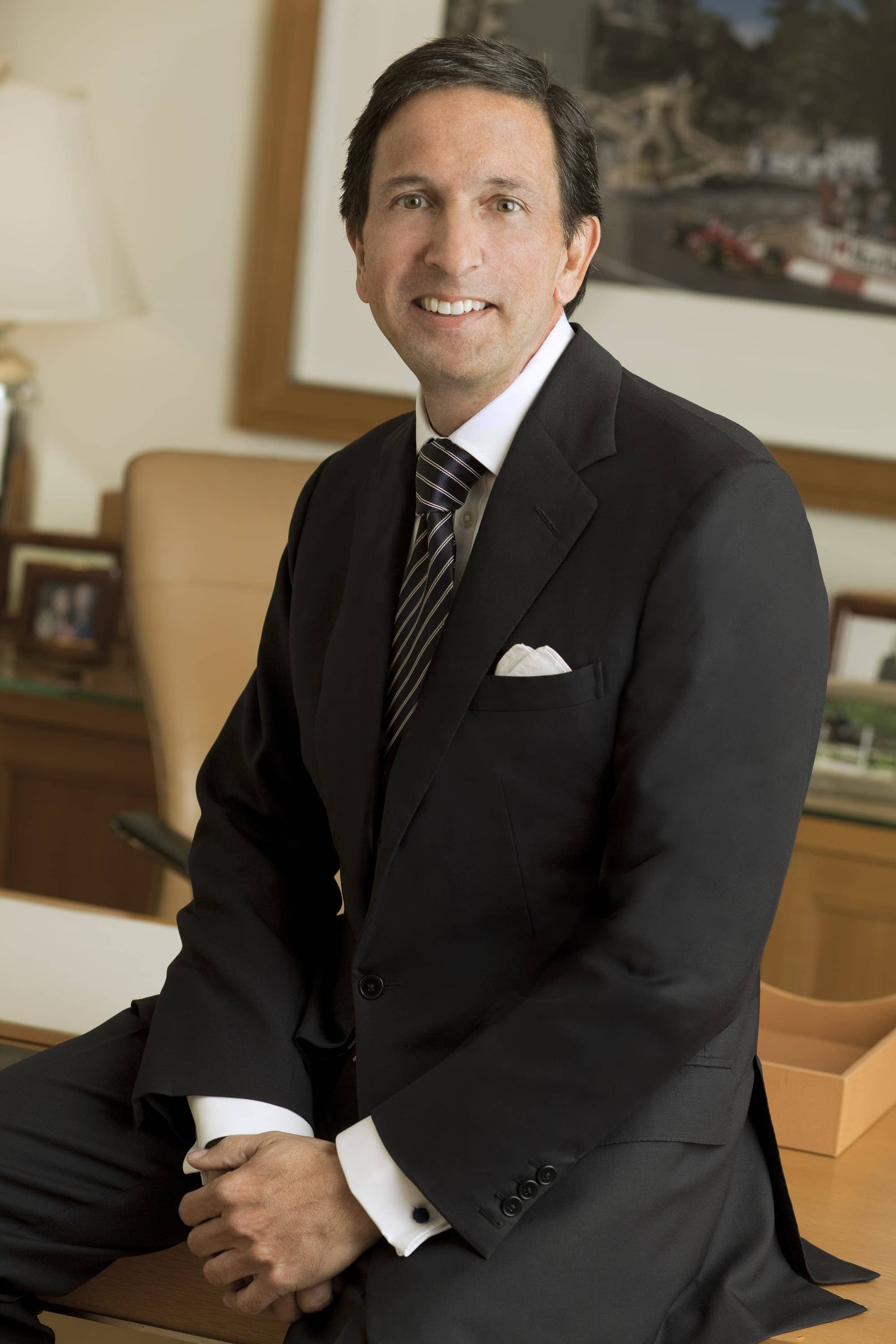
“We had a lot of issues coming out of fiscal 2025 that we needed to correct,” Idol told analysts during the company’s earnings call. “I feel really good. And I think the teams feel really good about what is happening, and we do a lot of research on the consumer and the way the consumer is looking at both Jimmy Choo and Michael Kors. And we haven’t seen healthy indicators like this for both brands in years.”
While adjusted earnings per share of 22 cents missed analyst expectations of 32 cents, management focused attention on improving consumer response and strengthening brand fundamentals, particularly at Michael Kors.
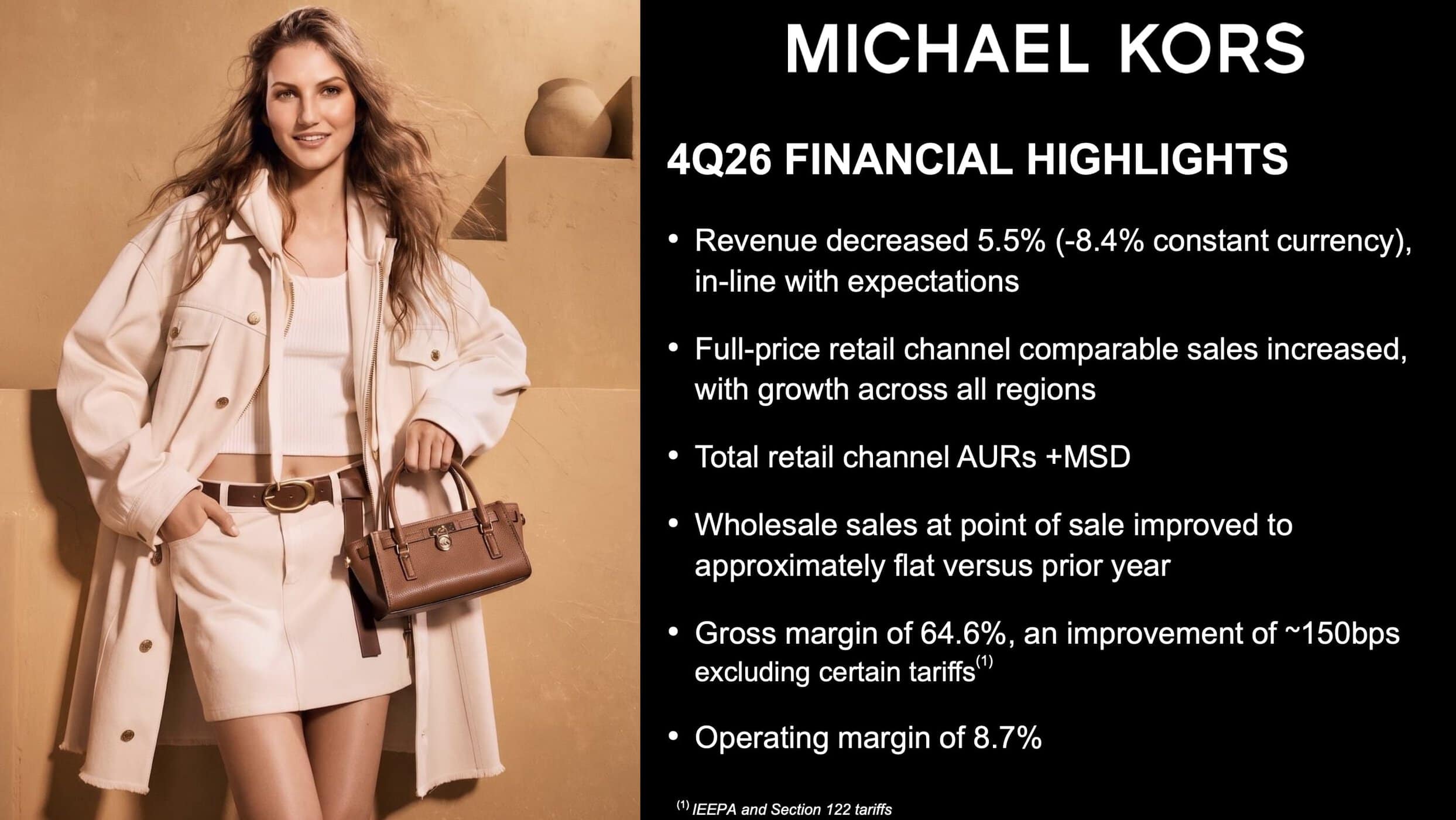
Idol said the brand is showing clear signs of renewed momentum, with comparable sales turning positive in full-price stores. Average unit retail prices increased by low-double digits, supported by stronger sell-through and a more disciplined promotional strategy.
The company is also seeing improvement in its outlet business. After years of relying heavily on discounts, Capri has been reducing promotional activity while introducing new products and selective price increases.
“While actions to reduce promotional activity and third-party sales are creating near-term pressure on revenue, these deliberate steps are strengthening the long-term foundation of the brand,” Idol said. “Outlet AURs turned positive during the fourth quarter, reflecting our quality of sale initiatives, select price increases and early flow of new product.”
The wholesale business remains under pressure, but management characterized much of the decline as intentional. Inventory levels ended the year down 17 percent as Capri continued limiting off-price distribution.
“Even though the wholesale business is down double digits, the majority of that is coming from the reduction in off-price sales,” Idol said. “We’re feeling optimistic that we’ve got the right building blocks in place.”
For the full fiscal year, revenue declined 4.1 percent to $3.5 billion. The company estimated that its efforts to reduce promotions, third-party sales, and off-price distribution reduced annual revenue by more than $150 million.
Despite those headwinds, Idol outlined an ambitious long-term vision for the business. He suggested Michael Kors could eventually grow from approximately $2.9 billion in annual sales to $4 billion, while Jimmy Choo could expand from roughly $600 million to $800 million.
The company is also signaling confidence through capital allocation. Capri resumed share repurchases during the quarter, buying back 4 million shares for $79 million.
Looking ahead, Capri expects fiscal 2027 revenue of approximately $3.5 billion and earnings per share of about $2.15. While the earnings outlook came in below analyst expectations, management emphasized that rebuilding brand equity, improving product quality, and restoring pricing power remain the priorities.
After years marked by declining sales, restructuring efforts, and the collapse of its planned acquisition by Tapestry, Capri is increasingly positioning itself as a company focused on rebuilding rather than retrenching. Whether Michael Kors can sustain its improving momentum will likely determine how quickly that next phase unfolds.