Review of Givenchy Spring 2027 Menswear Ad Campaign by Creative Director Sarah Burton and Photographer Juergen Teller with models Sir Don McCullin, Don Letts, and Danny Fox
Sarah Burton’s first menswear campaign for Givenchy arrives with a question larger than category expansion: what kind of man belongs in the world she is building? Timed to appear on Paris billboards on the eve of her debut menswear presentation for the house, the campaign, photographed in London by Juergen Teller, brings together Sir Don McCullin, Don Letts, and Danny Fox as figures of talent, elegance, and humanity. It is a telling introduction because the casting refuses to define the Givenchy man through surface alone. Instead, it asks what these men represent: authorship, conviction, curiosity, moral weight, and lives shaped by looking, making, and questioning. Burton’s Givenchy has been taking shape around body, character, and emotional intelligence. For menswear, she begins with men whose authority comes from quality of character.
That choice matters because Burton’s early work for the house has been strongest when it treats clothing as a way of understanding the person inside it. Her Givenchy woman has emerged through cut, posture, protection, sensuality, and control, a figure with presence that comes from construction as much as attitude. The move into menswear could easily have become a statement of sleekness or inheritance. This campaign opens the door through creative life. McCullin, Letts, and Fox are charged with history, work, friction, and inner weather.
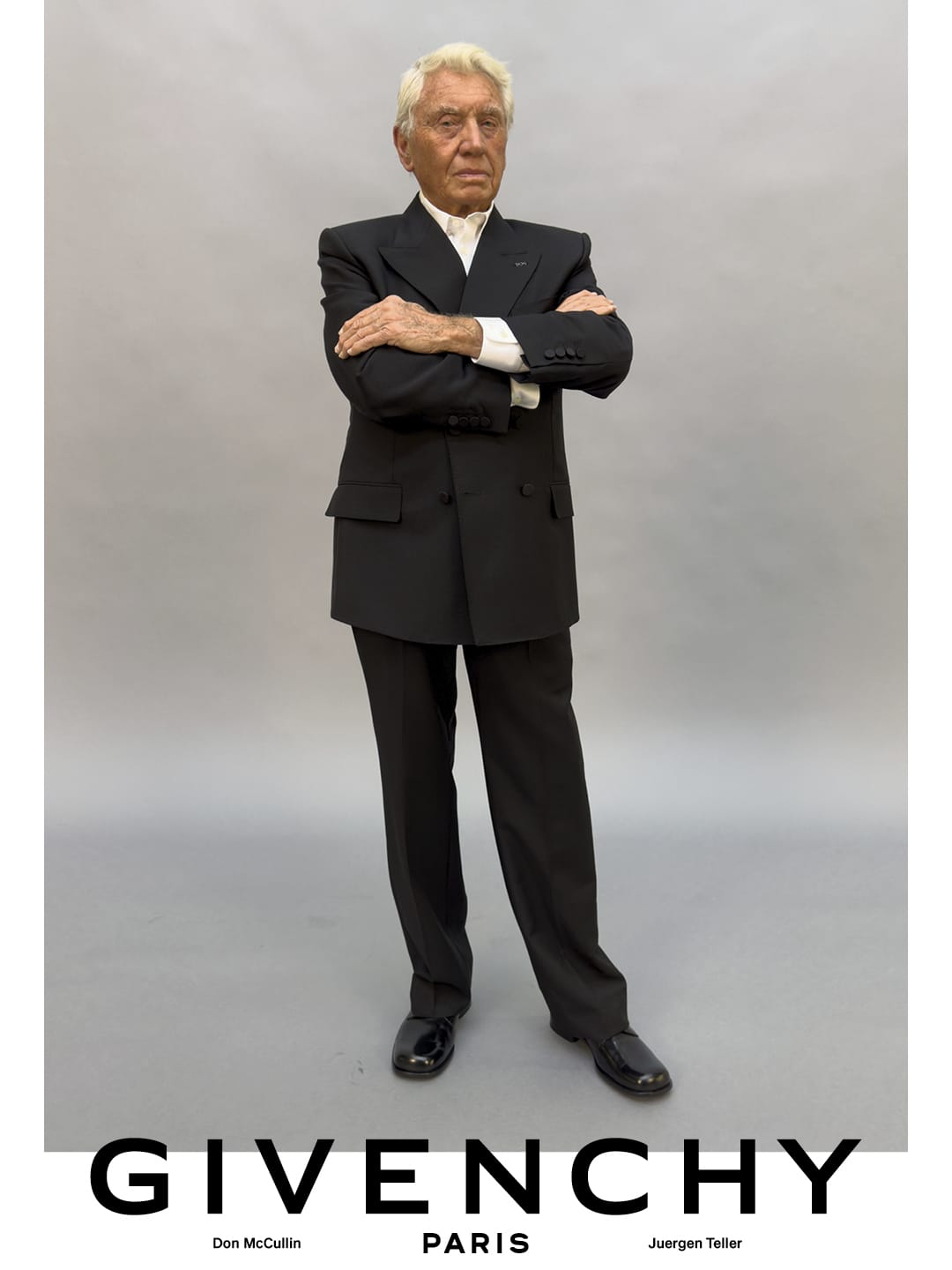
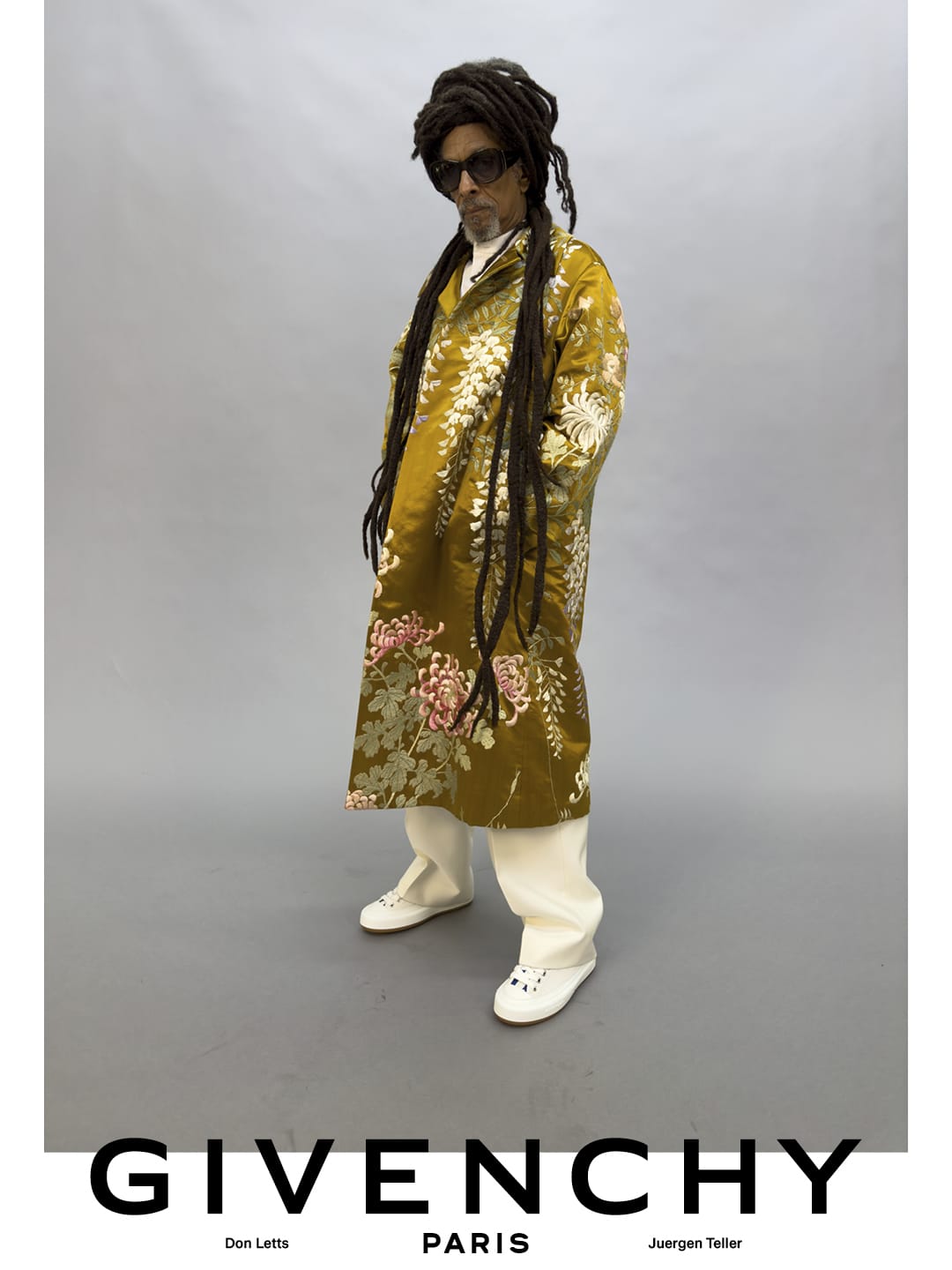
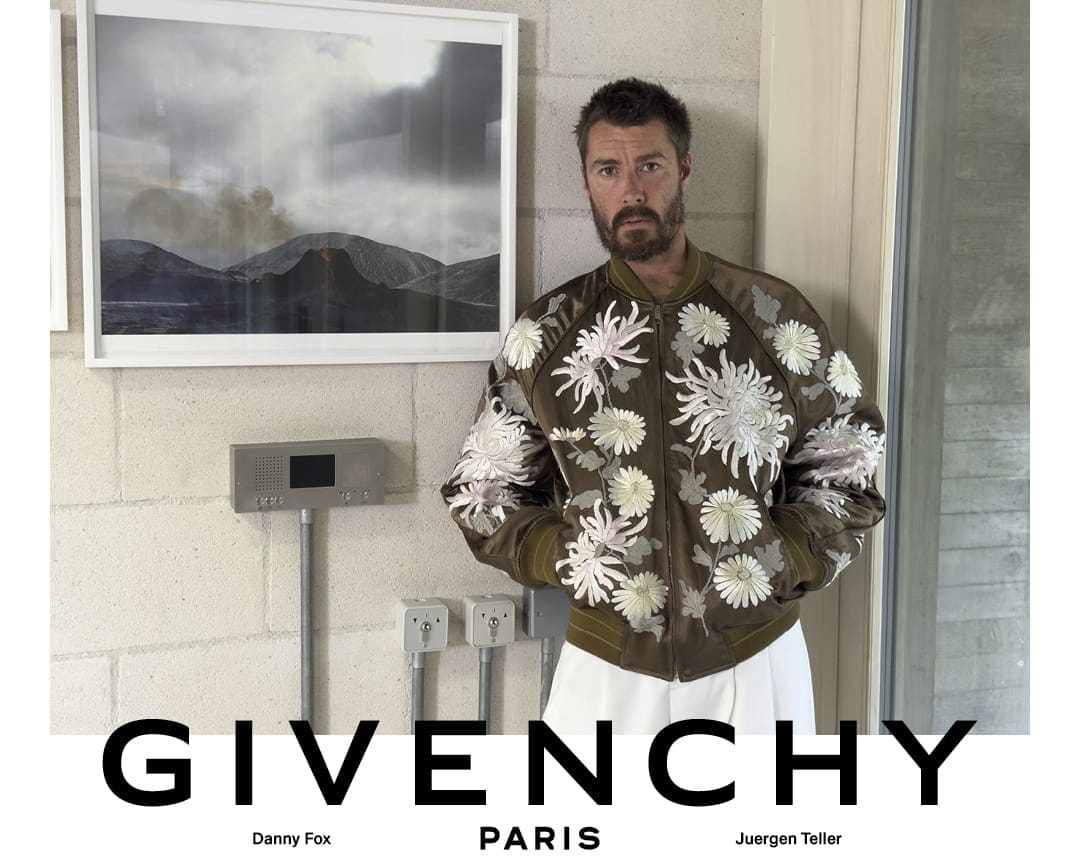
The campaign’s casting is its central argument. McCullin, a photographer whose career carries the gravity of witness, brings a sense of moral seriousness to the frame, the presence of someone who has spent a lifetime looking directly at the world. Letts carries the countercultural intelligence of music, film, and lived style, suggesting a masculinity shaped by rhythm, resistance, and cultural memory. Fox introduces a younger, more instinctive creative energy, one that feels rawer, looser, and more bodily. Together, they suggest that Burton’s Givenchy man is defined by the life behind the clothes: what he has made, what he has seen, what he has questioned, and how he occupies his own skin.
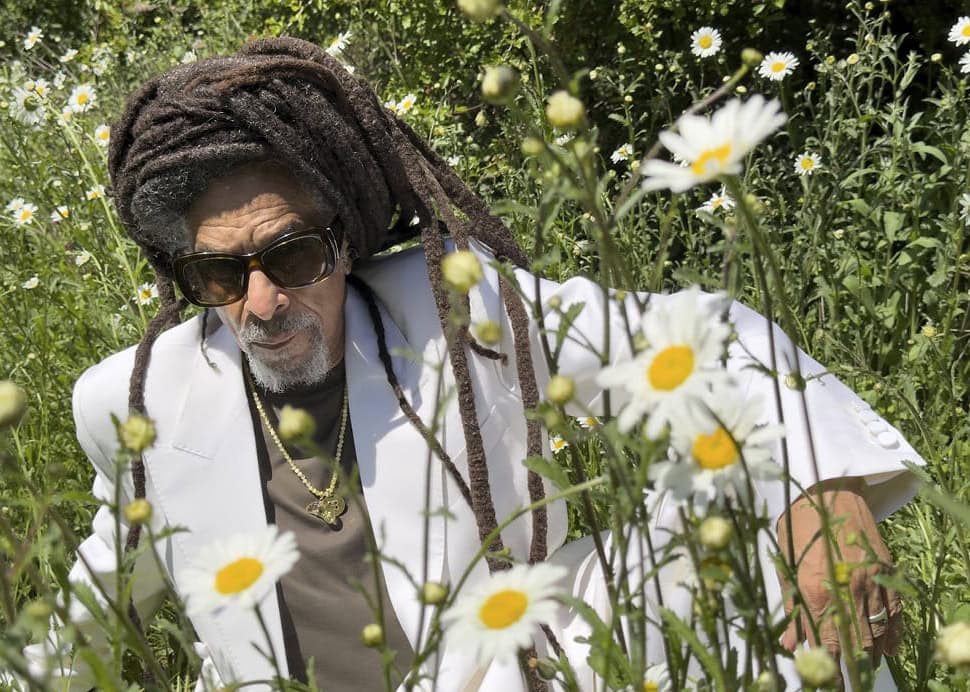
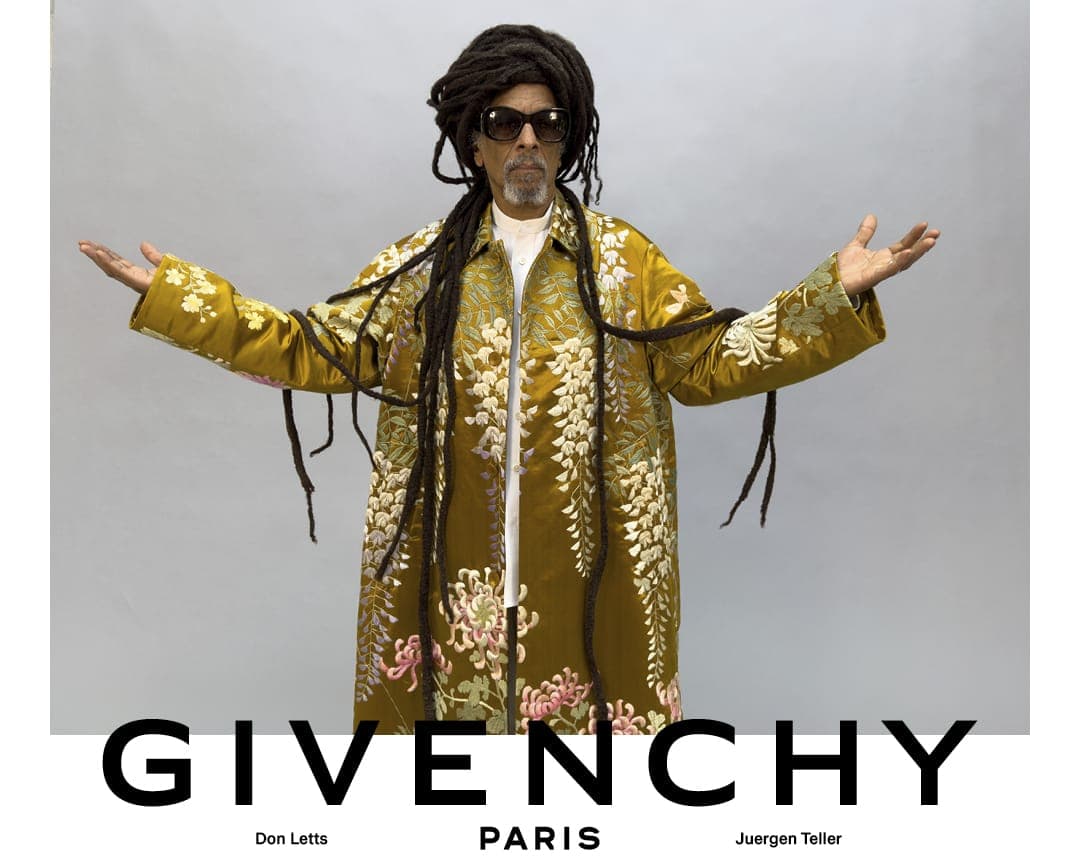
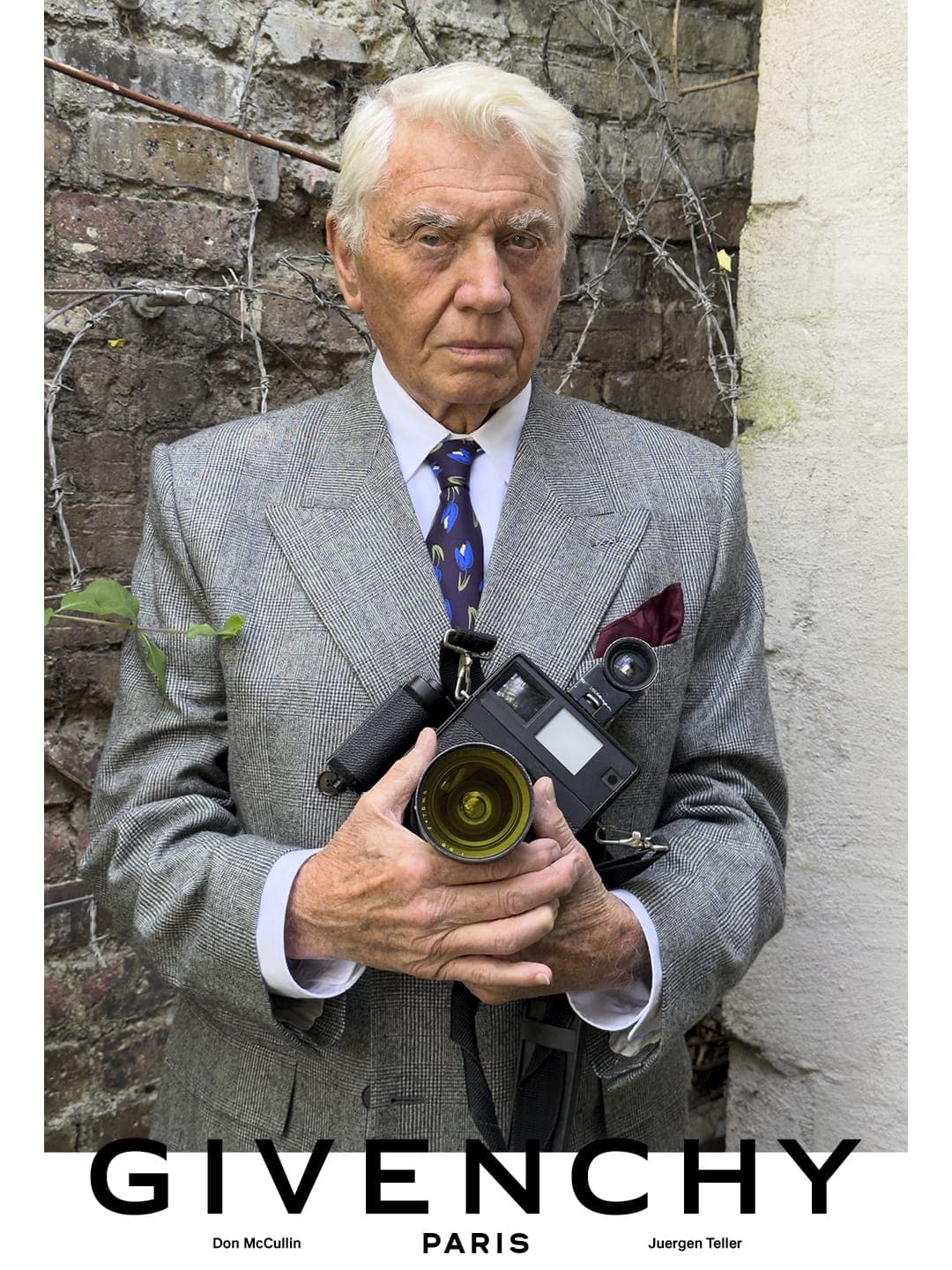
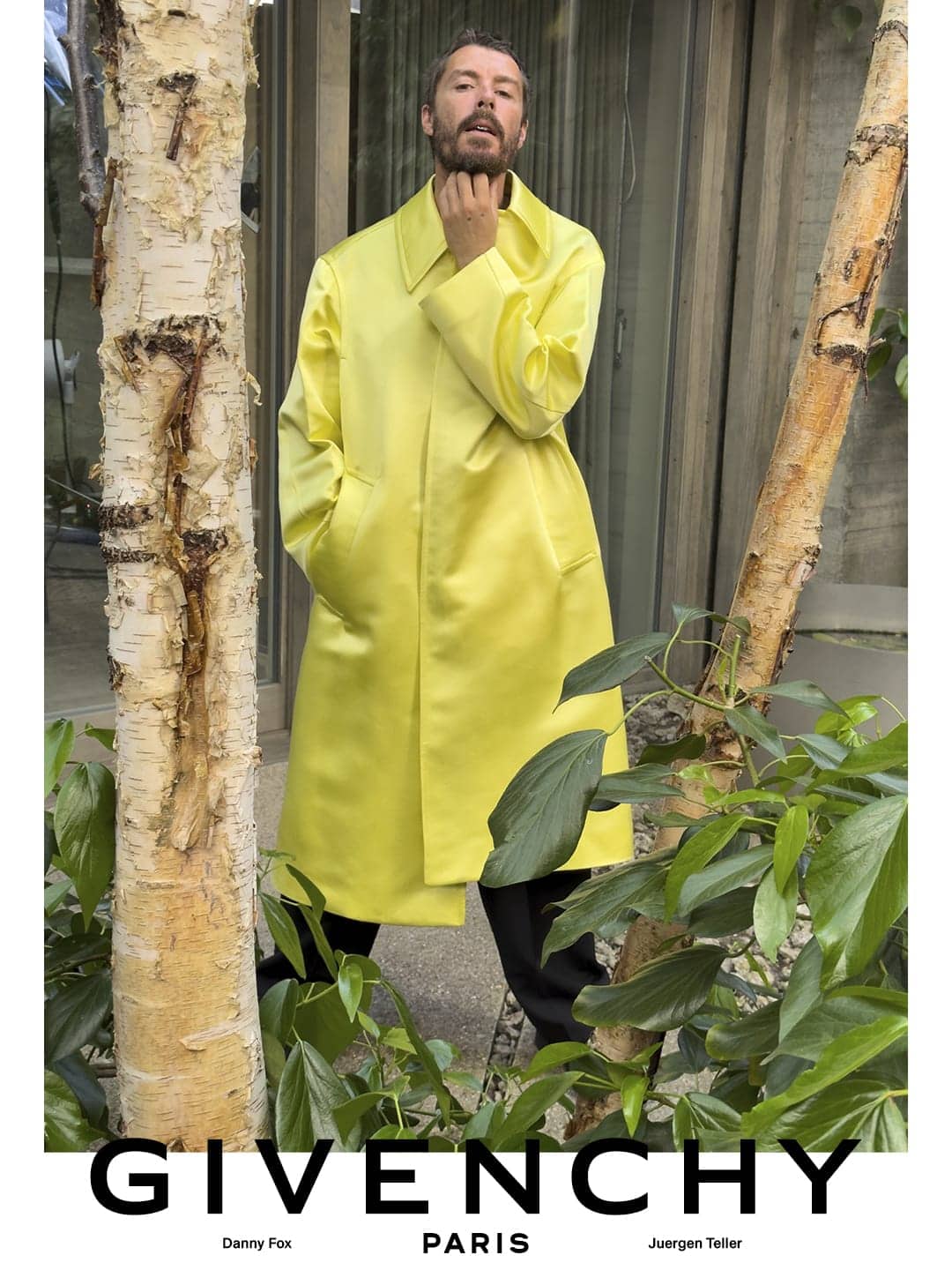
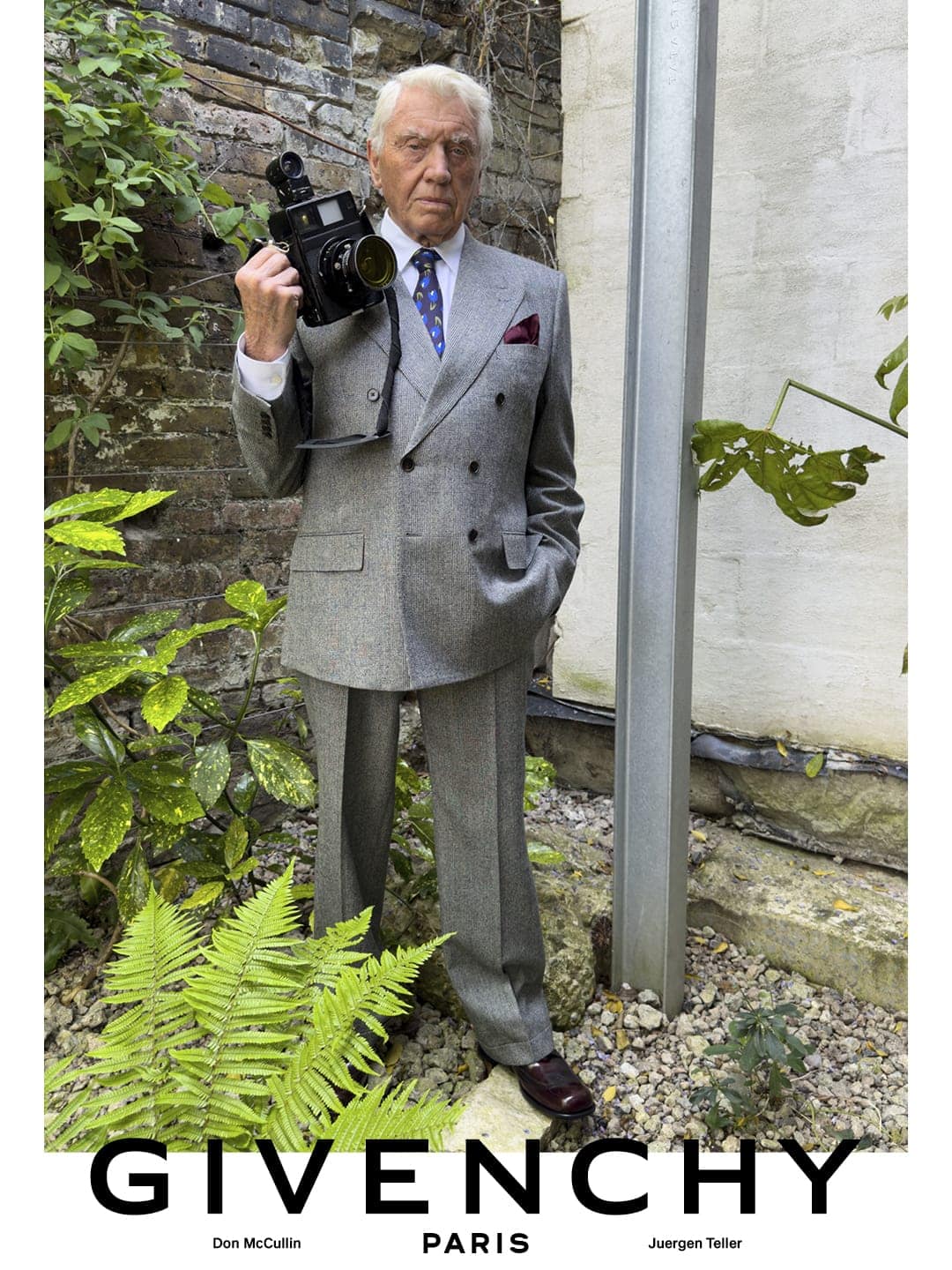
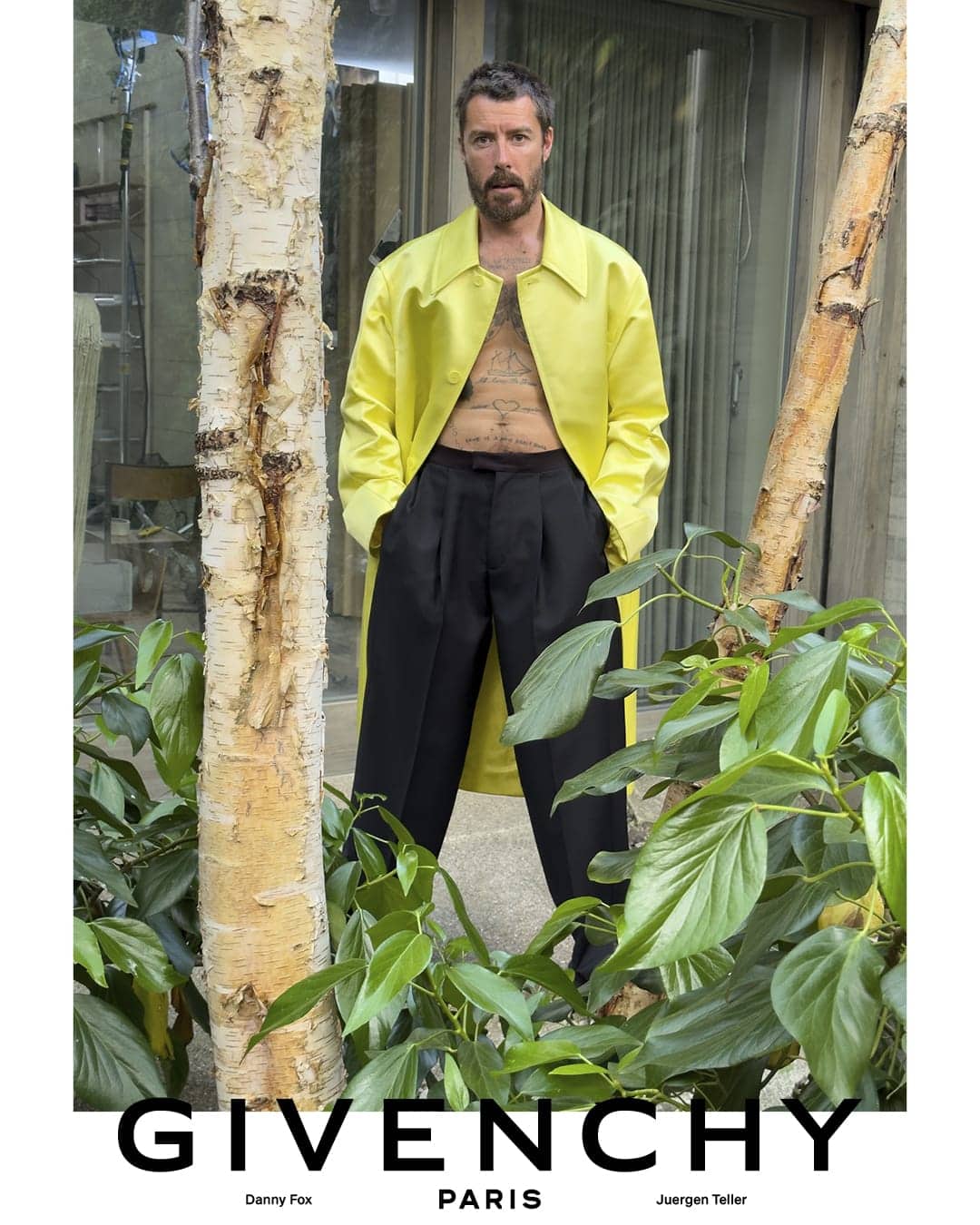
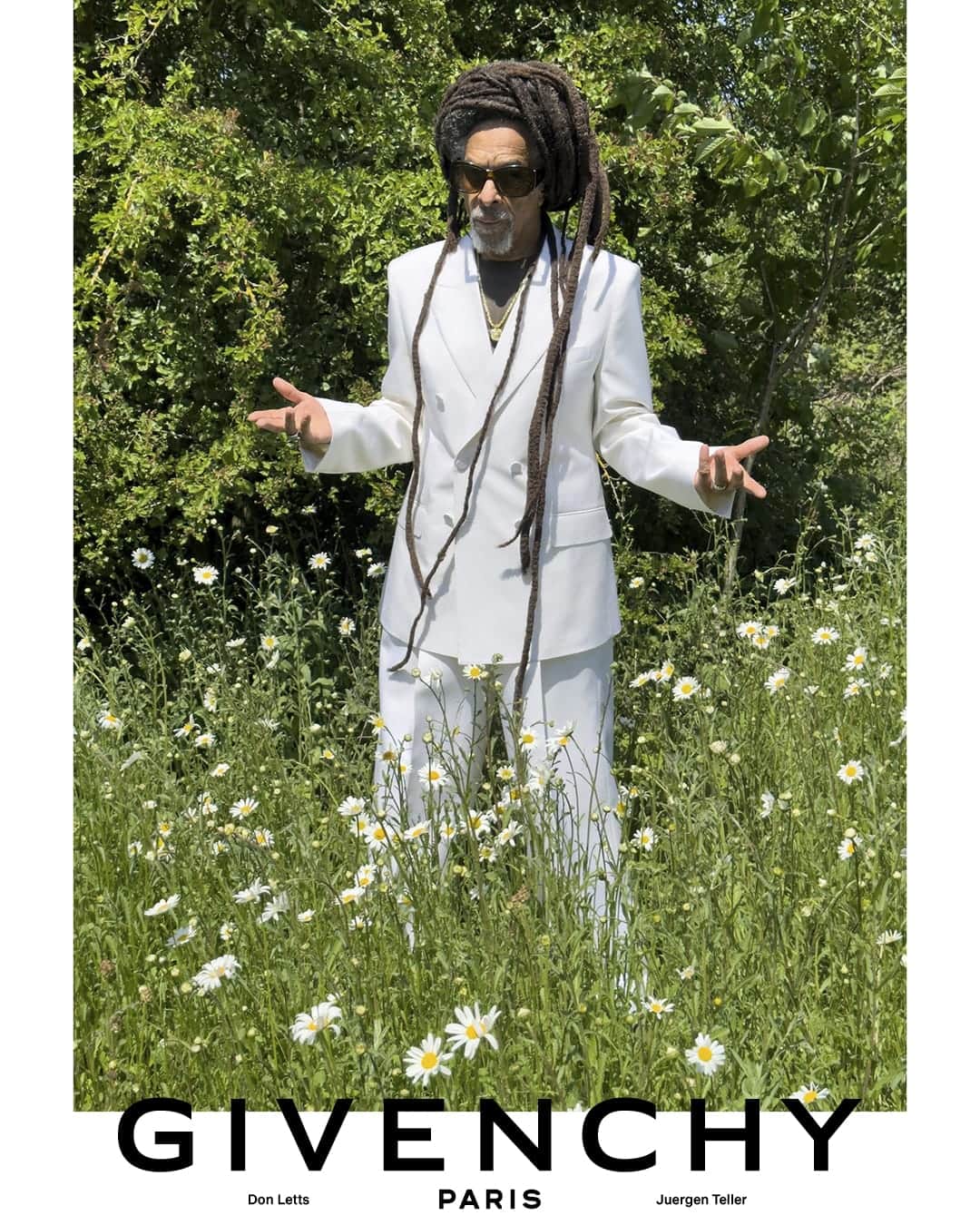
Teller’s imagery sharpens that idea by resisting excessive polish. The men appear in gardens, courtyards, studio-like spaces, and domestic architectural fragments, surrounded by brick, flowers, glass, concrete, and unruly greenery. The effect is direct, occasionally awkward, and deliberately alive. Nature presses in. The clothes meet the setting with a kind of practical strangeness. A luminous yellow coat on Fox reads with unexpected softness among pale birch trunks. Letts, surrounded by daisies or standing against a plain backdrop in embroidered silk, brings ease and theatricality without tipping into costume. McCullin’s tailoring carries its own moral weight, especially when paired with the camera he holds like both instrument and evidence.
What feels most persuasive is the way the campaign expands Burton’s Givenchy world while keeping its current logic intact. The same concern with structure, tactility, and personal presence carries across. Tailoring is strong, but it doesn’t harden into armor. Embroidery has romance, grounded by the men wearing it. The silhouettes have clarity, yet the campaign keeps returning to human irregularity: Letts’ open arms, Fox’s tattooed torso beneath a sculpted jacket, McCullin’s steady gaze. The clothes are allowed to meet men with stories already written on them.
That is a smart proposition for Givenchy now. The house has long held an association with elegance, but Burton appears interested in elegance as relationship, not etiquette. Her casting points toward a menswear universe where refinement can hold eccentricity, age, memory, artistry, and softness. The campaign suggests that masculinity, inside this new chapter, can be cultivated, bruised, generous, defiant, humorous, and exacting. A rare garden, admittedly, but a useful one.
The billboard format adds another layer. These are intimate portraits made public at city scale. That tension gives the campaign some of its charge. A photograph of McCullin holding a camera, blown up across Paris, becomes a statement about seeing and being seen. Letts among flowers turns countercultural presence into something almost pastoral. Fox’s looseness becomes architectural when placed under the Givenchy name. The campaign understands that a debut menswear statement does not need to explain the entire wardrobe. It needs to establish who has permission to enter the room.
The campaign’s looseness is part of its appeal, and also where it sets a higher bar for what comes next. Teller’s anti-gloss directness serves the casting well, giving each man room to remain distinct, even slightly unruly. At moments, that same directness makes the campaign feel closer to a set of character studies than a fully resolved house world. The men are compelling enough to carry the images, which gives the debut its credibility and its central challenge. As Burton’s menswear develops, the question will be how these personalities become a broader masculine vocabulary beyond the authority of exceptional individuals.
That is also why the campaign lands with more assurance than its offhand surface might suggest. It builds credibility through men who have lived, made, observed, and endured, which feels aligned with Burton’s particular gift: making clothes feel intelligent about the body wearing them. Givenchy menswear begins here with character leading silhouette, while silhouette remains quietly decisive. The campaign’s proposition is clear. The new Givenchy man is worth looking at because he has already looked closely at the world.
For Burton, that may be the most meaningful bridge from womenswear to menswear. She is adding men to the house by asking what kind of presence the house can hold. McCullin, Letts, and Fox make a compelling case for a Givenchy man rooted in character, craft, and lived authority. The next question is how far that world can expand while keeping its humanity intact.



Creative Director | Sarah Burton
Photographer | Juergen Teller
Models | Sir Don McCullin, Don Letts, and Danny Fox
Casting Director | Jess Hallett