At Milan Design Week 2026, the house extends its home universe through hammered metal objects and textile pieces rooted in artisanal precision.
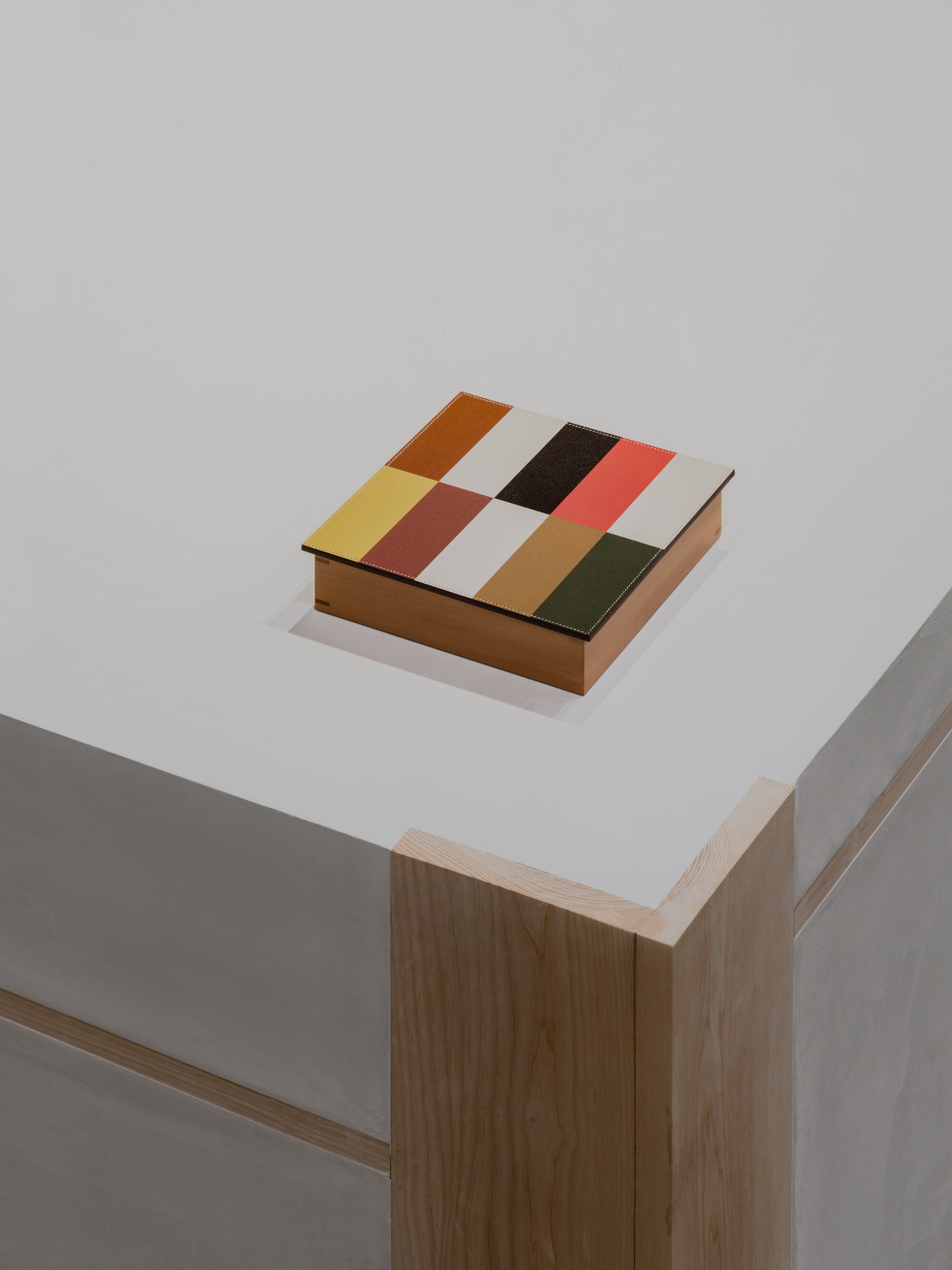
Hermès used Milan Design Week 2026 to sharpen the identity of its home category, unveiling a new “Collections for the Home” presentation built around material dialogue, artisanal process, and a refined sense of domestic storytelling. The presentation brings together sculptural objects in hammered palladium-finish metal with a series of textile works that explore weaving, dyeing, embroidery, and construction as design languages in their own right.
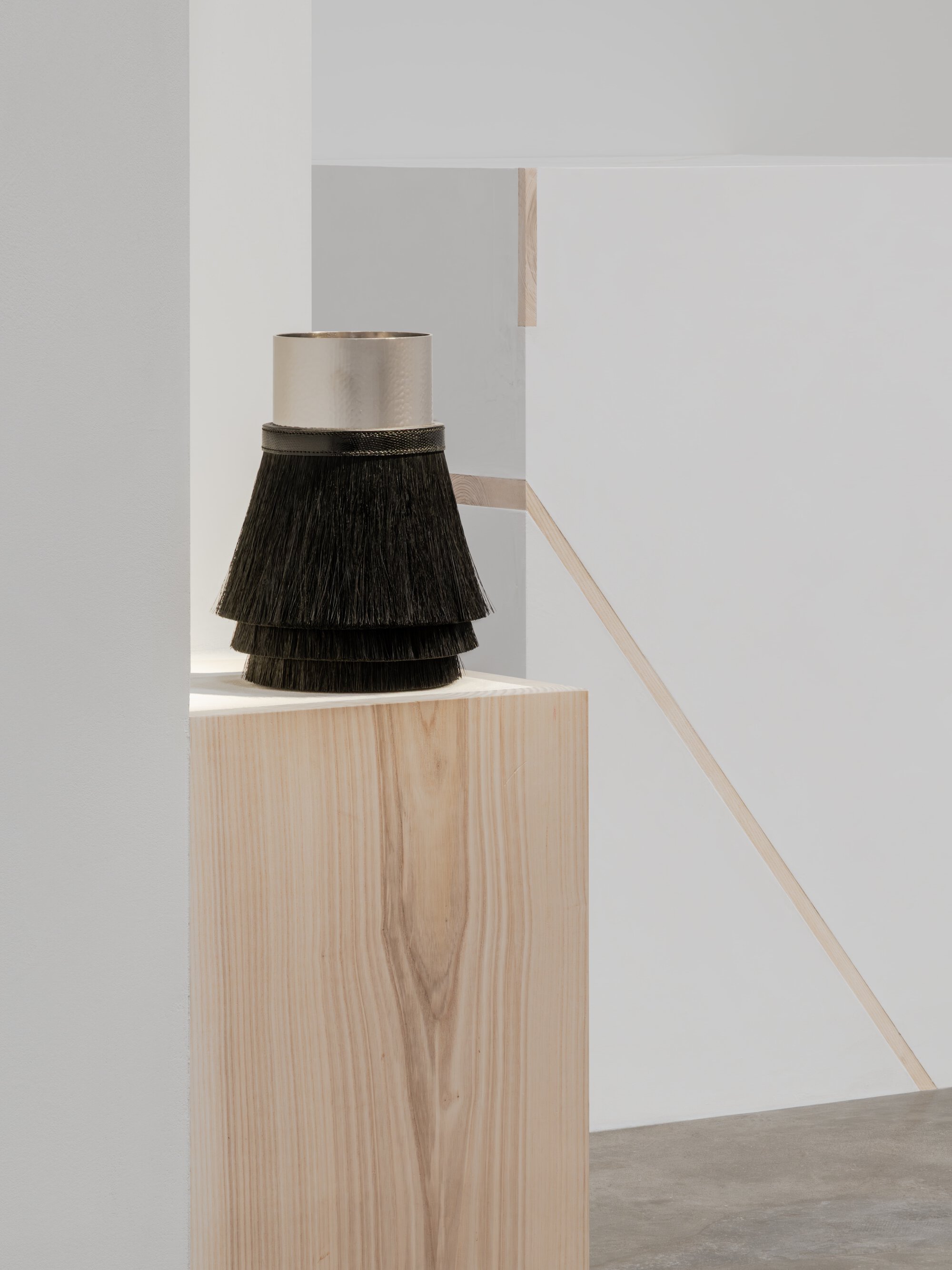
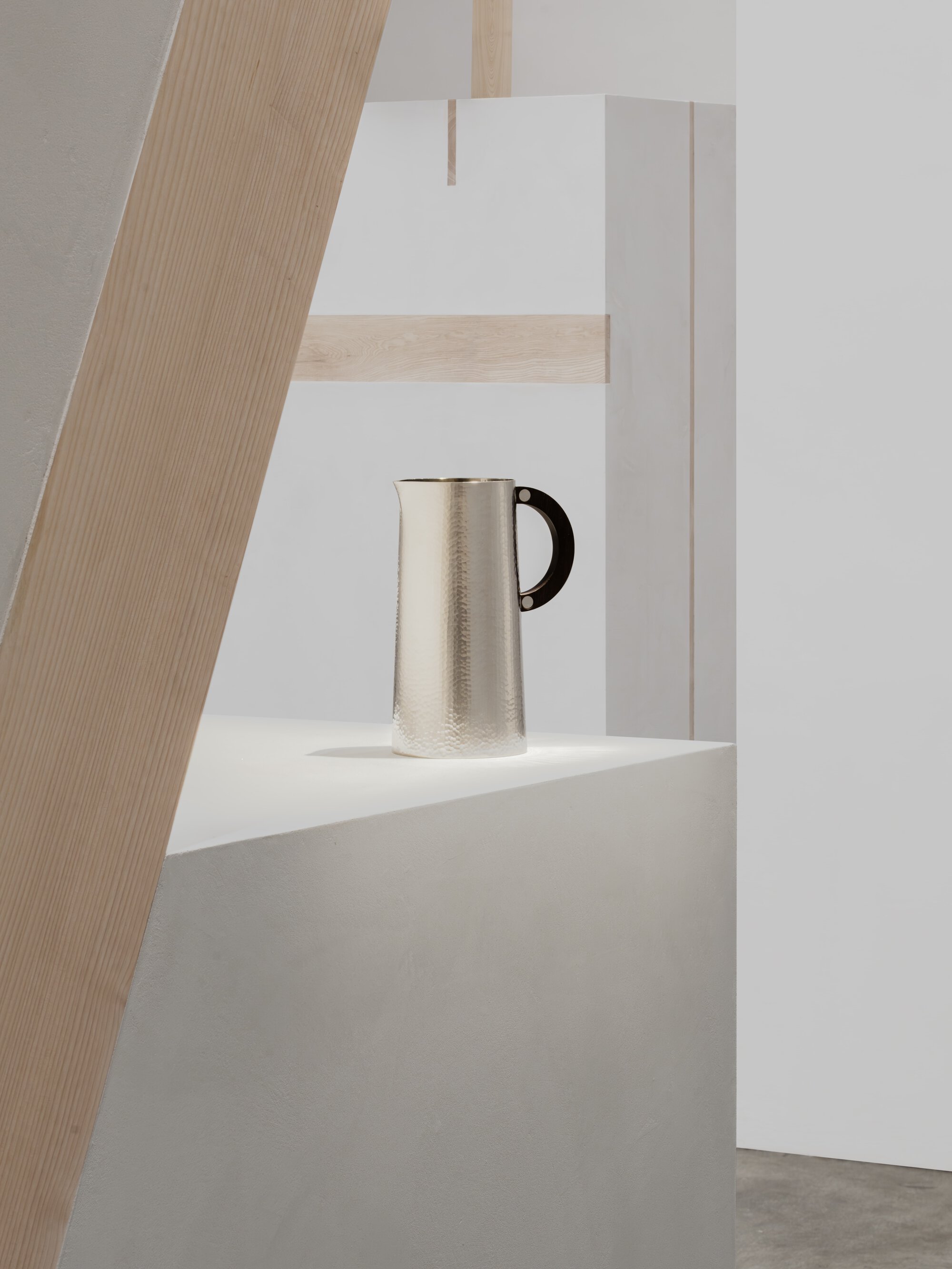
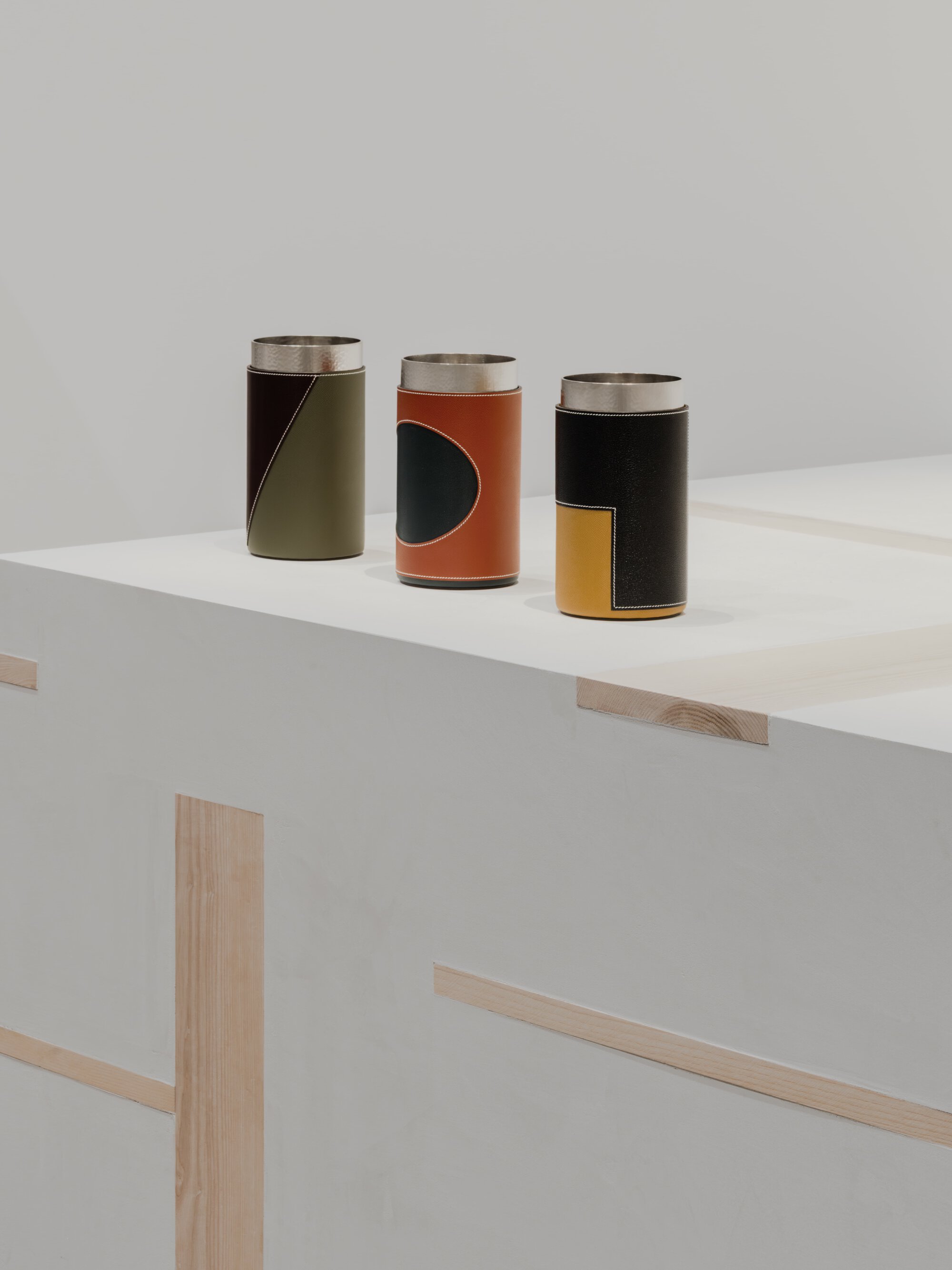
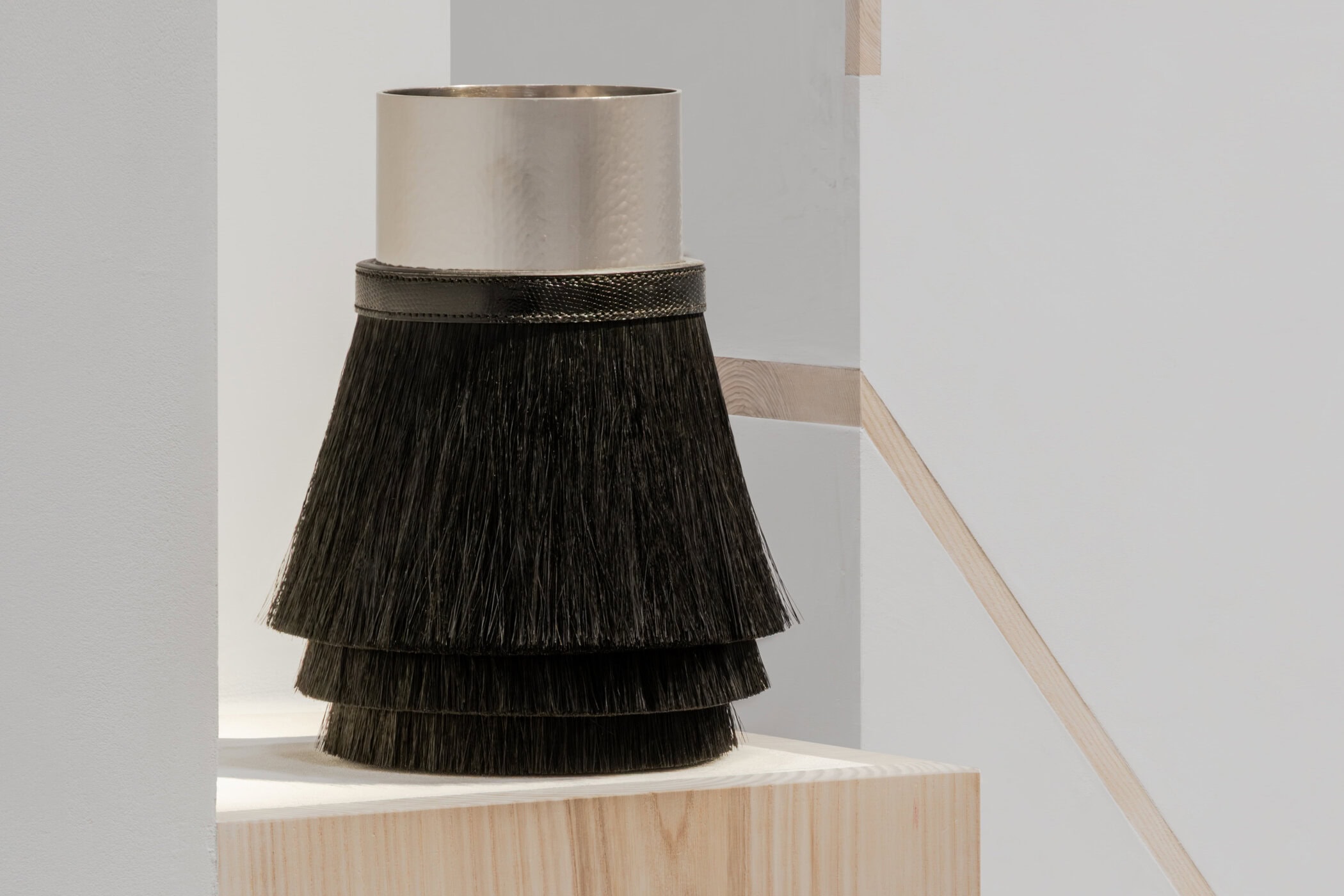
At the center of the object offering is Palladion d’Hermès, a new line of home pieces in hammered metal combined with leather, horsehair, or wood. The collection draws on the figure of Pallas Athena and frames the pieces as contemporary protective objects, with Hermès emphasizing the visual texture created by the silversmith’s hammer and the tension between reflective metal surfaces and warmer natural materials. The line includes a vase sheathed in black horsehair and calfskin, a jug with a cassia wood handle, a leather-clad cylindrical vase that nods to the house’s equestrian heritage, and a centrepiece finished with two-tone leather lacing.
The launch also reinforces a broader strategic constant for Hermès: the ability to translate core house codes into adjacent categories without losing coherence. In these pieces, saddle-making references, leatherwork, and the brand’s long investment in surface, finish, and touch move into the home with clarity. The result feels aligned with a larger luxury market appetite for interiors that communicate authorship and permanence rather than seasonal novelty.
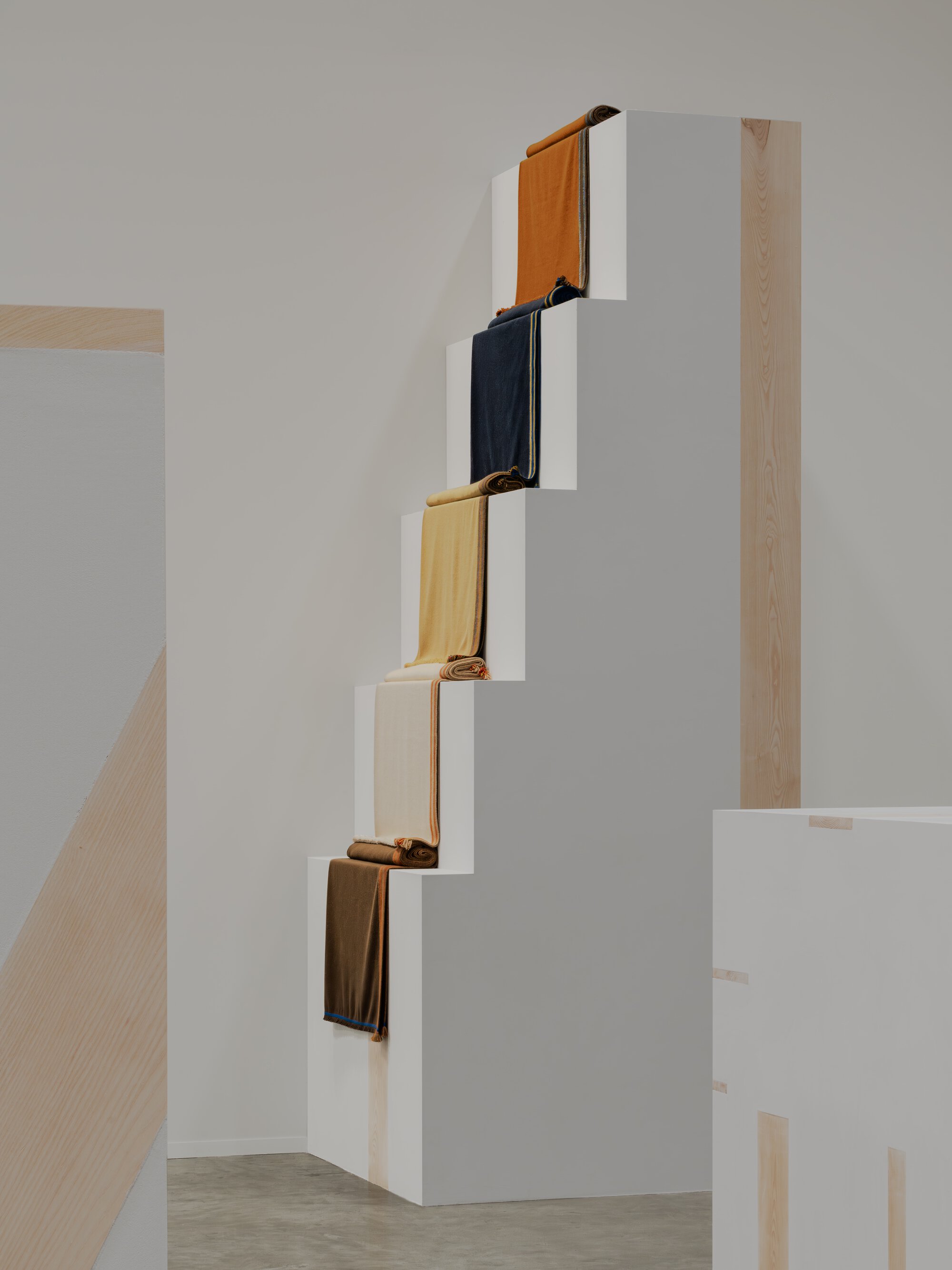
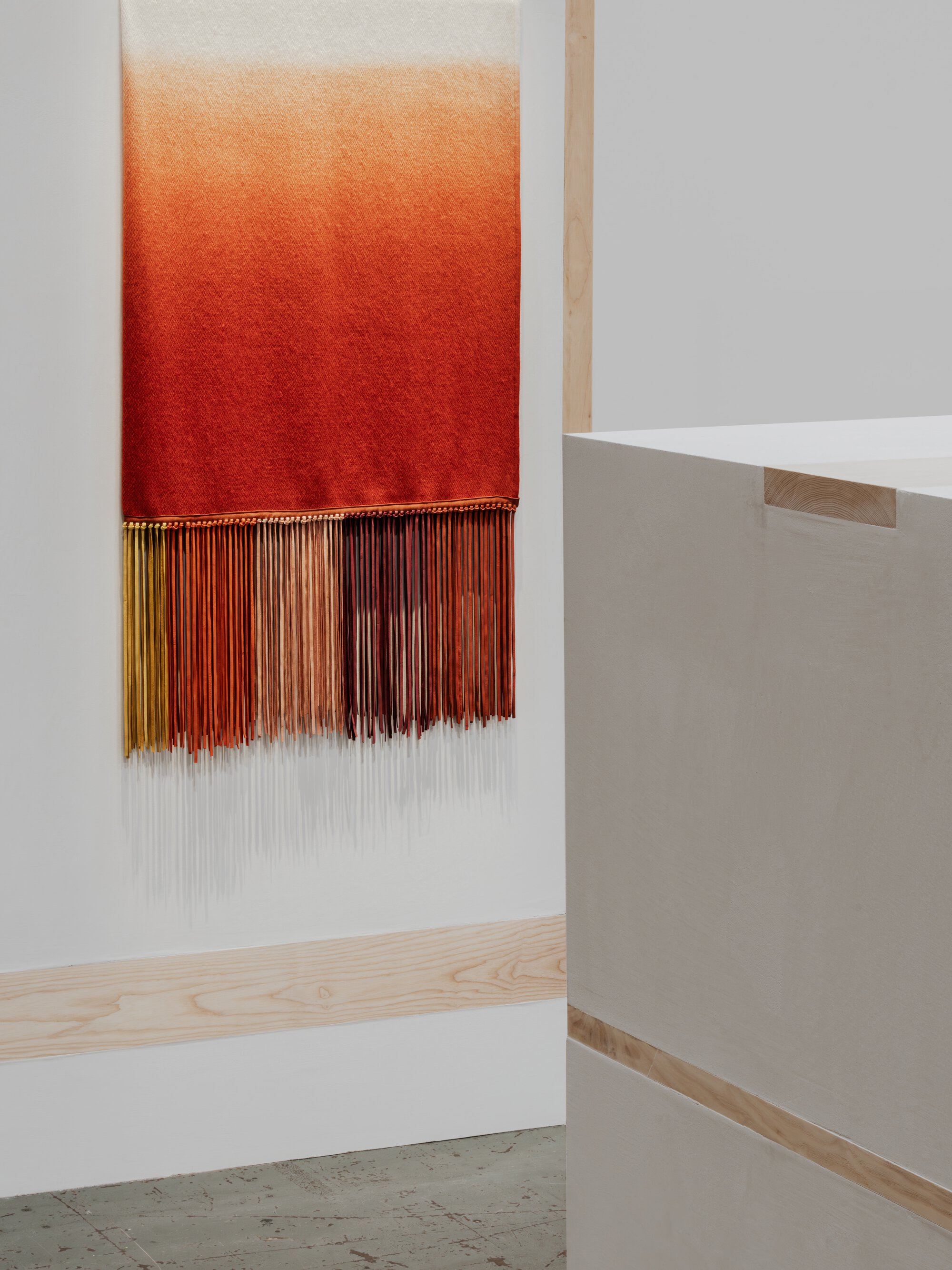
Alongside the metal objects, Hermès presented a textile group that places craft process at the forefront. The house describes the category as an ongoing site of experimentation, with hand-woven cashmere throws produced in Nepal and finished through resist-dyeing, embroidery stitching, ribbed webbing, and intricate panel construction. The Clamp & Dye throw uses four joined panels to build a geometric composition, while H Letter, designed by Hyunjee Jung, applies the traditional Korean art of bojagi to linen voile and cashmere, requiring hundreds of hours of work and revealing a discreet oversized H within its structure. Other pieces include Sangles Sellier, edged with ribbed webbing inspired by equestrian straps, and Aventure, a hand-dyed cashmere throw finished with long velvet lambskin fringing in sunset-like tonal gradients.
What stands out in Milan is Hermès’ continued confidence in slow luxury as a positioning tool. The presentation leans into time-intensive making, elevated raw materials, and restrained but highly legible design codes. That approach keeps the home division closely tied to the values that anchor the wider house, while giving clients another way to buy into the Hermès worldview through objects meant to endure.