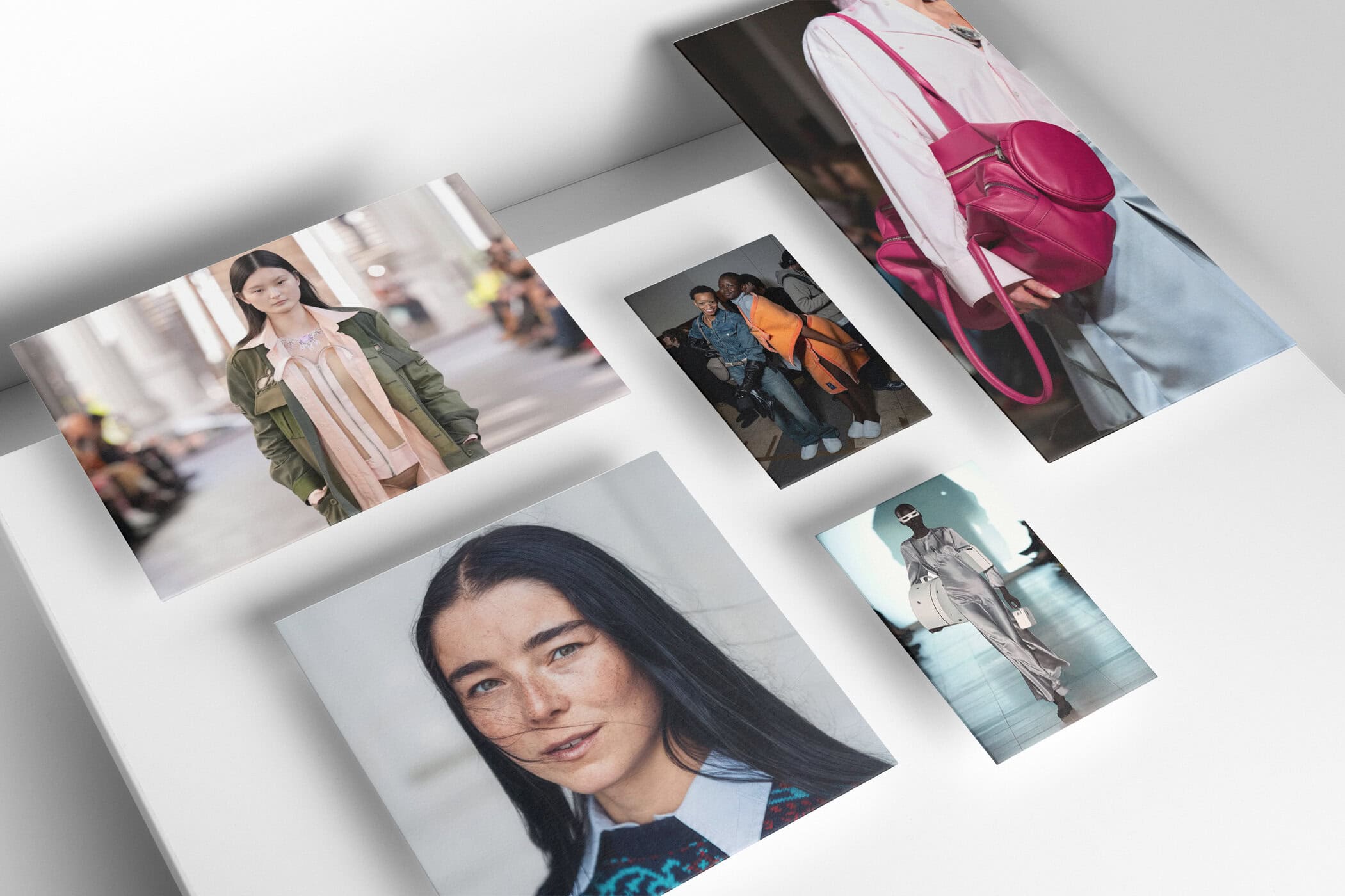
The LVMH Prize finalist speaks with The Impression at Antwerp.Fashion Festival about her home presentation, the reality of building an independent brand, and why fashion’s next generation needs partnership, not pressure
By Kenneth Richard
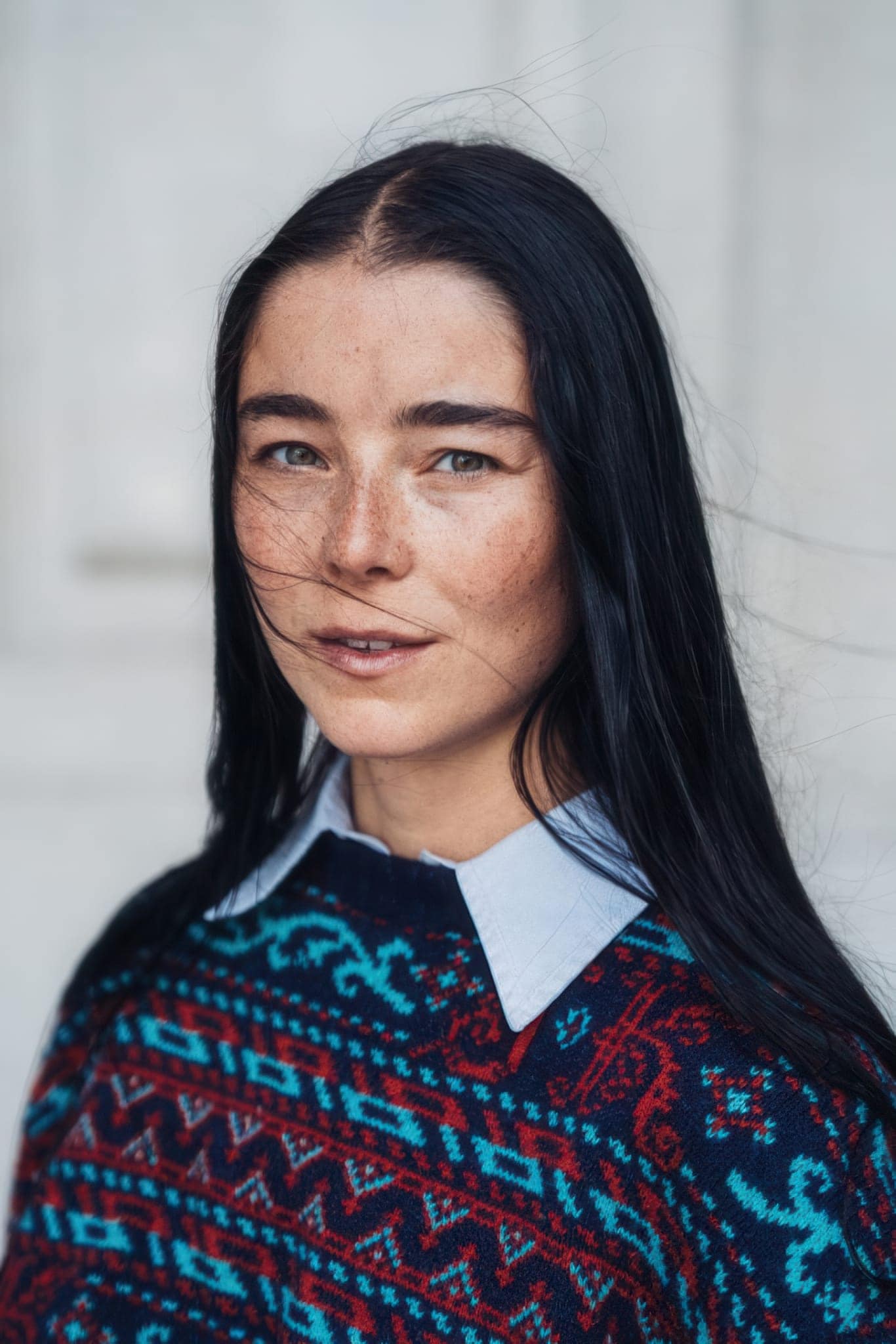
At Antwerp.Fashion Festival, Julie Kegels did not present her world as a runway, a showroom, or a retail exercise. She built an apartment. Or rather, she built the feeling of one: a lived-in, slightly hurried, emotionally precise space where fashion, furniture, objects, friends, collaborators, mentors, makeup stains, Post-it notes, and ambition all found a place. For a designer whose ready-to-wear often explores the speed and multiplicity of women’s lives, the format felt less like a detour into interiors than an expansion of the same idea. The Julie
Kegels woman, as the designer describes her, is always in motion, transforming from one role into another, slipping between private life and business life with more wit than the day probably deserves.
The exhibition, titled After Work and presented with COUR, brought that spirit into a gallery setting in Antwerp, where Kegels gathered work from the creative family that has helped shape the brand across its first three years. Rather than fill the space with garments alone, she invited collaborators, friends, mentors, artists, and members of her team to make or contribute pieces under their own names, each responding in some way to the collections she has already created. There were vintage pieces, design objects, a mirror made with Post-its by the brand’s business manager, works by artists connected to her personal and professional life, and references to the garments, gestures, textures, and little obsessions that have become part of her brand language.
“For me it was also very interesting, actually, to make a show that’s not existing out of pieces of garments, but something else that still breathes the same vibe as JK Woman,” Kegels said.
That phrase, “JK Woman,” is useful because Kegels is designing from inside the life she is describing. A Belgian designer born, raised, and educated in Antwerp, she launched her womenswear label in 2024 after graduating from the Royal Academy of Fine Arts Antwerp. This year, she became one of the finalists for the LVMH Prize for Young Fashion Designers, an acknowledgment that has placed her in a wider international conversation while keeping her rooted in the local instincts that formed her. She is part of a new Antwerp generation that has inherited a city famous for fashion mythology, but her work does not lean on nostalgia. It is more alert to the present: to the woman with three identities before lunch, to the beauty of getting dressed while life is already pulling at your sleeve, to the business reality that a young designer may be celebrated publicly while privately trying to solve production, cash flow, and delivery timing before breakfast.
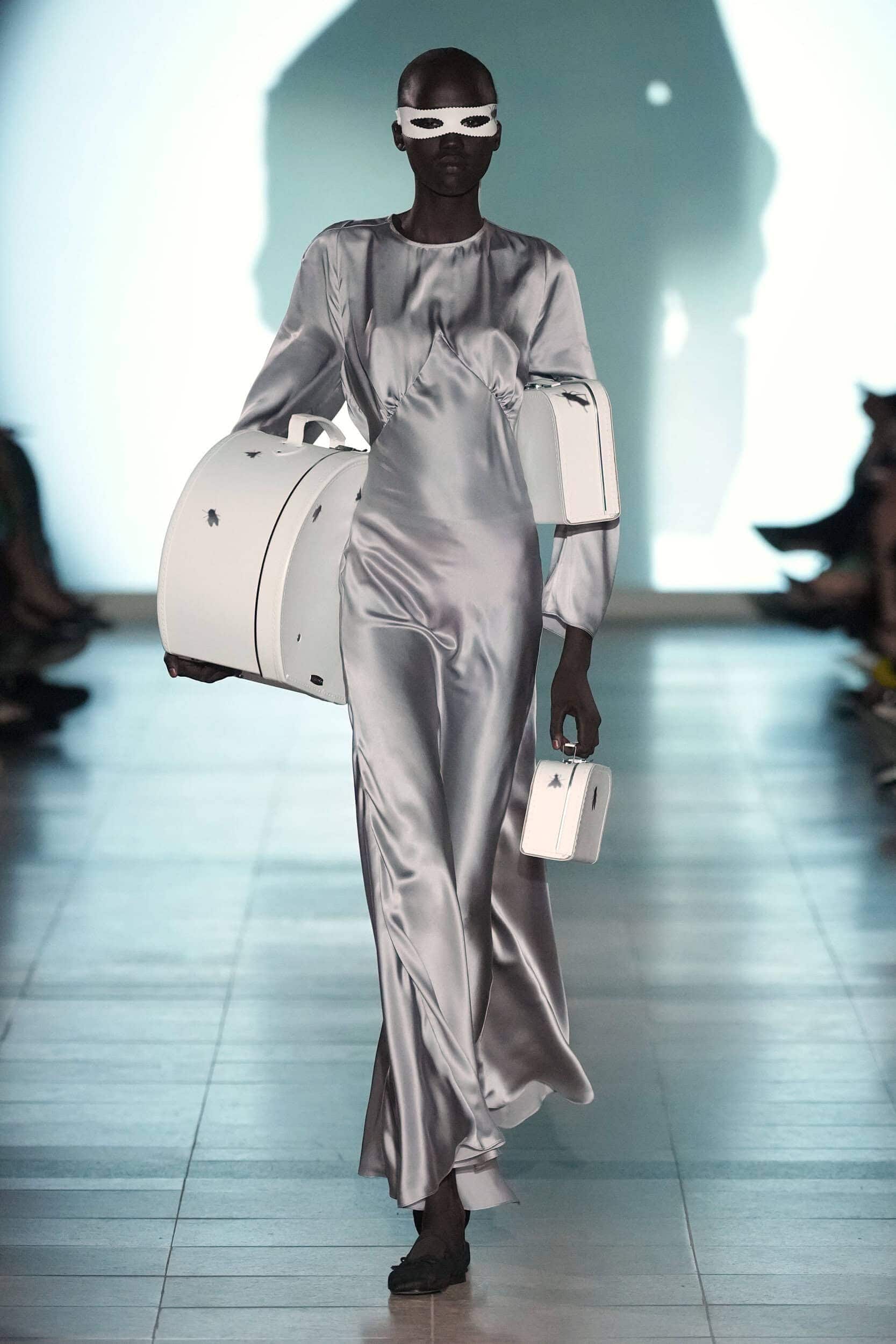
Asked to describe the brand in a few words, Kegels answered with three that could also describe the mood of the exhibition: “stubborn, fresh and always…” She paused, or perhaps the sentence simply kept moving, which felt appropriate. Her clothes often seem to start from the idea that a woman is never only one thing. A skirt can perform. A jacket can shift. A garment can be practical, strange, polished, and unruly, sometimes all at once. Her own life is part of that proposition.
“As a woman, the inspiration of all the collections is experiences of my own life,” she said. “Also what I want to wear, and the identities that you have, the different identities for the day. Like in the morning I have to be a very warm girlfriend to my boyfriend, a partner, and then during the day sometimes you have to be strict and be a business woman, and in the evening you have to be again social and with friends.”
Garments, for Kegels, allow those roles to become characters. “Garments give you that opportunity,” she said. “You can really take a character.”
There is humor in that, but also a serious understanding of how contemporary women use clothes. The point is not costume in the superficial sense. It is agency. Kegels is interested in clothes that let women move through different states of life without pretending those states are seamless. She admits that she sometimes changes three times a day, and on other days wears a uniform of denim shirt, denim pants, and a shirt. The brand makes room for both impulses: performance and practicality, fantasy and the part of life that can be messed up.
The Antwerp setting sharpened that thinking. Kegels speaks about the city with the particular intimacy of someone so close to a place that its influence can feel almost like a blind spot. “I was born here. I’ve always lived here, and while I moved to Paris for one year, I’m very much Antwerp,” she said. “You can’t be more Antwerp than I am.”
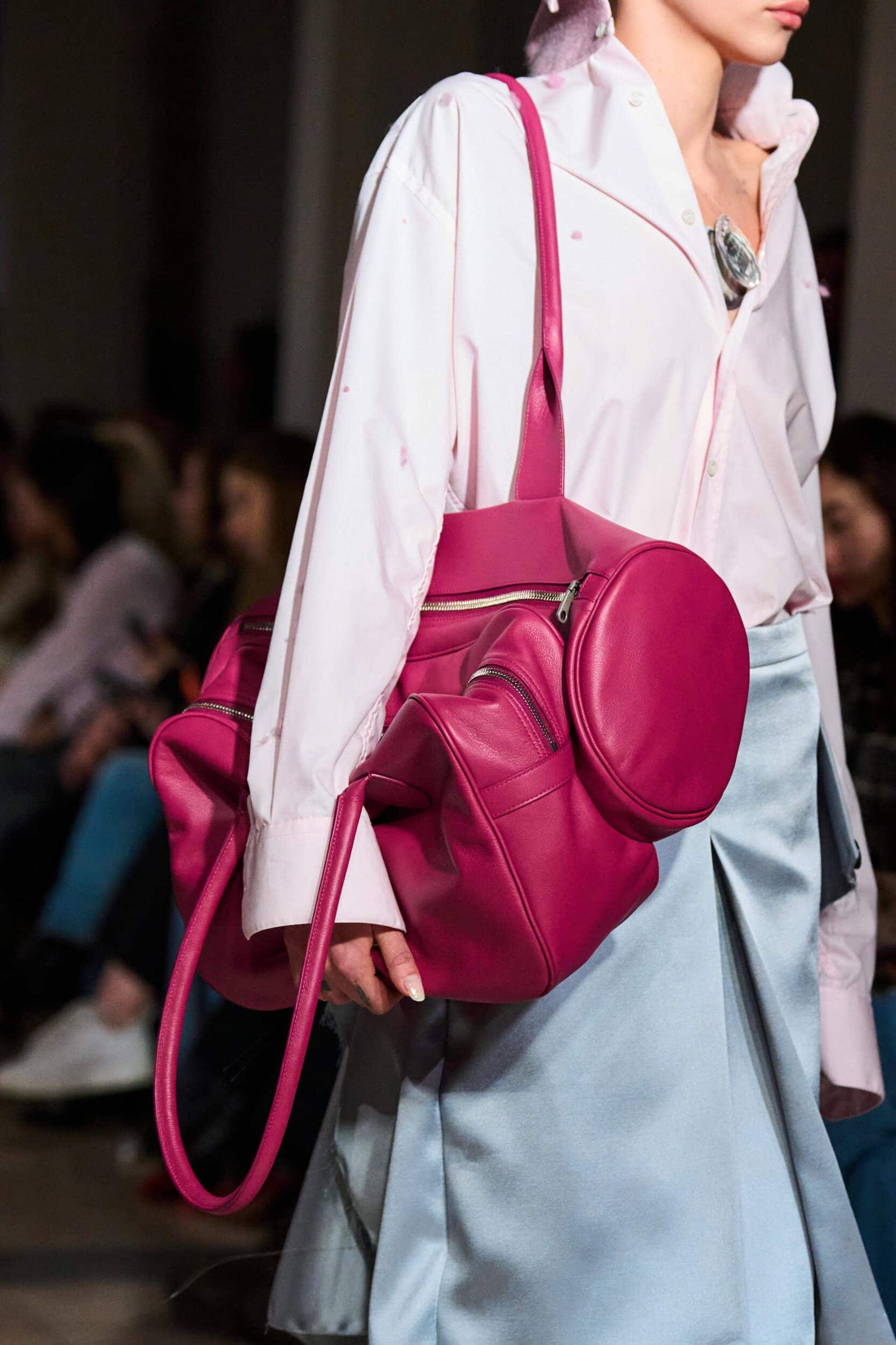
What she can identify is a certain rawness. Antwerp, to her, is gray, realistic, ordinary, not overly refined, and that very ordinariness creates space for dreaming. “There is something very raw about Antwerp and Belgium,” she said. “There is something that reads something ordinary out of daily life, but still there’s a lot of grace.”
That balance — ordinary life and grace, rain and imagination, realism and fantasy — is central to the way Kegels thinks about fashion at a moment when the industry is being pulled between automation, scale, and speed on one side, and the renewed value of craft and human touch on the other. She is aware of the pressures around artificial intelligence and corporate efficiency, but she reads the moment with a surprising optimism. The more perfect and automated certain things become, the more room there may be for work that carries the evidence of human hands.
“I think there’s also something very positive,” she said. “Things that are too perfect, it gives actually us an opportunity also to go more to craft, and it’s a job that can be replaced by AI, because for me it’s humans for this, and also imperfections that humans make.”
Her words arrive at one of the central questions facing fashion’s next generation: how to build brands that can grow without sanding away the very human qualities that made them worth noticing in the first place. Kegels is young, energized, and gaining momentum, but she is not romantic about the mechanics. Growth brings visibility, but also growing pains. Freedom is inspiring, but it arrives with invoices, timelines, production calendars, and the daily need to switch between creative and business thinking.
“It’s also kind of a turning point, also because you’re growing and you have a lot of growing pains,” she said. “It’s not always fun.”
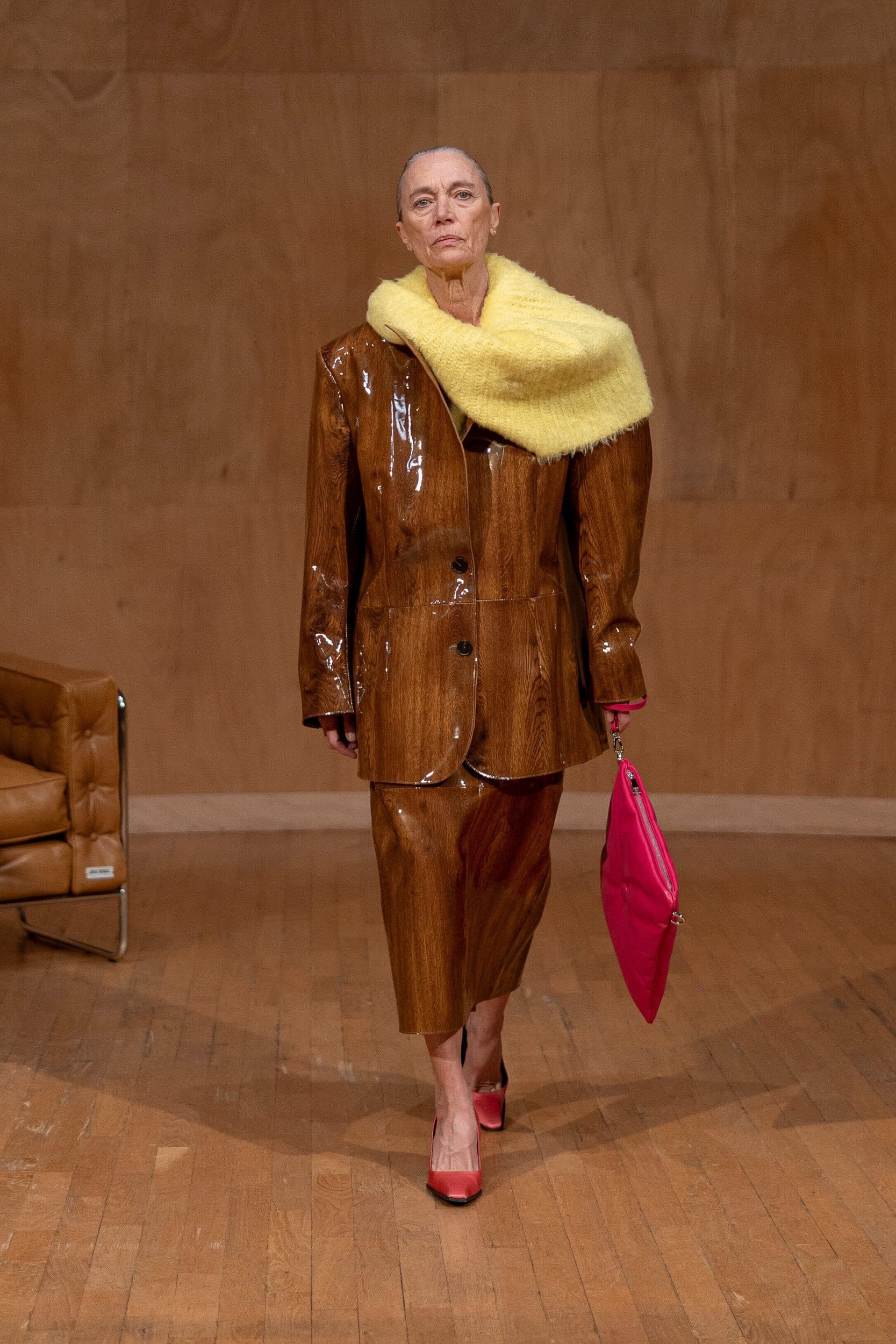
That experimentation is one of the advantages of a young brand. Kegels still has space to test, shift, and choose another path if something does not work. But the job of being an independent designer today increasingly demands two personalities that do not always happily share a room.
“You really have to say, okay, today I’m putting that hat on, but then I can’t be creative,” she said of the business side. “It’s really one or the other, because the other stops the creativity, and the creativity also stops the business side.”
The LVMH Prize process put her in a different kind of room. The semi-final came immediately after her show, which may have been a blessing. There was no time to overthink it. “It was a day after our show, so I have to say I didn’t stress about that,” she said. “It was just from the show to the LVMH showroom, and it was like, okay, and he’s there, and she’s there, okay? So I just let it happen, and it was a very beautiful experience.”
For an emerging designer, that kind of recognition can open doors, but Kegels’ conversation with The Impression made clear that recognition alone is not enough. If the industry wants to champion the next generation, applause must be matched by structural support. Young designers do not simply need visibility. They need fairer production access, realistic delivery expectations, stronger deposits, and retailers and manufacturers who understand that independent brands cannot operate on the same cash-flow assumptions as major houses.
The production issue is particularly acute. Kegels works across multiple countries, including Italy, Spain, Belgium, Romania, Bulgaria, and Portugal, with different specialists for different categories: suiting, shirts, dresses, shoes, bags, jersey, and more. That network allows quality and specialization, but as a small brand she is often at the back of the production queue.
“It’s not always easy, like the manufacturer part, quantities, for example, you’re always the last one, because you’re the smallest brand,” she said. “So your production is the latest. That’s always a stress point, because the stores expect you to deliver the same time.”
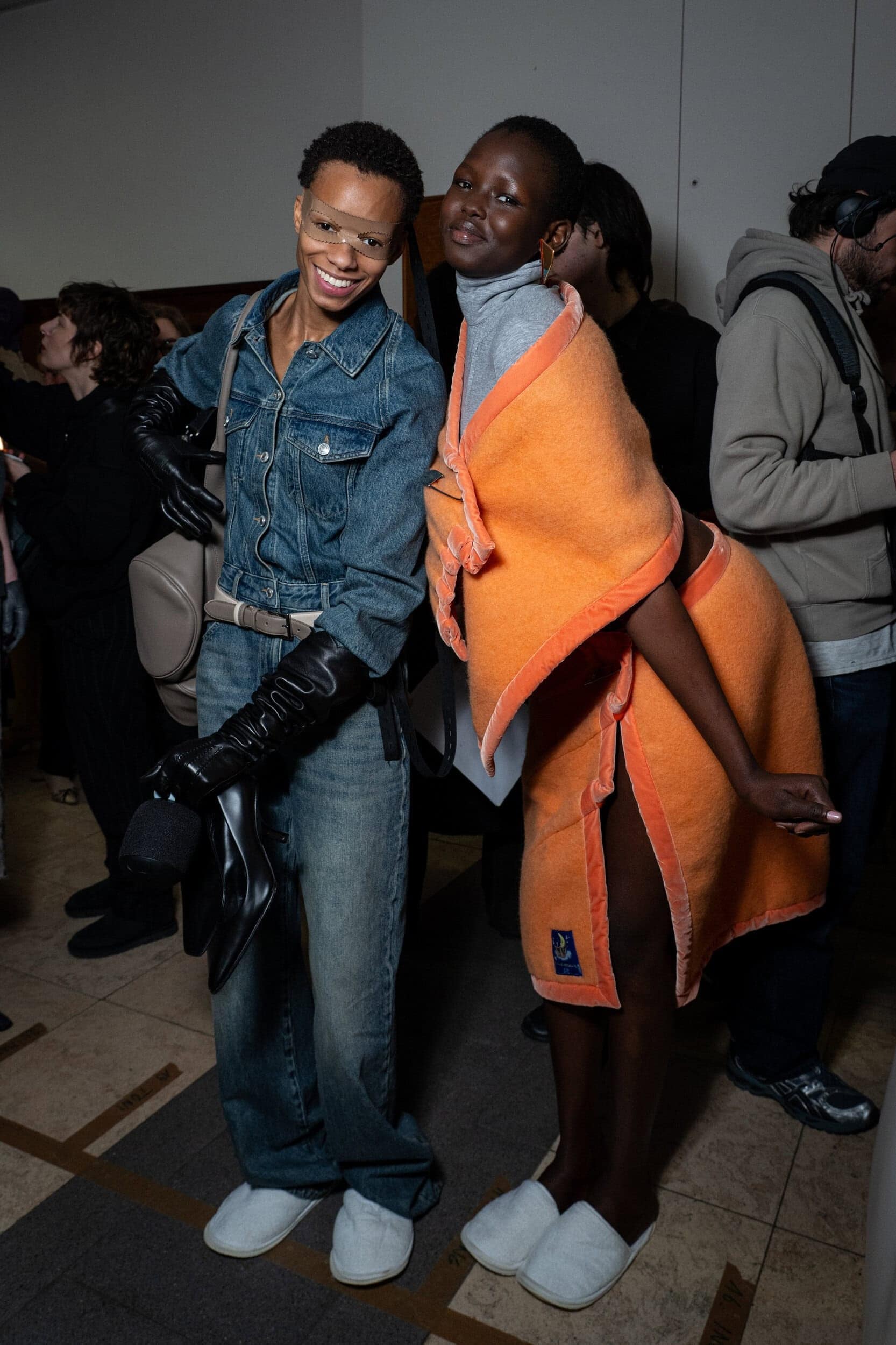
The problem is not simply that emerging designers are under pressure. It is that they are often asked to behave like fully resourced companies before the system has given them the terms to become one. A small brand must finance increasing quantities, maintain quality, manage multiple suppliers, deliver on time, and still produce the
creative spark that made retailers interested in the first place. Kegels is candid about the tension.
“When you grow, you want to maintain that same quality that you had in the beginning, because you have the small quantities and you can control it all,” she said. “But then when it’s growing, you want to control it all, but how, that’s all very challenging.”
Retailers, she suggests, can help in very practical ways. They can pay deposits, place orders on time, and understand that financial timing can determine whether a young brand is able to grow healthily or simply absorb more stress with every success. “The bigger the deposit, the better for us,” Kegels said. “Your quantities grow, and so you have to refinance actually a bigger amount every time, because a lot of stores don’t pay that much before or nothing even.”
It is one of the less glamorous truths of emerging fashion: a strong order book can still create a cash problem. Growth requires financing, and when payment terms are misaligned, the burden falls on the designer. For an industry that speaks often about supporting new talent, Kegels’ point is a useful reminder that mentorship can be
financial, operational, and behavioral as much as creative. Partnership is not only an invitation to a showroom. It is a deposit paid on time. It is a production slot respected. It is a delivery conversation grounded in reality rather than pressure.
The media, too, has a role, though Kegels approaches that relationship with gratitude. “I’m very happy with all the beautiful articles already, and the people who support us as a brand,” she said. “It’s super important. Because of that we can also grow. It’s really a partnership as well.”
That word, partnership, is the thread running through her Antwerp presentation as much as through her view of the industry. After Work was built from relationships: her business manager, her makeup artist, her teachers, mentors, artists, designers, friends, and collaborators. Everyone made something under their own name. The brand became a room others could enter, and in doing so it revealed how young labels are actually built. Not in isolation, not from genius alone, but through a web of people who lend skill, time, care, belief, and occasionally a
good Post-it system.
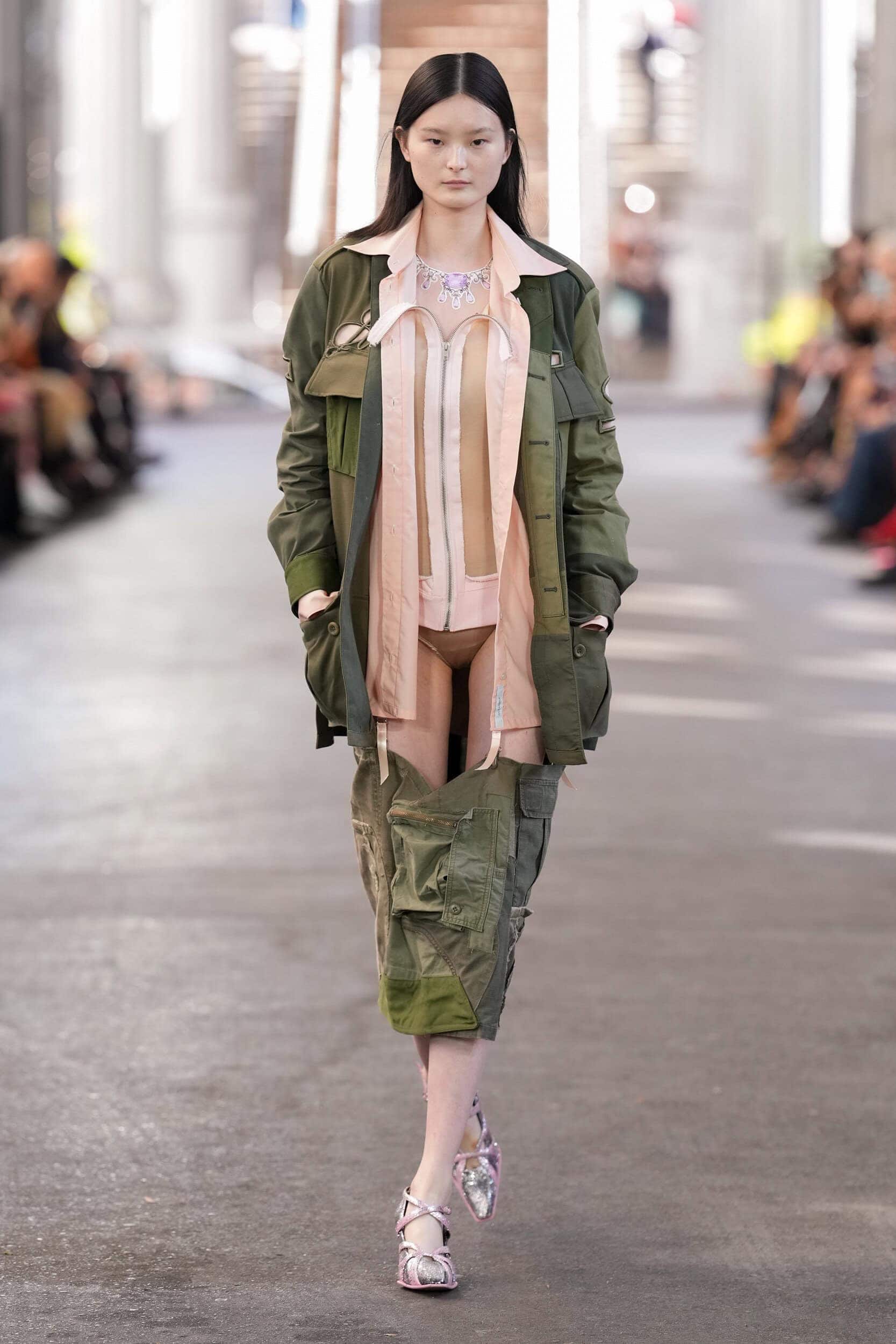
There is something very Antwerp in that. The city’s fashion history has often been told through individual names, but its power has also come from proximity: schools, studios, peers, mentors, manufacturers, and a shared willingness to let fashion remain a little raw around the edges.
Kegels belongs to a generation facing a very different industry than the one that formed Antwerp’s earlier legends, but she is asking some of the same essential questions in a new key. How does a designer stay independent? How does a brand grow without losing its soul? How do clothes carry the touch of human beings in a system that keeps asking for speed?
For now, Kegels seems willing to live inside the contradiction. She knows the work is difficult. She knows there are sleepless nights. She knows that success can arrive with new pressures before the old ones have disappeared. Yet she also speaks with the spark of someone who still sees possibility in the mess.
“It’s easy, you have sleepless nights and a lot of worries,” she said. “But I mean it’s also amazing that you can do your hobby as a job.”
At Antwerp.Fashion Festival, that hobby-as-job had become a home, full of objects, collaborators, memories, characters, and clues. It was a presentation about a ready-to-wear brand without relying on ready-to-wear as the only proof of its world. It was also a quietly persuasive argument for what young designers need now: not just
admiration from the industry, but better ways of working together. Kegels is building clothes for women who change roles several times a day. The industry around her may need to learn how to change roles too — from spectator to partner, from pressure point to support system, from buyer of newness to believer in what it takes to make newness last.