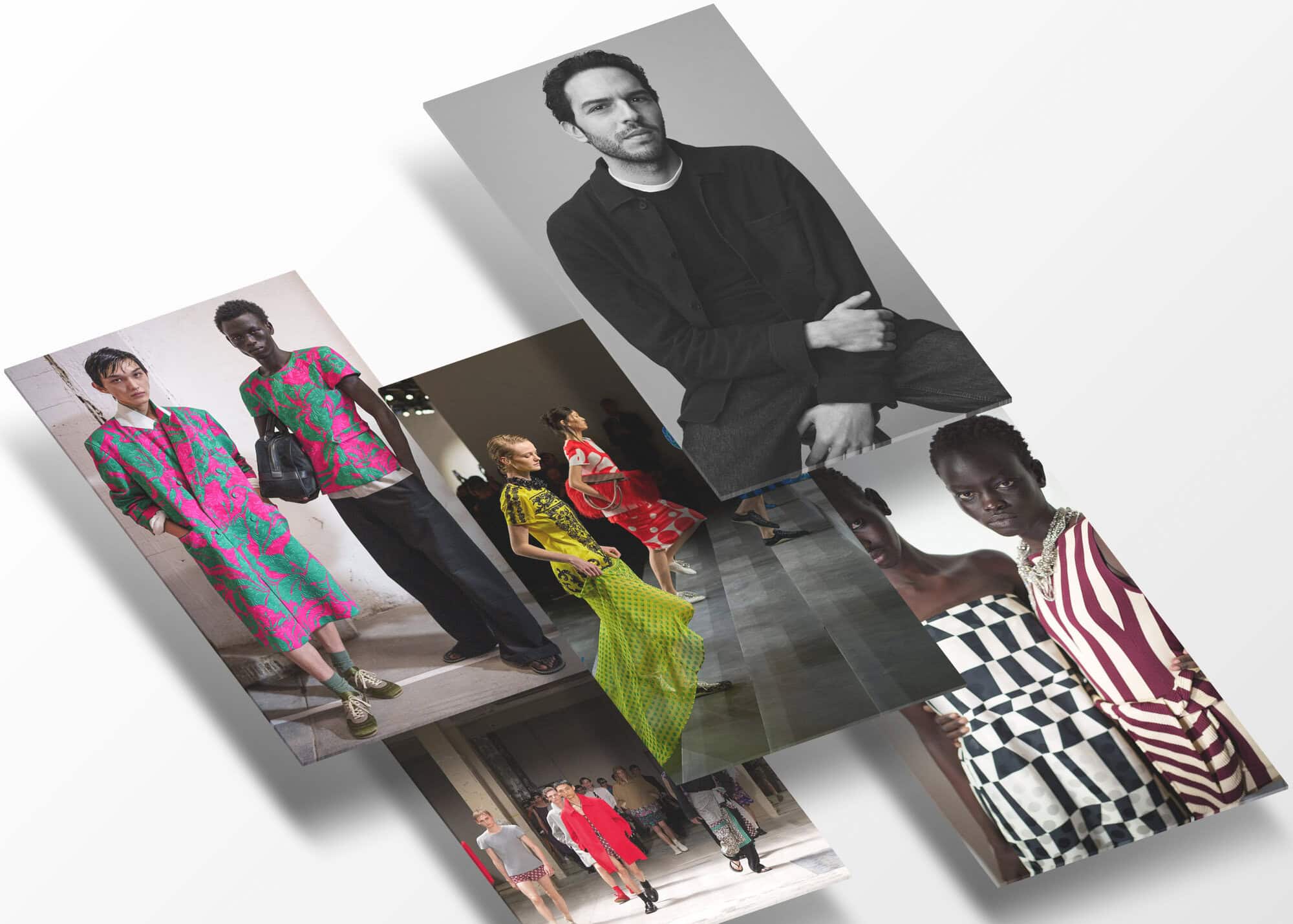
At Antwerp.Fashion Festival, the Dries Van Noten Creative Director reflects on inheritance, creative integrity, and the balance between fantasy and reality
By Kenneth Richard
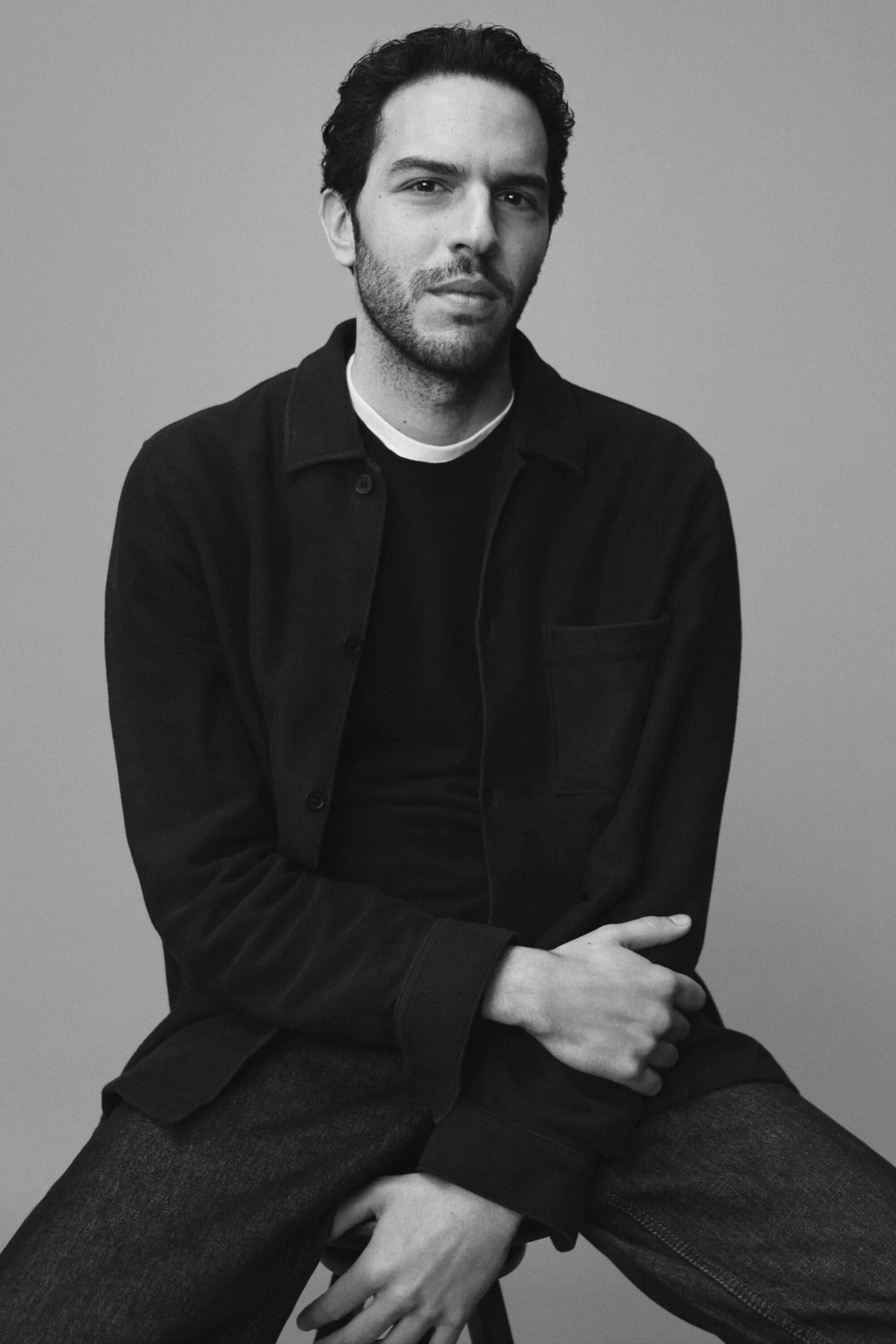
At Antwerp.Fashion Festival, in a city that has long understood the value of doing things slightly differently, Julian Klausner spoke about Dries Van Noten with the mixture of intimacy and clear-eyed responsibility that comes from having known the house first from the inside. Before becoming its Creative Director, Klausner had spent years working close to Dries Van Noten, learning the rhythms of a company built on fabric, color, process, discretion, and a stubborn belief that fantasy must eventually become a garment someone loves enough to wear for decades.
That may be the most important distinction in Klausner’s new role. He is not approaching Dries Van Noten as an outsider handed a set of codes to decode, nor as a star appointment brought in to announce rupture for the sake of noise. His transition has been quieter, more Belgian perhaps, and more delicate: a long working relationship becoming a larger responsibility, a studio conversation becoming a 360-degree vision, a house known for its founder’s deeply personal sensibility learning how to remain alive in another designer’s hands.
For Klausner, the first connection to the brand was built gradually, through name recognition, shows, the Antwerp store, and eventually the 2014 Inspirations exhibition in Paris, which he remembers as a profound window into Dries Van Noten’s world. “It was the kind of biggest window into the brand, like a real recap of all the different layers that Dries had created with the brand until that point,” he said. “I think it’s a brand that you get to know step by step, by middle by middle, and it’s so layered that I think there’s a lot of different entries to get to know the brand.”
His own first Dries Van Noten piece came through another very Antwerp rite of passage: the stock sale. As a student, he would attend the fabric sale to buy materials for school collections, and like many young people in Antwerp, he eventually found his way into the clothes. “I have a pair of super simple cotton pants that I still wear maybe 10 or 15 years later, so nothing really special, but in a way a good buy, because it’s still still of use,” he said. It is a modest anecdote, but also a telling one. In the Dries universe, the most poetic pieces are often anchored by the most practical truth: the clothes must live.
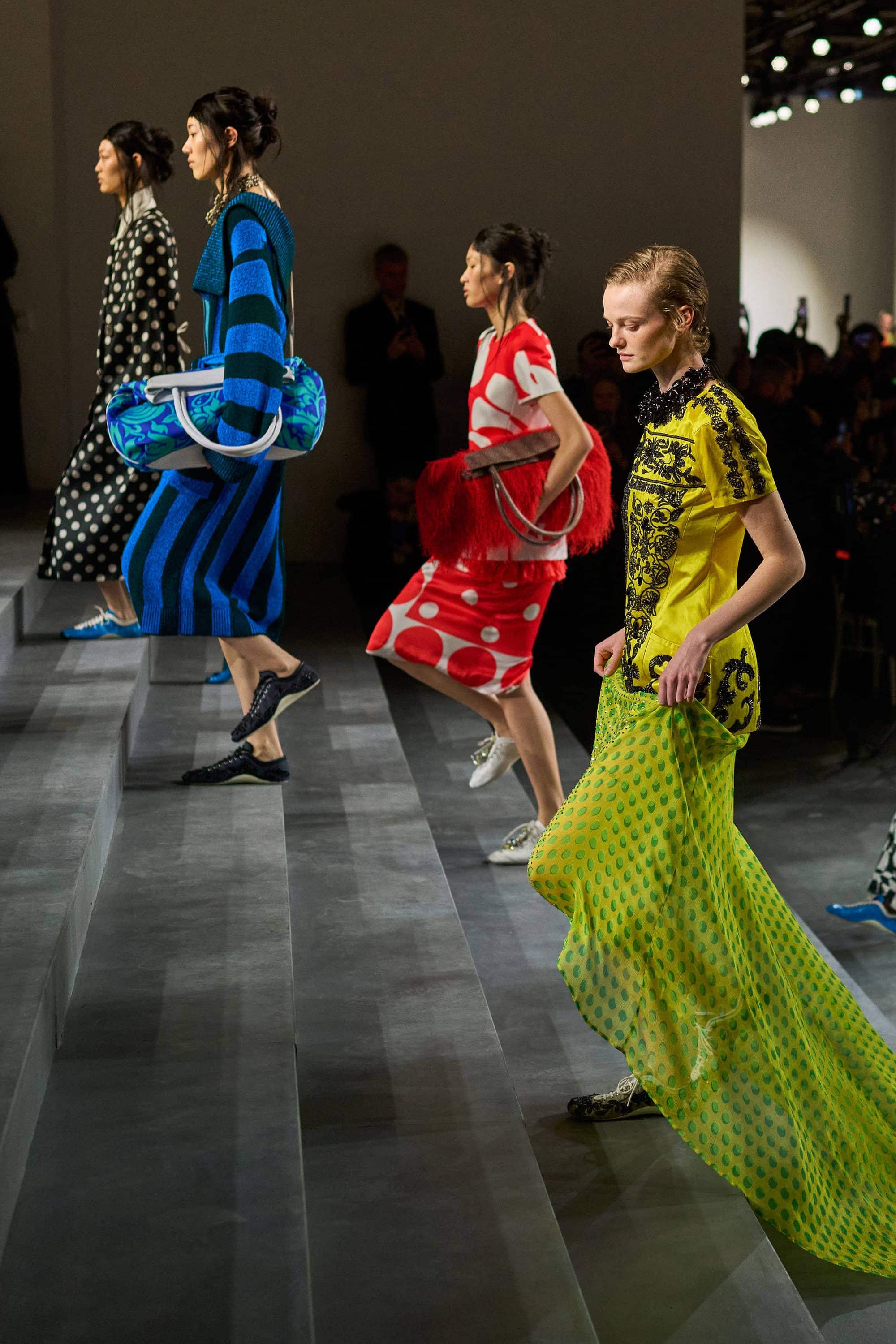
Klausner joined Dries Van Noten in 2018, after studying at La Cambre in Brussels and working in Paris, entering a house that had always seemed somewhat mysterious to him. It was not a brand known for revolving-door creative teams or a giant studio machine. “The only thing I heard was it was the same team for a very long time, and it was a small studio,” he said. When the opportunity came through a mutual friend, the connection was immediate enough to feel less like a career move than an opening into a world he had already been circling.
Working on the women’s collections with Dries gave Klausner a practical education in the kind of fashion that only appears effortless after many hands, many trials, and many recoveries from things that did not work. The lesson he carries most clearly is fabric. “Dries really taught me to fall in love with fabrics in a way,” he said. “Dries has such a passion and a love for fabrics and the way fabrics are made and challenging how they’re made, so I think that’s something that really developed.”
The other lesson was more philosophical, and perhaps more useful now that Klausner is leading the house himself.
Embrace mistakes, embrace accidents. That is something I always admired in Dries. When things didn’t work out, or when something didn’t come back looking the way he had hoped, he never wasted time being frustrated. He was very quick to react, to shift, and to use it to his advantage.
– Julian Klausner
That ability to turn disappointment into movement sits at the heart of creative leadership. Fashion has a way of mythologizing the final image while hiding the misfires that made it possible. Klausner seems more interested in the full process: the strike-offs, the swatches, the embroidery trials, the conversations, the reactions, the team’s collective eye, the unexpected failure that might become the season’s stronger idea if handled quickly enough.
The handover from Dries Van Noten was never, in Klausner’s telling, a theatrical passing of the torch. It was a process made of conversations, confirmations, sensitivities, and trust. There was no singular cinematic moment in which everything changed, partly because the human reality was more complex. Klausner was close to Van Noten and emotional about his departure, while also being asked to step forward into the role. “It was a very delicate moment,” he said. “It was also the end of an era for me, and of course I wanted to give him the space and time he needed. The last thing I wanted was to overstep or make that moment feel like it was about me.”
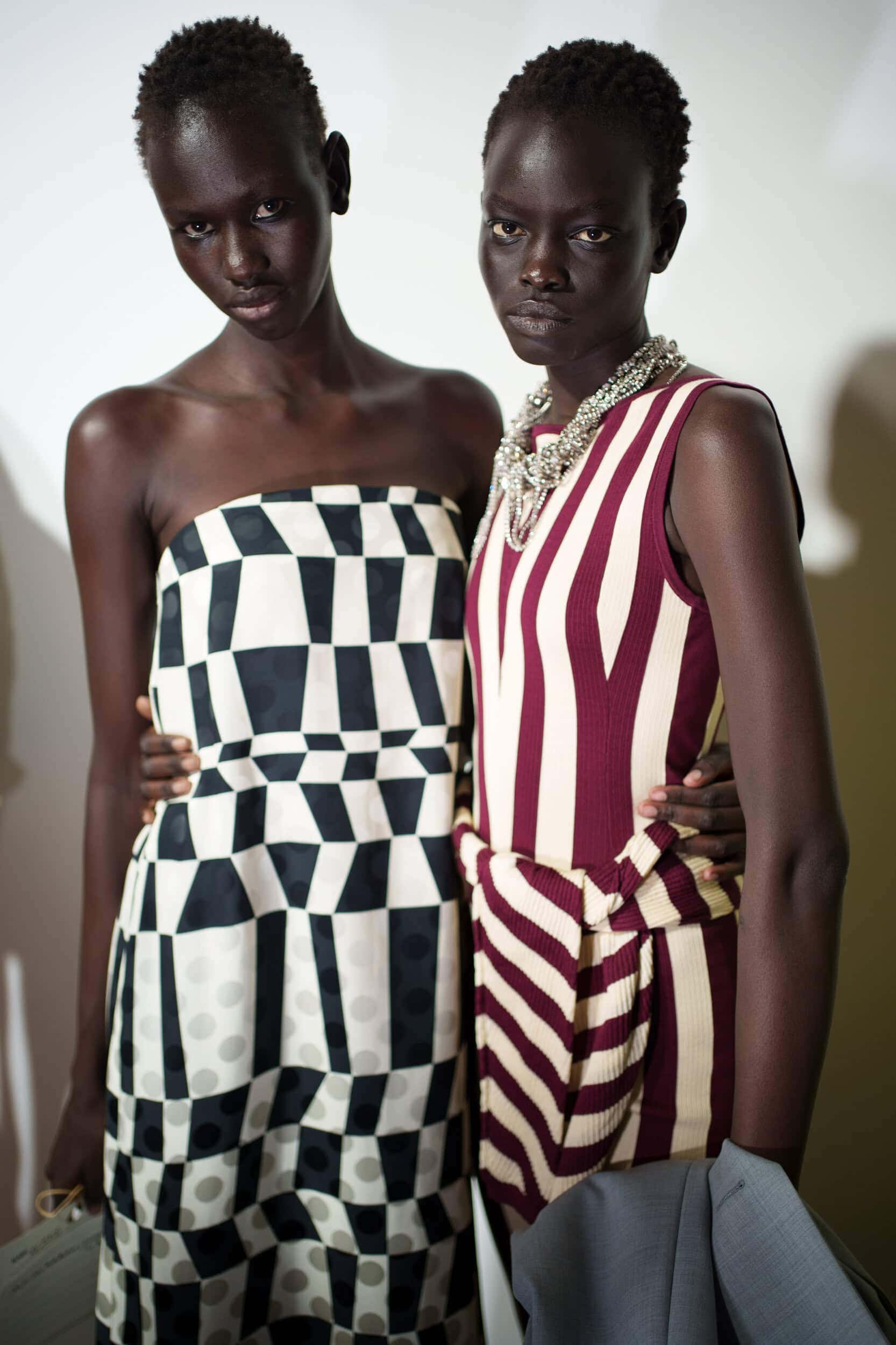
The result was what he describes as a “delicate dance,” with Van Noten giving him room and Klausner still allowing the founder the space he needed. “He was immediately very, very supportive, and very helpful, and very available to to advise, and to be there in whatever way could help me and the team,” Klausner said.
That last phrase matters, because the Dries Van Noten story is not only about one designer succeeding another. It is also about a company culture. Klausner speaks often about the team, the building, the internal conversations, and the structure that allowed continuity to feel possible. He describes the Antwerp office, located in the north of the city by the water, as a working environment where nearly the whole chain of the brand exists under one roof. There is a small team in Paris, but much of the creative, commercial, development, and visual life of the house unfolds in Antwerp across several floors, with the studio occupying a full level of its own.
“It’s one big open studio,” he said. “All the different teams have their little corner, and you know, with the prints, you have print strike offs and drawings and papers and paint brushes, and then with embroidery, it’s all beads and sequins and swatches.” The image is appropriately Dries: organized enough to function, abundant enough to remain alive. Upstairs, the showroom becomes a working space between selling seasons, allowing the team to spread things out across the floor. “So much of what we do is combining colors, materials, motifs,” Klausner said. “So we like to get spread it out.”
The archive, too, is not treated as a museum. Despite the fantasy one might attach to the idea of a Dries Van Noten archive, Klausner describes it with a touch of dry humor as “all black carbon bags,” very organized and clean, and increasingly complete thanks to the company’s renewed efforts to resource older pieces. What excites him most is not simply the presence of past collections, but the fact that the archive remains usable. “It’s very alive,” he said. “I think that’s really important for me, that we dive in there, that we use it. It’s, it’s an amazing working tool, as much as we respect it, as much as we feel comfortable using it.”
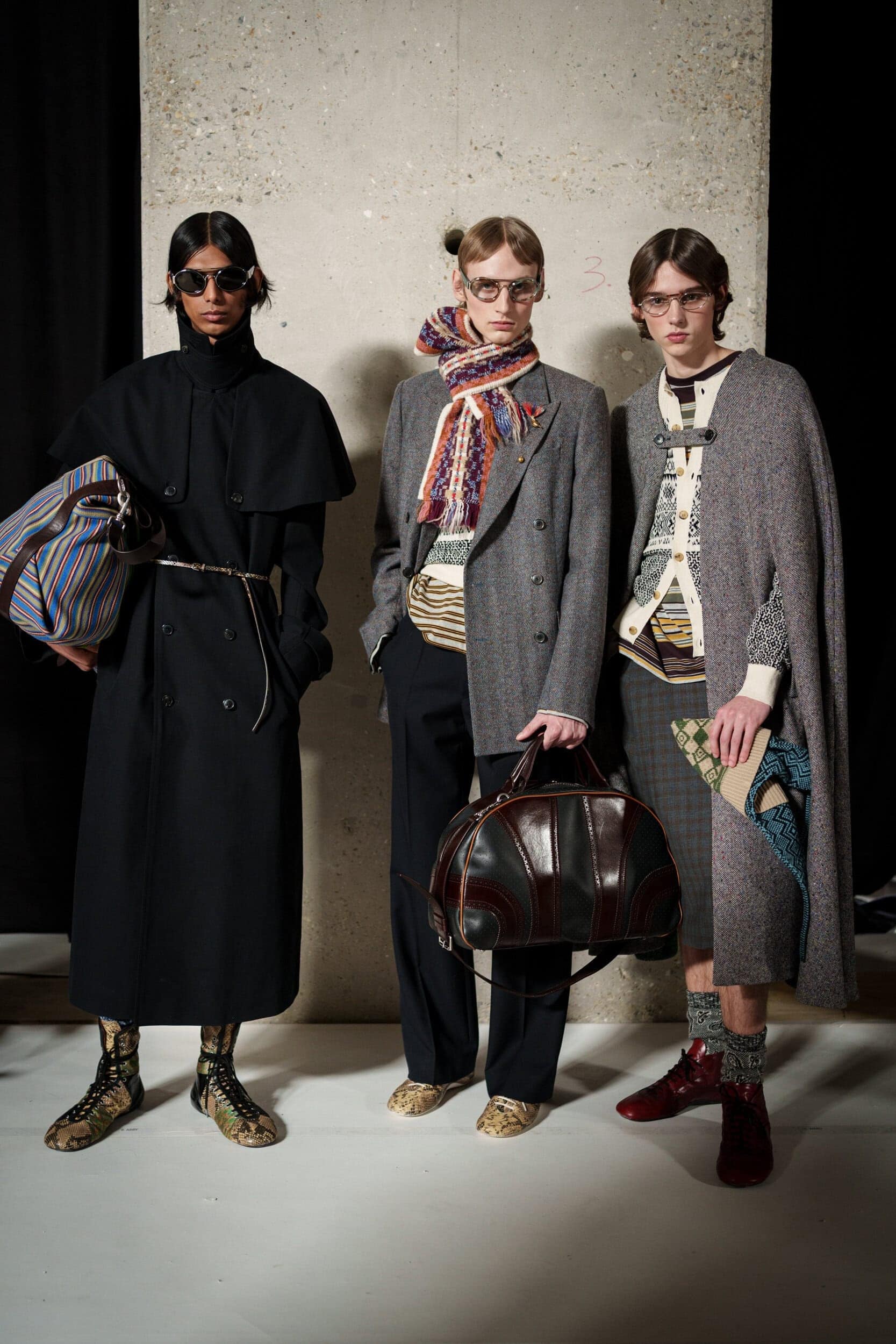
Klausner looks at the past in two ways. There is the literal layer: a fabric, motif, embroidery, print swatch, jacquard, or trial that may still have something to say. Then there is the less tangible layer: the attitude of a collection, the intention behind it, the way Dries positioned himself within the fashion landscape at a particular moment. “What’s the intention, or what’s the message, or what’s the spirit of the brand?” Klausner said. That question has become a guide, particularly as he works to make the house personal to him without losing the personal nature that Dries gave it.
The challenge is sharpened by the state of fashion itself. Klausner has arrived at the helm of Dries Van Noten during an extraordinary period of creative-director turnover, a moment when the industry seems both restless and newly alert to the importance of design voices with something to say. He sees that energy with humility rather than competition. His debut arrived in the same news cycle as other major debuts, placing him alongside designers he had long admired. “For me to be in one same article as Haider Ackermann or Sarah Burton, that was very, very humbling,” he said.
His optimism about fashion’s new creative class is balanced by an awareness of how the industry recently lost some of its focus.
Fashion went through a slightly strange moment. It became very open and democratic, which was exciting, but then, through Covid, the numbers became increasingly important and social media started to take up a very big space. In that process, I think fashion maybe lost its way a little.
– Julian Klausner
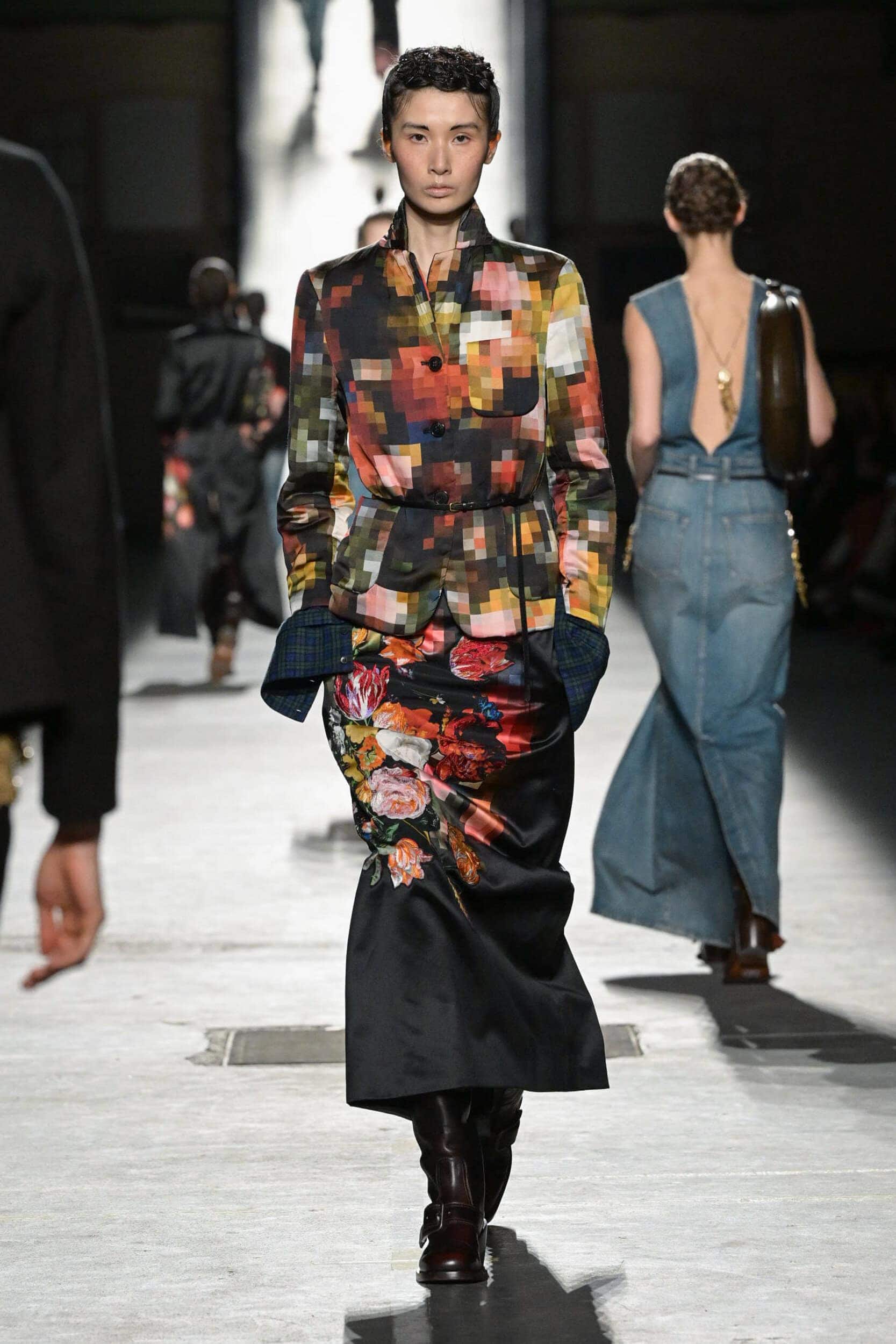
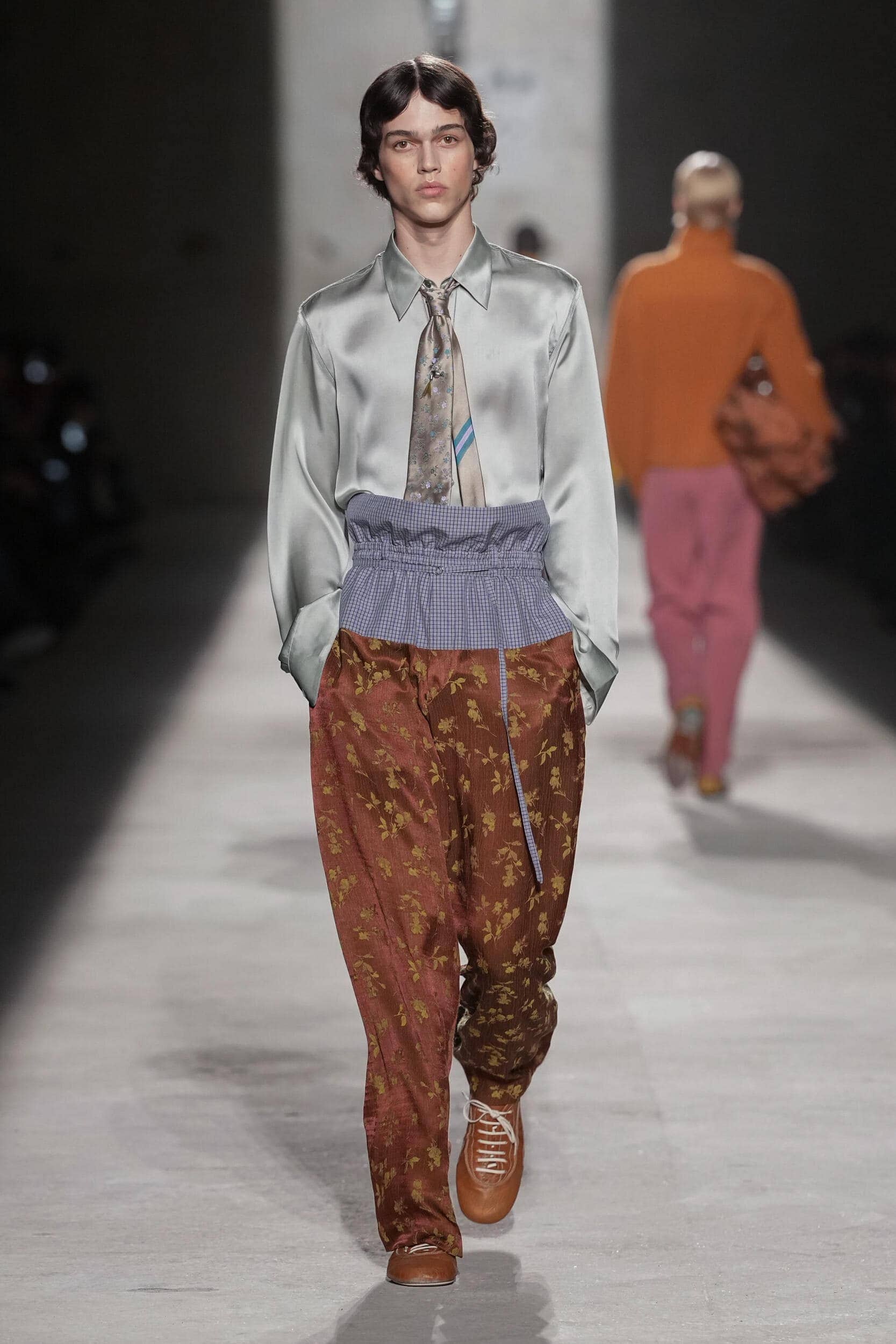
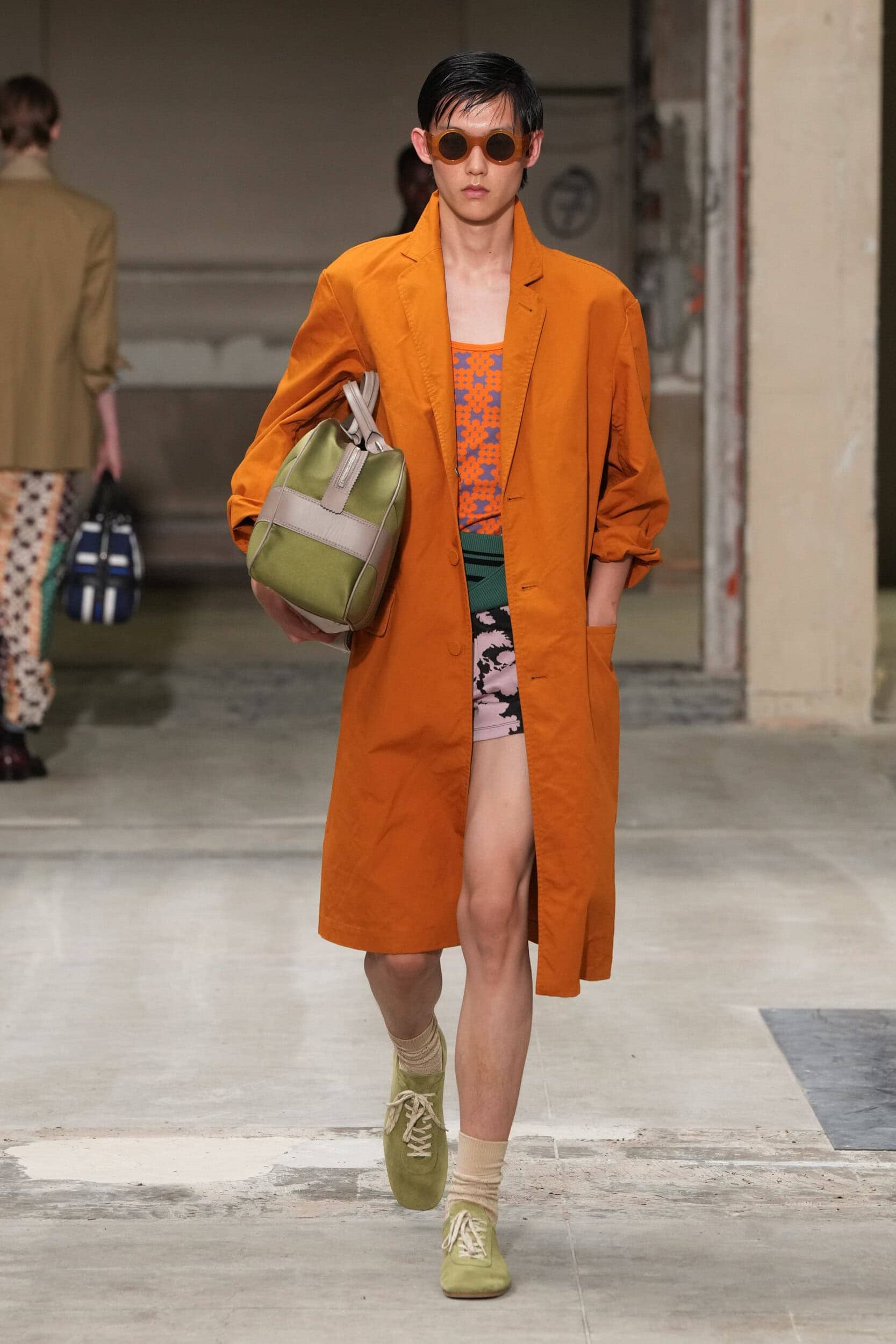
Now, he sees reason to believe that fashion’s future can be exciting again, especially when designers are placed in houses where their instincts have a real relationship to the work.
For Klausner, that relationship is deeply Belgian. He studied at La Cambre in Brussels, while Dries Van Noten’s own history is inseparable from the Antwerp Academy and the Antwerp Six. Klausner speaks of Belgium as a fertile but understated place to create, shaped by strong schools, a hands-on relationship to making, and a national character that does not encourage taking oneself too seriously. “We are quite a particular country, let’s say we’re very small, and we have three official languages, and a kind of messy government, and surrounded by these kind of great big histories and art history around us,” he said. “I think as a Belgian, you don’t take yourself too seriously from the from the get go, and I think you’re also pushed to look at things in a slightly different way.”
That lack of inherited fashion grandeur may have been a gift. Unlike Paris or Milan, Belgium did not impose a long historical template of luxury on its designers. There was space to invent. “There was very little fashion history,” Klausner said. “Everything still had to be done. There wasn’t the weight of a specific heritage or a fixed point of comparison, and I think that gave Belgian designers a certain creative freedom.”
His own education reinforced that pragmatism. At La Cambre, students were pushed into the physical reality of making almost immediately. “They really teach you to be very hands on,” he said. “You need a lot of fantasy to be in fashion, you need to be able to dream, but you also need to be confronted to the reality of making it happen.” In Belgium, he added, the idea of luxury is less dominant than ideas of quality, creative integrity, meaning, and intention. It is a useful lens for understanding what he is bringing to Dries Van Noten: not a rejection of beauty or sophistication, but a more grounded belief in why beauty must be made and how it should be used.
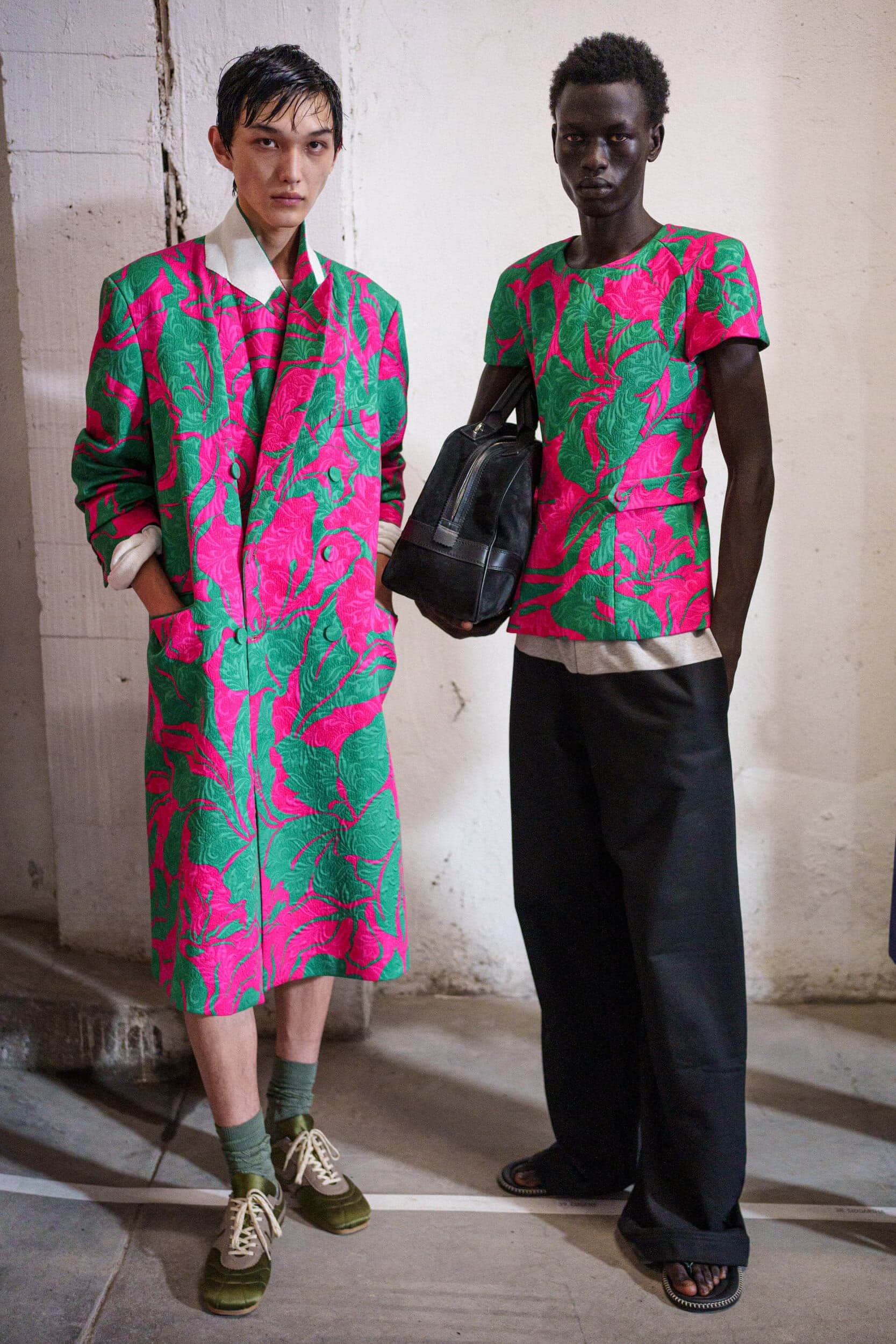
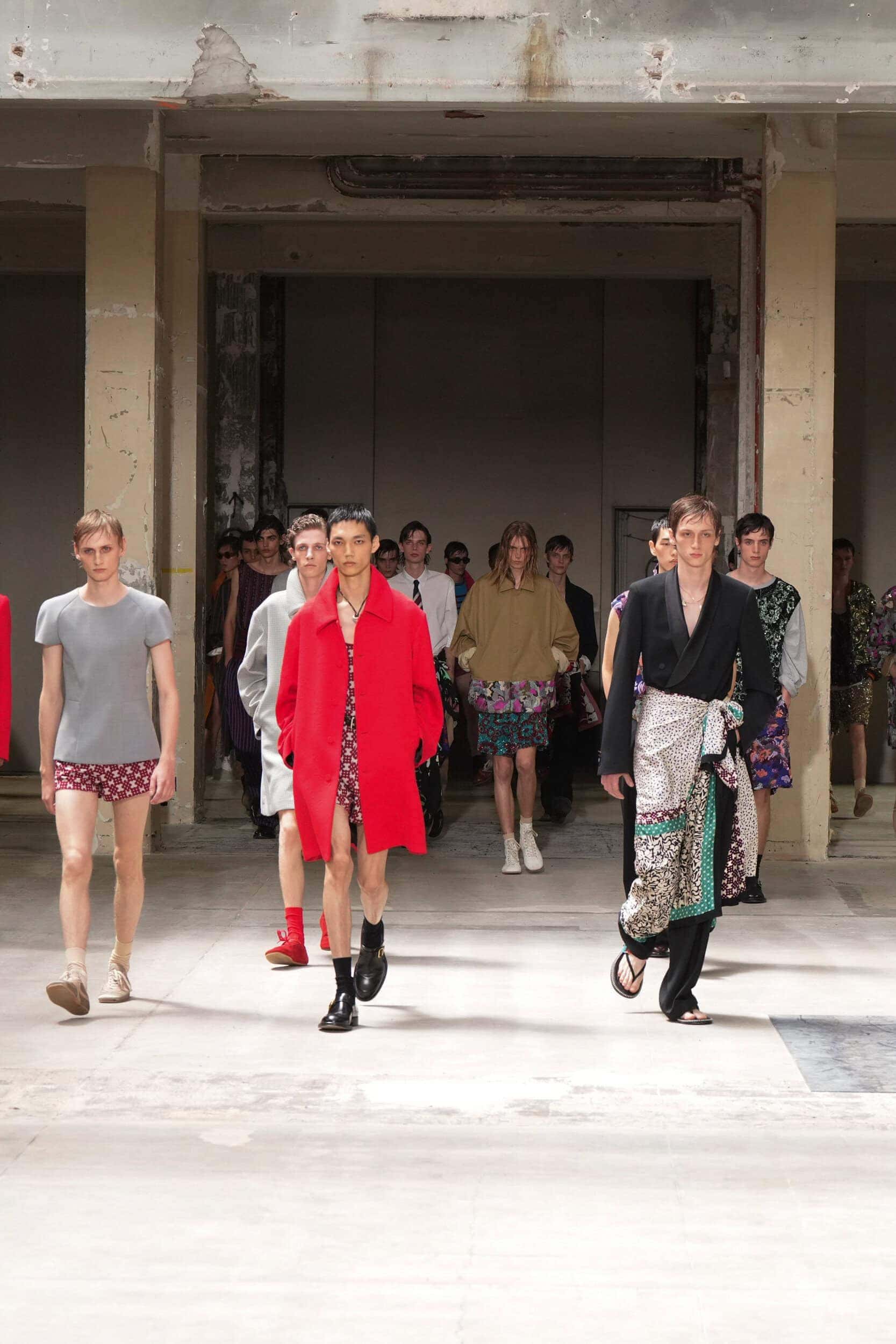
That belief was visible in the response to his early menswear. Though his background had been womenswear, Klausner’s first men’s collection sparked immediate enthusiasm, particularly around the styling of sarongs, cummerbunds, and ties. He was surprised and delighted that people felt inspired to mimic the looks in their own way. “I think that’s always a great compliment as a designer, regardless if they’re getting the piece from us,” he said. “If you can, if you feel that you can inspire somebody at home to kind of immediately feel like already so excited to take on that look, that idea.”
Menswear, he said, felt like playing the same game with slightly different rules. The wardrobe offered new toys: tailoring, ties, the cummerbund as a masculine staple reworked into something more playful and desirable. He tried not to overthink it, relying instead on curiosity, the men’s team’s expertise, and the house’s natural ability to make styling feel like possibility rather than instruction. “It made me feel like, okay, maybe menswear is fun,” he said.
The larger balance, though, is the one Dries Van Noten has always demanded: fantasy and reality. Klausner understands that the brand must dream, but the dream has to end in a wardrobe.
Being Creative Director at Dries Van Noten, it is very clear to me that the essence of the house is this balance between fantasy and reality. There has always been a lot of storytelling and a lot of fantasy, but at the same level, there has always been a wardrobe.
– Julian Klausner
It is a deceptively simple statement. In an industry often pulled between spectacle and product, Dries Van Noten has long occupied a rarer middle ground, making clothes that can be editorially transporting and personally useful. Klausner speaks about this not as a commercial compromise, but as the heart of the house. “The goal is to create a garment that serves someone and that brings them joy or excitement,” he said. “There’s nothing I think more rewarding than to see somebody wear the pieces over and over again, and in Dries’s case, decades later, still wearing the same piece with the same affection.”
The modern creative-director role, of course, stretches far beyond the garment. Klausner has had to move from the focused detail of leading womenswear into a broader responsibility for shows, stores, beauty, visuals, strategy, accessories, communications, and the way all of it connects. “Today my role is to have the 360 vision,” he said. “If I’m not thinking of how everything connects together, then really nobody else will.”
He is frank about the learning curve and grateful for the support around him, including Van Noten’s generous handover and the knowledge of long-standing team members. He also knows where the center must remain. “The clothes should be a priority, because in the end that is really what we do, and I think you know all the rest has to exist around it,” he said.
That clarity extends to the relationship between creativity and business. Asked about financial realities, Klausner framed restriction not as the enemy of creativity, but as one of the conditions through which creativity must become real. “Having great ideas is one thing, but not being able to see them through kind of removes all the value of it,” he said. “I believe that there is a way to be creative within restrictions, but still, as creative director, my role is to bring in the dream, and then there’s dialogs to figure out the details.”
The word “dialog” appears often in Klausner’s thinking, perhaps because the Dries studio seems to run on conversation as much as image. He describes the creative process as open, sometimes concept-led, sometimes organic, sometimes beginning with an artist, a feeling, a venue, or a reaction to the previous show. He reads the reactions because he wants to know what people think. “We make these collections for people to react to,” he said. “I would hate to be so selfish that I don’t care what people think. Absolutely not. I want to know, and regardless of who, any opinion is an exciting opinion to have.”
That openness does not mean surrendering the work to public opinion. It means keeping the collection porous enough to register the world around it. Klausner calls himself a sponge, someone who likes to absorb information, reactions, references, and signals. Inside the studio, he prizes people who can explain why something works or does not work for them. “I really believe in creative dialog,” he said. “Dries will call it the ping pong, but I really believe in this kind of creative ping pong, but in order to play a good ping pong, you need to be really able to explain why something is working better for you.”
As for the public-facing nature of his new role, Klausner is still adjusting. The morning of his first show felt familiar, concentrated, and internal, until the moment after the show when the world suddenly came toward him with microphones, recognition, and attention. “It’s weird,” he said, while acknowledging the opportunities that visibility brings. Here again, he looks to examples close to him: Dries, who remained discreet and humble despite being a public figure, and peers from La Cambre who have reached major roles without seeming changed by them.
The office remains his anchor. He describes it as a second home after eight years, a place where creativity happens through conversation and where his days move from studio decisions to visual meetings, product development, management strategy, show casting, hair and makeup, music, invitations, and the constant overlap of men’s and women’s collections. At night, he often revisits the day’s decisions mentally, allowing connections to form between things that happened too quickly in real time.
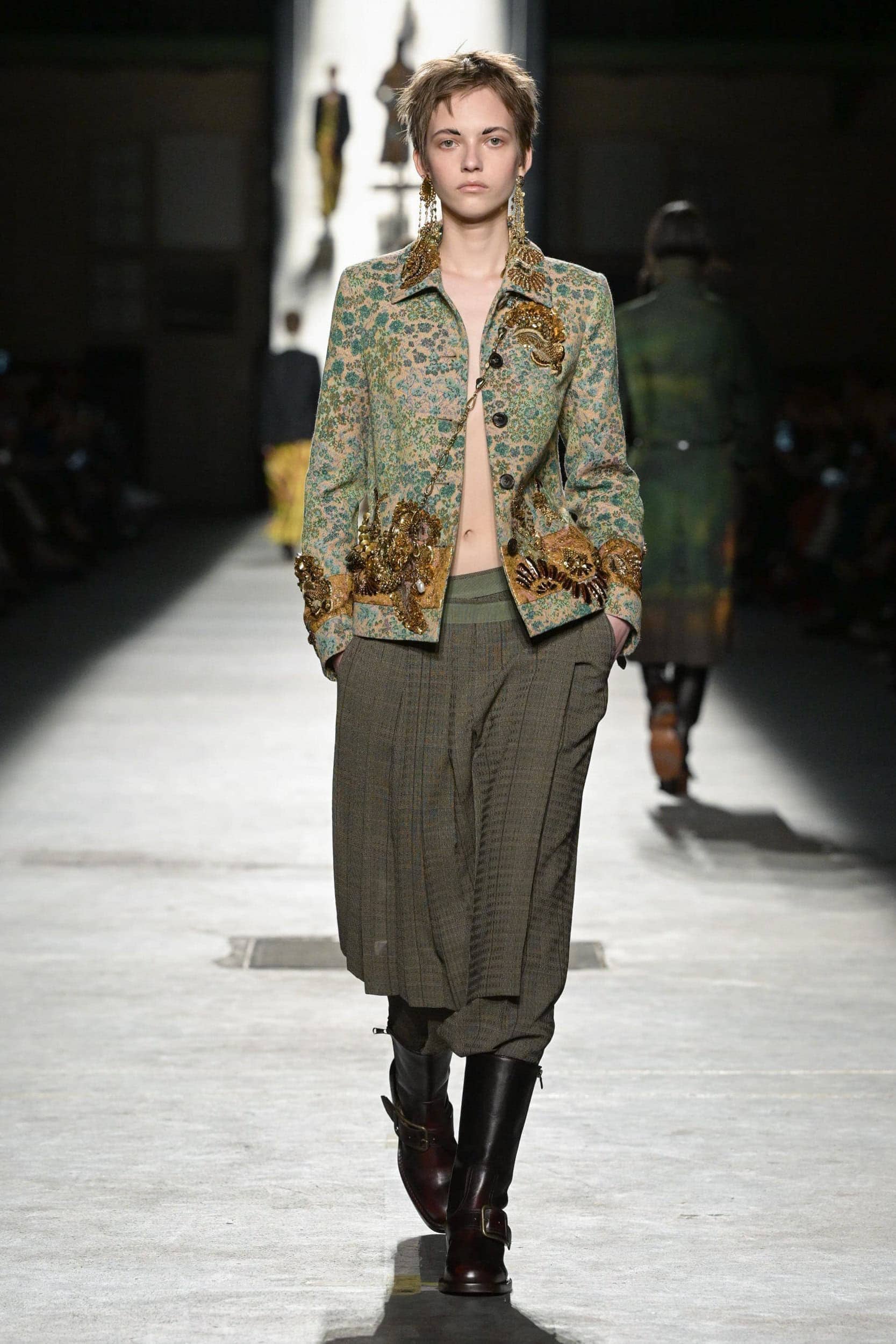
That reflective instinct may prove essential as he continues to define his own authorship at Dries Van Noten. Klausner is aware that taking creative risks at an established house can feel dangerous, but he also sees daring as part of the house’s inheritance. “Dries was and is a strong defender of creativity,” he said. “Every season wanted to push things forward, and he was really keen on looking to the future.” Faced with the choice between being too daring and being too bland, Klausner knows where he would rather land. “Definitely I’d rather lean towards creativity,” he said. “I think it’s very much also the spirit of the house and of the Antwerp designers that creativity has to stay the priority.”
For young designers, his advice is similarly rooted in process rather than polish. School, he believes, should be used as a place to make mistakes, stumble, and learn before the industry begins asking for certainty. “Use school to do your mistakes,” he said. “To stay creative, to still like keep dreaming big.” Creative integrity, passion, and the ability to enjoy the process remain central, even when the realities of building a brand can be daunting.
In Antwerp, Klausner seemed less like a designer declaring a new era than one carefully, actively living his way into it. The archive is open. The team is working. The clothes remain the priority. Dries Van Noten’s language of fabric, color, texture, and lived-in fantasy is not being treated as a relic, but as a set of tools with which to build something forward. Klausner’s task is delicate, but he appears to understand the house’s most important lesson: beauty lasts when it is made with intention, and the future of fashion still depends on people willing to bring in the dream.