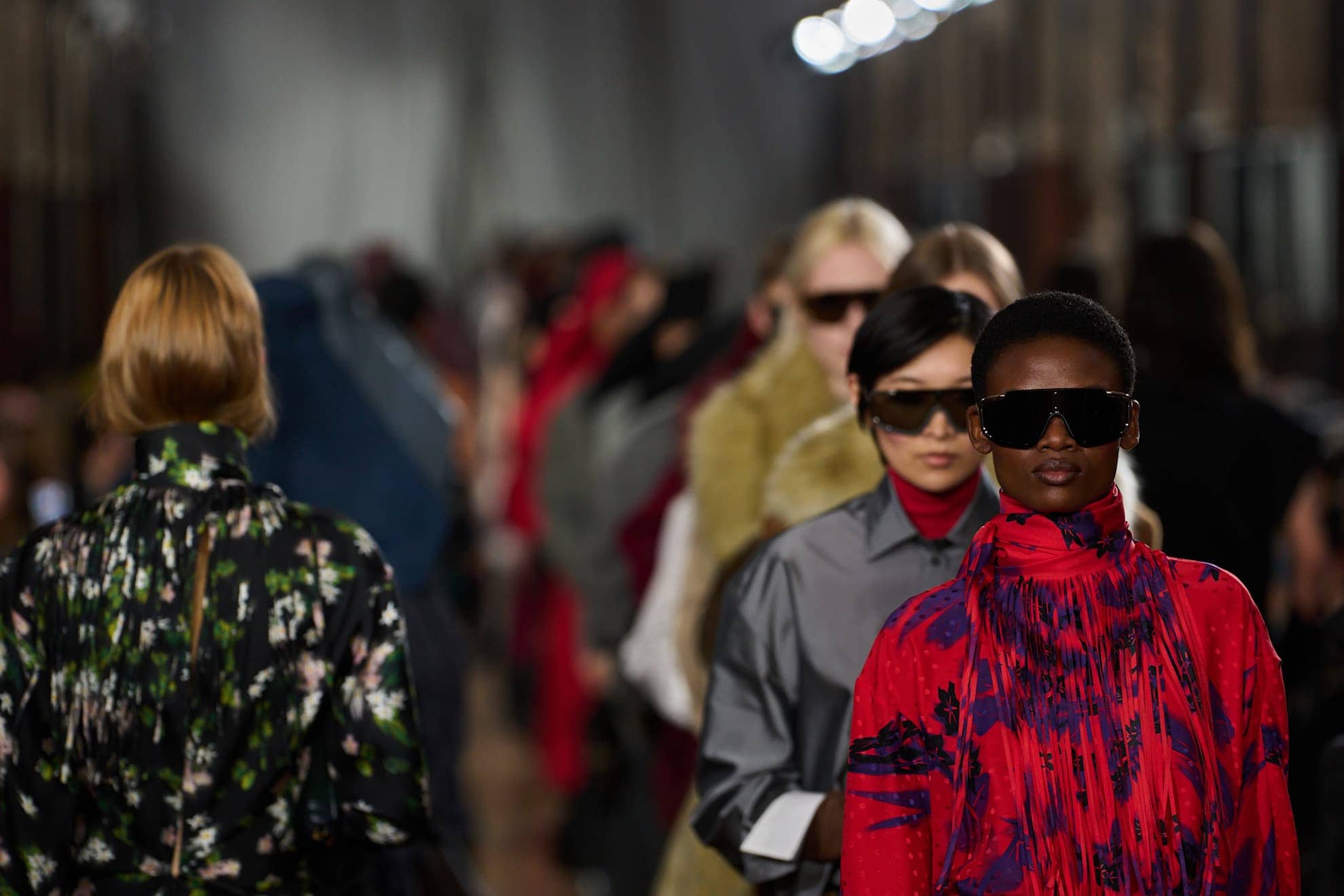
The Luxury Group Closes Stores And Restructures Operations Amid Ongoing Pressure On Sales And Profitability
Lanvin Group deepened its losses in 2025 as the luxury conglomerate continued a broad restructuring effort aimed at stabilizing its business after years of aggressive expansion.
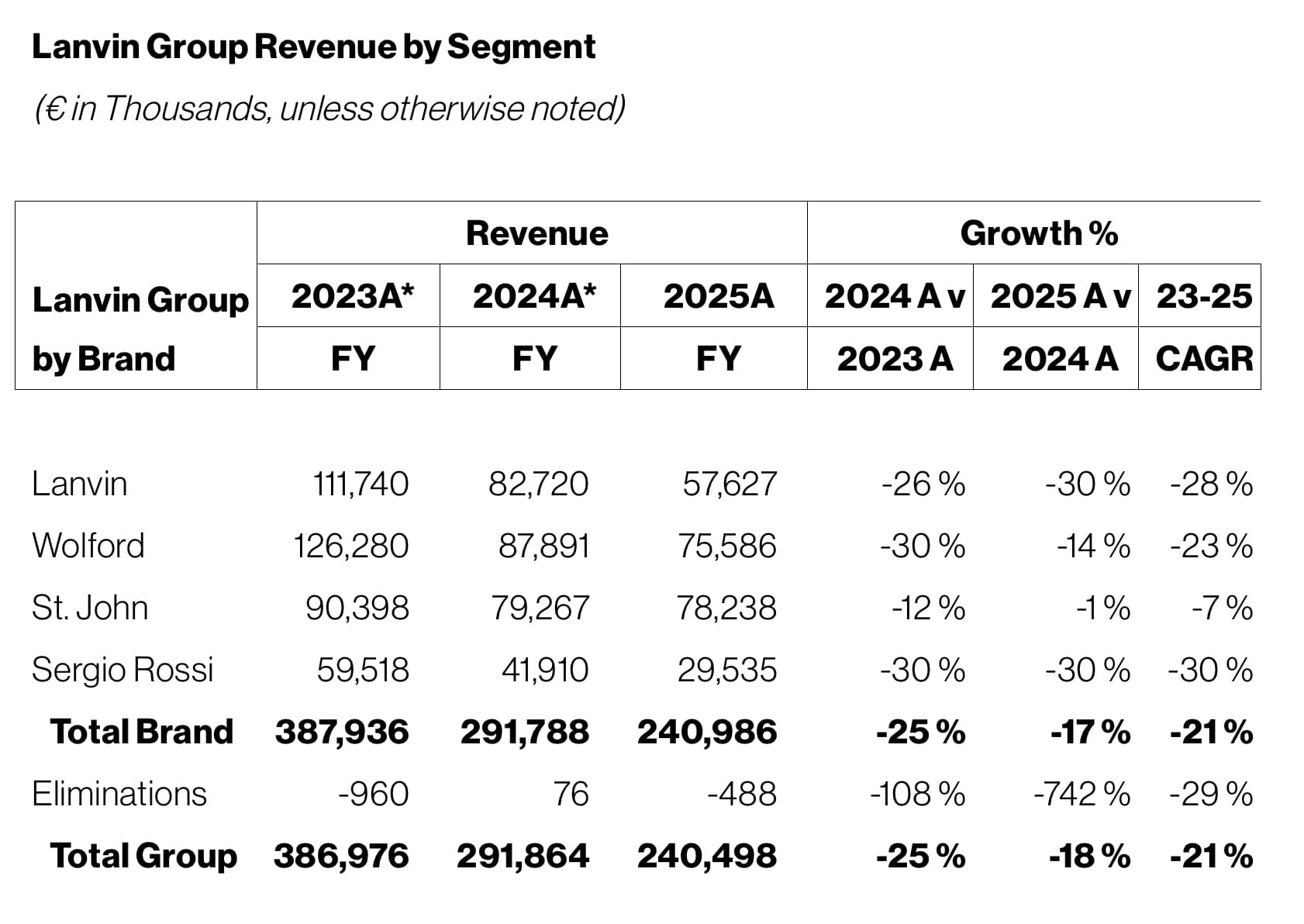
The group — which owns Lanvin, Wolford, Sergio Rossi and St. John — reported revenues of €240 million for the year, down 18 percent, while net losses widened to €263 million. Since its formation in 2018, the company has accumulated nearly €1 billion in losses, with approximately 95 percent of those losses generated over the past five years.
Despite the weak top-line performance, the company pointed to early signs of operational improvement tied to its strategic reset. Adjusted EBITDA losses narrowed by €4 million to €90 million, supported by cost-cutting initiatives and a significant reduction in retail exposure. During the year, Lanvin Group closed 51 stores, reducing its global network from 225 locations to 174 as it focused on higher-performing markets and locations.
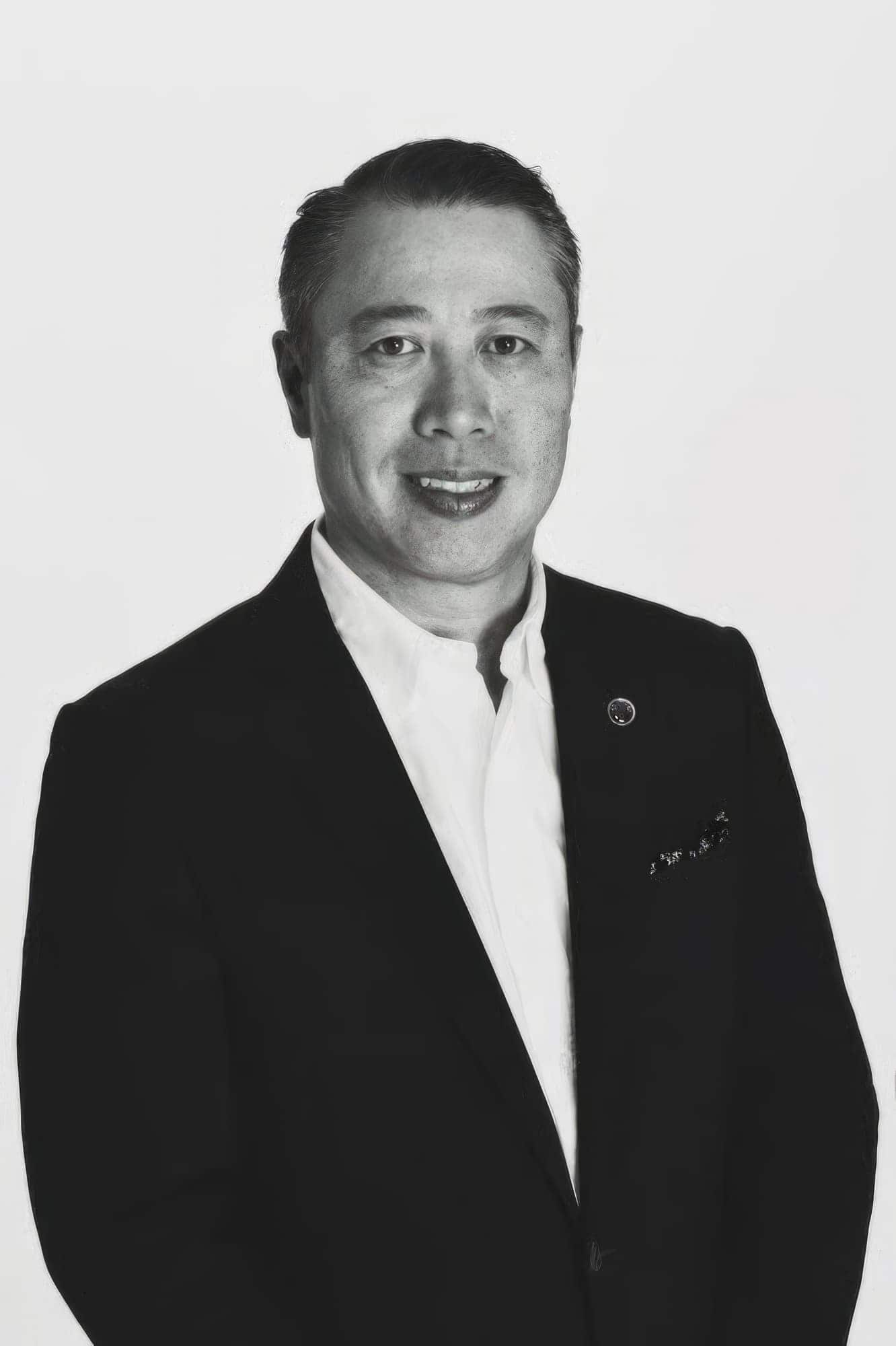
Executive President Andy Lew described 2025 as “a year defined by both external challenges and internal transformation,” citing ongoing softness in the global luxury market, particularly in Greater China, alongside macroeconomic uncertainty.
“At the same time, we continued to take deliberate actions to reshape our business, streamlining operations, optimizing our retail footprint, and reinforcing our focus on core brands,” Lew said during the company’s investor call. He added that trading improved in the second half of the year, particularly at Lanvin and Wolford, suggesting the restructuring measures were beginning to gain traction.
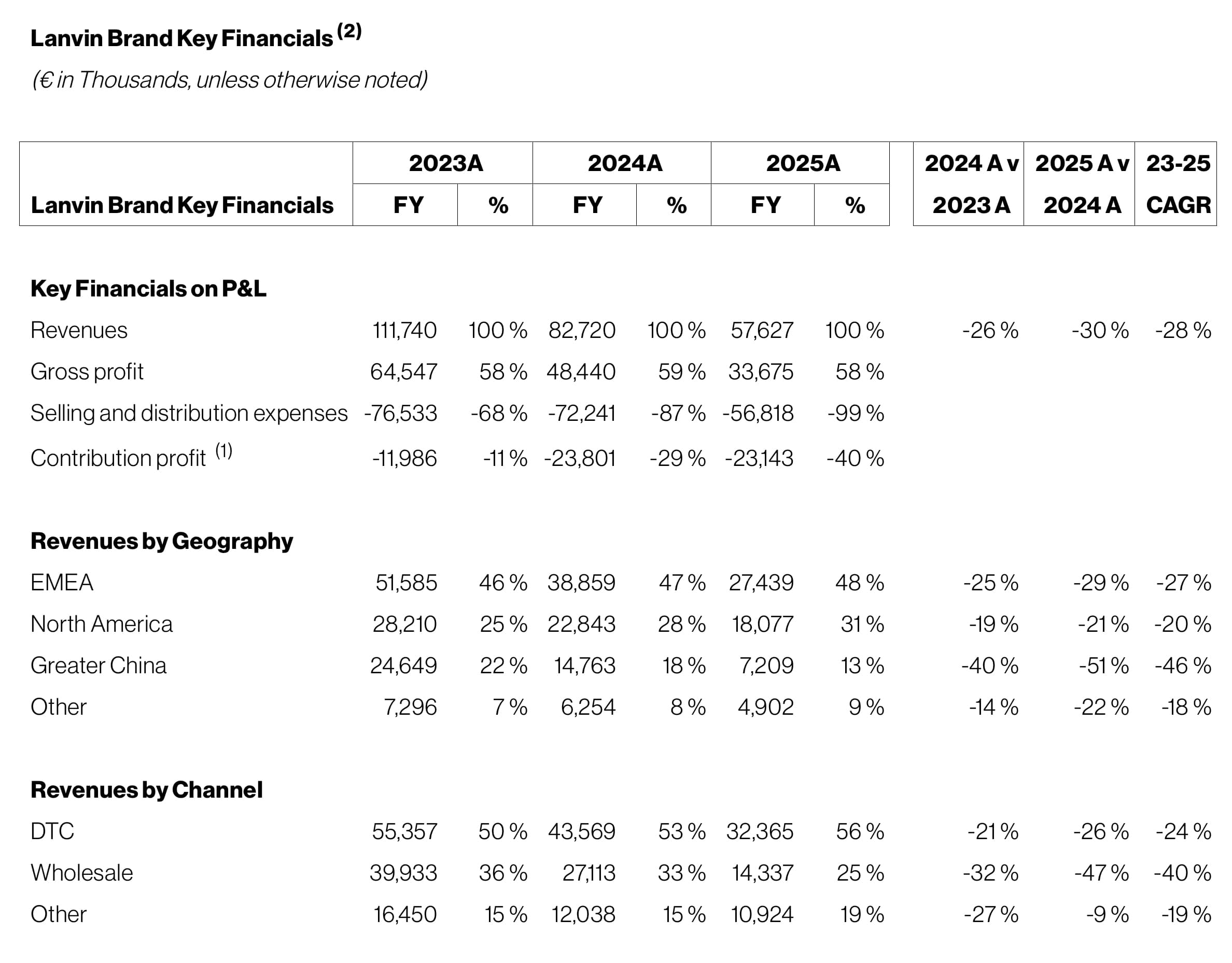
Performance across the portfolio remained uneven. St. John proved the group’s most resilient brand, with revenue declining just 1 percent to $78 million. Wolford sales fell 14 percent to $76 million, while Lanvin posted a 30 percent decline to $58 million. Sergio Rossi also dropped 30 percent to $30 million as the footwear label transitions toward a more asset-light operating model.
The results underscore the difficulty of building a modern luxury conglomerate around legacy brands, even with substantial financial backing. Lanvin Group, which rebranded from Fosun Fashion Group ahead of its 2022 public listing, remains heavily dependent on Chinese conglomerate Fosun International, which controls nearly 72 percent of voting power.
Regulatory filings highlighted the extent of that reliance. At year-end, the group held €28.3 million in cash against €325 million in borrowings due within 12 months. Lanvin Group stated in its annual report that Fosun has committed to continue supporting the business financially for at least 36 months.
The company has already begun simplifying its portfolio. Earlier this year, Italian menswear manufacturer Caruso was sold to MondeVita Italy, reversing part of the acquisition strategy Fosun pursued over the last decade in its attempt to build a global luxury platform.
Lanvin Group’s latest results reflect both the ongoing strain facing the luxury sector and the particular challenges of turning around heritage brands in a slowing market. While management maintains that restructuring efforts are beginning to show results, the scale of accumulated losses and continued reliance on shareholder support underscore the long road still ahead.