As luxury races toward scale, the Italian designer believes the future belongs to brands willing to know exactly who they are
By Kenneth Richard
For many independent designers, success is often described through the language of expansion. More collections. More categories. More stores. More markets.
Luca Magliano speaks about almost the opposite.
Sitting inside his intimate Paris presentation following the unveiling of Magliano’s Spring 2027 collection, the Bologna-based designer describes the season not as an exercise in growth but in reduction. The collection is smaller. The ideas are more concentrated. Resources have been directed toward refining what already exists rather than multiplying it.
“We wanted to regroup around what is strongest about us,” he says.
We didn’t want to develop too much product. We wanted to reconstruct ourselves by staying very close to the original idea of Magliano.
That original idea remains remarkably concise.
“Ironic tailoring.”
It is an unusually confident definition for a designer now eight years into building one of Italy’s most respected independent fashion houses. While many brands continually reinvent themselves in search of novelty, Magliano seems increasingly interested in becoming more recognizably himself.
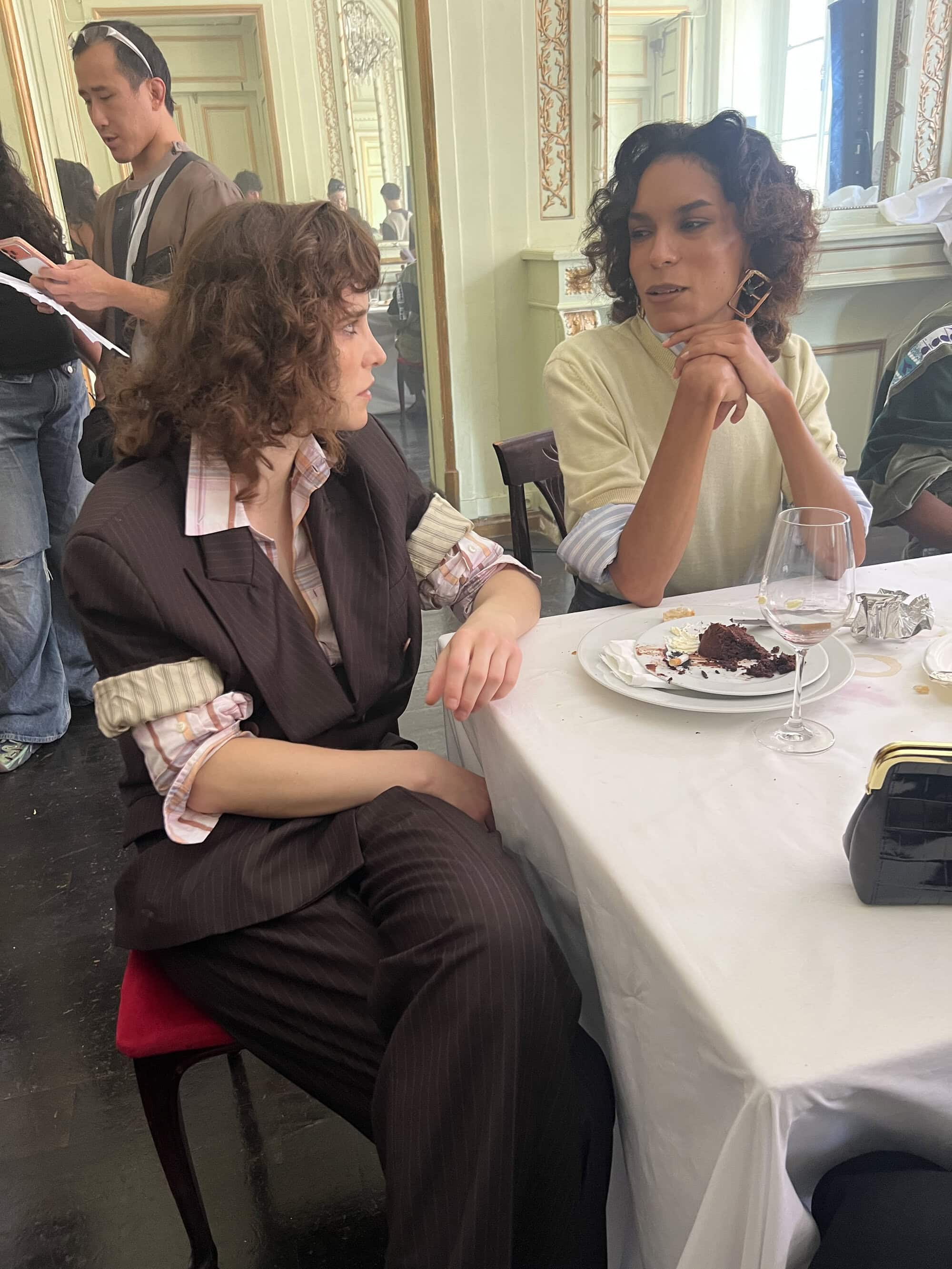
This season that meant simplifying the silhouette while quietly introducing technical experimentation. Tailoring became softer. Jersey—largely unfamiliar territory for the house—was transformed into trousers, eveningwear and everyday essentials that retained Magliano’s peculiar elegance while making the wardrobe feel lighter and more immediate.
Even something as ordinary as a handkerchief became an object of investigation.
“The handkerchief is probably the simplest fashion object ever made,” he explains. “It’s decorative but also utilitarian. We wanted to give it another meaning.”
The handkerchief is probably the simplest fashion object ever made. We wanted to give it another meaning
Across belts, bras and T-shirts, the humble square of fabric becomes structural rather than decorative, demonstrating Magliano’s fascination with reimagining familiar objects instead of constantly inventing new ones.
That instinct toward reinterpretation extends well beyond clothing.
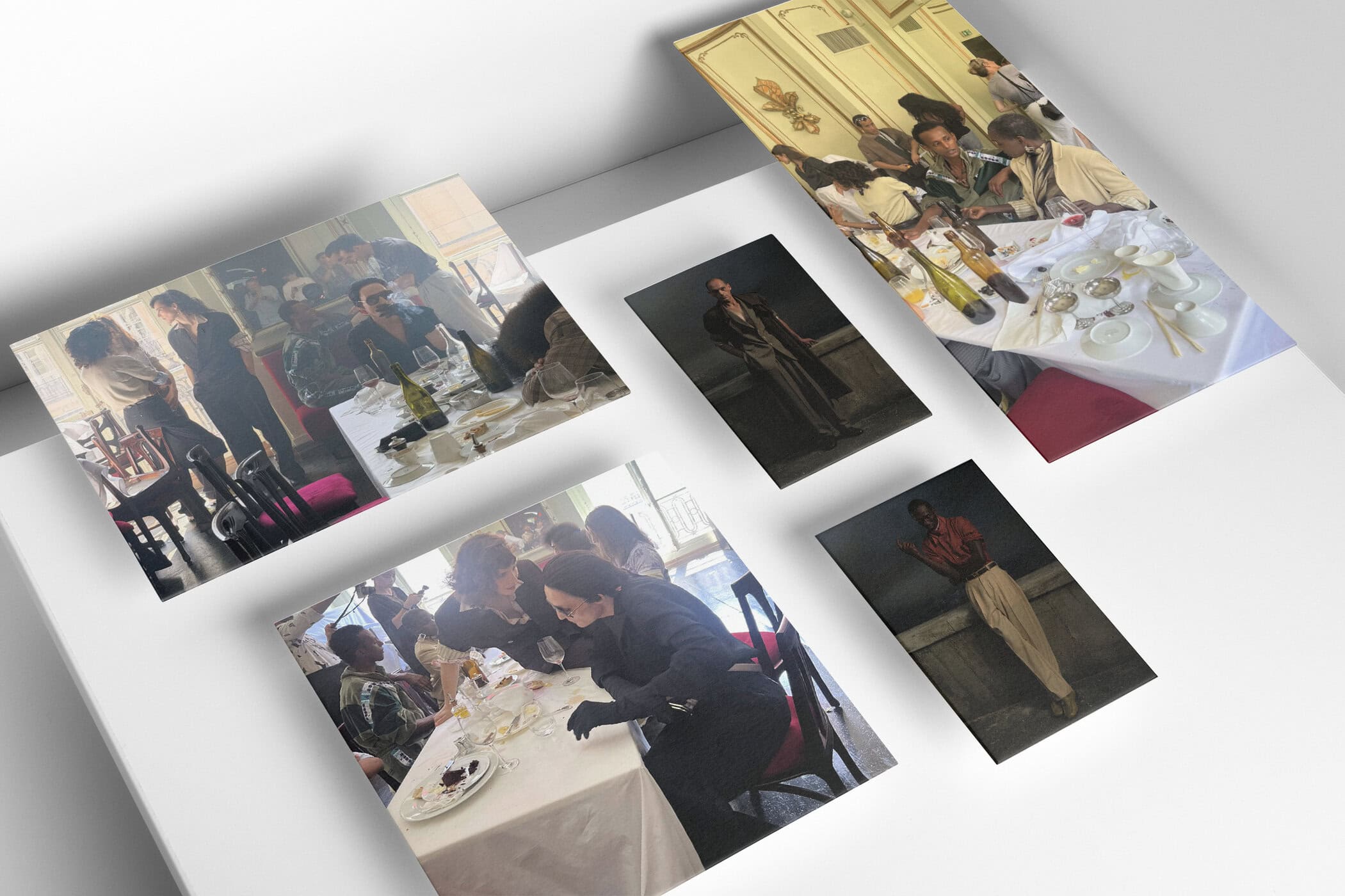
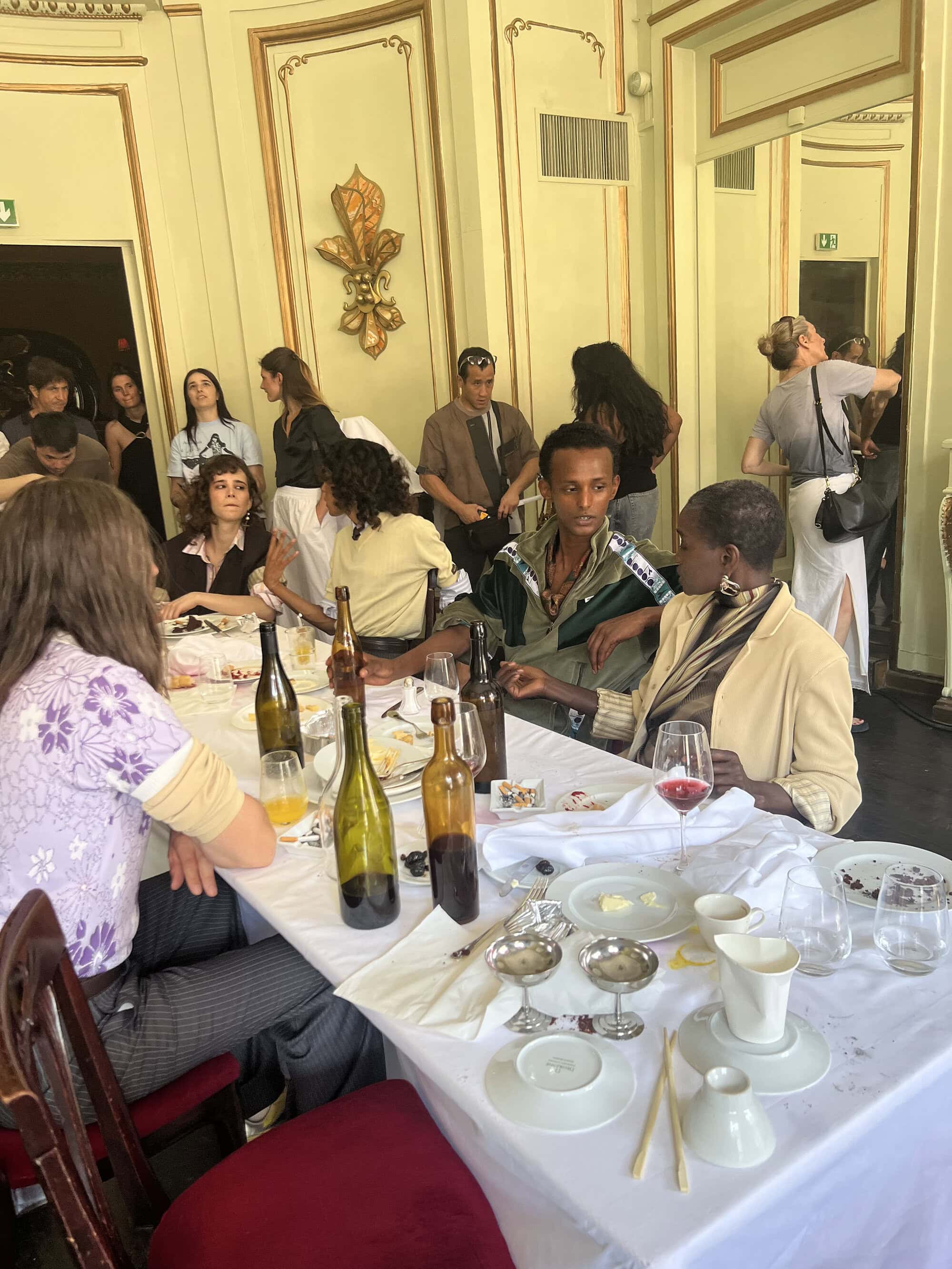
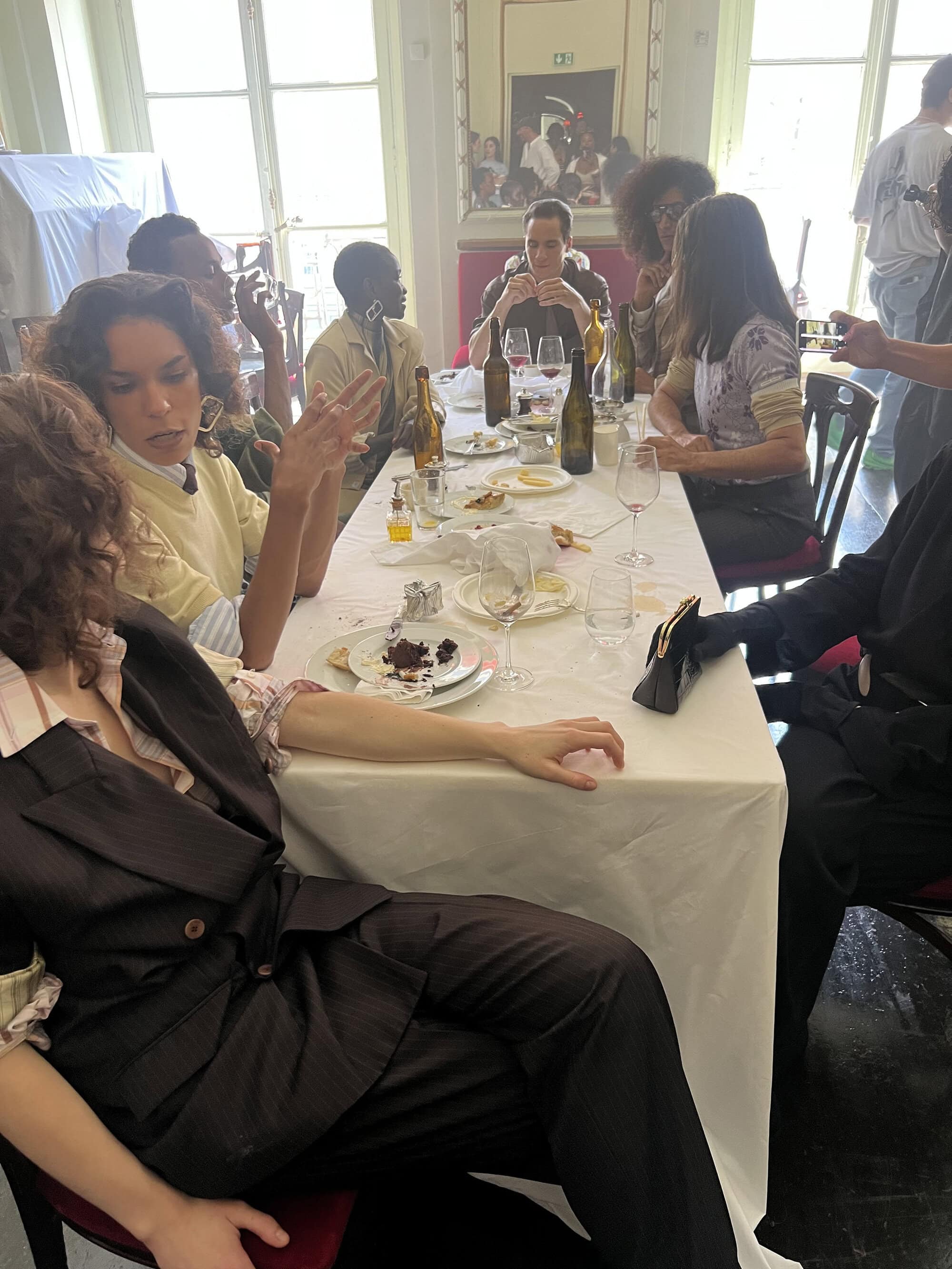
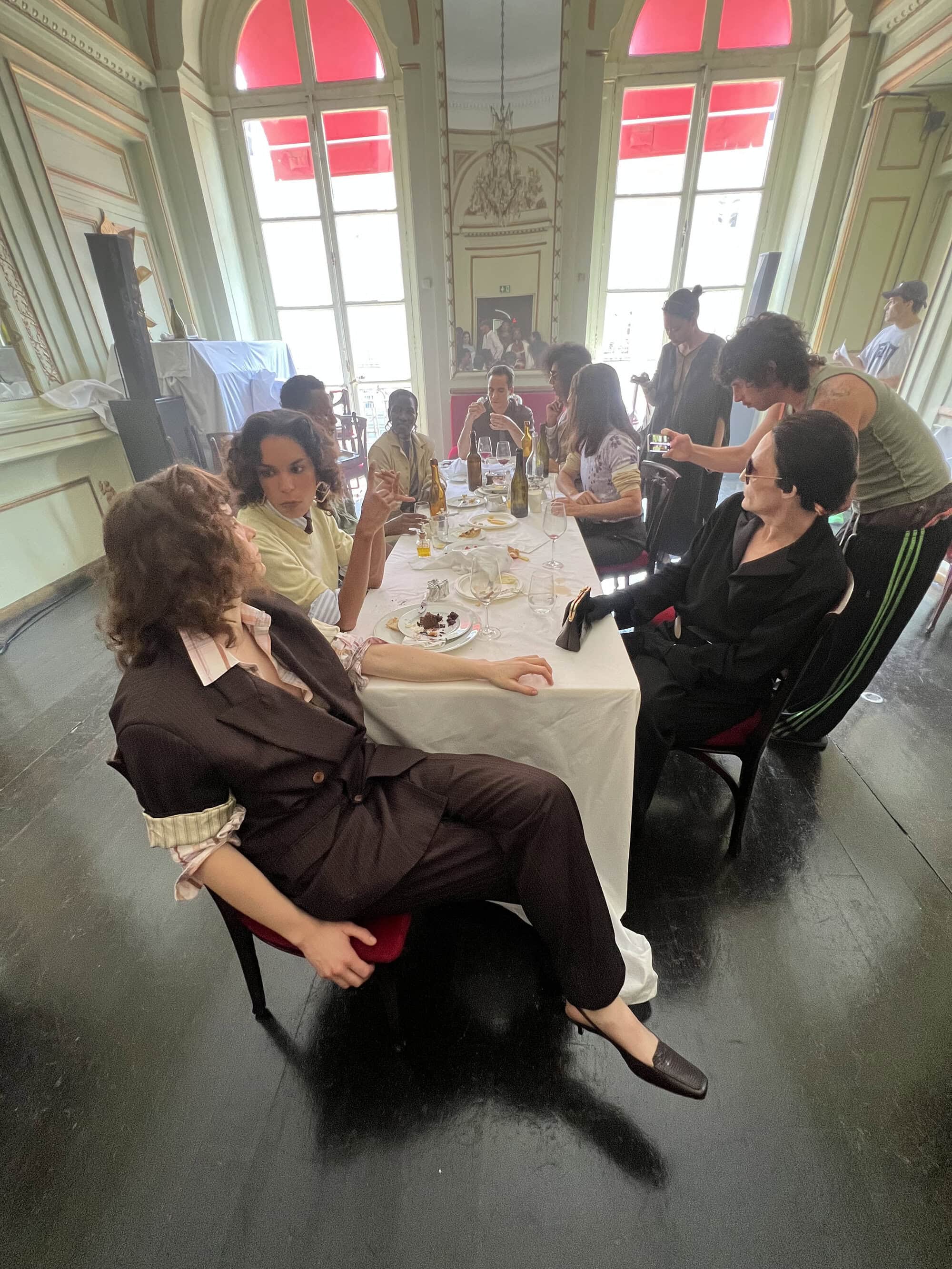
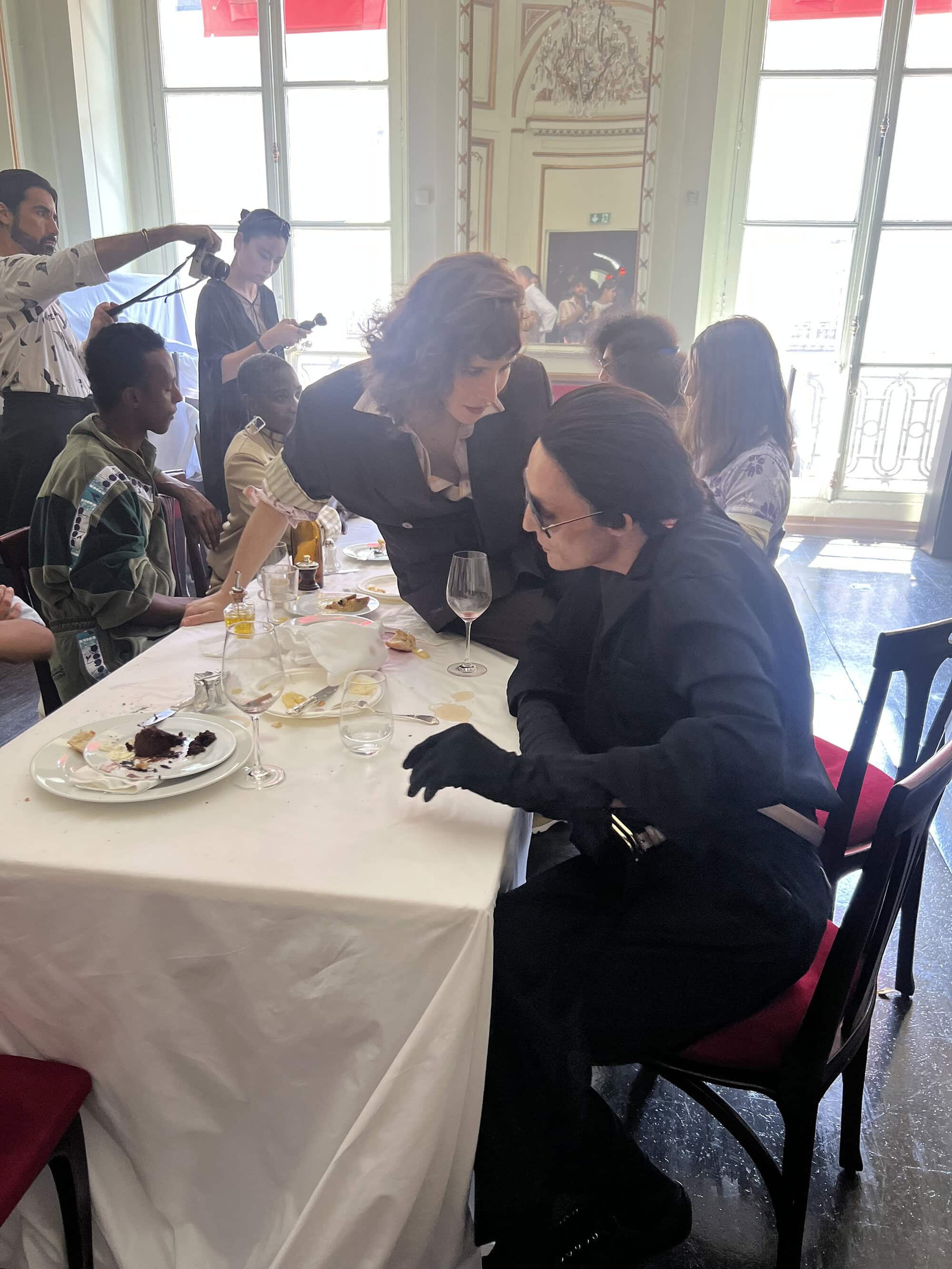
The presentation itself unfolded around half-finished dining tables where guests drifted through conversations as if arriving at the end of a long summer afternoon. Smoke lingered in the air. Wine bottles remained half empty. Nothing appeared staged as much as remembered.
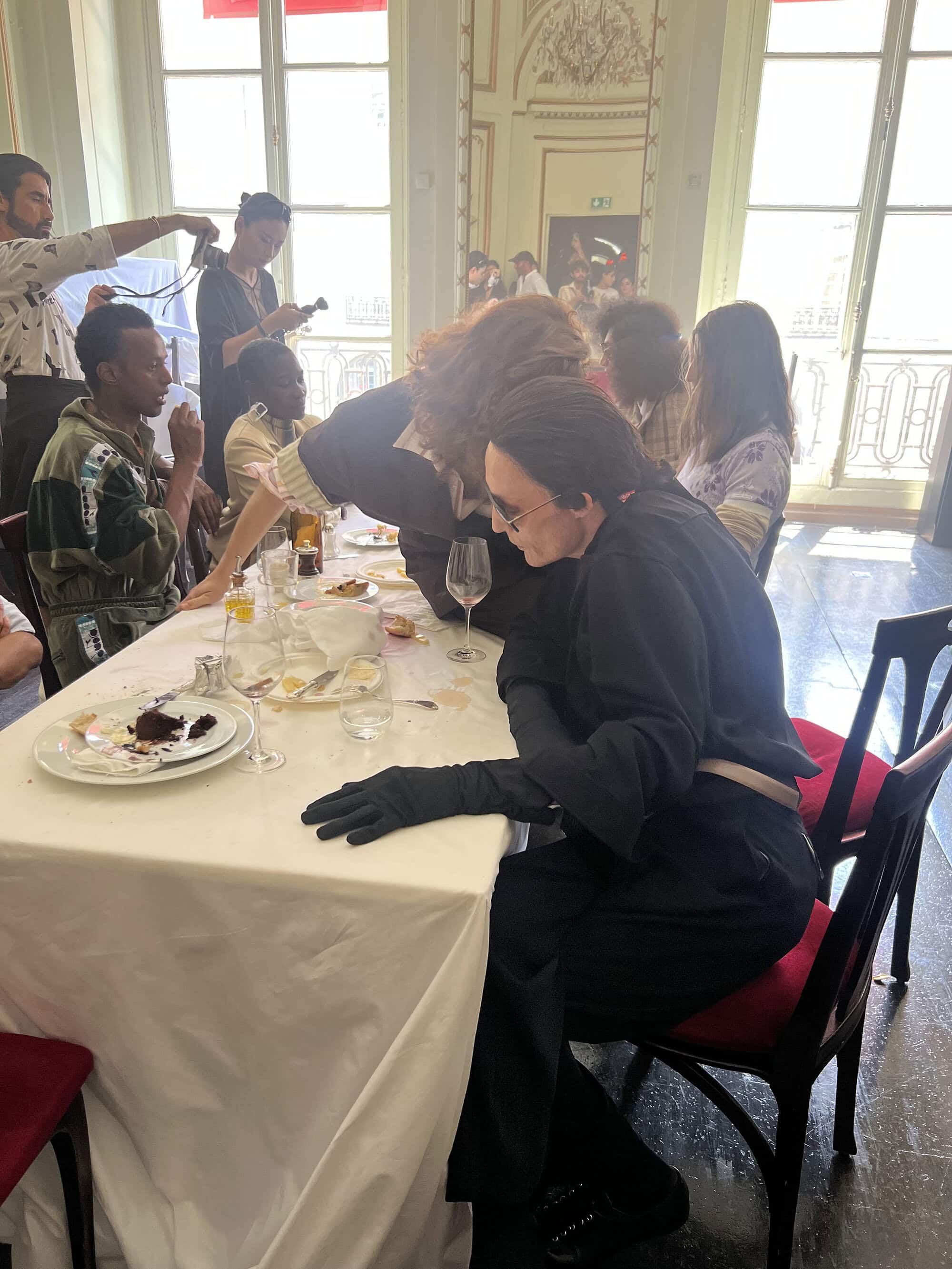
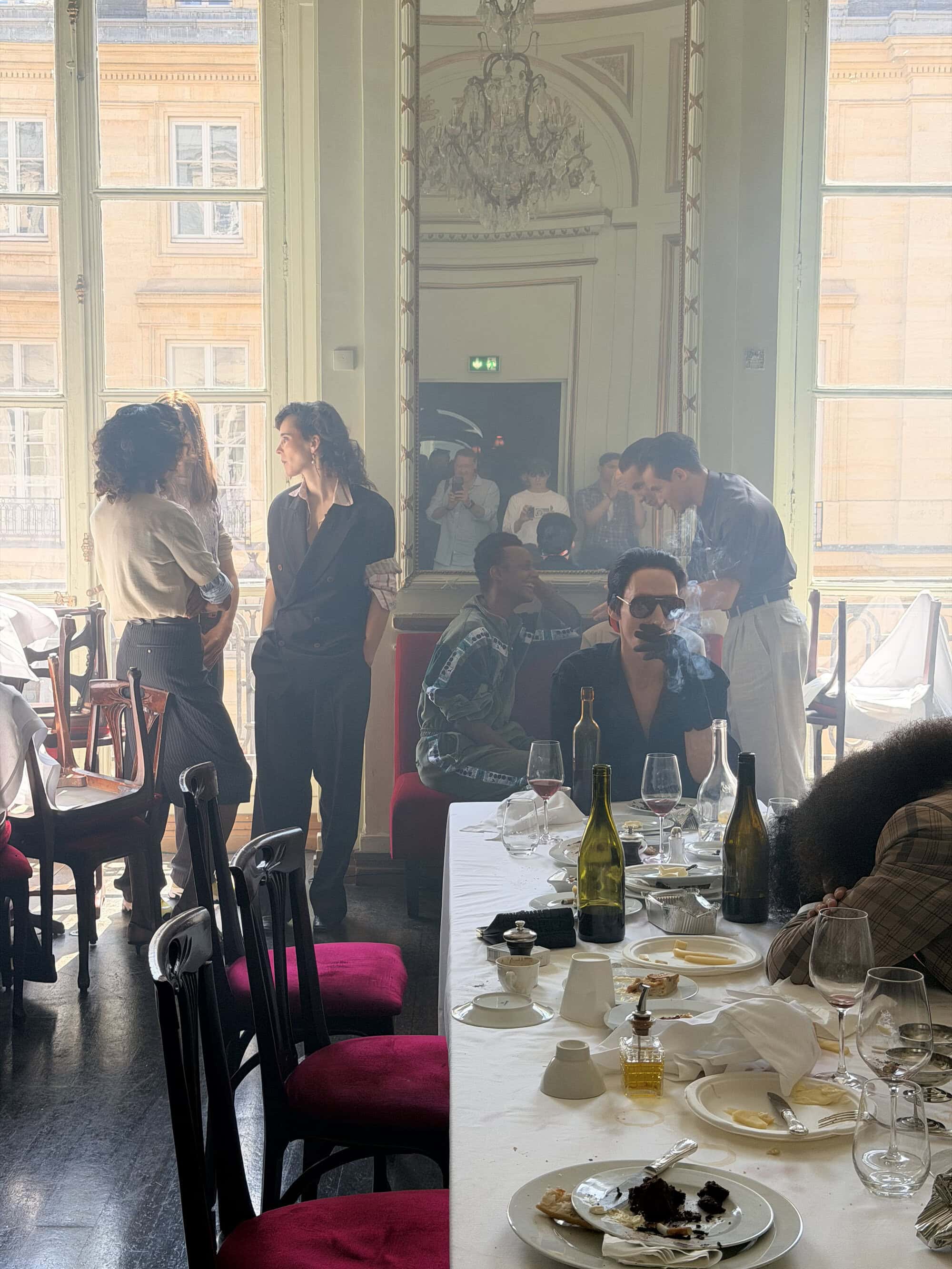
The accompanying notes describe “a torrid, sticky memory,” drawing inspiration equally from photographs of the 1970s and the late 2000s. Luca expands on that thought.
“We wanted to evoke a hot and unique memory,” he says. “A casual place of encounters where people simply gather together.”
It is less a fashion presentation than an emotional landscape.
The collection may have become more compact, but the world around it feels richer than ever.
That discipline extends into the business itself.
Magliano has quietly built one of the stronger wholesale businesses among Europe’s independent designers, finding early success throughout Japan before expanding into Korea, China and increasingly the United States. Rather than speaking about aggressive retail expansion, however, he talks about relationships—with retailers, with factories and with the craftspeople who have supported the brand since its beginning.
“I built relationships with the makers,” he says simply. “We created something meaningful based on trust.”
Trust becomes a recurring word throughout the conversation.
It also shapes his surprisingly philosophical answer when asked what the fashion industry could do to better support emerging designers.
Rather than asking for financing, production support or better payment terms, Magliano answers with something much broader.
“It’s a matter of values.”
He pauses before continuing.
If the industry plays by the right values, there is space for smaller realities like ours.
But if the industry only looks at money, there won’t be space for projects like ours.
His definition of those values is refreshingly practical rather than idealistic.
“Controlling growth. Not being greedy.”
There is no bitterness in his voice, only realism.
“If money is the only thing that matters,” he says, “then the people with less money will disappear.”
In many ways, that sentence feels larger than Magliano itself.
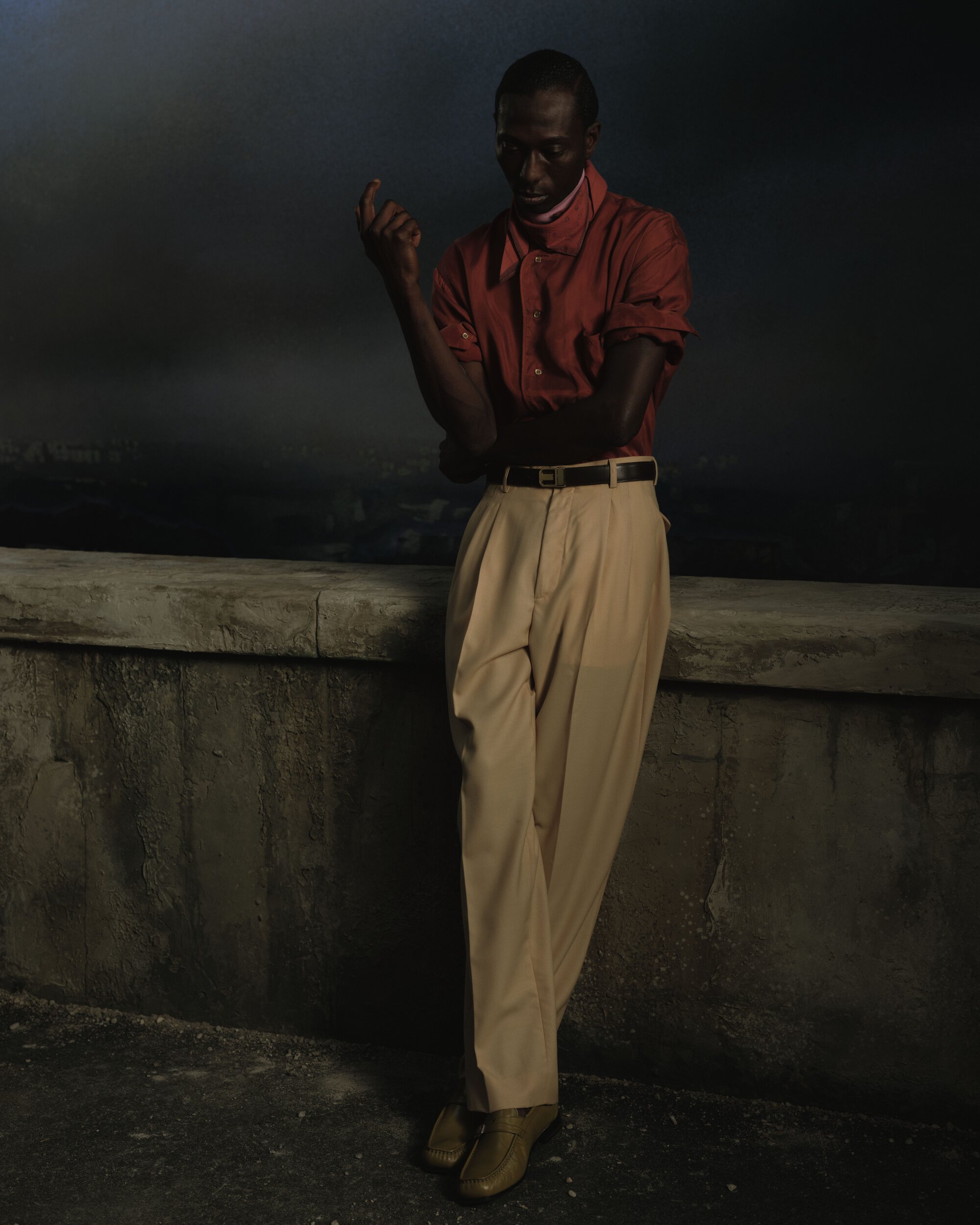
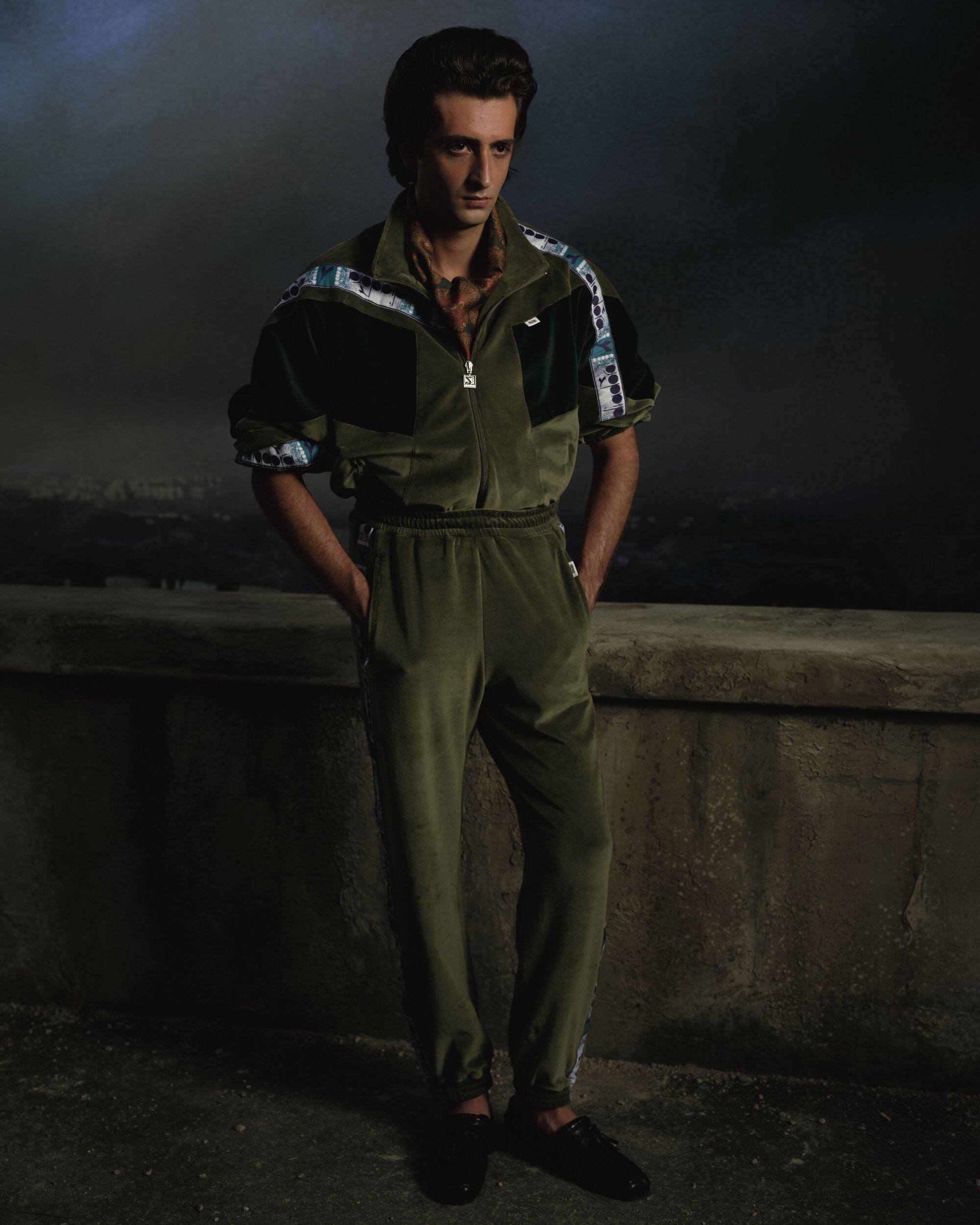
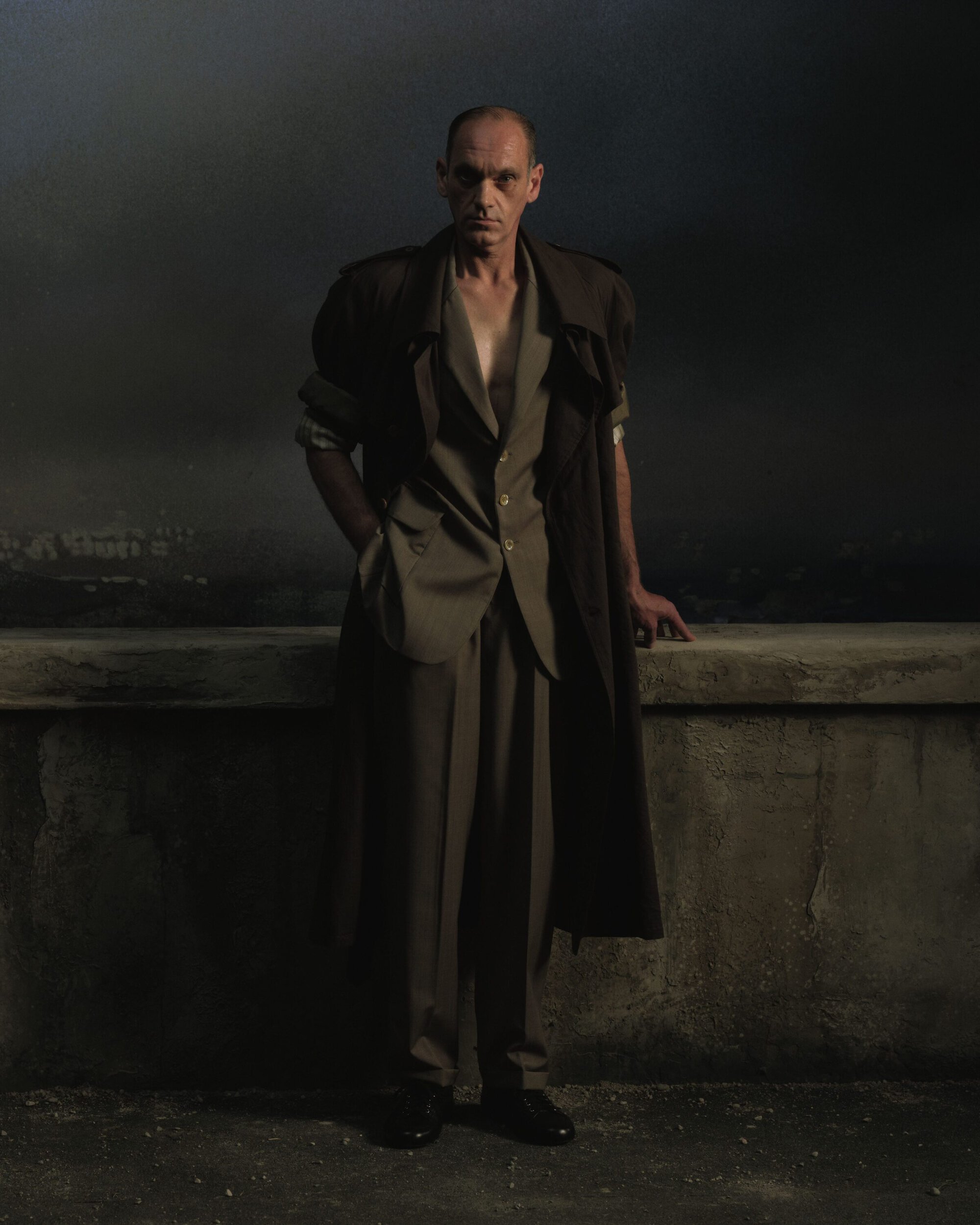
Luxury fashion is entering another period of consolidation. Conglomerates continue to become larger while independent designers face increasingly difficult wholesale conditions and rising production costs. Against that backdrop, Magliano’s answer reads less like criticism and more like a quiet reminder that fashion has always depended upon a healthy middle—the independent voices willing to take creative risks long before they become commercially obvious.
The move from showing in Italy to presenting in Paris reflects that same confidence.
Rather than arriving to become more international, Magliano arrived because he wanted the work to be understood differently.
“We wanted our story to be read not simply as something typically Italian,” he says, “but as something connected to broader emotional landscapes.”
That ambition feels increasingly achievable because the brand no longer seems interested in proving itself.
It knows what it is.
In a fashion industry that often mistakes constant expansion for progress, Luca Magliano offers another possibility.
Growth is not always about becoming bigger. Sometimes it is about becoming clearer.
And clarity, especially today, may be the most radical form of luxury there is.