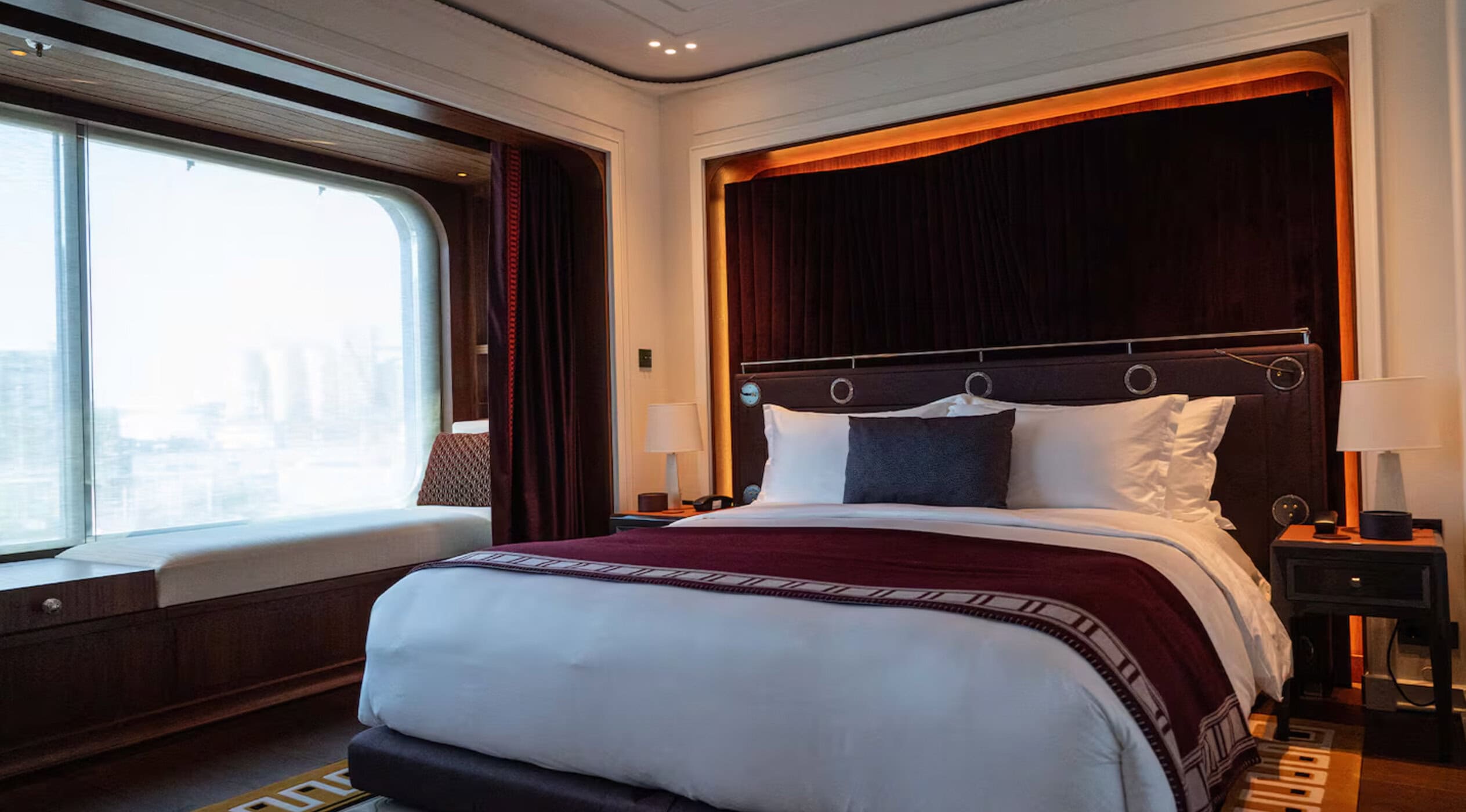
The Corinthian yacht signals a broader bet on experiential spending as luxury goods sales slow
As the appetite for personal luxury goods cools, LVMH and Accor are steering Orient Express toward a different kind of aspiration. The Corinthian, the first of two planned superyachts under the Orient Express joint venture, launched this season, shuttling between the French and Italian Rivieras and positioning itself squarely within a client base reordering its priorities around access, presence, and experience over acquisition.
Accor CEO Sébastien Bazin confirmed the venture is banking on new wealth generated by the AI boom, anticipating that a growing class of ultra-high-net-worth individuals will drive demand for premium experiences over goods. His framing is pointed: when a client already has seven homes, twelve cars, and seventeen watches, the next purchase is not an eighteenth. Instead, it is a four-day Riviera cruise beginning at €25,000 per suite.
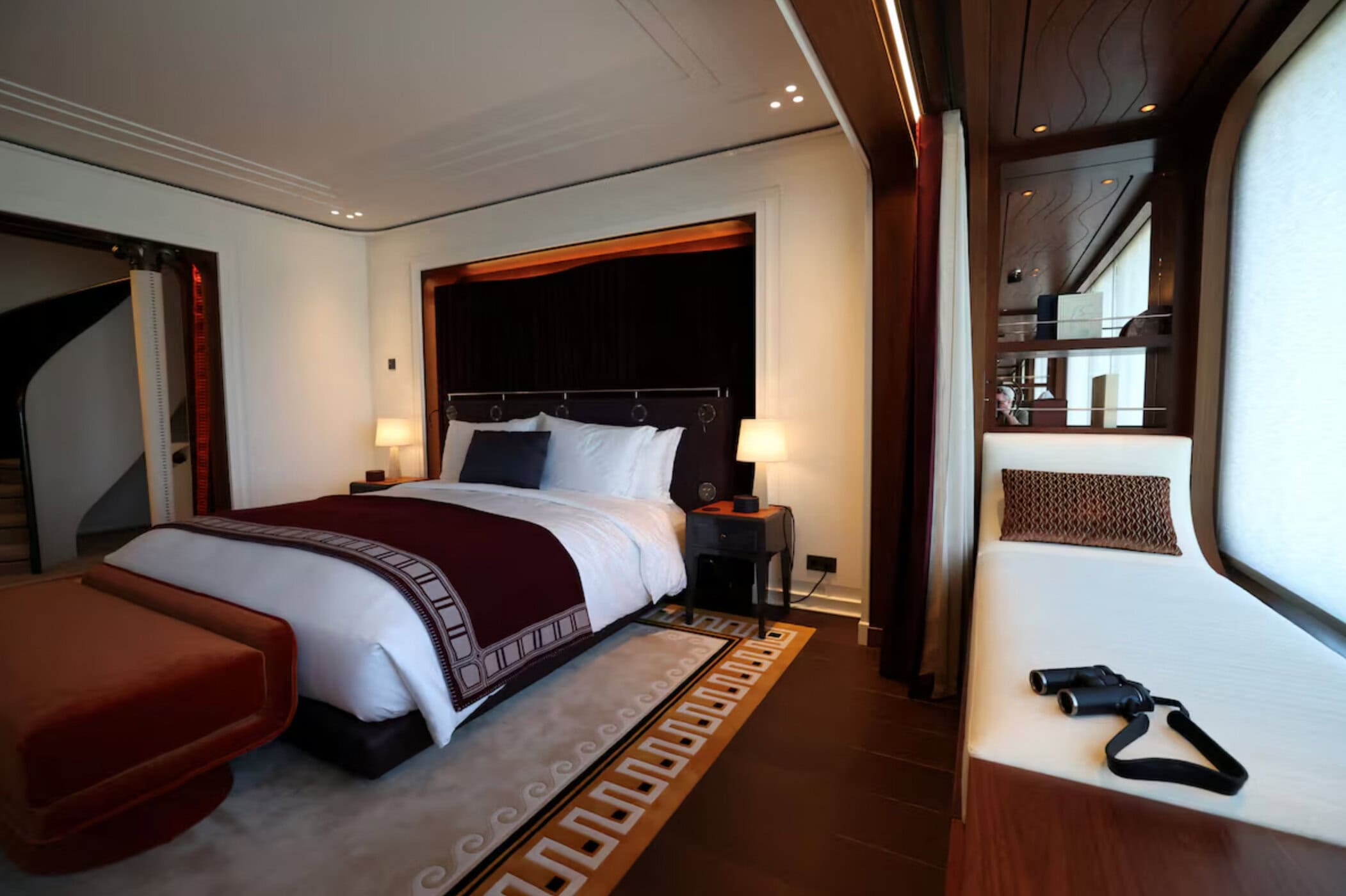
The vessel integrates the LVMH portfolio throughout, from a Guerlain beauty salon to Hennessy cognac in the penthouse suites, folding the group’s existing brand architecture into a single immersive environment. It is an approach that sidesteps the promotional register entirely. The brands are present not as products to be sold, but as textures within a curated world, closer to the logic of hospitality design than retail.
Orient Express has anchored its early itinerary around high-profile events, including the Cannes Film Festival and the Monaco Formula One Grand Prix, with exclusive access functioning as a core part of the value proposition. Forbes counts 45 new AI-linked billionaires in 2026, contributing to record demand for high-end services, and Orient Express is positioning itself to attract them.
Bazin confirmed that LVMH and Accor hold reciprocal options to acquire each other’s stake in the coming years. Orient Express’s portfolio of hotels and the forthcoming Art Deco train, combined with the Corinthian and a second planned yacht, is estimated at around €1 billion. For LVMH in particular, the venture represents a structural hedge: spending on high-end experiences is forecast to grow 9 to 11 percent this year, compared with 1 to 4 percent growth projected for personal luxury goods, according to a Bain study.
Whether an eventual LVMH acquisition consolidates the brand under its hospitality division or leaves it operating as a standalone business remains to be seen. What Orient Express already demonstrates is that the most commercially intelligent move in luxury today may be building the environment rather than simply filling it.