Reopened Paris Boutique Features Redesigned Space And Architectural Updates
Max Mara has reopened its boutique on Avenue Montaigne as part of its 75th anniversary, introducing a redesigned retail space spanning 745 square metres. The updated store has been conceived by architect Sophie Hicks and replaces the previous layout with a new architectural approach.
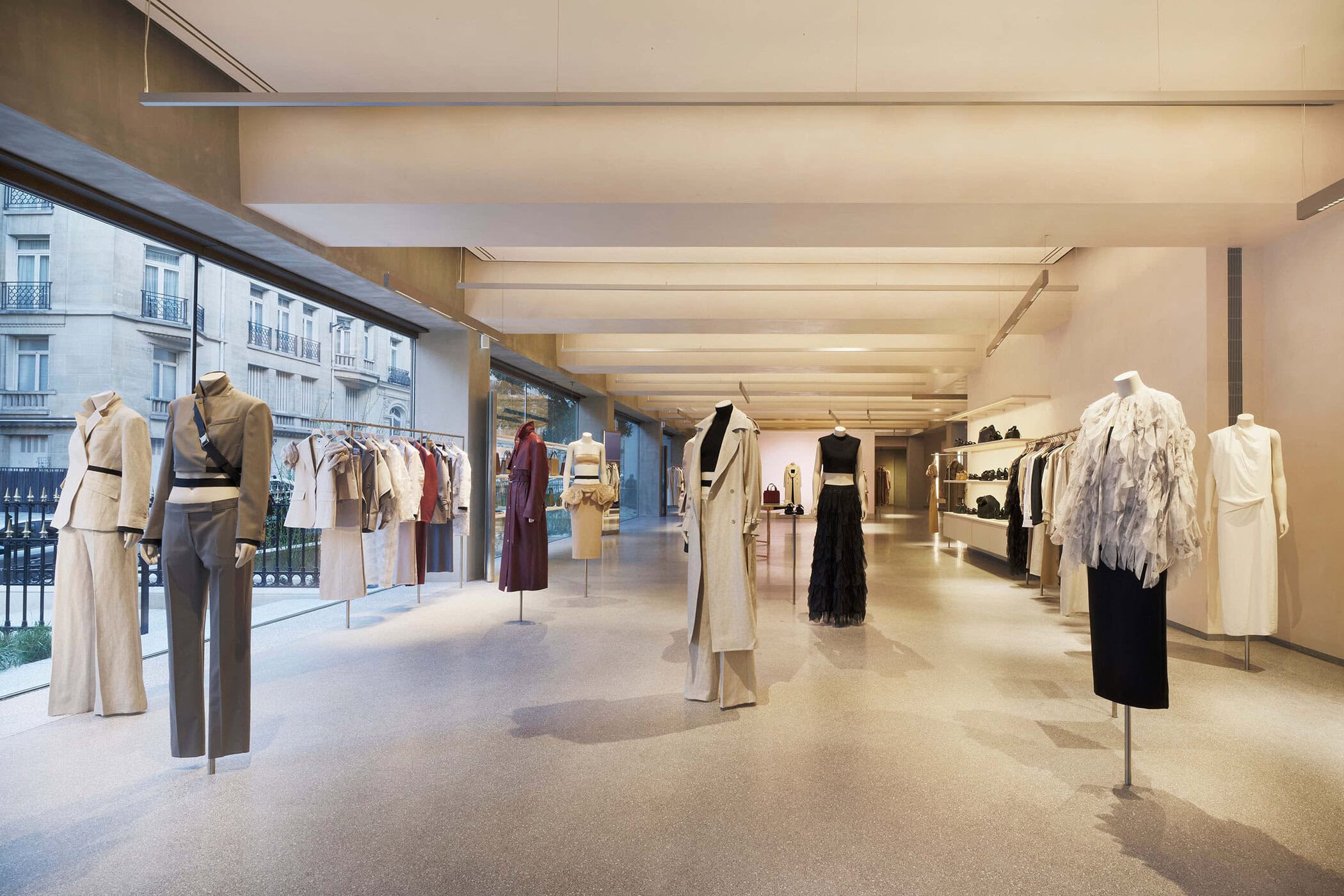
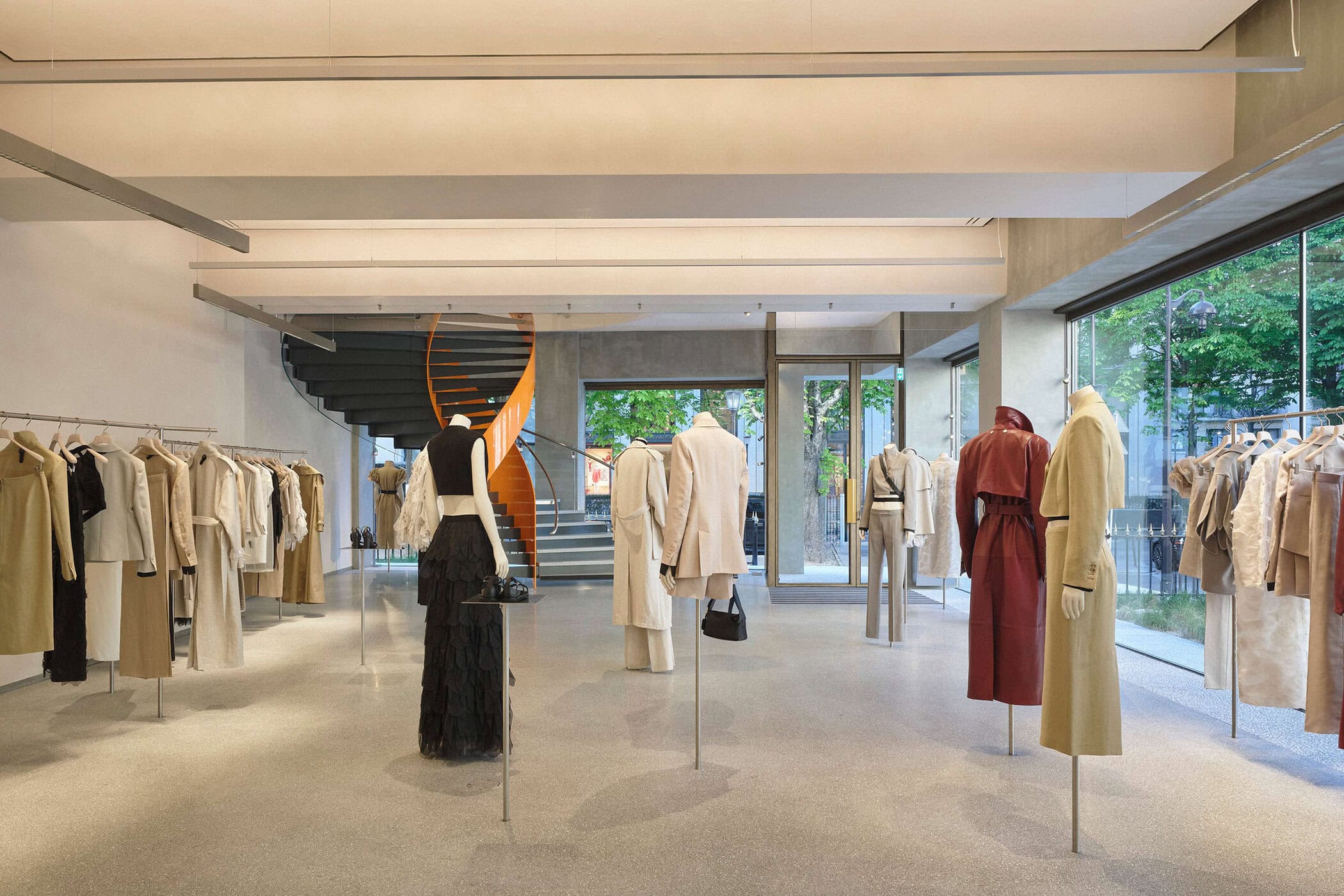
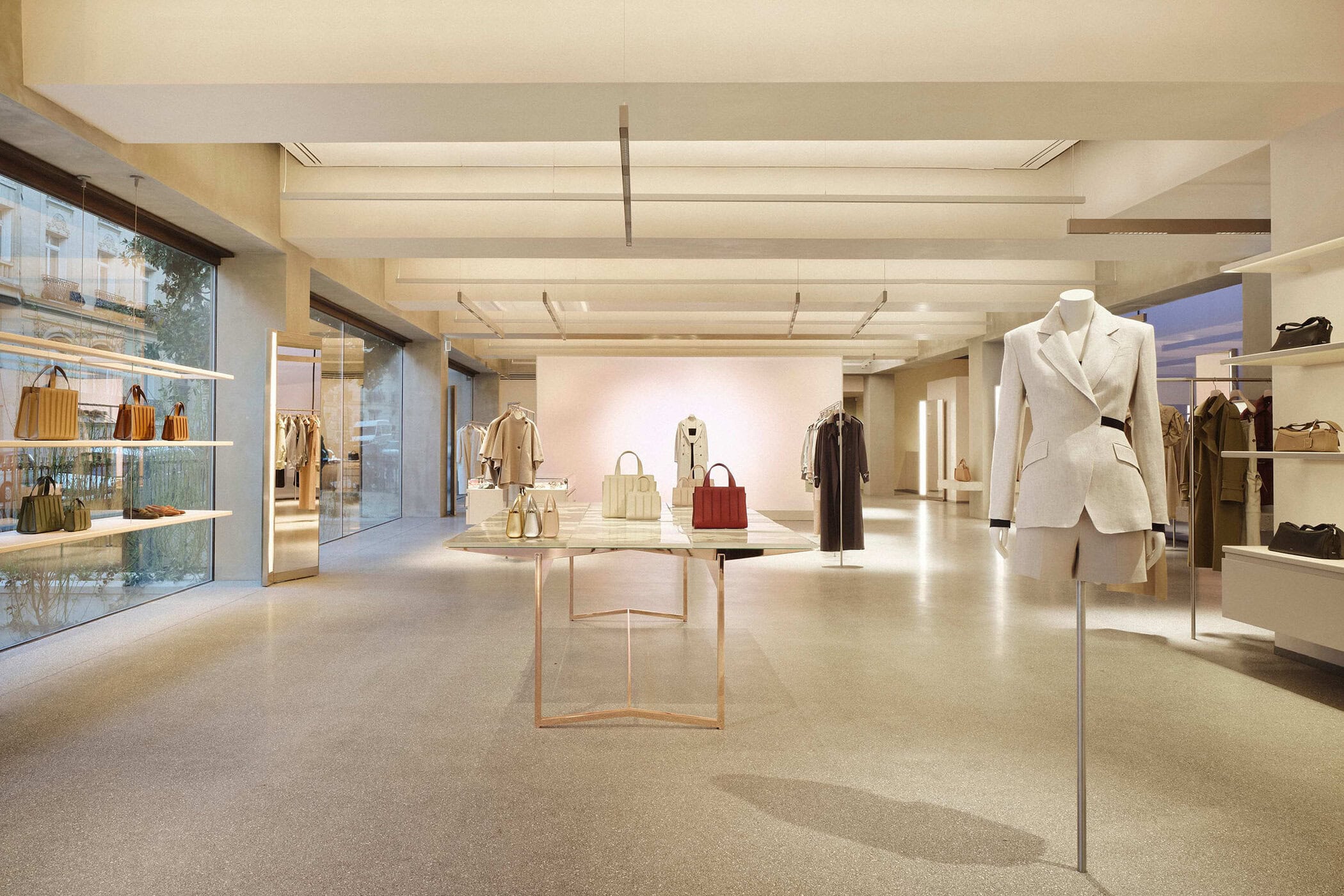
The design focuses on open interiors, unobstructed sightlines, and defined structural details. The layout emphasizes clarity of space, with a restrained approach to materials and finishes aimed at creating a controlled and accessible retail environment.
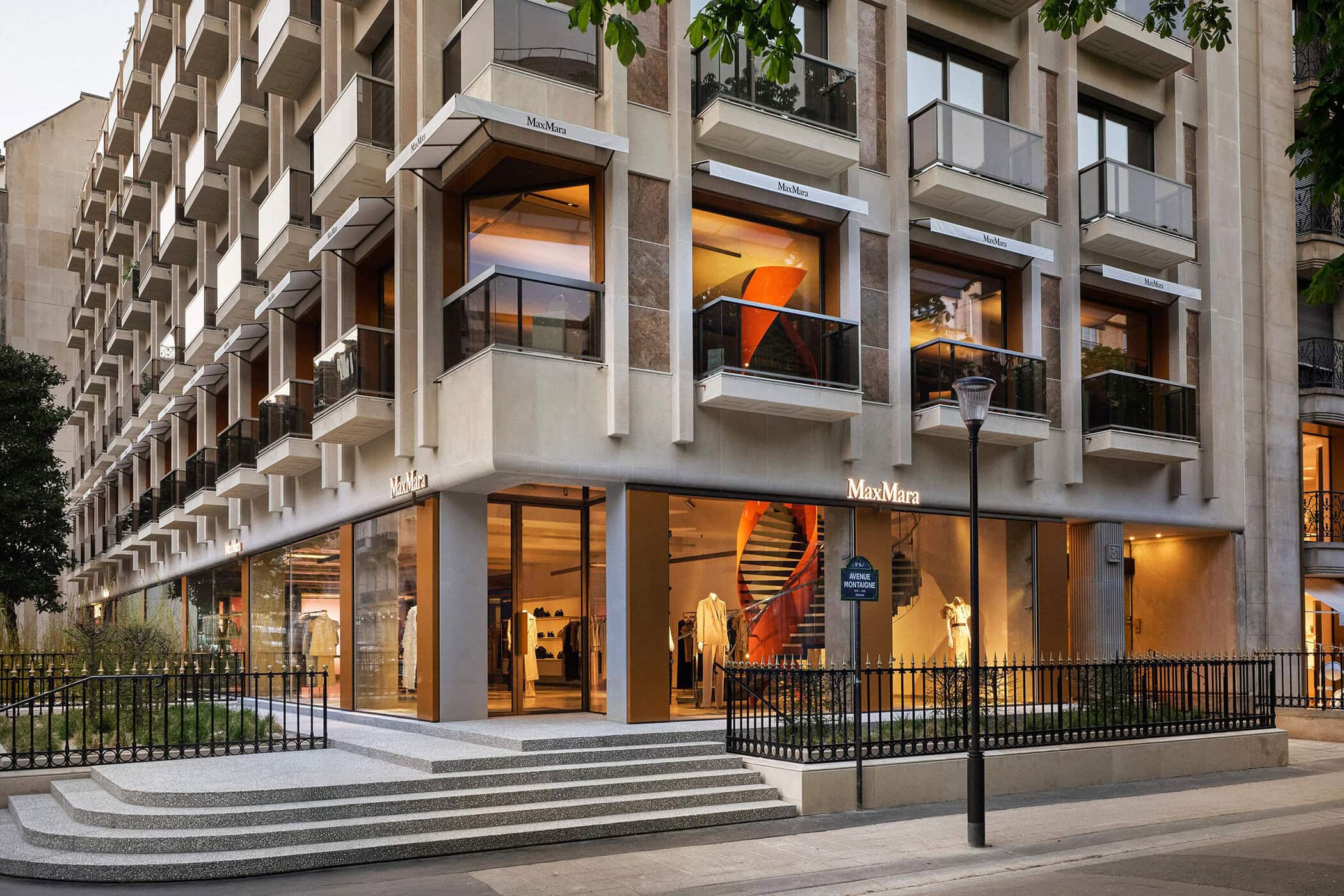
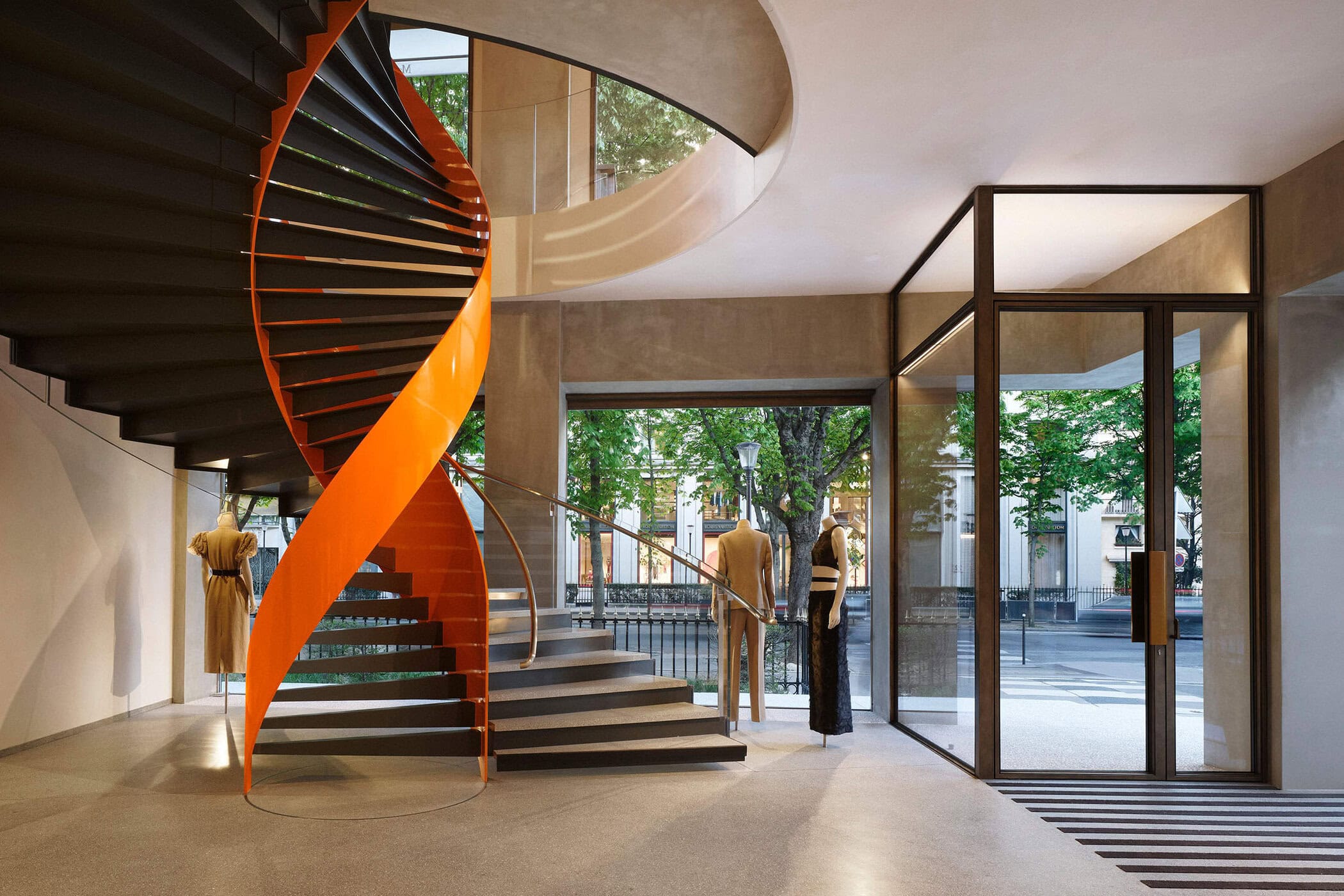
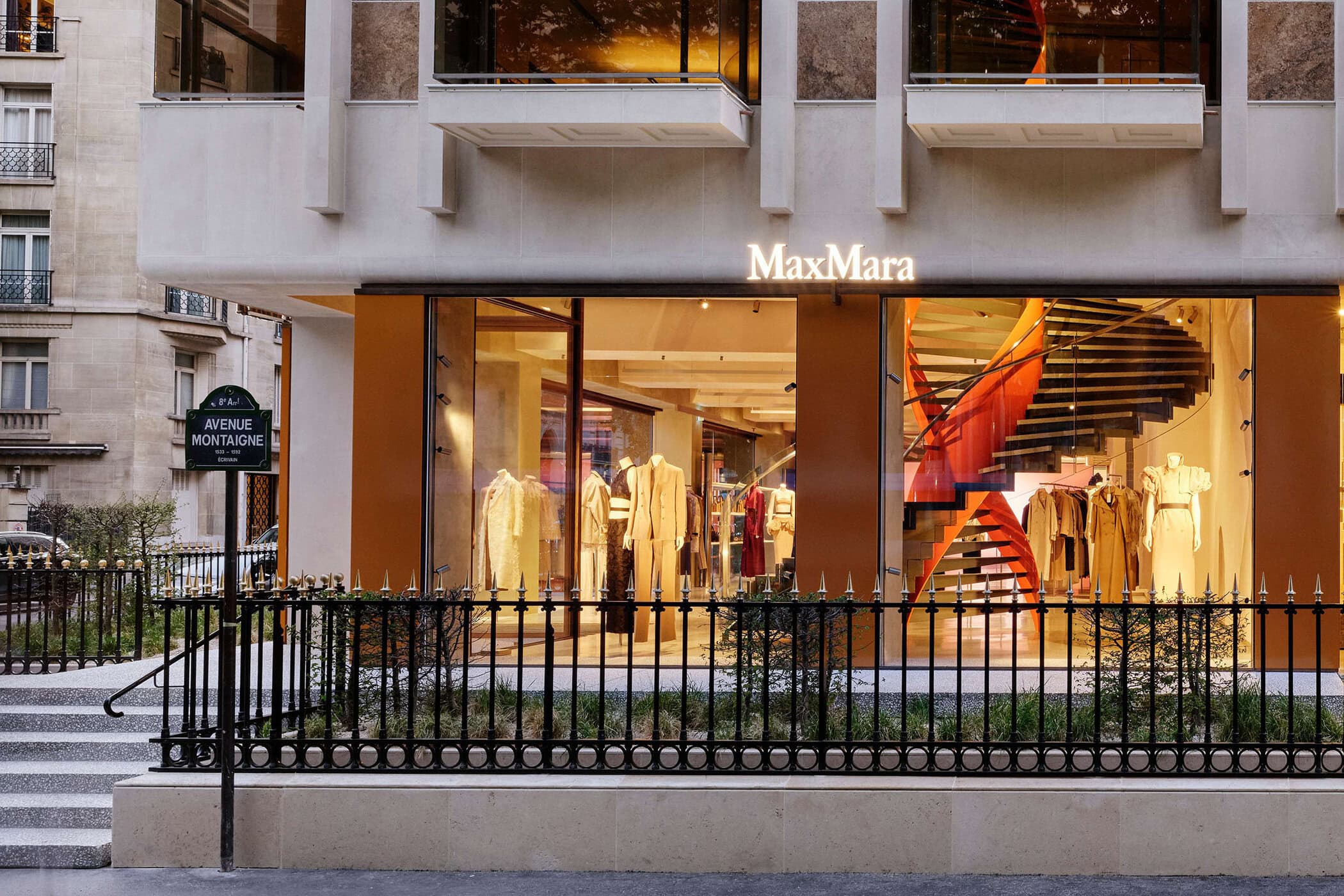
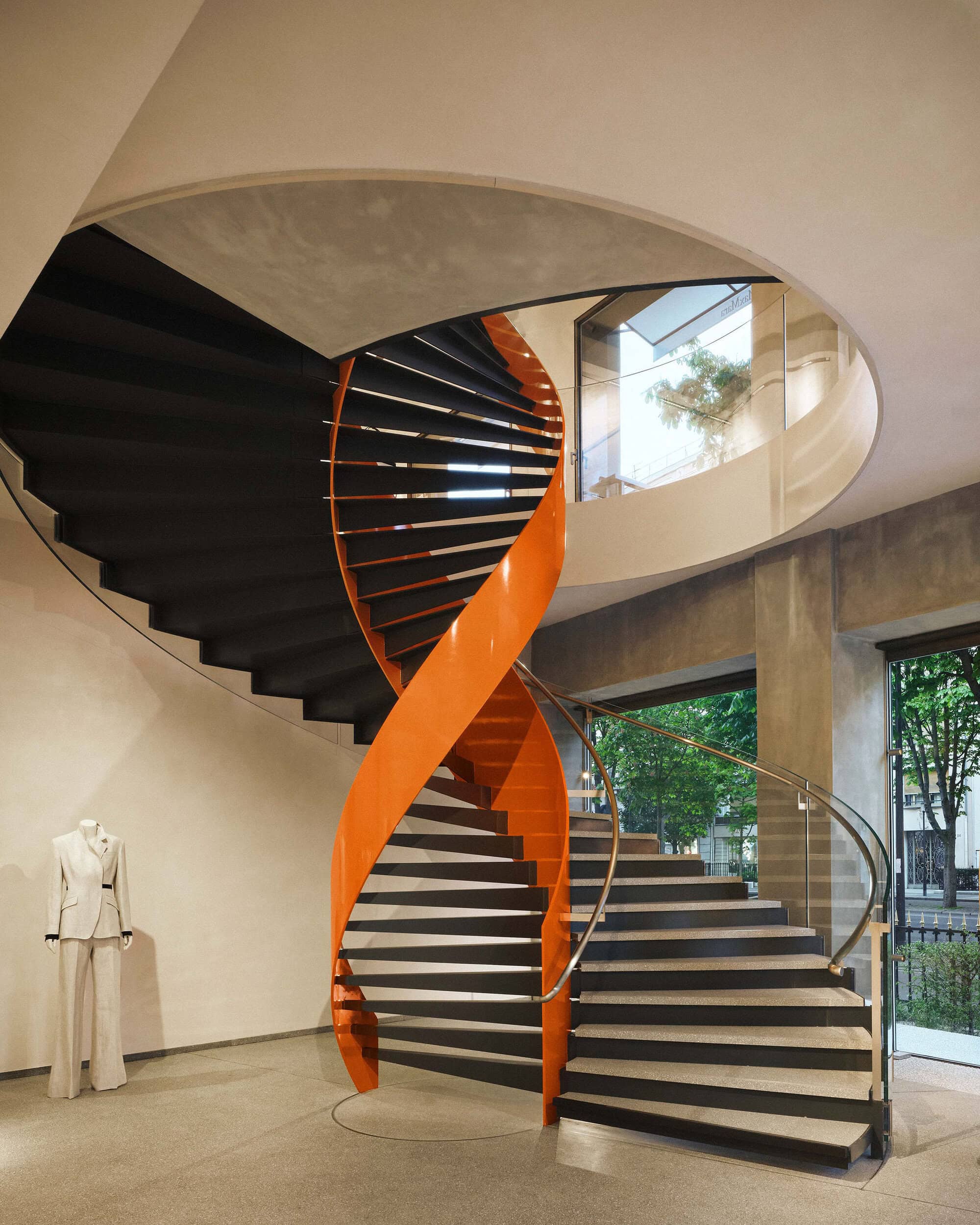
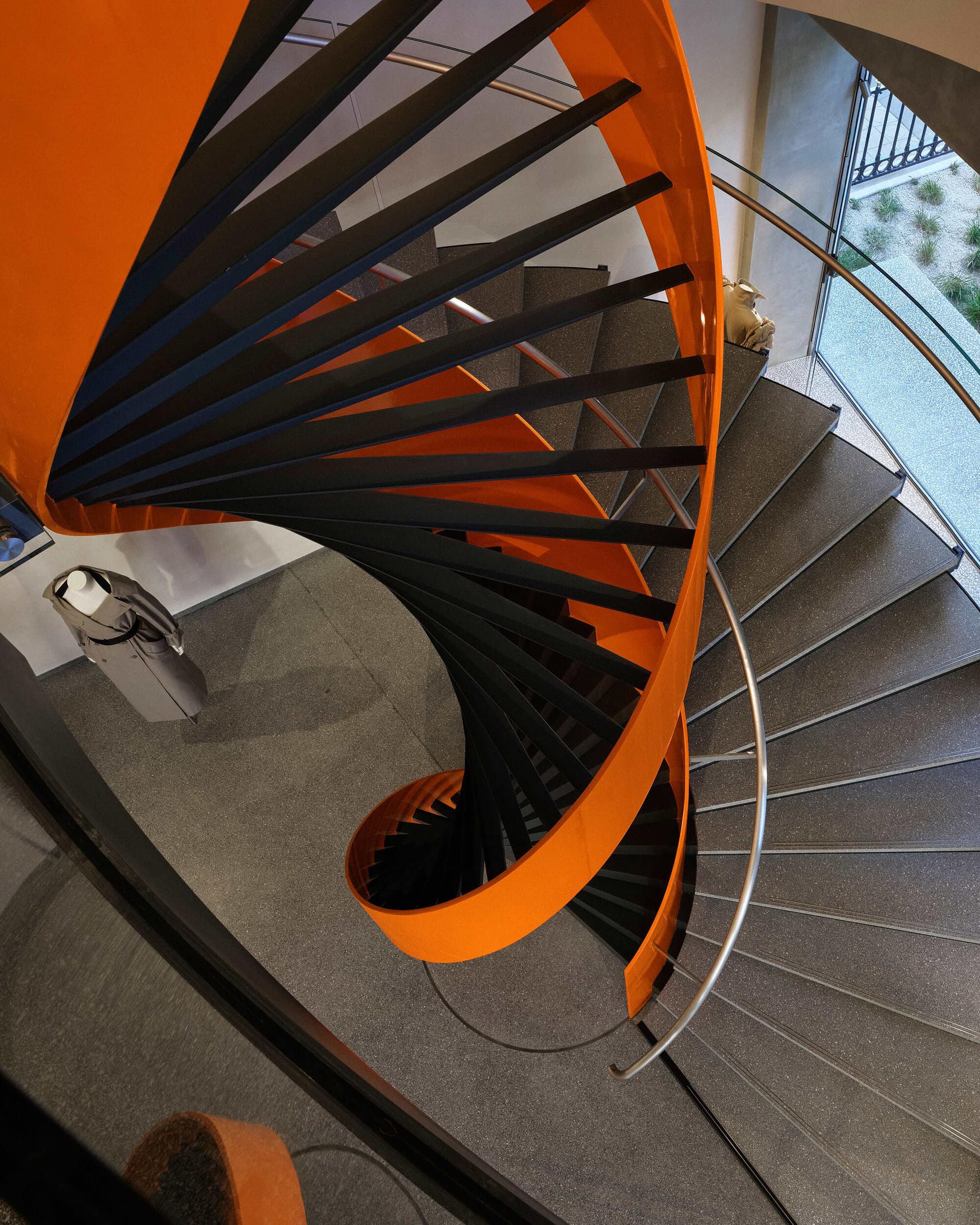
“I want Paris to notice Max Mara. I want to shoot an unexpected Italian firework over Avenue Montaigne.” says architect Sophie Hicks. “For me, the epitome of Max Mara is a timeless, camel overcoat. This store is a play on camel, a camel enamel shopfront, camel tinted glass and if you exaggerate camel, what does it become? Orange of course!”
A central staircase leads to the upper level, designed as a double twist resembling an orange peel. Positioned as a focal element, the staircase appears elevated, with steps that seem to float. Its structure is supported by a central orange double-helix, reinforced with grey steel connectors that link both sides and provide structural balance.
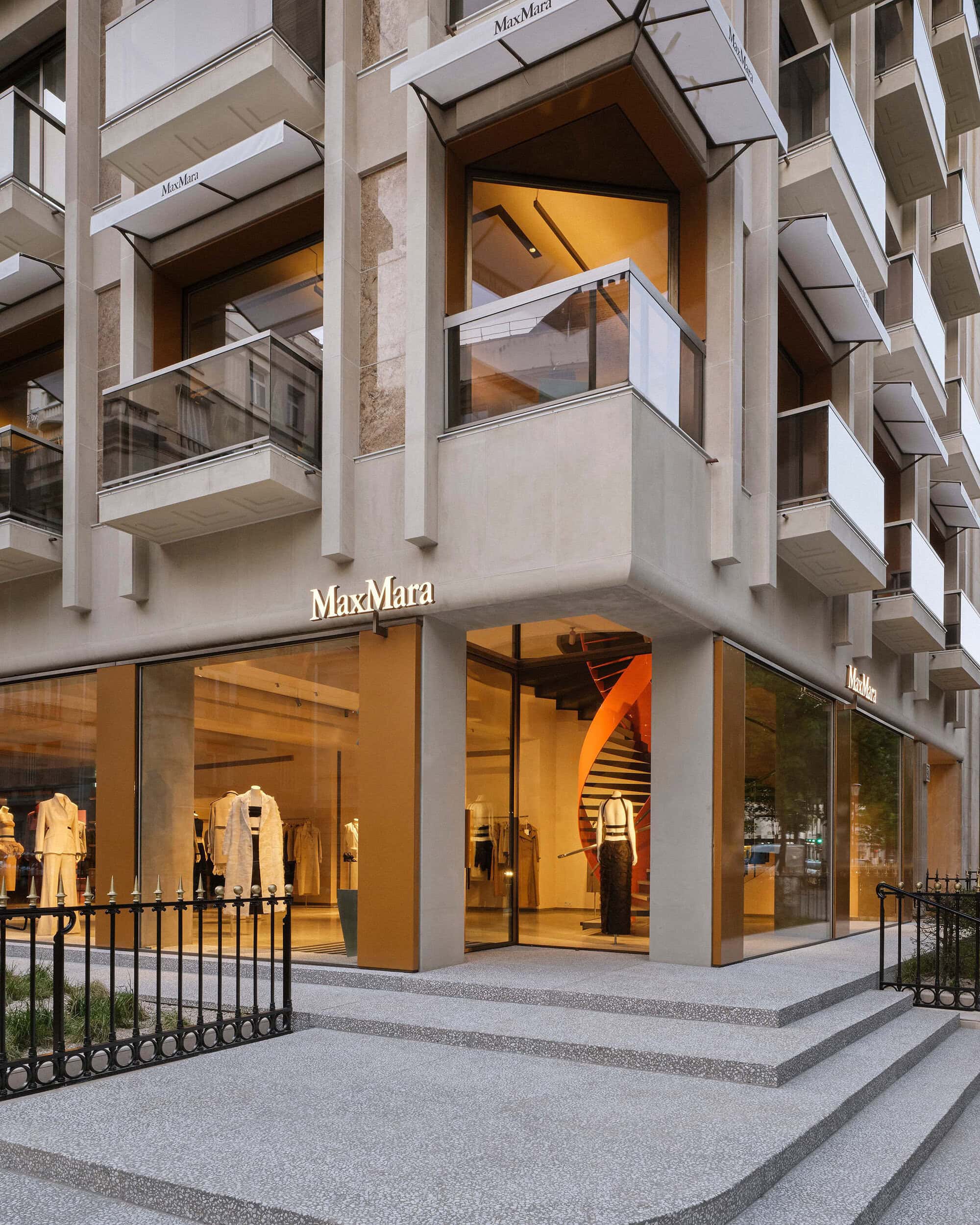
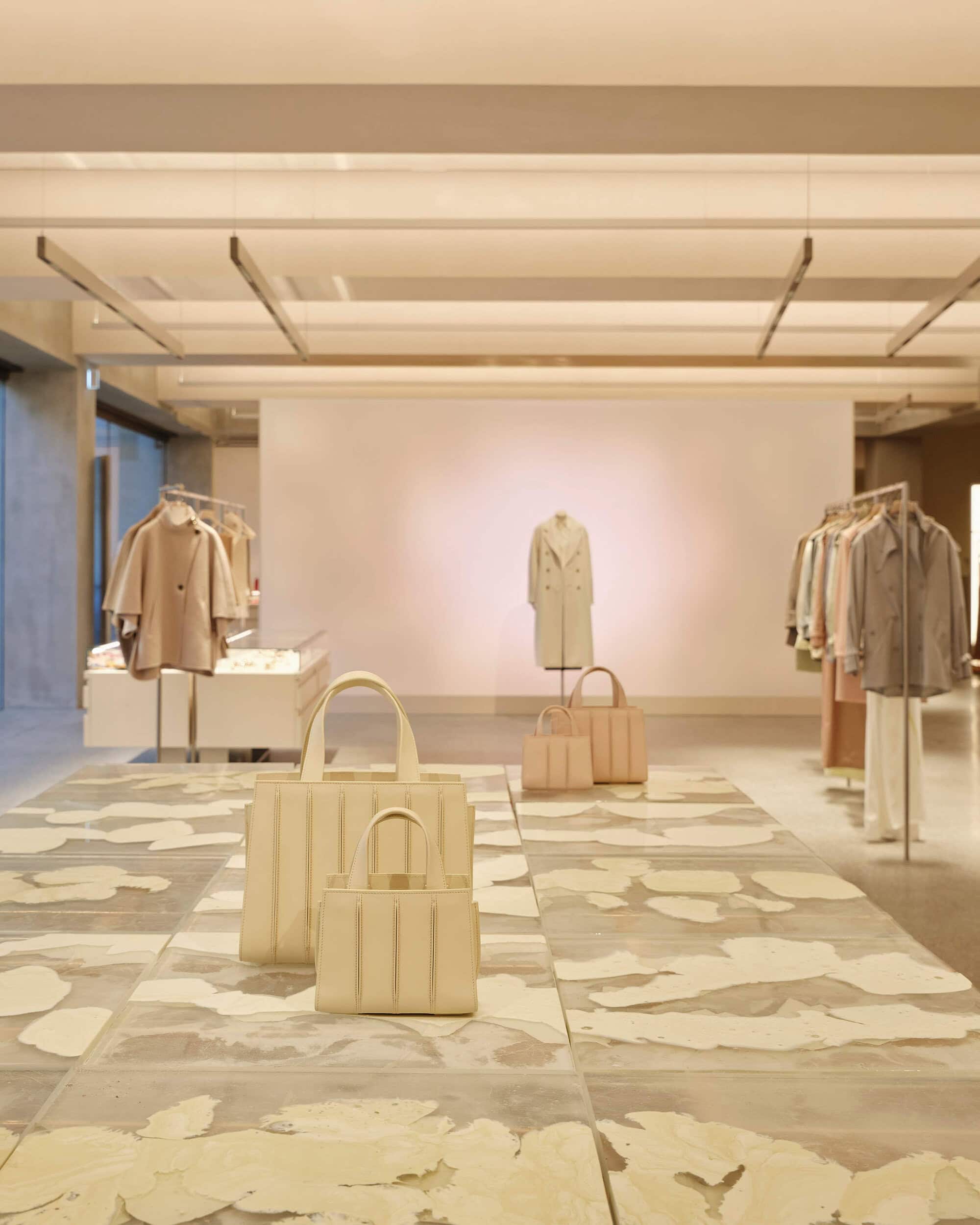
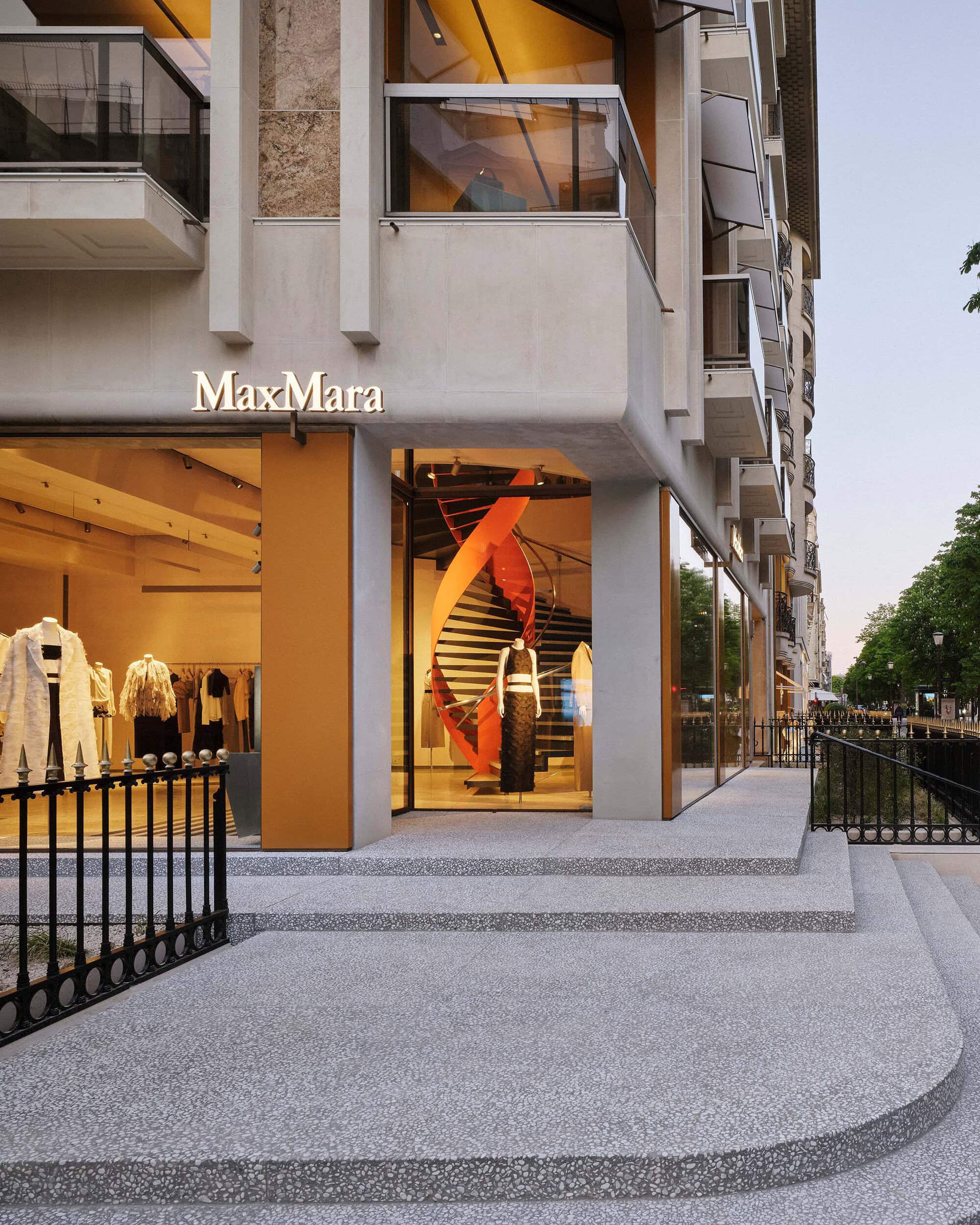
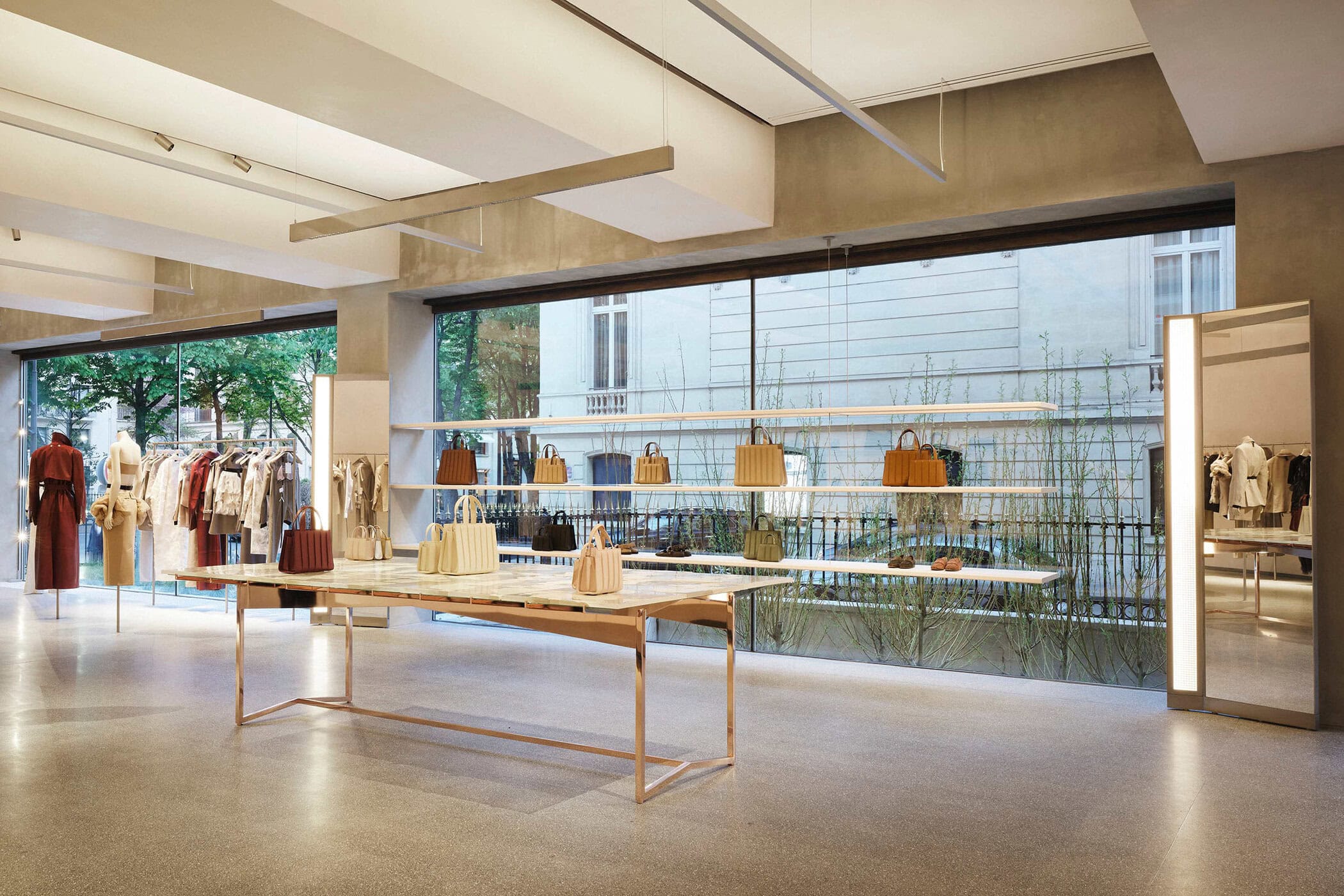
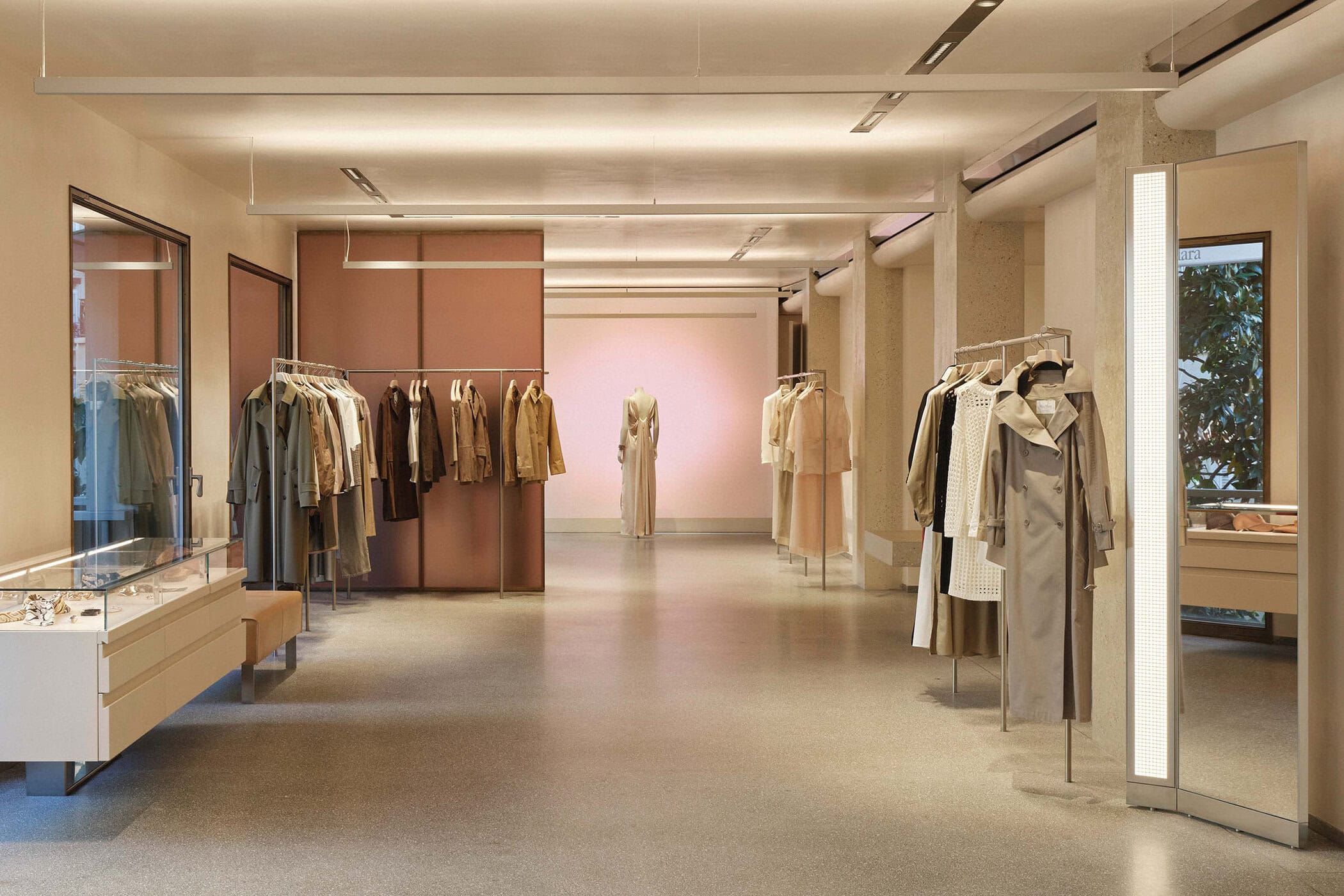
While the staircase introduces a strong visual element, the rest of the store reflects a more restrained architectural approach. This is supported by the original concrete framework of the 1970s building, which has been exposed to highlight its structural form. The open layout reveals the building’s construction, with additional concrete display tables incorporated into the retail setup.
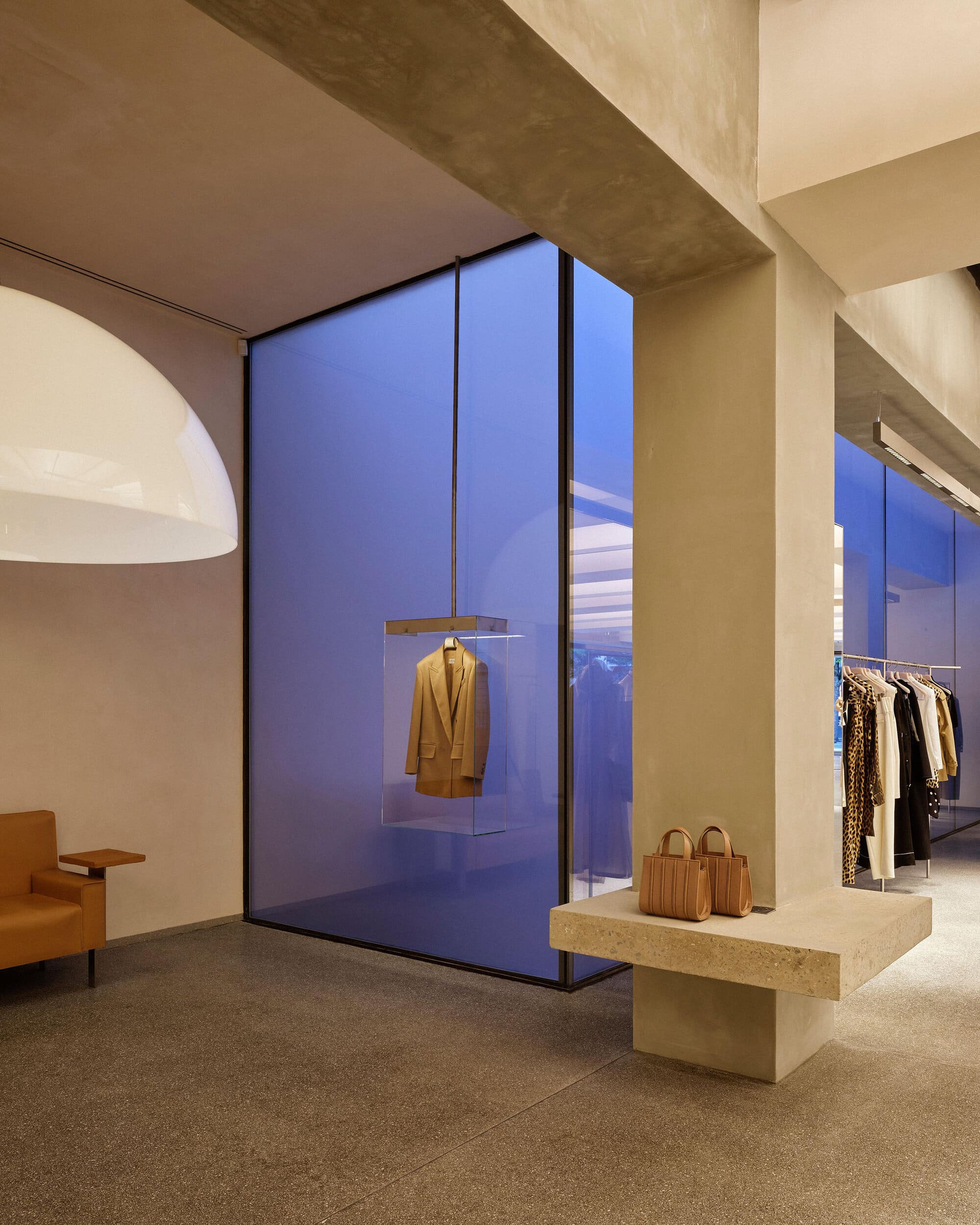
The store layout allows for visibility from the street, aligning with the brand’s presentation strategy. Window displays have been relocated to the interior, encouraging movement through the space as visitors navigate among mannequins arranged across the floor.
Although Max Mara operates globally, its production remains based in Reggio Emilia, Italy. The store integrates materials associated with Italian construction, applied in specific finishes:
• Marmorino plaster is used across walls and ceilings in a vanilla tone, embedded with rosso di Verona stone fragments and polished to create a reflective surface, particularly above the staircase.
• Terrazzo flooring appears in two finishes, smooth within the store and textured outside, where it meets the surrounding pavement.
The interior layout has been arranged to guide movement through the space, with lighting designed to create a gradual reveal of products. Reflected light from the ceilings provides general illumination, supplemented by focused lighting on displayed items.
An illuminated linen installation forms a central visual feature, displaying real-time weather conditions from Reggio Emilia. Environmental data such as wind, fog, sunlight, and rain are translated into projected visuals using images of the original Max Mara factory, now the Collezione Maramotti, along with surrounding landscapes.
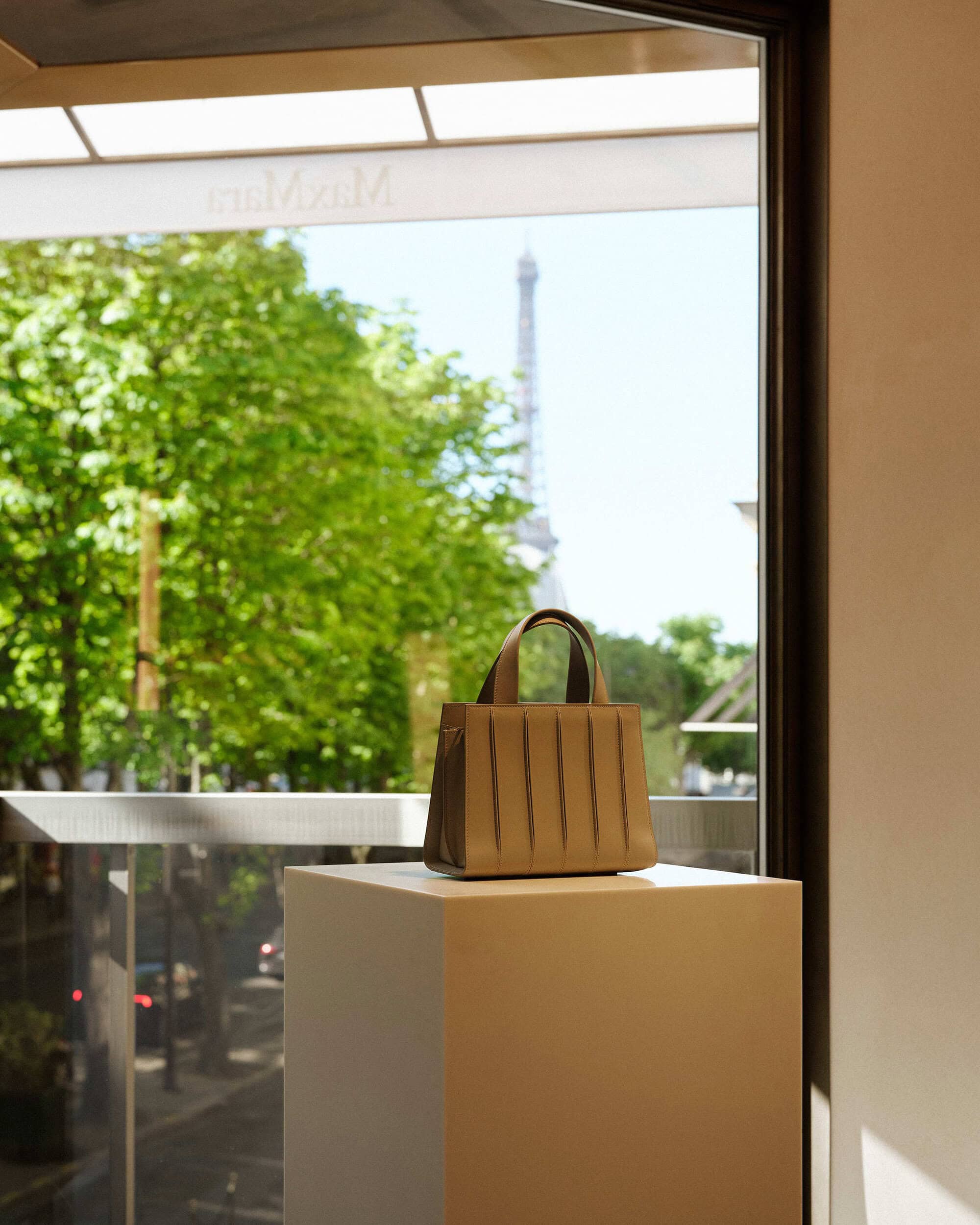
On the upper floor, a sequence of windows extends along the length of the space, increasing natural light exposure. From this level, visitors can view the Eiffel Tower before moving through sections displaying various materials, including cashmere, camel, silk, and cotton, arranged along the interior.
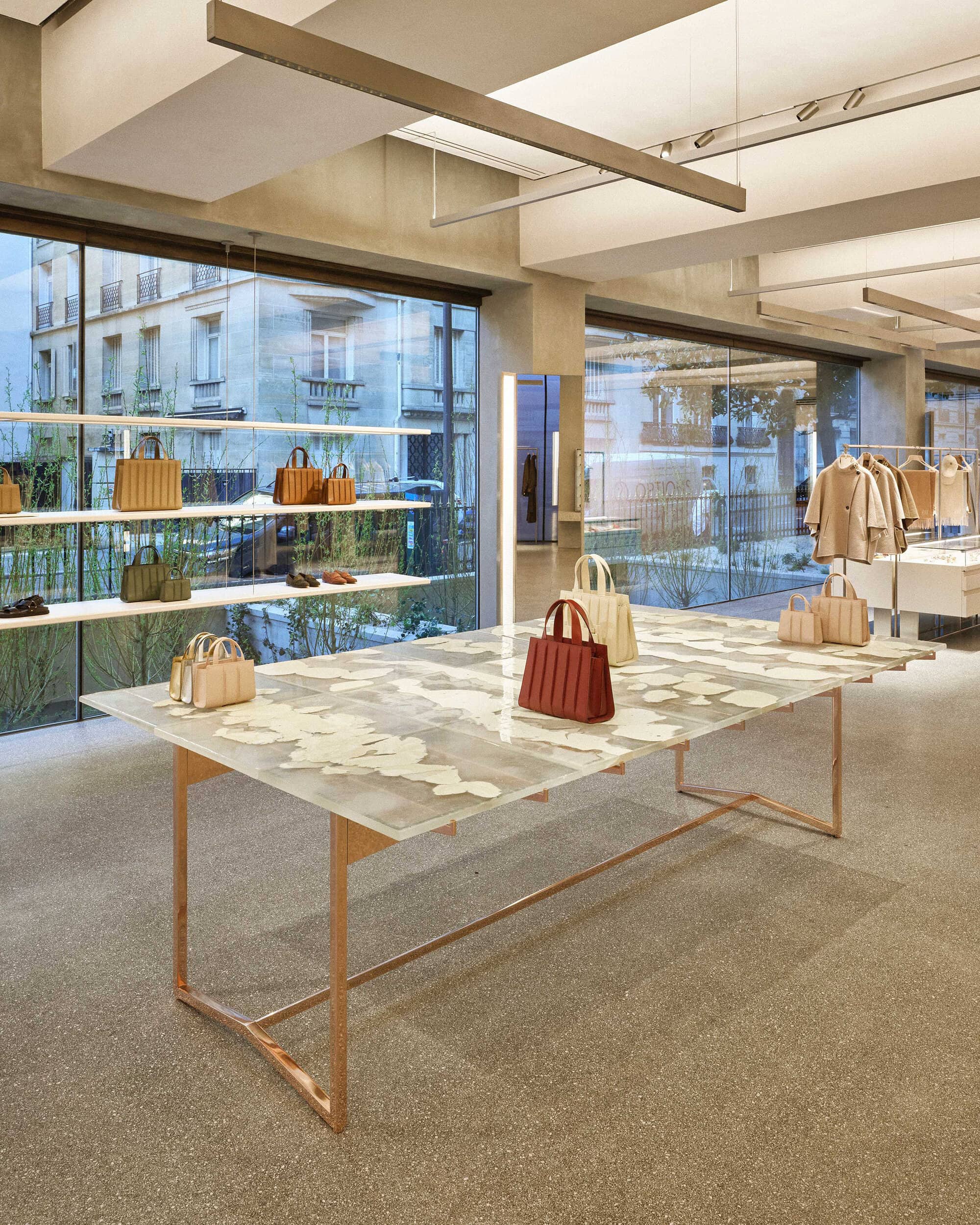
The furniture across the store varies between functional and handcrafted elements. A table designed by Sophie Hicks combines cast glass panels with a copper frame, referencing structural components from the original Max Mara factory building.
The exterior includes a landscaped garden designed to complement the store’s setting on Avenue Montaigne. The layout combines structured plant arrangements with seasonal variations, featuring hornbeam trees shaped into cubes and willow trees that change appearance throughout the year.