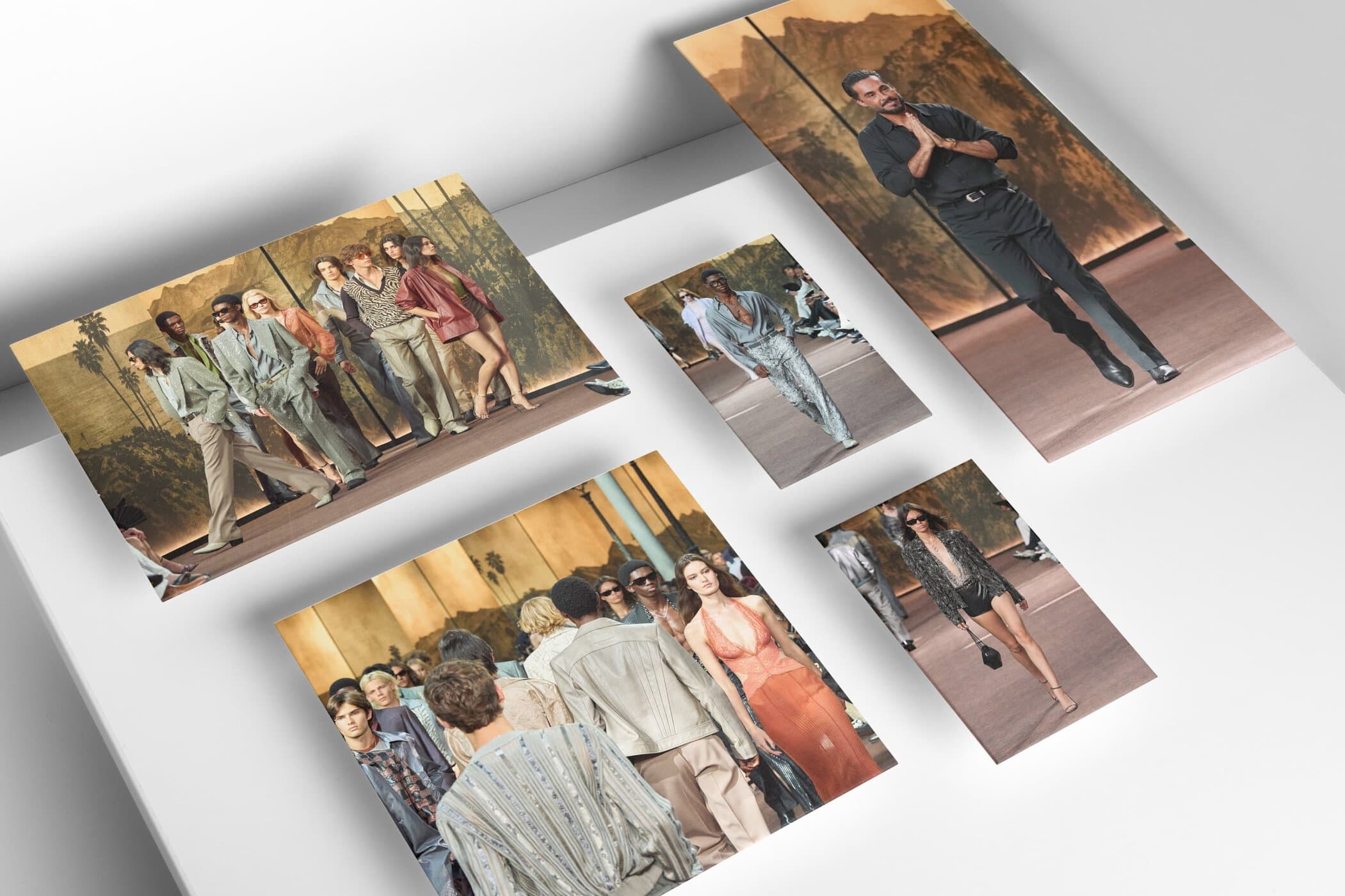
As the Los Angeles designer settles into Paris with growing confidence, he reflects on building a distinct creative language, embracing sensuality as part of modern luxury, and why the next chapter of Amiri is only just beginning
By Kenneth Richard
Paris has a way of asking designers difficult questions.
For some, the city demands reinvention. For others, it quietly exposes uncertainty, inviting comparisons with the great houses that have defined luxury for generations. Every season, designers arrive hoping to make an impression, but the ones who endure eventually discover that Paris isn’t looking for imitation. It rewards originality, conviction, and the confidence to know exactly who you are.
That realization seems to have settled comfortably with Mike Amiri.
Speaking after unveiling his Spring 2027 collection during Paris Men’s Fashion Week, the Los Angeles designer reflected less on individual garments than on the journey that brought him here. The conversation wasn’t about proving himself anymore. It was about recognizing that his greatest strength has always been the perspective he carries with him from home.
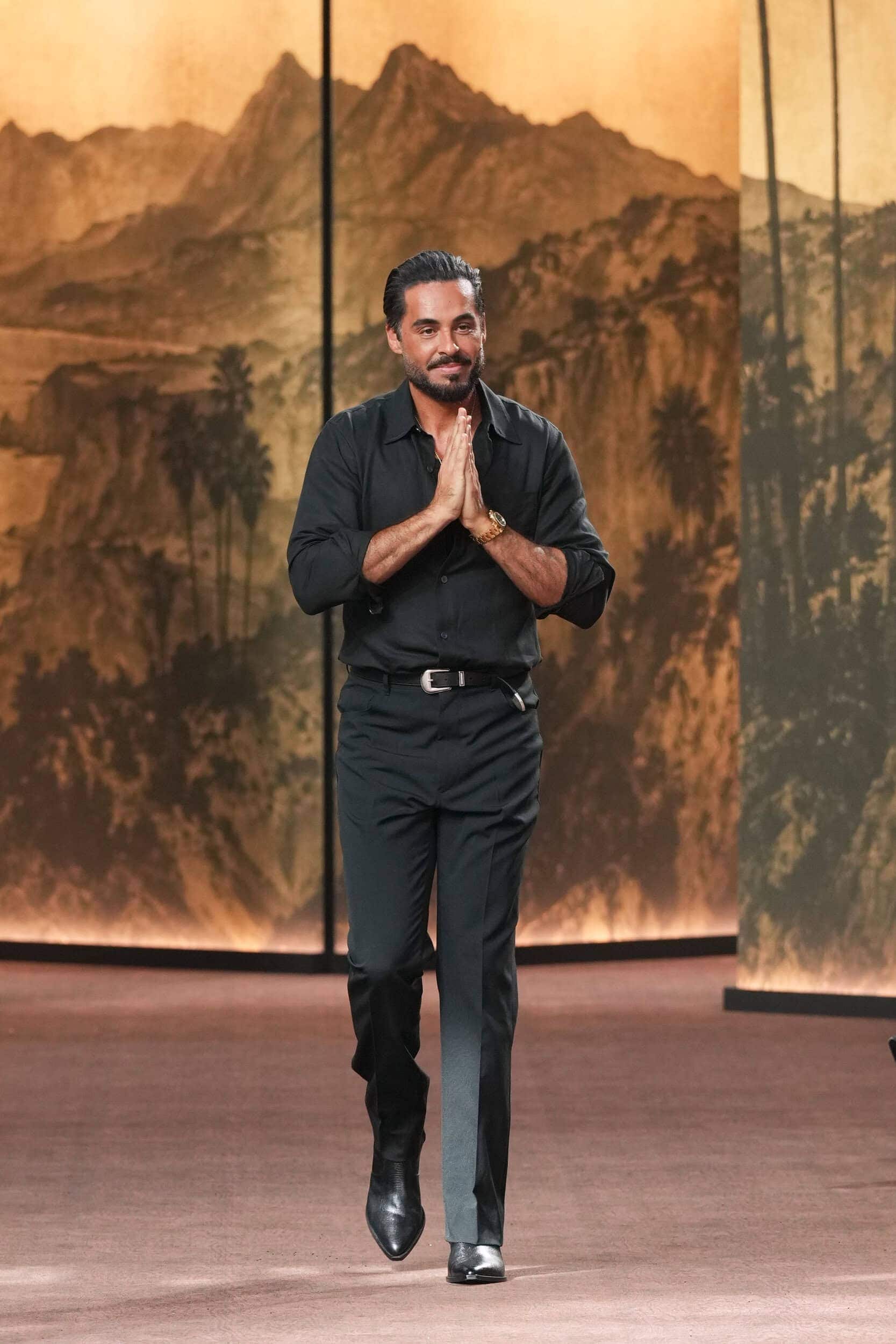
“I used to come here thinking, ‘This is Paris. How do you show up for Paris?’”
I’ve kind of learned that my strength is bringing what I have from Los Angeles here and executing it at the level that’s expected on these platforms.
It’s the kind of observation that only arrives with experience.
For years, Amiri has steadily built a vocabulary rooted in the effortless confidence of Los Angeles. Rock-and-roll glamour, relaxed tailoring, faded denim, sensual ease, and the cinematic mythology of Hollywood all became recognizable signatures. Today, those ideas no longer feel like references. They have evolved into a language that belongs entirely to him.
“I feel like I have my place,” he says. “I feel like I have a language that I can speak distinctly for myself. Now’s the time to be bold and be yourself.”
There is an honesty to that statement that resonates beyond fashion. Every creative spends years searching for a voice that feels unmistakably their own. Once it arrives, the challenge shifts from finding it to trusting it.
For Amiri, that trust has become the foundation of the brand’s evolution.
“We know who we are. We know what we do,” he explains.
I love the idea of someone seeing someone walking down the street and saying, ‘That’s an Amiri look.’ That takes years to build. I want to earn that.
It is a philosophy rooted in consistency rather than constant reinvention. Fashion often celebrates novelty, but the strongest houses are built through repetition, refinement, and patience. Identity becomes recognizable only after years of saying the same thing in increasingly sophisticated ways.
Amiri smiles when he describes it in the simplest possible terms.
“Repetition becomes reputation.”
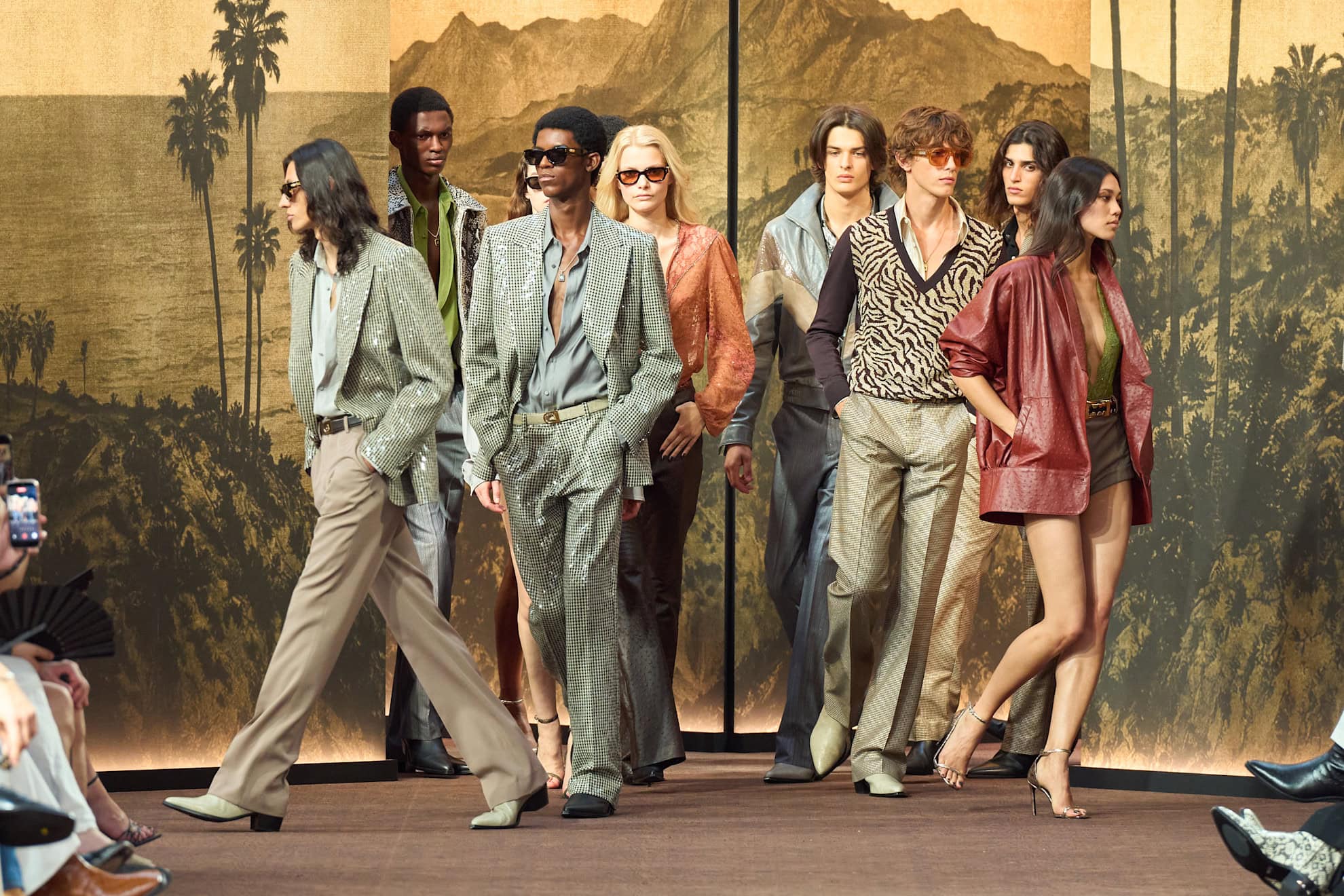
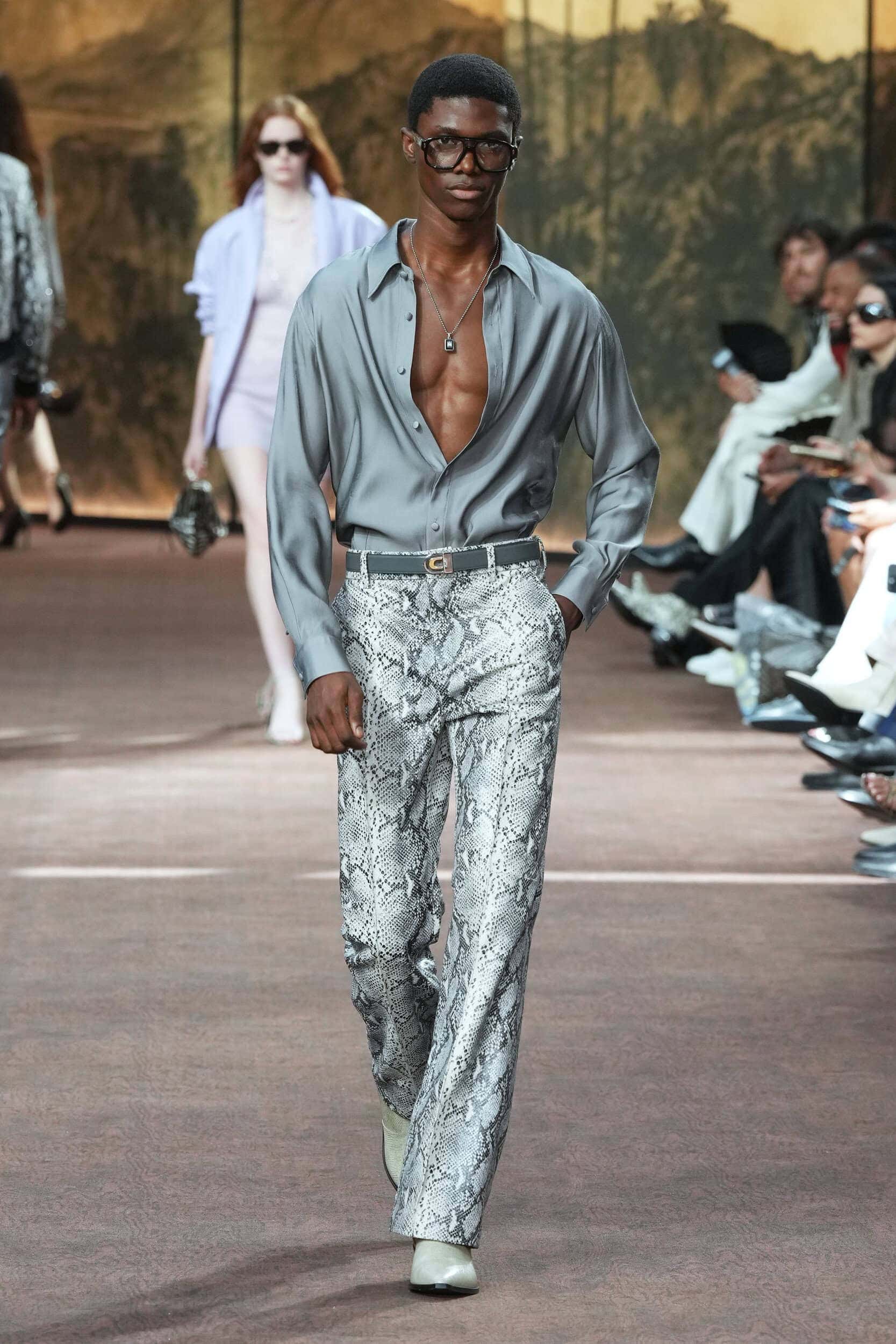
That confidence extends naturally into the collection itself, where tailoring is softened with unexpected ease and elegance is intentionally disrupted. Sneakers replace traditional dress shoes. Shirts are left open one button further than convention might suggest. Formality is never rejected; it is simply made more personal.
“If you wear sneakers with a suit, it takes the formality out,” he says. “Distorting the ceremony makes it individual. That’s what our language is.”
There is also a sensuality running through the collection that feels more assured than ever before. It isn’t loud or theatrical. Instead, it comes from confidence—the ease of a perfectly unbuttoned shirt, the relaxed drape of tailoring, or the quiet understanding that elegance can still be provocative.
“There is no fixed code,” Amiri laughs when asked about his famously open shirts. “Usually I’m tempted to go for the extra button. Why not be a little bit sexy?”
That ease feels unmistakably tied to Los Angeles, but not the version of the city built on clichés. Instead, it evokes the Hollywood of late-night conversations, intimate gatherings, and the mysterious allure of films like American Gigolo and Drive. They are stories built around characters who reveal just enough to keep you intrigued.
“I can dress them for dinner. I can dress them for the party,” Amiri says. “Why don’t I dress them for the after-party, where there’s only fifteen people? Those are the coolest rooms in every city.”
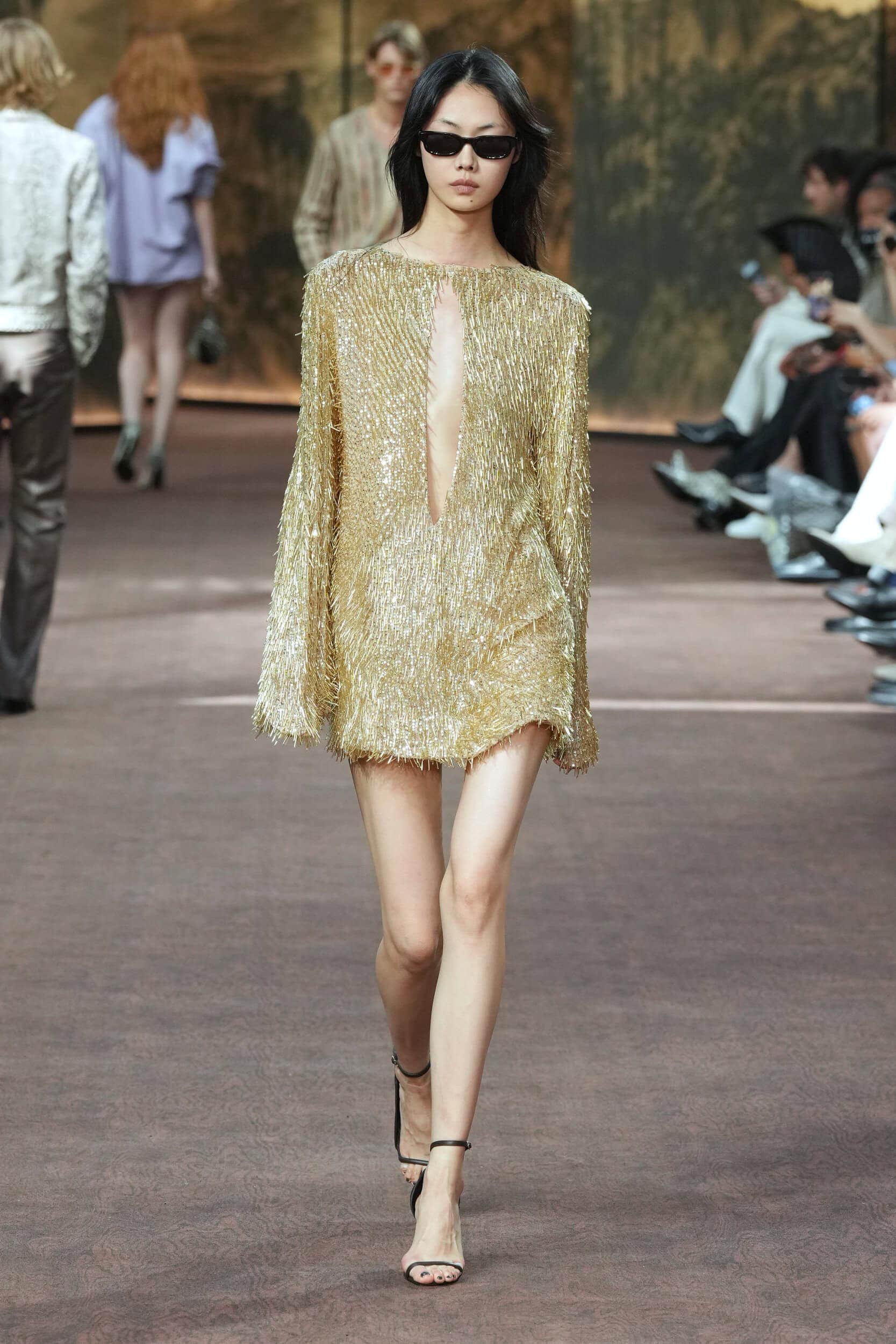
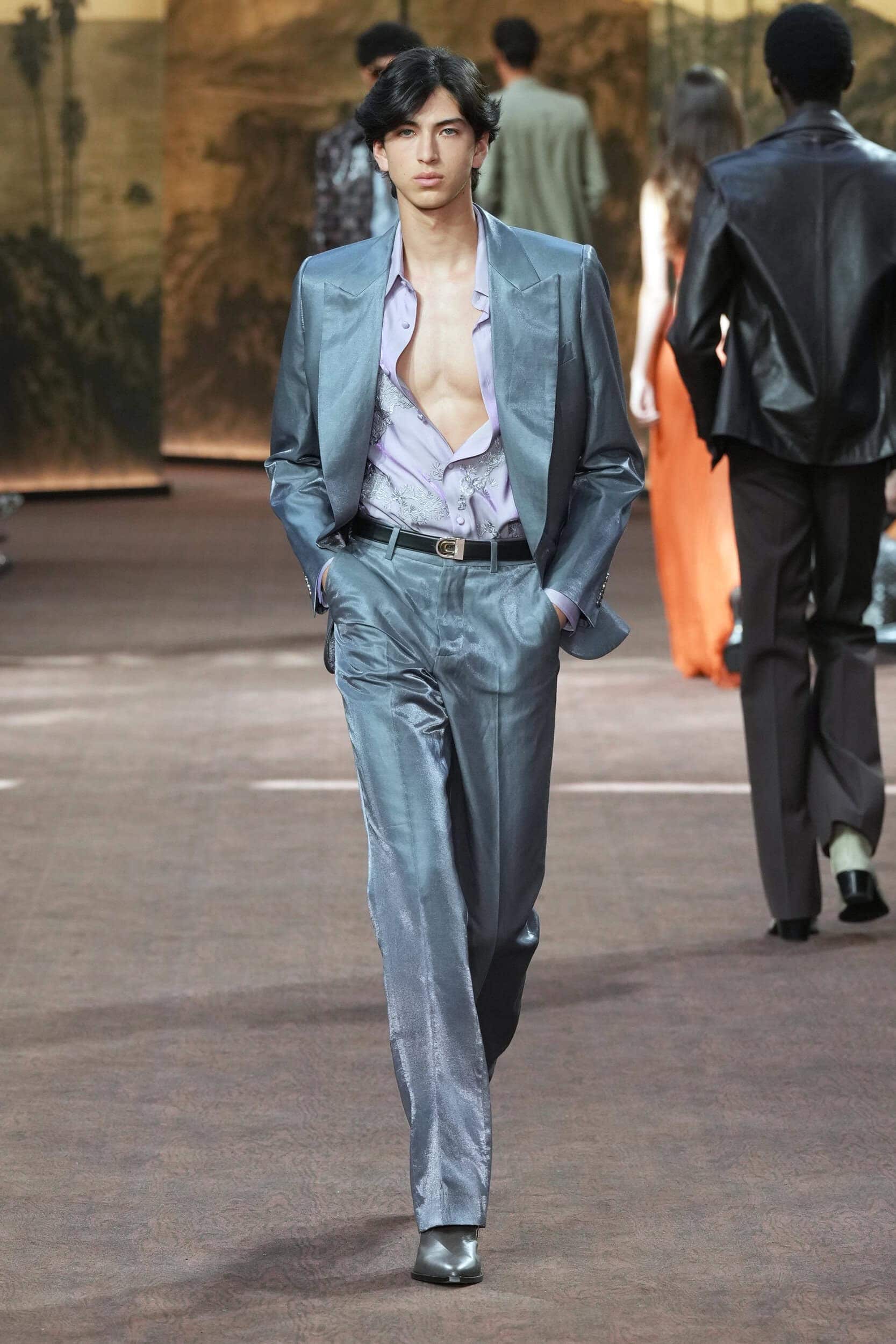
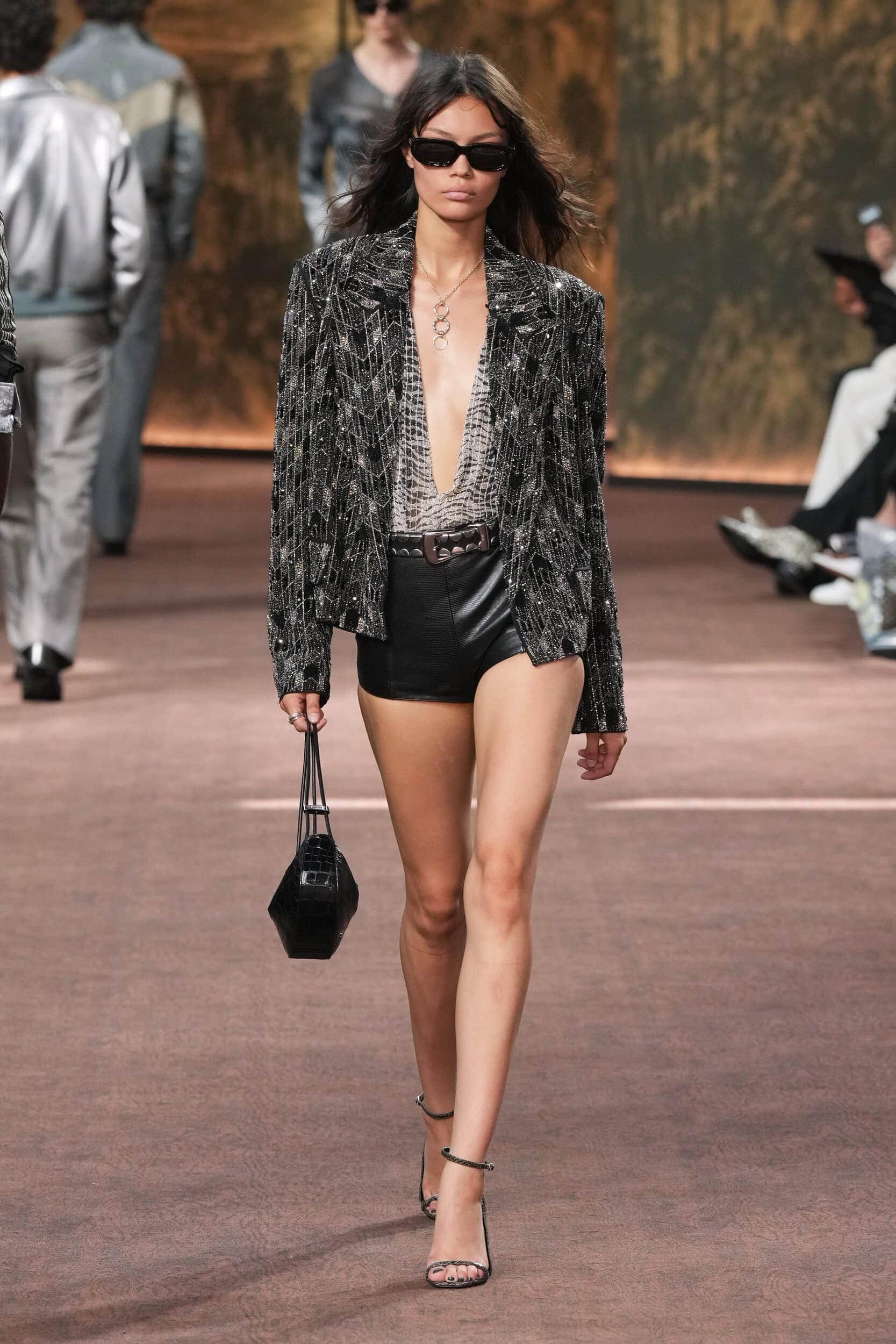
That same sense of confidence is shaping the women’s collection as well. Looking to Lauren Hutton’s commanding presence in American Gigolo, Amiri speaks about designing women with a new sense of clarity and strength.
“She isn’t his girlfriend. She isn’t his side character,” he says. “She’s the hero.”
The comment reveals something deeper than styling. It speaks to a designer who increasingly sees every character in the Amiri universe with sharper focus than before.
That clarity is also expanding beyond clothing.
This season introduced a fine jewelry collaboration with Spinelli Kilcollin, while fragrance arrives next year. Tailoring continues to mature. Womenswear has found its footing. With the support of OTB, Amiri now speaks openly about building something that extends well beyond seasonal collections.
“For me, it’s about reaching the full potential of myself and the brand,” he says. “We have the chance to build something that can last generations.”
Perhaps the most revealing moment comes when he describes the current stage of his journey as “the beginning of 2.0.”
It is an optimistic way of looking at success. Rather than treating today’s accomplishments as a finish line, Amiri sees them as permission to dream bigger. Nine years ago, customers discovered the brand through denim, sneakers, and T-shirts. Today they walk into his boutiques to build wardrobes. Tomorrow, they will discover fragrance, jewelry, and an even broader expression of the Amiri world.
But products alone aren’t what make a luxury house endure. They endure because they create a feeling—one so distinct that people immediately recognize it before they recognize the label.
That feeling has become remarkably clear for Mike Amiri.
It is Los Angeles, but not the version sold on postcards. It is the city after midnight, when dinner has ended, the velvet rope has disappeared, and only a handful of people remain in the room.
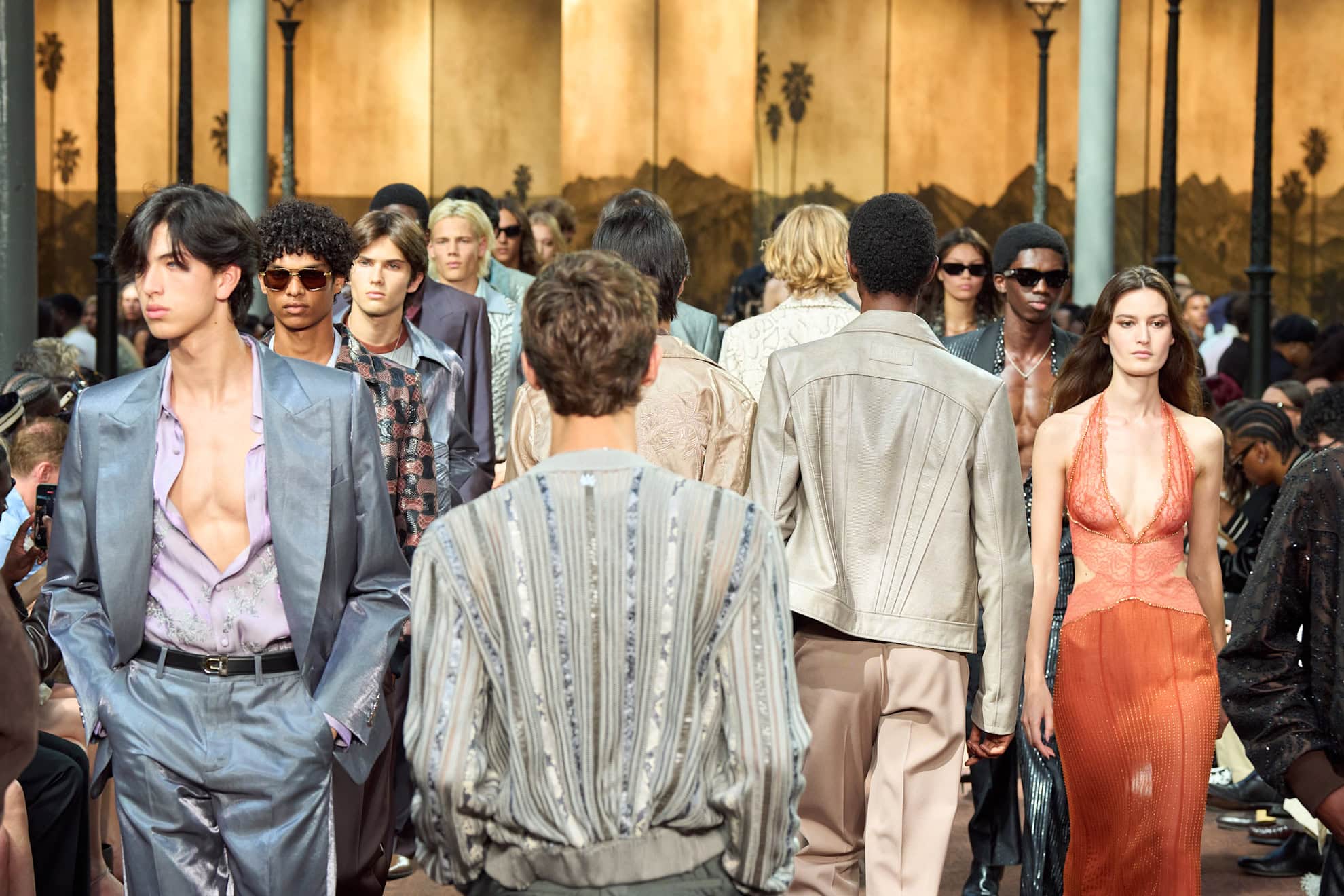
It is confidence without performance, elegance without stiffness, and sensuality without apology.
That sense of seduction quietly runs through everything he creates. Shirts fall open one button further than expected. Tailoring feels relaxed rather than rigid. Sneakers dismantle the ceremony of a suit. Men and women carry themselves with equal confidence, neither existing in service of the other. Even when he references Hollywood, he is less interested in celebrity than in character—the kind of magnetic personalities who reveal just enough to keep you wanting to know more.
Listening to Amiri speak, it becomes clear that this evolution isn’t simply about style. It reflects a designer who has stopped searching for permission. Paris is no longer somewhere he comes to prove himself. It has become the place where he presents a point of view that could only have come from Los Angeles.
There is something deeply reassuring about watching a designer arrive at that kind of certainty. Fashion often celebrates reinvention, but the houses that shape generations are rarely built by changing direction every season. They are built by knowing exactly who they are and having the patience to refine it.
Mike Amiri seems to have reached that moment.
The clothes have become sharper. The world around them has grown larger. The ambition stretches further than ever before. Yet perhaps the biggest transformation is invisible.
For the first time, Mike Amiri doesn’t look like a designer finding his place in luxury. He looks like one building a house that others will one day measure themselves against.