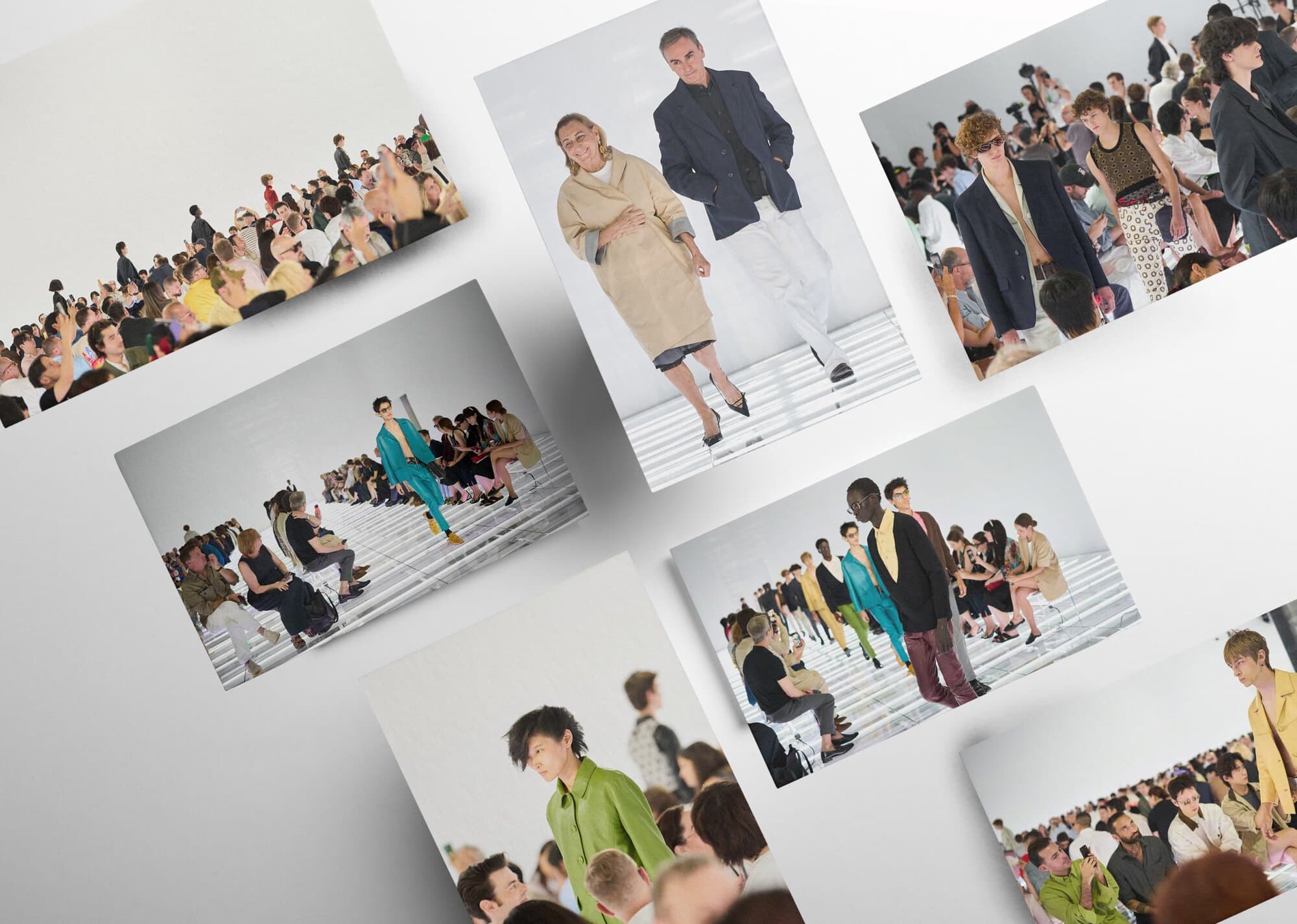
Ahead of Prada’s Spring 2027 menswear show, the co-creative directors discuss meaningful design, luxury’s responsibilities, and why fashion must remain connected to real life
By Kenneth Richard
Fashion has always lived with a contradiction.
It is an industry built around desire, yet it exists in a world increasingly defined by uncertainty. Political instability, economic anxiety, technological disruption, and cultural fragmentation have made questions of value more pressing than ever. What role does fashion play in such a moment? What purpose can it serve?
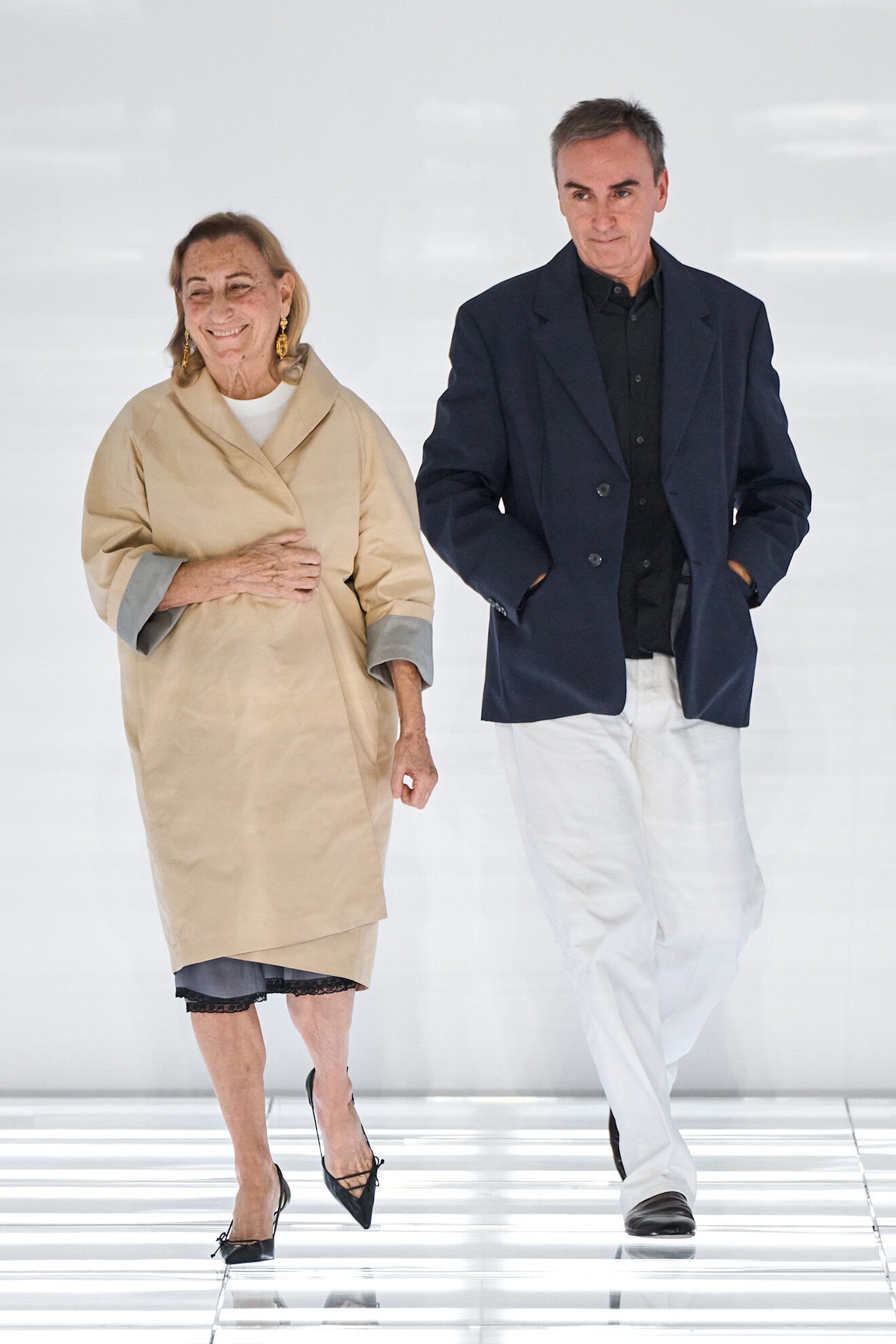
These are questions Miuccia Prada and Raf Simons think about constantly.
Speaking with The Impression ahead of Prada’s Spring 2027 menswear show in Milan, the co-creative directors returned repeatedly to ideas of honesty, usefulness, and responsibility. The collection itself became less the subject than the catalyst for a broader discussion about the state of culture and the role fashion should play within it.
For Prada, the starting point is a simple acknowledgment.
The only thing that can make our work acceptable is to be honest – Miuccia Prada
It is a remarkably direct statement from one of fashion’s most influential figures. Prada does not pretend that fashion can solve society’s biggest problems. Nor does she attempt to elevate luxury beyond its commercial reality.
“We are a company,” she says. “We have to sell. We have to be serious about our work.”
Yet honesty, for Prada, is precisely what gives fashion legitimacy. Rather than claiming greater importance than it deserves, the industry should recognize its place within a larger cultural conversation and approach its work with sincerity and purpose.
That pursuit of purpose has increasingly shaped her thinking around design itself.
My obsession lately is meaningful design. If it’s useless, there is nothing more wrong than that – Miuccia Prada
The statement speaks to a growing resistance, shared by both Prada and Simons, to excess for excess’s sake. Throughout their conversation, they repeatedly challenged the notion that complexity automatically creates value.
Fashion, they argue, does not become more relevant through greater decoration, more elaborate techniques, or increasingly complicated ideas. In many ways, the opposite may be true.
For Prada, design must have a reason to exist.
A garment can be provocative. It can challenge conventions. It can even critique the culture that produces it. What matters is whether it has intention.
“It has to have a point,” she explains. “Doing something simply for the sake of doing it is not enough.”
Simons shares that perspective. In fact, he suggests that their latest work emerged as much from rejection as inspiration.
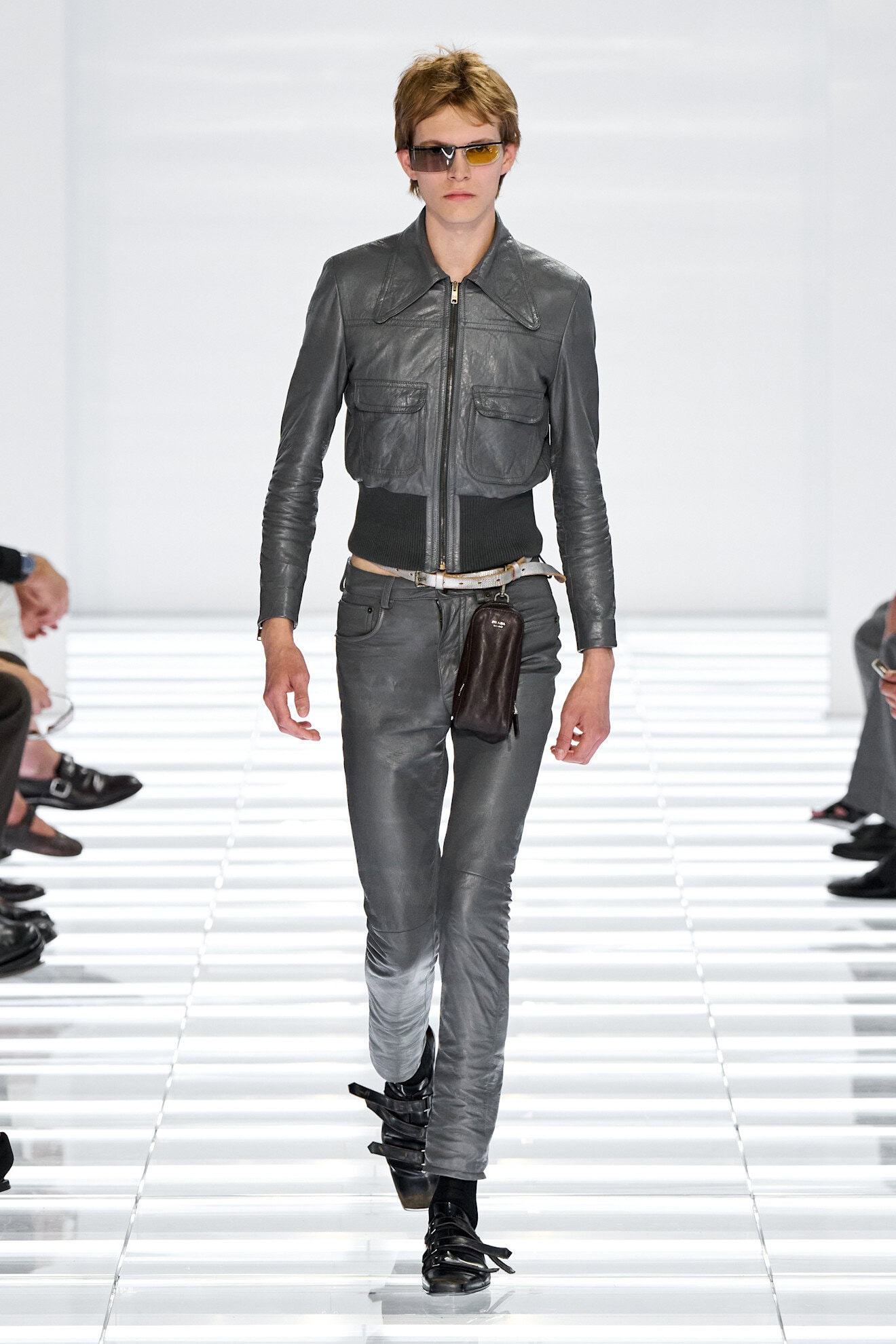
If we’re honest, this collection was born from what we do not want right now. – Raf Simons
The comment reveals something broader than a seasonal shift. It reflects a growing desire to strip away noise and focus on what feels essential.
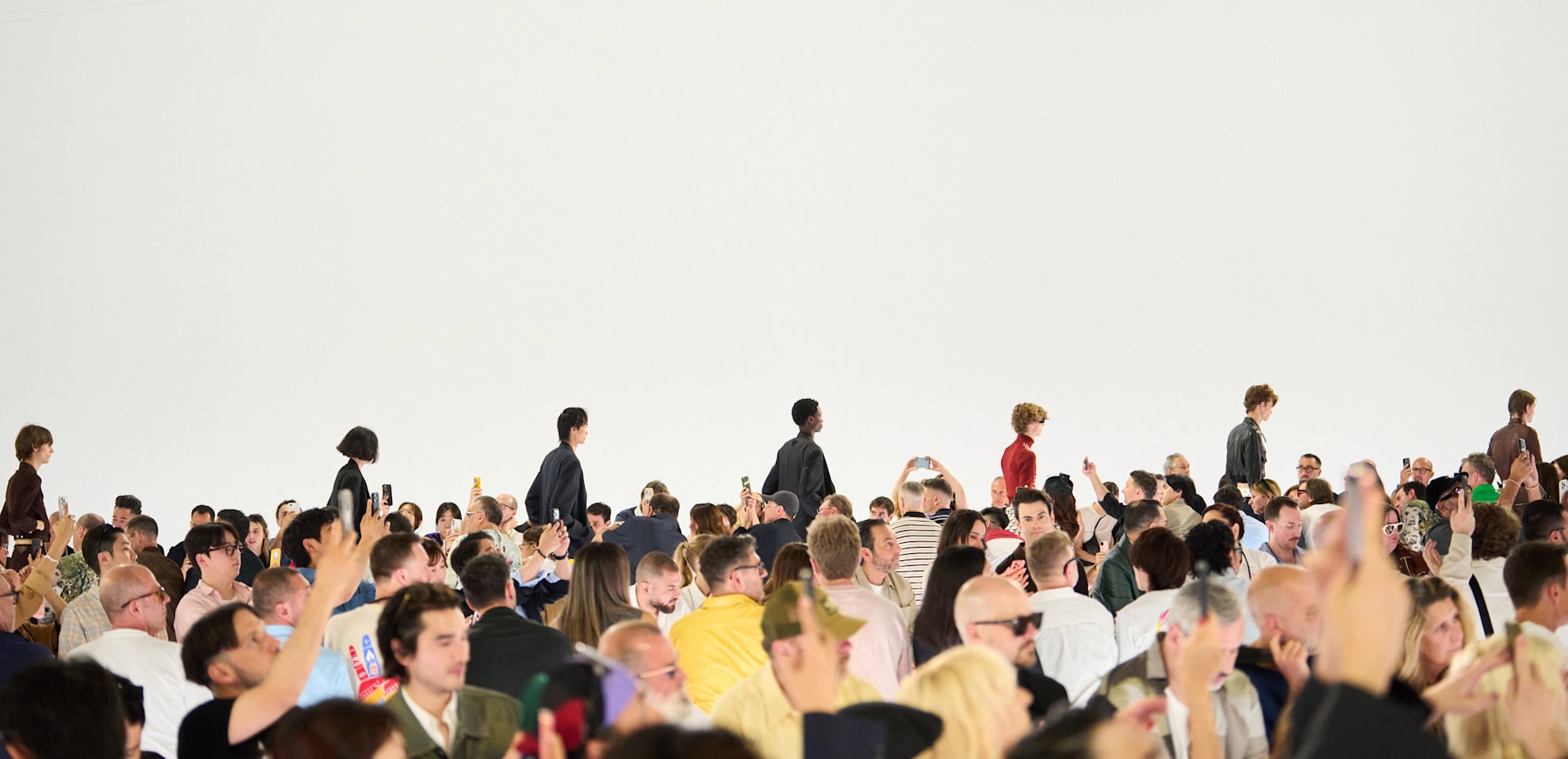
For both designers, the contemporary fashion landscape can often feel overcrowded by spectacle, overwhelmed by novelty, and disconnected from everyday life. Their response has not been to retreat from fashion, but to reconsider its foundations.
That connection to real life remains central to how Simons thinks about clothing.
“The biggest reward is seeing somebody wear the clothes,” he says.
It is a deceptively simple observation. Yet it challenges an industry that increasingly experiences fashion through images, campaigns, social media, and runway events. For Simons, the true measure of success remains the relationship between a garment and the person who chooses to wear it.
Fashion becomes meaningful when it enters life.
That belief also informs his view of individuality.
For decades, luxury brands largely dictated taste from the top down. Today, the relationship is more fluid. Inspiration moves between designers, communities, and individuals. Personal style emerges through interpretation rather than instruction.
“People can be individual with common garments,” Simons says. “If you rethink how to wear them and how to combine them.”
Prada agrees.
Rather than encouraging endless consumption, she suggests that fashion can also encourage people to engage more deeply with what they already own.
“To consume less, you have something that is good and rethink how to put it together.”
The idea feels especially relevant at a moment when discussions around sustainability often focus on production. Prada’s perspective shifts the conversation toward behavior. Creativity is not only found in making new things. It can also be found in discovering new possibilities within familiar ones.
Underlying much of the conversation is a shared awareness of the world beyond fashion.
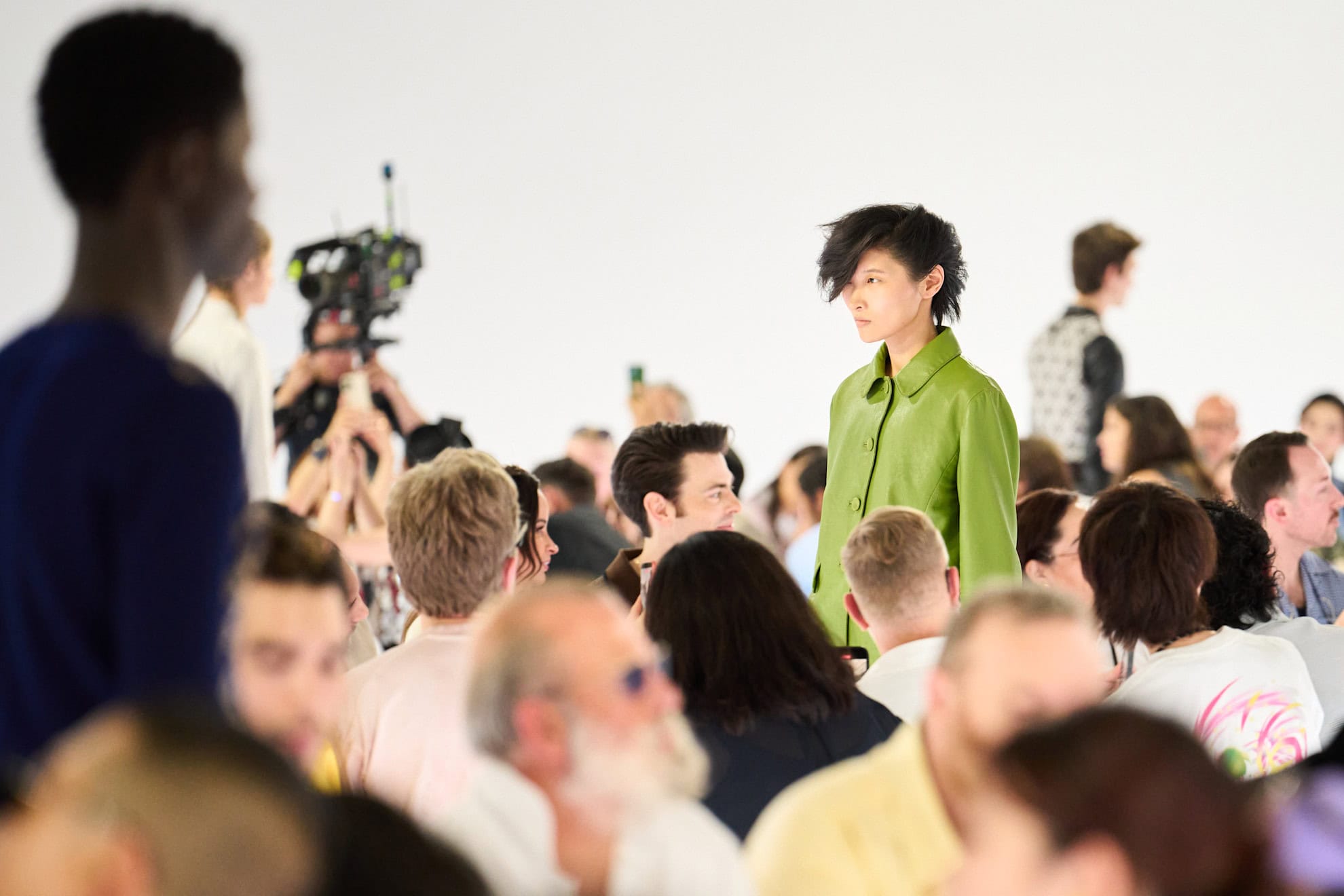
Neither designer speaks about politics directly. Instead, they speak about mood. About atmosphere. About the emotional realities people are navigating every day.
The answer they arrived at was not confrontation but optimism.
Because the world is complicated, the idea of doing something pure and light is calming. – Raf Simons
It is not escapism. It is a recognition that fashion can provide relief as much as commentary.
Prada echoes the sentiment with characteristic simplicity.
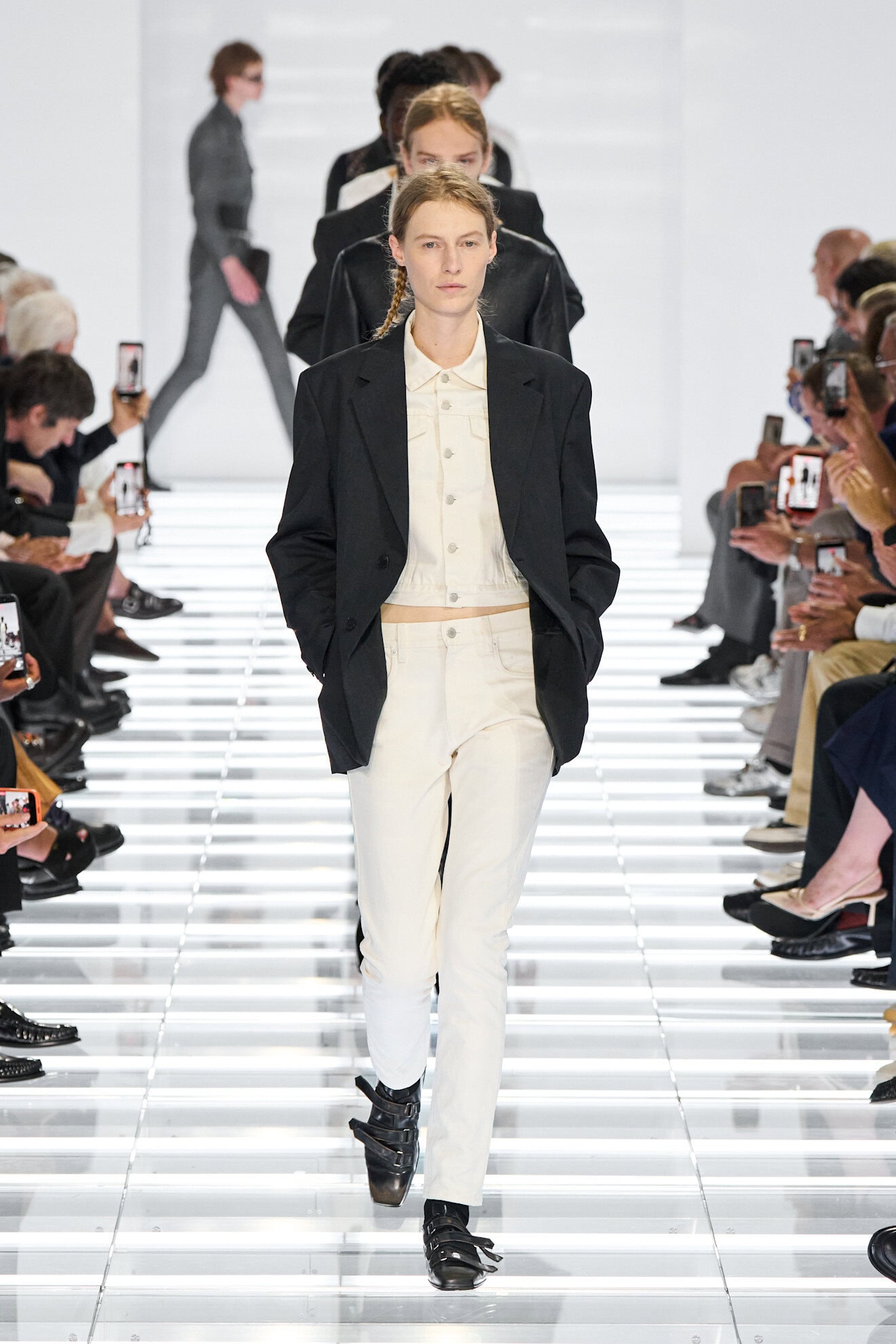
“We wanted to be a bit more positive.”
That positivity is not naïve. Nor is it detached from reality. Rather, it reflects a belief that fashion can offer clarity during moments of uncertainty.
As the conversation draws to a close, what emerges is not a discussion about trends, products, or even a specific season. It is a conversation about values.
Honesty.
Purpose.
Usefulness.
Connection.
For Prada and Simons, fashion’s relevance today does not come from claiming to be more important than it is.
It comes from understanding exactly what it can be.
A thoughtful object.
A meaningful gesture.
A reflection of how people choose to live.
In an era increasingly defined by noise, that commitment to clarity may be one of fashion’s most radical ideas.