The Antwerp Six Designer Speaks With The Impression About His Hometown Anniversary Show, The Force Of Independence, And Why Creativity Still Matters Most In Fashion
By Kenneth Richard
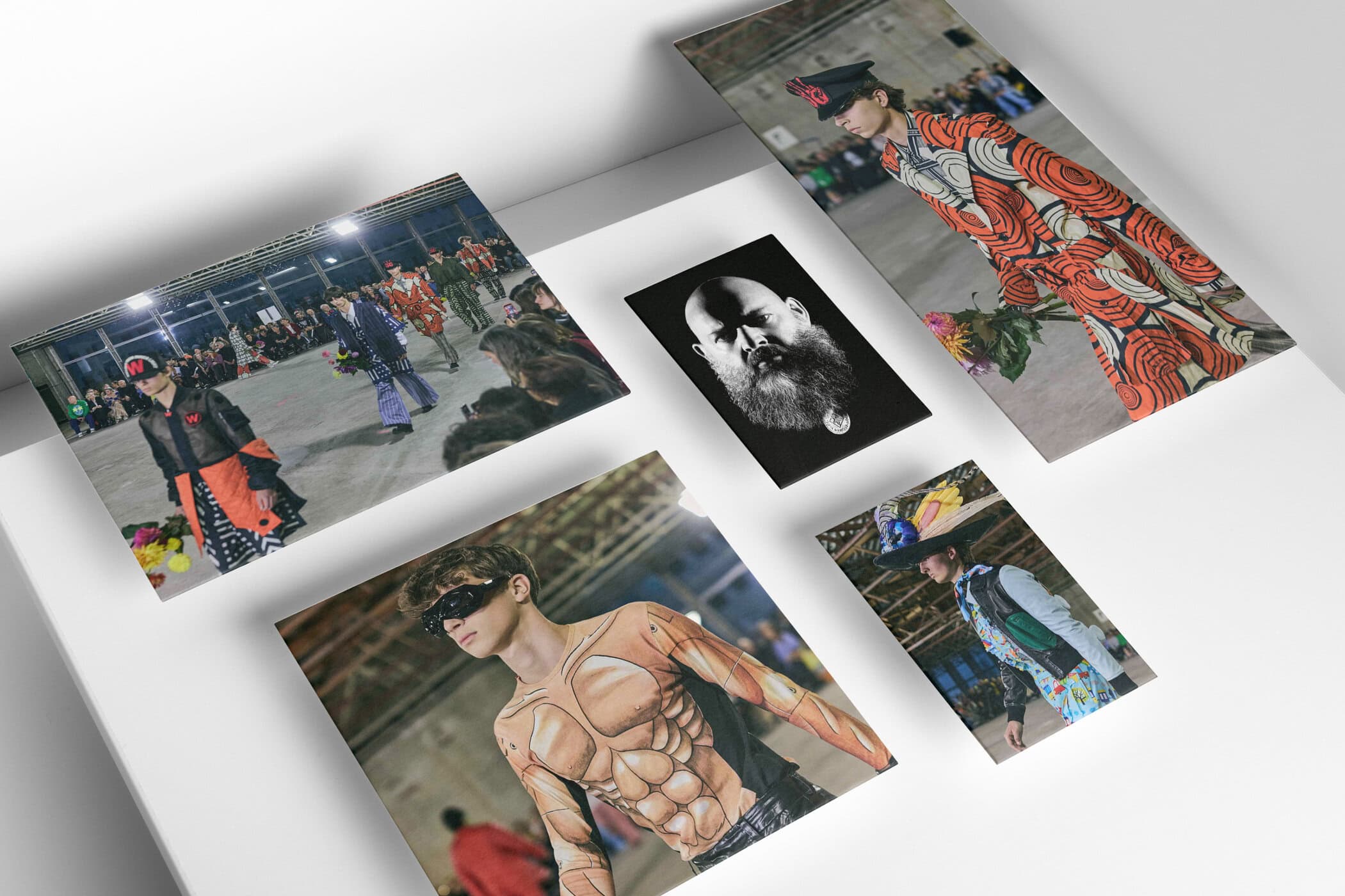
Backstage in Antwerp, after a 40th-anniversary show that brought four decades of Walter Van Beirendonck’s imagination back into view, the designer was still taking in the strange pleasure of meeting one’s own history in motion. Around him was the familiar post-show hum of congratulations, camera flashes, old friends, young admirers, and the particular electricity that comes when fashion feels less like a presentation and more like a gathering of witnesses. Among those who came backstage to congratulate him was Ann Demeulemeester, his fellow member of the Antwerp Six, making the evening feel not only like a personal milestone, but a chapter in the living mythology of Antwerp fashion.
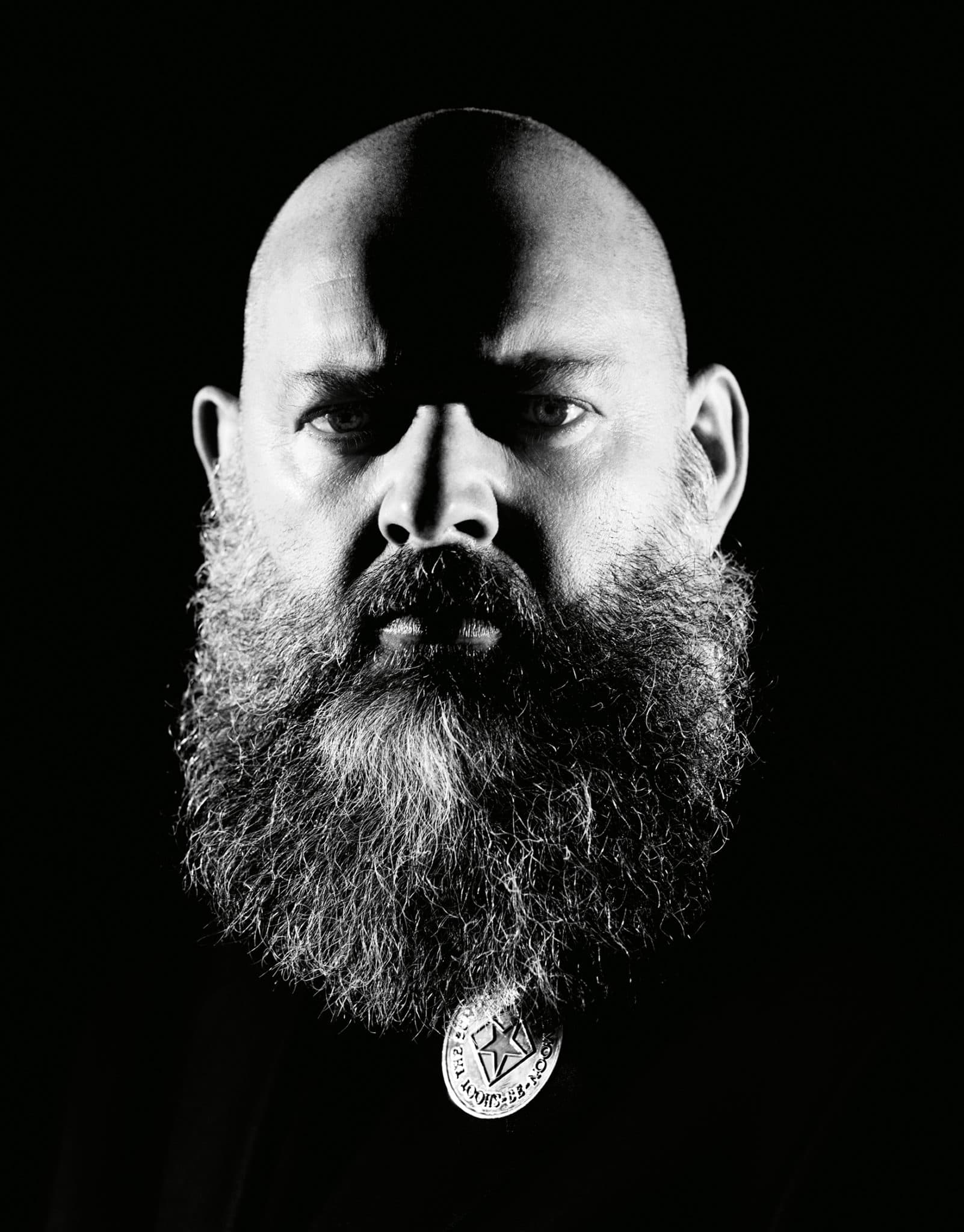
For Van Beirendonck, the show was a deliberate homecoming. Rather than show this season at Paris Men’s Fashion Week, the Belgian designer chose to celebrate his 40th anniversary in Antwerp, the city where he has lived, worked, taught, and built one of fashion’s most distinctive bodies of work. The decision came together as Antwerp was revisiting its own fashion legacy through the Antwerp Six exhibition and the Antwerp.Fashion Festival, and Van Beirendonck felt the timing was right to give something back to the city that has shaped him.
“It all came together by working on the Antwerp Six exhibition,” he said backstage. “I found it the right moment to do it in Antwerp, to give something back to the city where I’m living and working all my life.”
The anniversary show drew from an enormous personal archive that Van Beirendonck has maintained since the beginning of his career. In fact, his archive reaches even further back, including pieces from school and early contests. For the show, he began with 1986, the year of the first collection he wanted to reference, and spent weeks selecting and restoring looks from thousands of possibilities. For a designer whose work has often been described through color, provocation, humor, protest, scale, and fantasy, the exercise was less a nostalgic tidy-up than a confrontation with the intensity of his own consistency.
“It was an extreme walk down memory lane,” he said of the process. “It was great to go through my archives to put the looks together. It was nice to see lots of evolution and different periods I went through.”
What he discovered, looking back across the decades, was not a fixed style so much as a fixed insistence. From the start, Van Beirendonck had pushed for the fabric, the print, the construction, the experiment, the result that did not yet exist in front of him. His work has long treated fashion as a place where innocence and danger, comedy and critique, beauty and agitation can appear in the same silhouette. Revisiting the archive reminded him that the pressure to push had always been there.
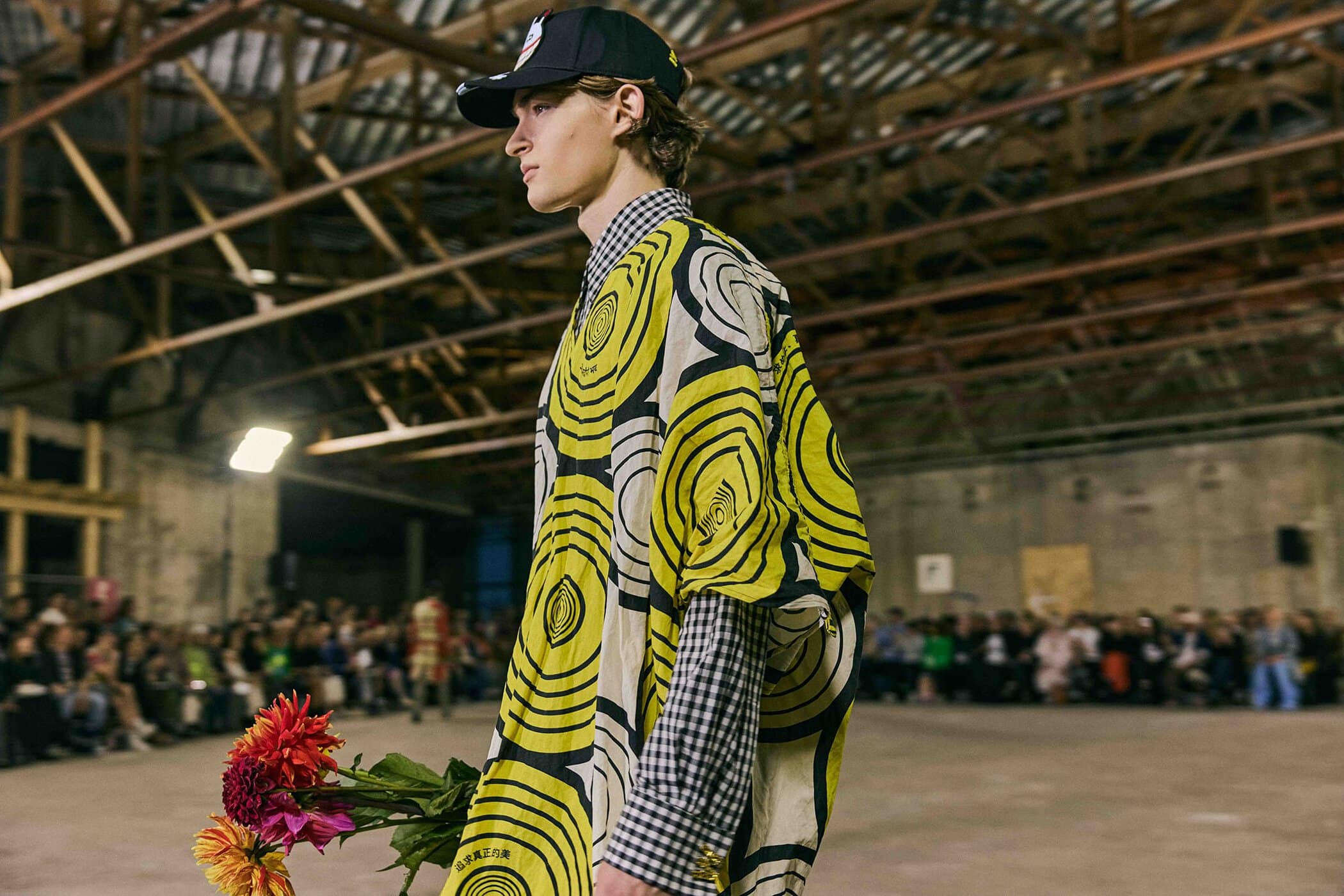
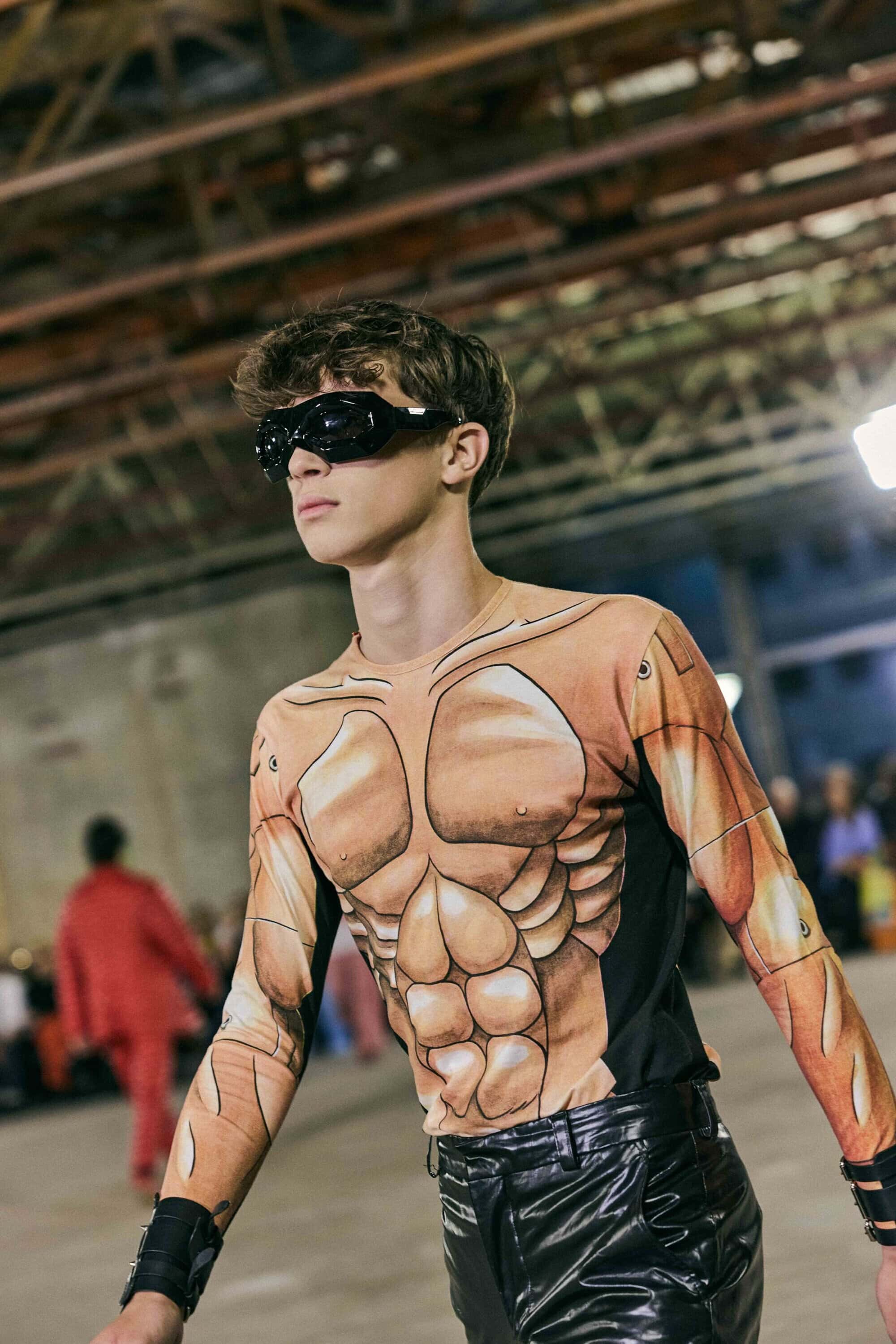
“I really pushed it all the time from the beginning,” he said. “I always wanted things, I wanted to have certain prints, certain fabrics, certain results, certain experiments, and I was pushing that all the time because I found it important.”
That drive has made Van Beirendonck one of fashion’s great independent minds, a designer whose career has unfolded across the industry’s many transformations without losing its appetite for invention. The Antwerp Six breakthrough, the extraordinary energy of the 1990s, the commercial highs, the harder periods of survival, the teaching years, the collaborations, the returns, the rebukes, the new collections: Van Beirendonck describes the full arc with characteristic candor.
“As a roller coaster up and down,” he said of the last four decades. “I never skipped a season, which is rather special in the fashion world. One way or another, I always could put a collection together.”
There were moments of extraordinary success, especially in the 1990s, when his W.&L.T. period brought him global visibility and the feeling, as he puts it, of being “like a superstar.” There were also difficult stretches, when independence required resilience as much as imagination. For Van Beirendonck, those fluctuations are not side notes to the career. They are part of the career. The endurance is the work, too.
The city of Antwerp has been central to that endurance. Van Beirendonck never moved away, in large part because of his long teaching career at the Royal Academy of Fine Arts Antwerp, where he began teaching in 1983 and later led the fashion department. Teaching kept him rooted, but the city’s character kept him willing. Antwerp, he notes, is well positioned, connected to Europe, and still carries a spirit that makes room for independence.
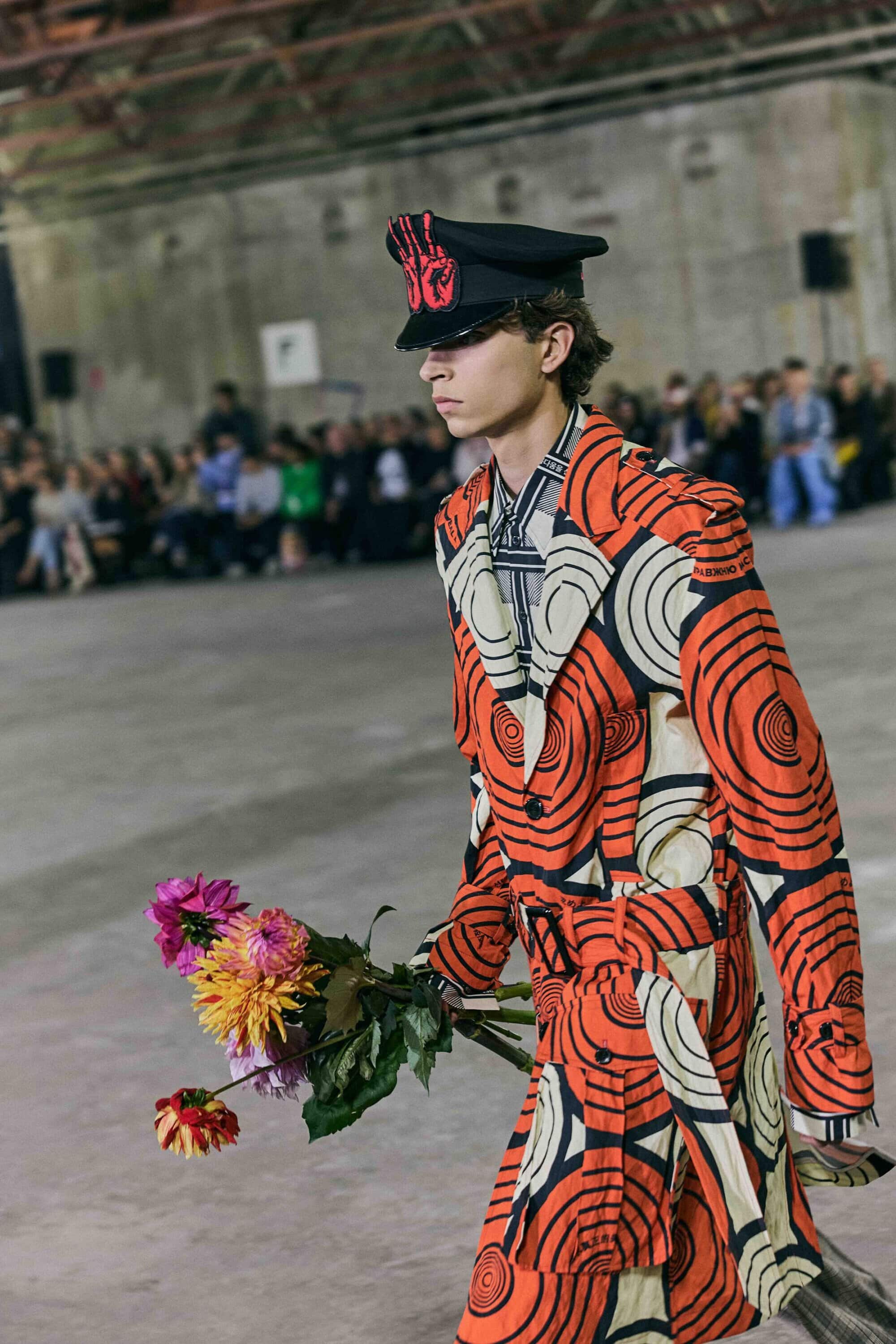
“I never moved away from Antwerp, and the main reason was I was always teaching since 1983 at the school,” he said. “But the city is well located and has a nice spirit.”
That spirit also ran through the new collection, which shifted the anniversary evening forward rather than leaving it in the archive. Van Beirendonck described the latest work as a new step: more spiritual, more relaxed, less complicated, and influenced in part by his fascination with India. The music he chose became part of that internal rhythm, something he played repeatedly while working.
“For me. It was a new step, a little bit more spiritual,” he said. “ I’m fascinated by India. I’m gonna go there soon so it’s a little bit spiritual.”
Asked why the work had become more relaxed, Van Beirendonck connected the shift to age, instinct, and the state of the world around him. “I’m changing, the world is changing, and that is also letting me think differently, and doing new things,” he said.
That ability to change without erasing himself may be one of Van Beirendonck’s most valuable lessons. He remains a creative director and designer actively engaged in the present, but with the rare vantage point of someone who has seen fashion’s power structures, promotional machines, and creative ambitions mutate over decades. His critique of the current system is not gentle, though it is rooted in love for the medium.
“I think it’s still a strong tool to express myself, and I do like to make collections,” he said. “I know that it’s a terrible time that the world is going through, but still I want to go on and make fashion.”
For Van Beirendonck, the future of fashion depends on whether creativity can survive the machinery built around it. He sees an industry increasingly dominated by money, marketing, and the constant rotation of designers at major houses, a system that risks draining fashion of the very thing that made it matter.
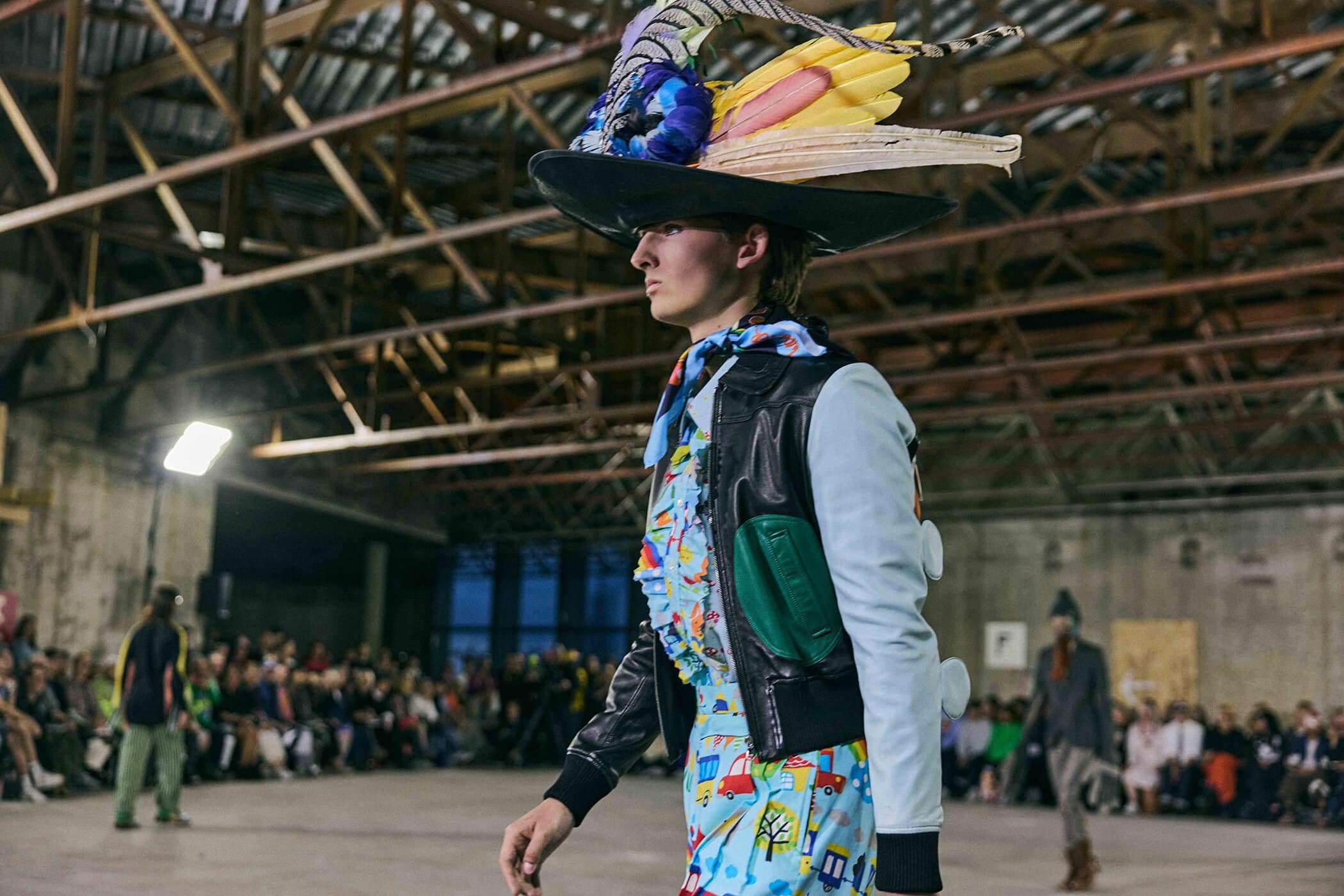
“It’s all about creativity, what this evening is about, and that’s I think what hopefully can survive, and that is so necessary in this fashion world,” he said.
Today the industry has been completely ruined in the last few years by the big houses, by a lot of money, by houses mainly concentrating on marketing and on changing all the time designers. We’re losing so much of the soul of fashion, and that’s what it’s all about, creativity. That’s what we’re missing today.
– Walter Van Beirendonck
His concern is particularly sharp when it comes to young independent designers. Van Beirendonck recognizes that the contemporary landscape offers tools his generation did not have. Social media gives young designers reach, visibility, and the possibility of immediate global communication. At the same time, he sees them entering a fashion system so financially and optically dominated by mega-brands that independent voices can struggle to be heard with any proportion.
“The world completely changed,” he said. “At one side it’s more difficult, but at the other side it’s more easy, because you’re communicating through social media, which didn’t existing when we started.”
Yet the problem, as he sees it, is the scale of the competition. “How can you show a collection properly in Paris if next to you is Louis Vuitton and next to you is this big mess. It doesn’t make sense as an independent designer,” he said. “There should be a separate fashion week, only for independent designers, and with creativity as the main cause.”
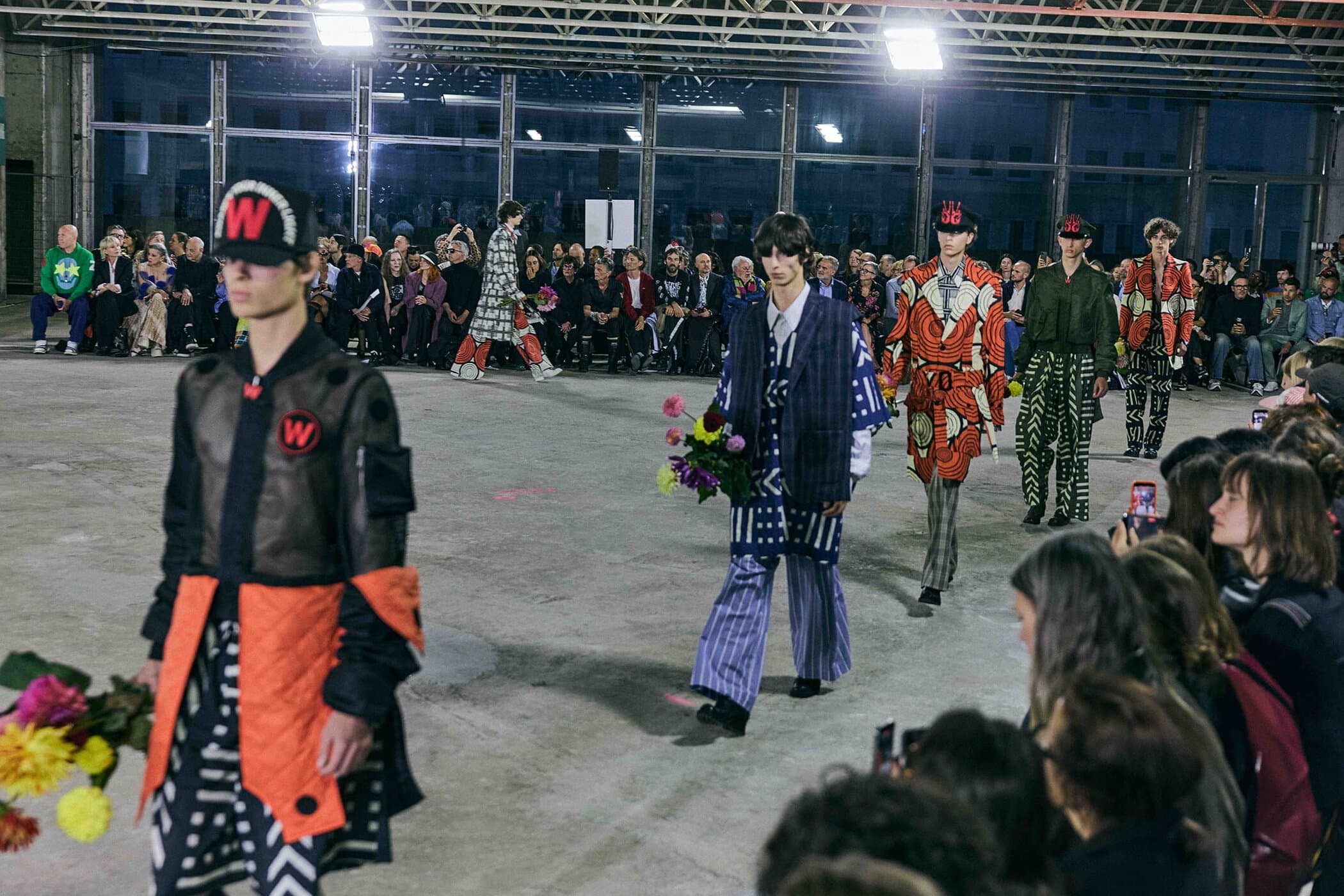
It is an idea that sounds radical only because fashion has become so accustomed to imbalance. Van Beirendonck’s point is not that independent designers need charity. It is that creativity needs an ecosystem where it can be properly seen, understood, and allowed to grow without being swallowed by spectacle. Antwerp, in that sense, remains a useful symbol: a city whose fashion influence has never depended on being the biggest, only on being distinct.
It’s the force of independent designers and the force of creativity, and that we should believe in, and that’s what I’m fighting for.”
– Walter Van Beirendonck
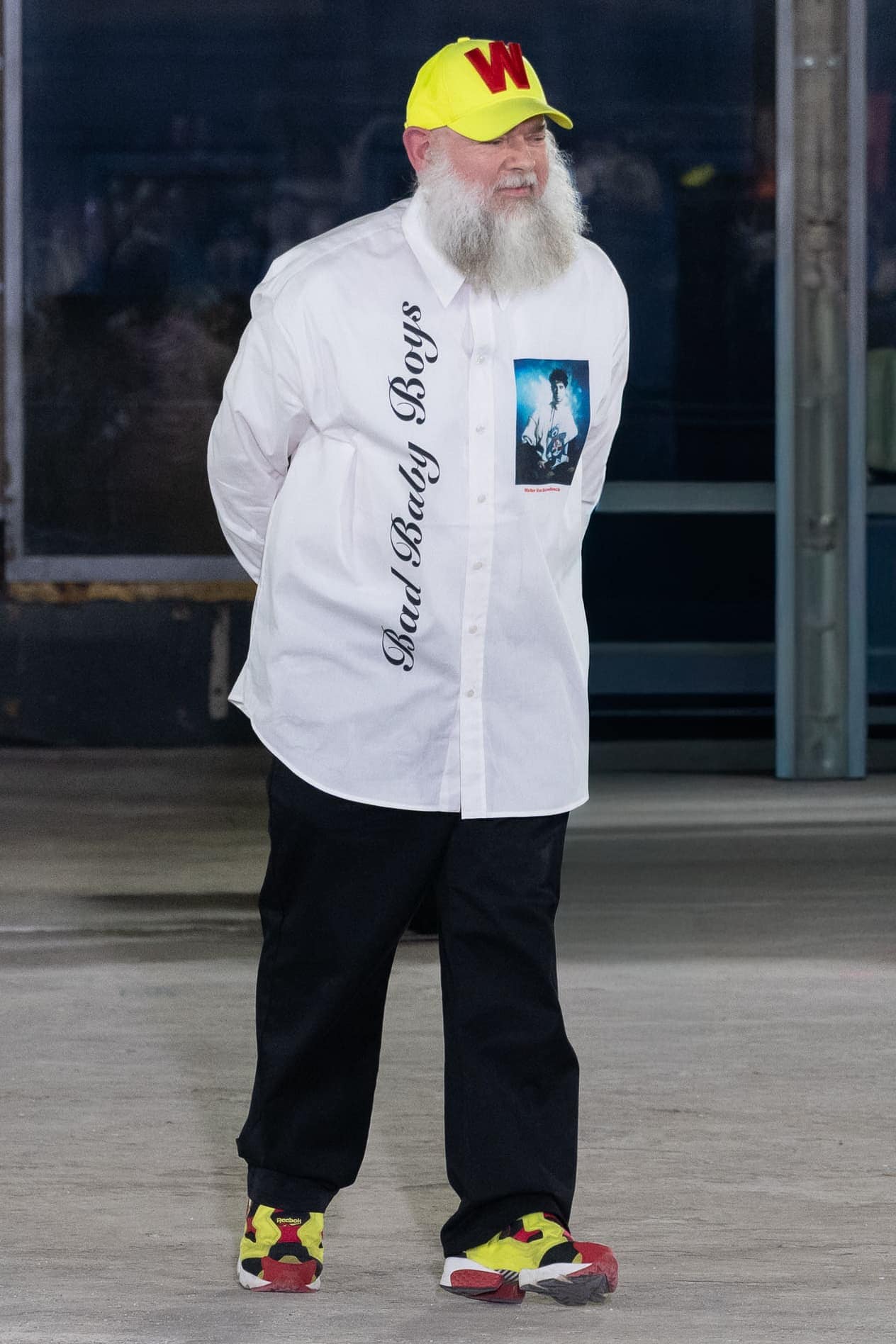
Independence, however, is not romanticized. Van Beirendonck knows its cost. Young designers are often pulled toward jobs at larger houses, where money, infrastructure, and team support can be seductive and practical. Once inside those systems, he notes, it can be difficult to restart one’s own path and push oneself again. His advice is therefore both idealistic and pragmatic, carrying the weight of someone who has lived through fashion’s glamour and its bookkeeping.
“I think it’s a good thing, but of course it’s also not easy,” he said of remaining independent. “It’s not easy, becasue the money is there, and the money is called again. They get easily jobs in houses and once they are there, it’s very difficult to restart, and push yourself again.”
Still, Van Beirendonck’s message to the next generation is not despairing. After 40 years, thousands of looks, countless seasons, and a career that has moved through mainstream attention, underground loyalty, academic influence, and independent persistence, his advice is almost disarmingly simple.
“Keep on believing, keep on believing, and then probably one day it will happen,” he said. “But work hard.”
Backstage in Antwerp, that belief had the rare advantage of evidence. The archive had walked again. The city had gathered. A fellow Antwerp Six designer had come to congratulate him. The new collection had pointed somewhere softer, more spiritual, and still unmistakably his. Four decades on, Walter Van Beirendonck is not merely looking back at a career of creative defiance. He is still inside it, still pushing, still making fashion because, as he says, it remains stronger than himself.