The Shape of Self-Invention
Review of Gucci Resort 2027 Fashion Show
By Mackenzie Richard Zuckerman
“In New York, you can be a new man.” – David Bowie
Few cities understand identity as performance quite like New York. It is a place where reinvention becomes a kind of currency—where people construct themselves through ambition, projection, style, excess, and aspiration. In theory, that should make it fertile ground for Gucci, a house that has historically thrived in contradiction: aristocratic and street, polished and vulgar, deeply crafted yet knowingly excessive. Both Gucci and New York understand that identity is rarely fixed. It is performed, refined, exaggerated, and constantly in motion.
Which is what makes Gucci’s Cruise 2026 collection feel unexpectedly unresolved.
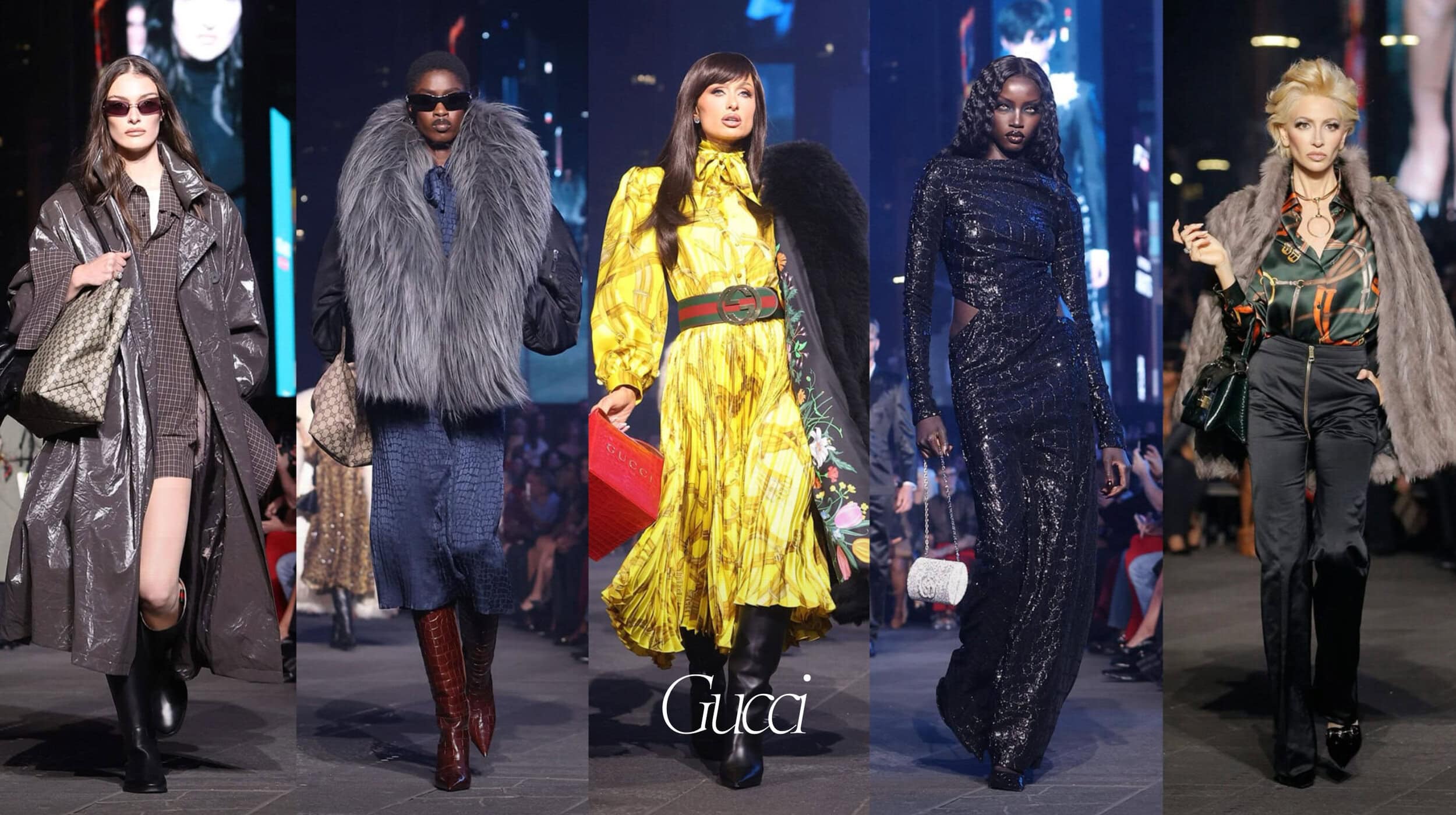
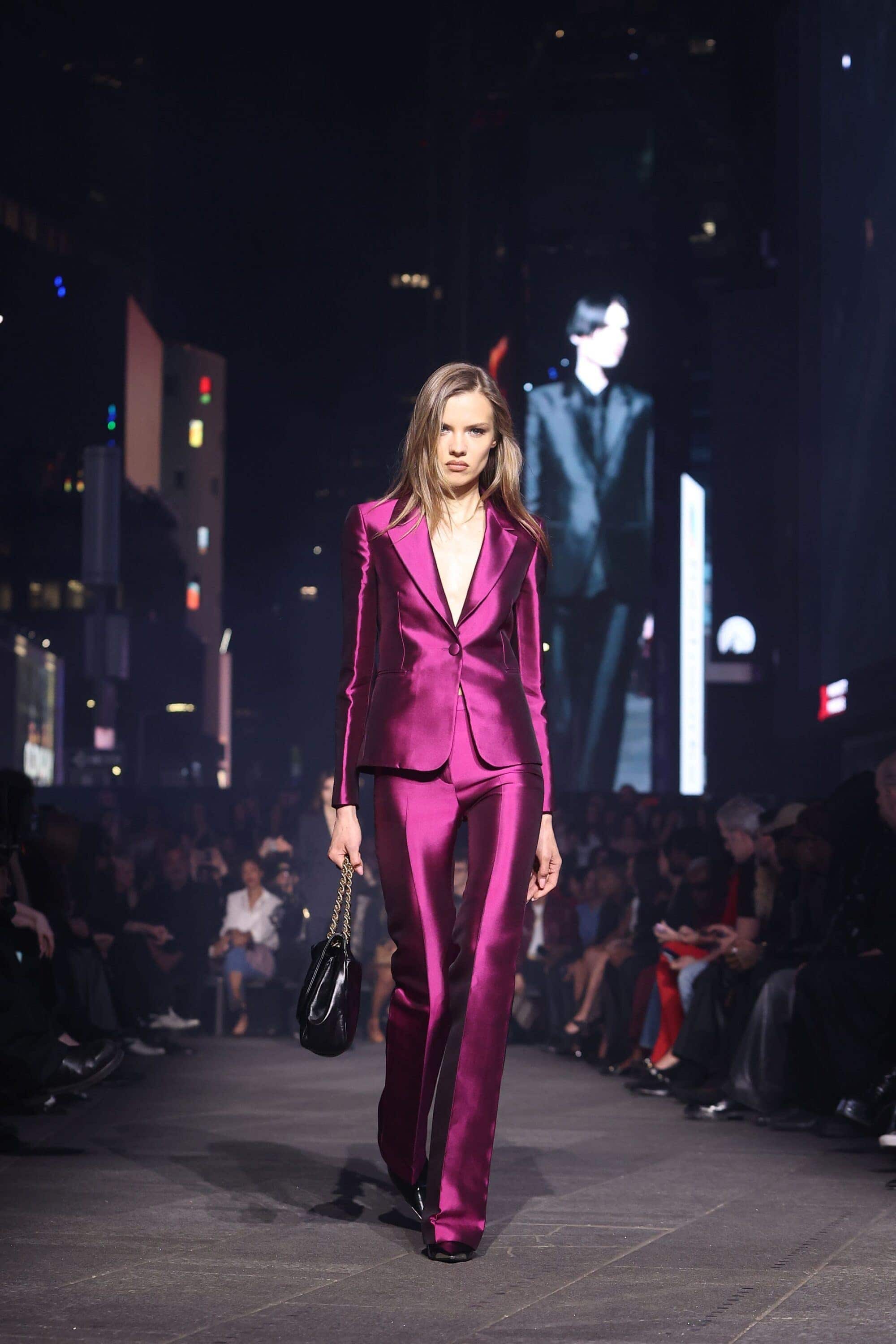
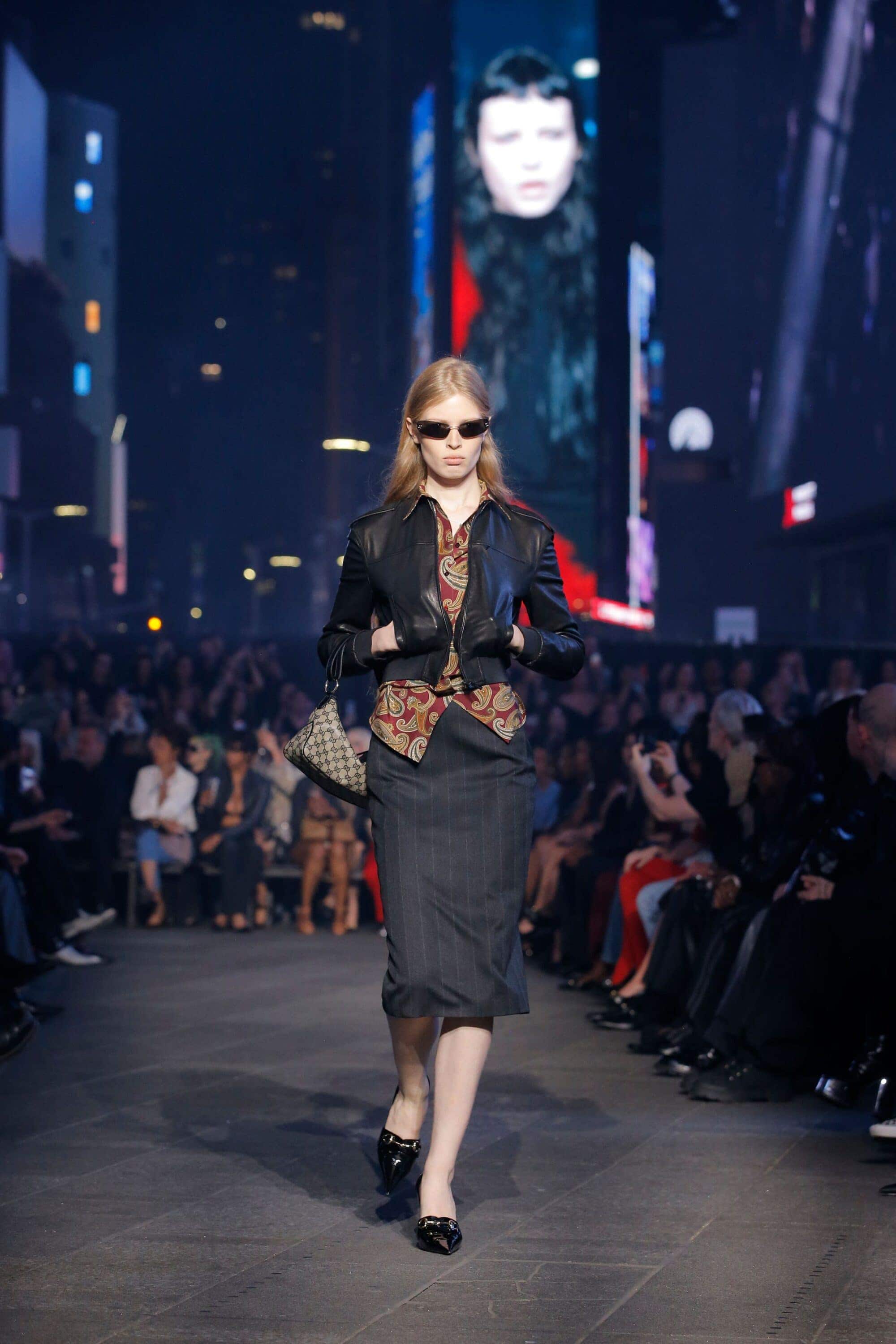
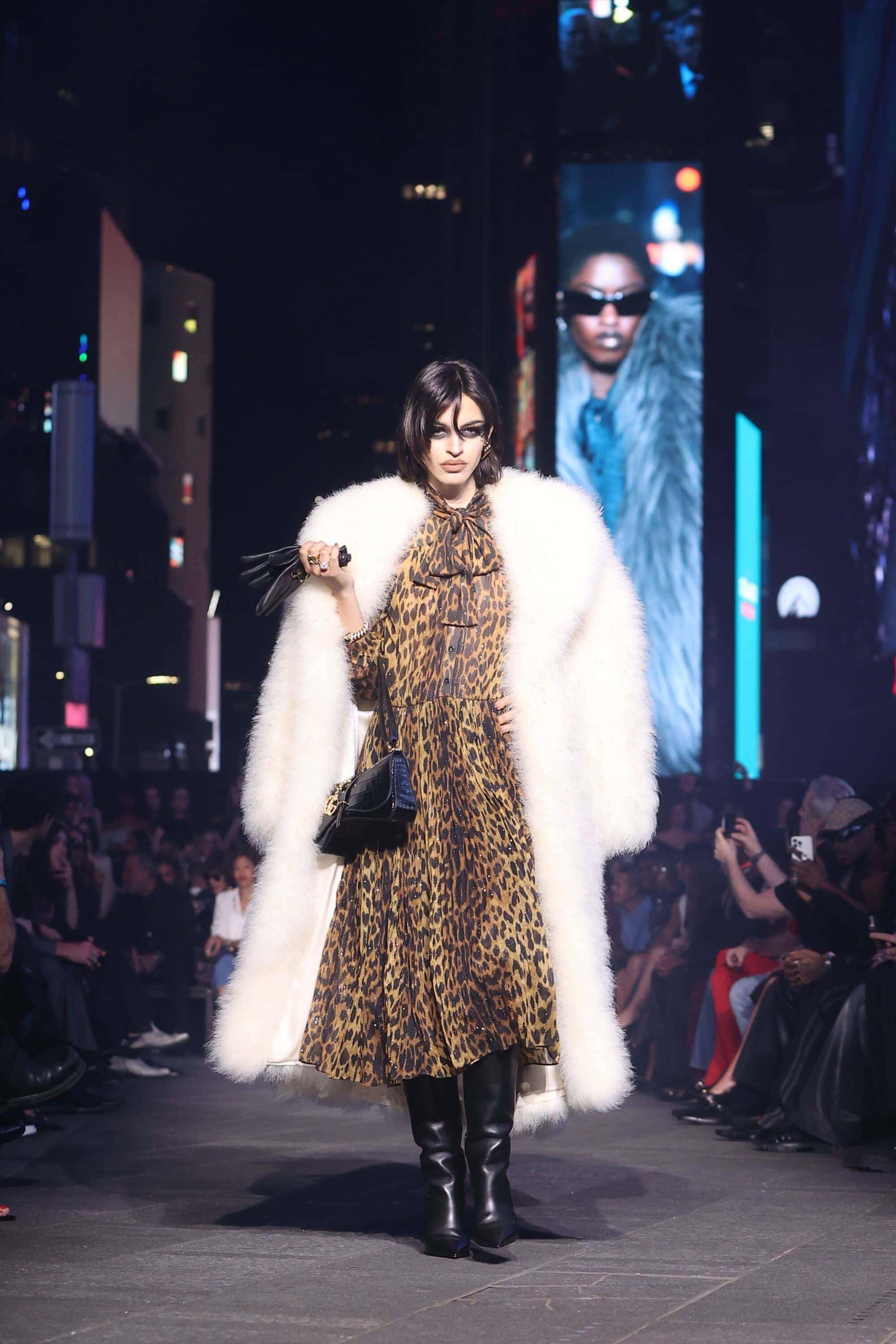
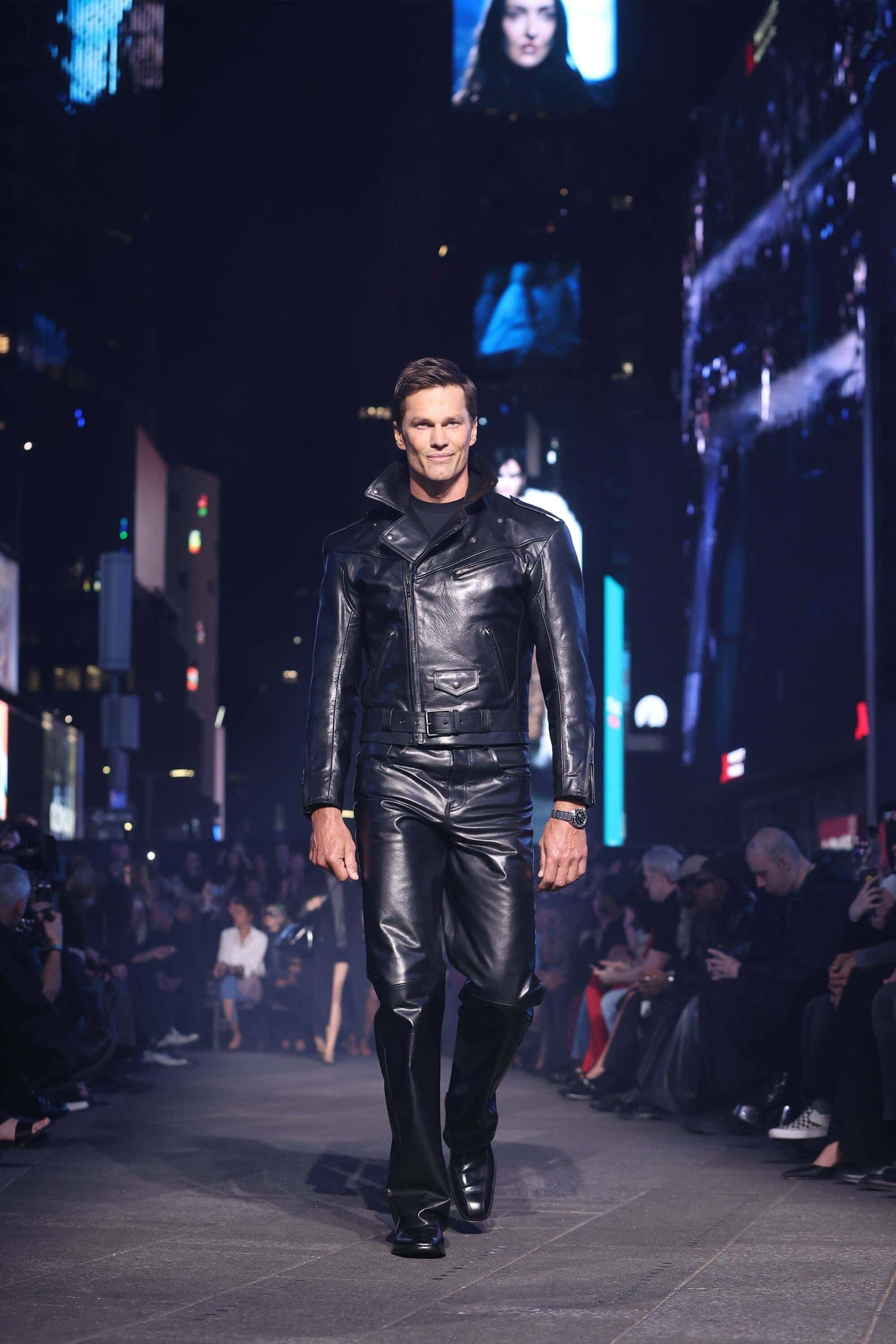
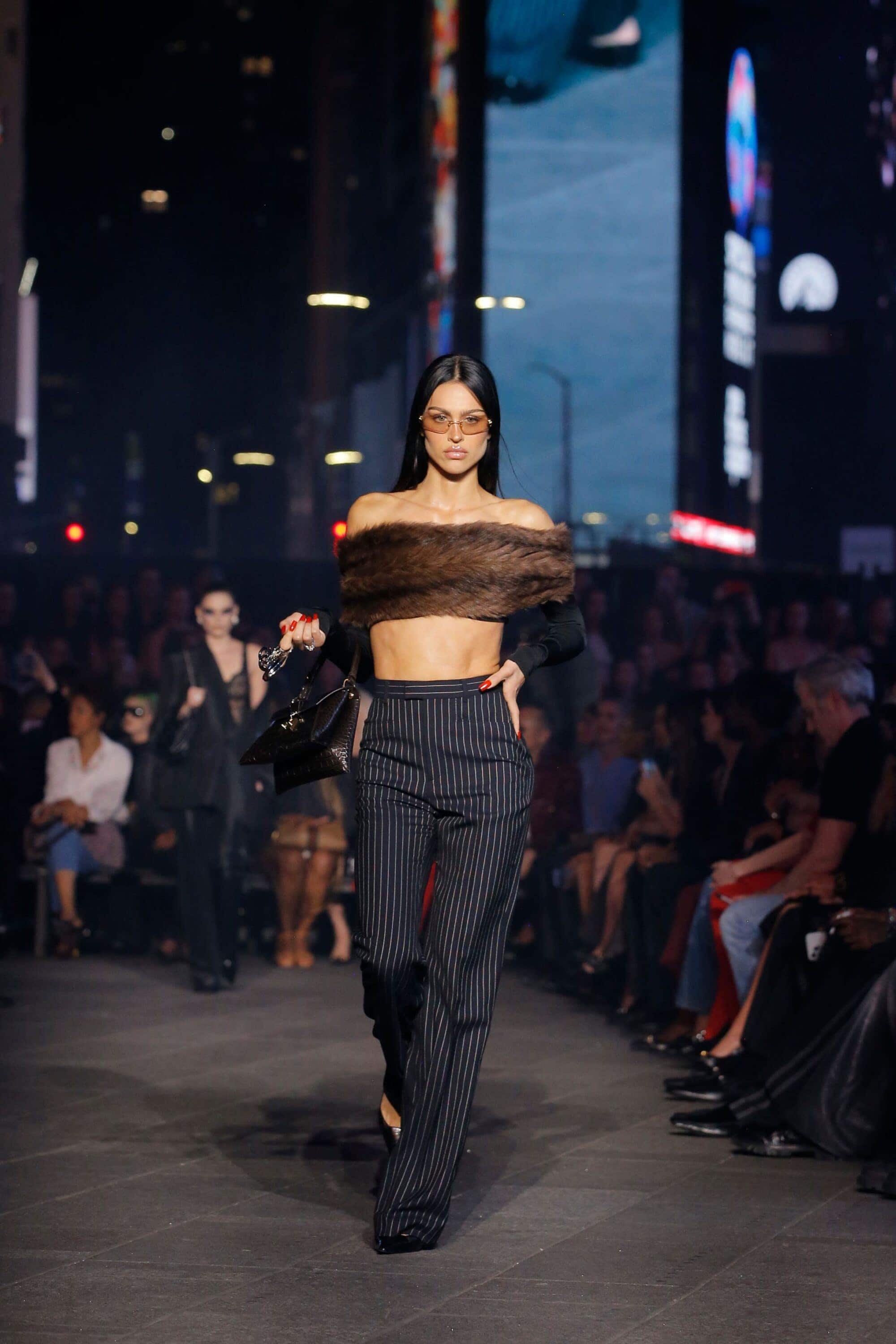
For this outing, Demna approached New York through a familiar vocabulary of urban archetypes and street-coded gestures. There were flashes of taxis, sportswear references, glittering surfaces, oversized tailoring, and downtown severity. Yet despite the city’s endless complexity, the collection often reduced New York to its most immediately recognizable symbols rather than engaging with the deeper tension that makes it compelling in the first place.
The question lingering beneath the show became difficult to ignore: what exactly is the Gucci idea being proposed here – and why does it feel necessary now?
THE COLLECTION
THE VIBE
Demna’s strength has always been his ability to identify visual archetypes and heighten them until they become cultural commentary. That instinct served him well in Los Angeles, where his Balenciaga collection’s self-awareness and exaggerated theatricality allowed the work to wink at itself while still engaging meaningfully with the city’s mythology.
New York proved more difficult terrain.
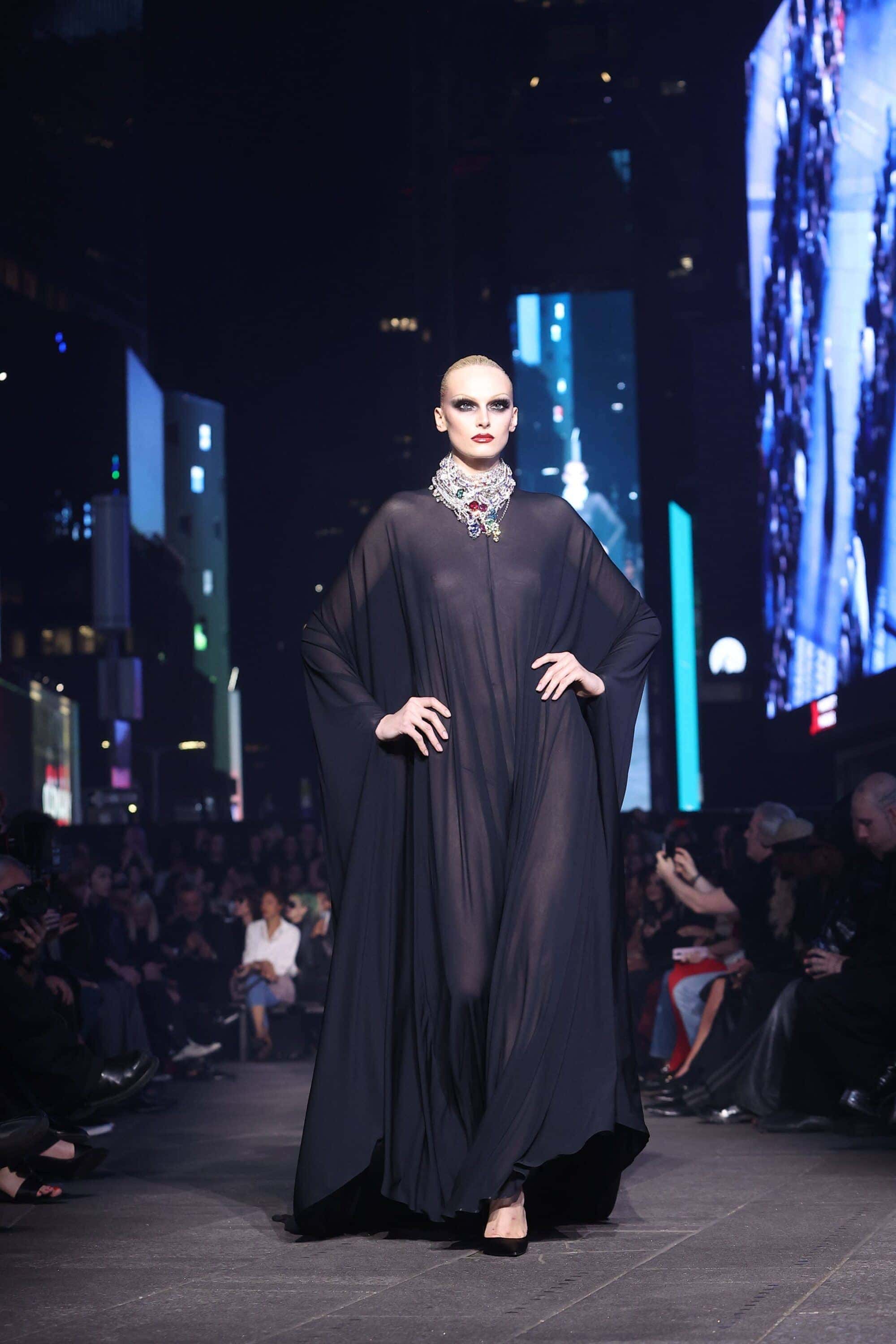
Here, the collection often approached the city with a heavier seriousness that limited some of that playfulness. The result was a wardrobe that felt more observational than interpretive—less interested in what New York means than in what it looks like from a distance.
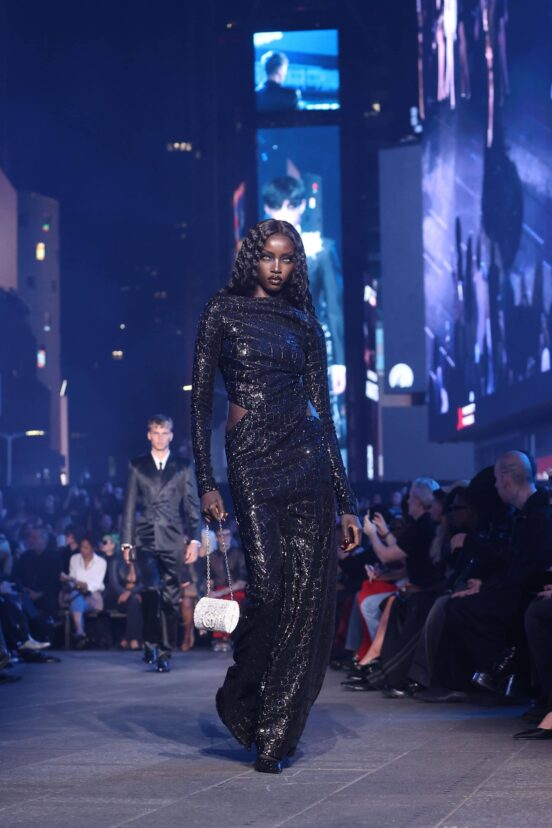
There were moments that landed. The closing dresses introduced a welcome sense of glamour and release, reconnecting briefly with the emotional richness and sensuality that Gucci can uniquely deliver. At their strongest, they hinted at the tension the collection needed more consistently: the collision between severity and seduction, polish and excess.
Elsewhere, however, the work drifted toward territory that felt overly familiar within Demna’s broader design language. The oversized silhouettes, studied awkwardness, and elevated basics with subtle distortions inevitably invite comparisons to peers such as Phoebe Philo or Michael Rider—designers similarly exploring wardrobe archetypes through reduction and recalibration.
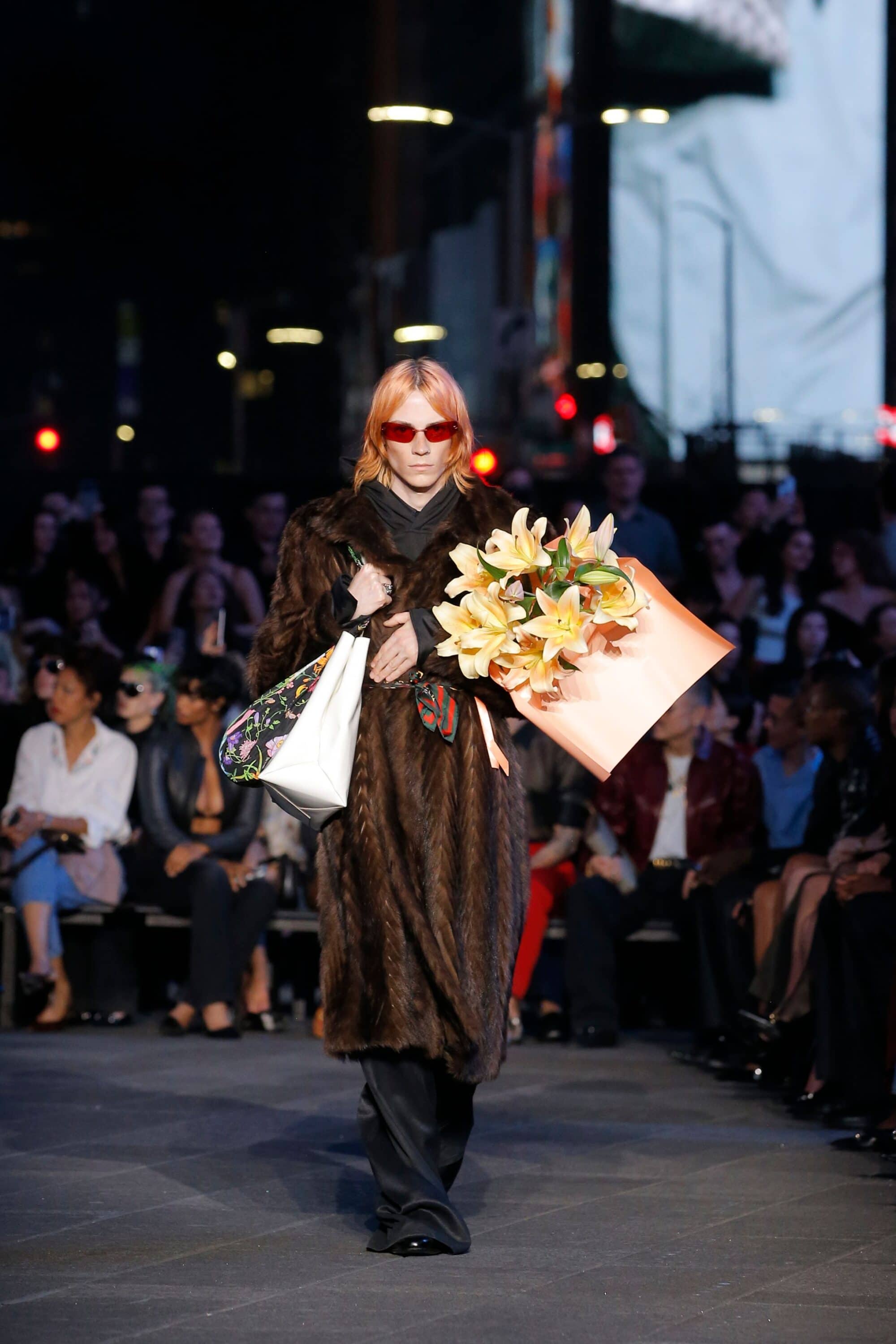
That familiarity becomes particularly challenging when placed within Gucci itself, a house with one of fashion’s richest and most emotionally charged visual histories. The use of Gucci codes here occasionally felt more referenced than deeply inhabited, as though the collection was working around the house rather than fully through it.
And that distinction matters.
Gucci has historically resonated when it embraces contradiction—when it allows craftsmanship, eroticism, glamour, vulgarity, and self-awareness to coexist simultaneously. New York operates through many of those same tensions. It is a city of ambition and anonymity, commerce and fantasy, grit and performance. The strongest version of this collection may have emerged had those shared contradictions been pushed further.
Instead, the show often stayed at the level of gesture.
THE WRAP UP
Demna remains one of fashion’s most influential image-makers, and his ability to shape silhouette and cultural conversation is undeniable. But Cruise 2026 also illustrates the challenge of longevity for a designer whose visual language has been deeply visible for more than a decade. Familiar signatures no longer carry the same disruptive force on recognition alone.
That places greater importance on the relationship between designer and house.
At Gucci, the opportunity is not simply to impose a point of view onto the brand, but to discover where Demna’s instincts and Gucci’s emotional core genuinely intersect. The collection suggests that search is still ongoing.
And perhaps that is ultimately the most constructive way to view this outing—not as a failure of execution, but as evidence of a larger transition still finding its footing. The ideas are present. The cultural references are present. What feels less fully formed is the sense of emotional necessity that transforms a collection from recognizable into resonant.
Because New York deserves more than symbols.
And Gucci, perhaps more than any house, deserves a vision of self-invention that feels thrillingly alive rather than merely familiar.