A New Foundation
Review of Balenciaga Fall 2026 Couture Fashion Show
By Mackenzie Richard Zuckerman
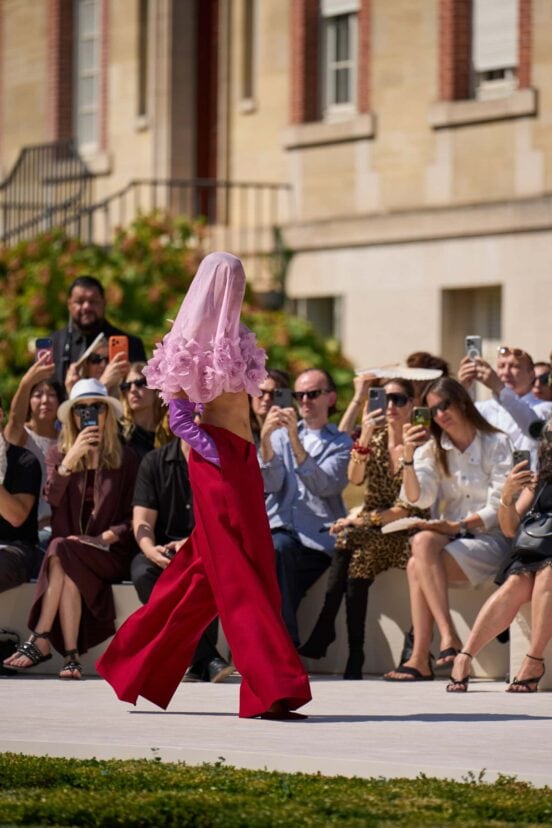
Pierpaolo Piccioli’s first couture collection for Balenciaga began with one of the hardest assignments in fashion: how does a designer with such a beloved and recognizable couture language enter a house built on another designer’s idea of purity?
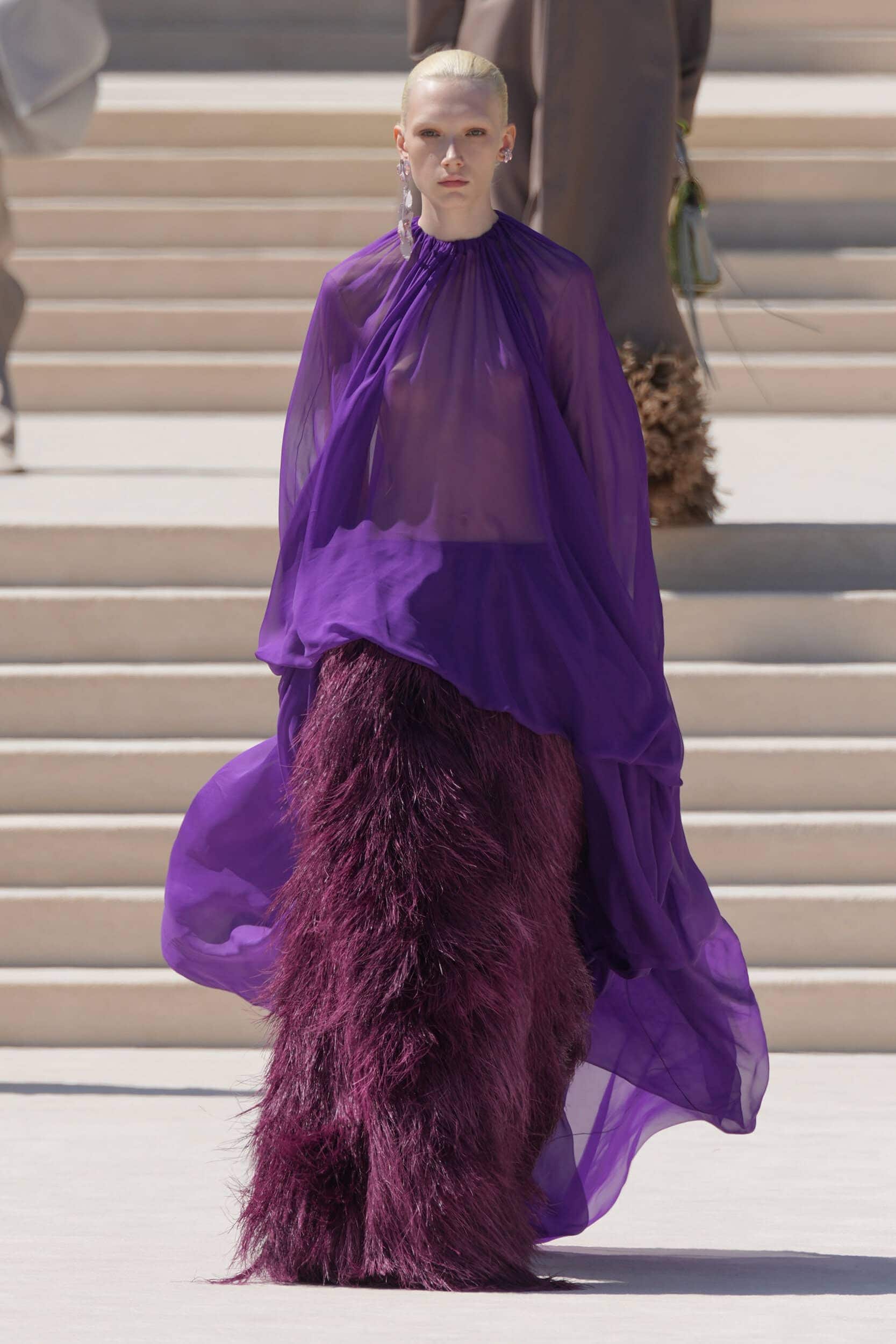
That question followed the collection closely. Piccioli spent 25 years at Valentino, where color, softness, grace, romance, and emotional scale became central to his design vocabulary. His couture was often carried by color as feeling, almost Rothko-like in the way it gathered meaning the longer you sat with it. It created atmosphere before silhouette had to explain itself.
At Balenciaga, that gift becomes both a strength and an immediate complication. Cristóbal Balenciaga’s legacy is rooted in architecture, volume, cut, and the body’s relationship to space. The house’s couture history asks for rigor. Piccioli brings emotion. The collection’s most interesting moments came when those two instincts began to meet.
In the show notes, Balenciaga framed couture as information: a way of thinking that can guide the entire house. Piccioli echoed that idea backstage, speaking about couture as culture, a mindset that should inform everything from gowns to T-shirts and denim. It was a smart and necessary proposition for a house now entering life after Demna. Balenciaga couture has to answer a new question: what does experimentation look like when irony, distortion, and provocation are no longer the primary tools?
Piccioli’s answer was to begin with the atelier. Before approaching Cristóbal as archive, he approached the people who make the clothes. That human dimension matters. His Balenciaga is clearly interested in the hand, the body, the maker, and the emotional charge that can come from trust between designer and atelier.
The result was a collection with serious craft, intelligent construction, and moments of remarkable beauty. It was also a collection still negotiating how fully Piccioli’s world can be reshaped by Balenciaga’s.
THE COLLECTION
THE VIBE
Engineered Grace, Color as Structure, A House in Transition
The collection was strongest when it treated Balenciaga’s history as a method of construction. Piccioli spoke backstage about studying Cristóbal without replicating a single silhouette, and that felt like the right place to begin. Balenciaga’s legacy has always been larger than one shape. It is a way of thinking about volume, the body, lightness, and the space between garment and wearer.
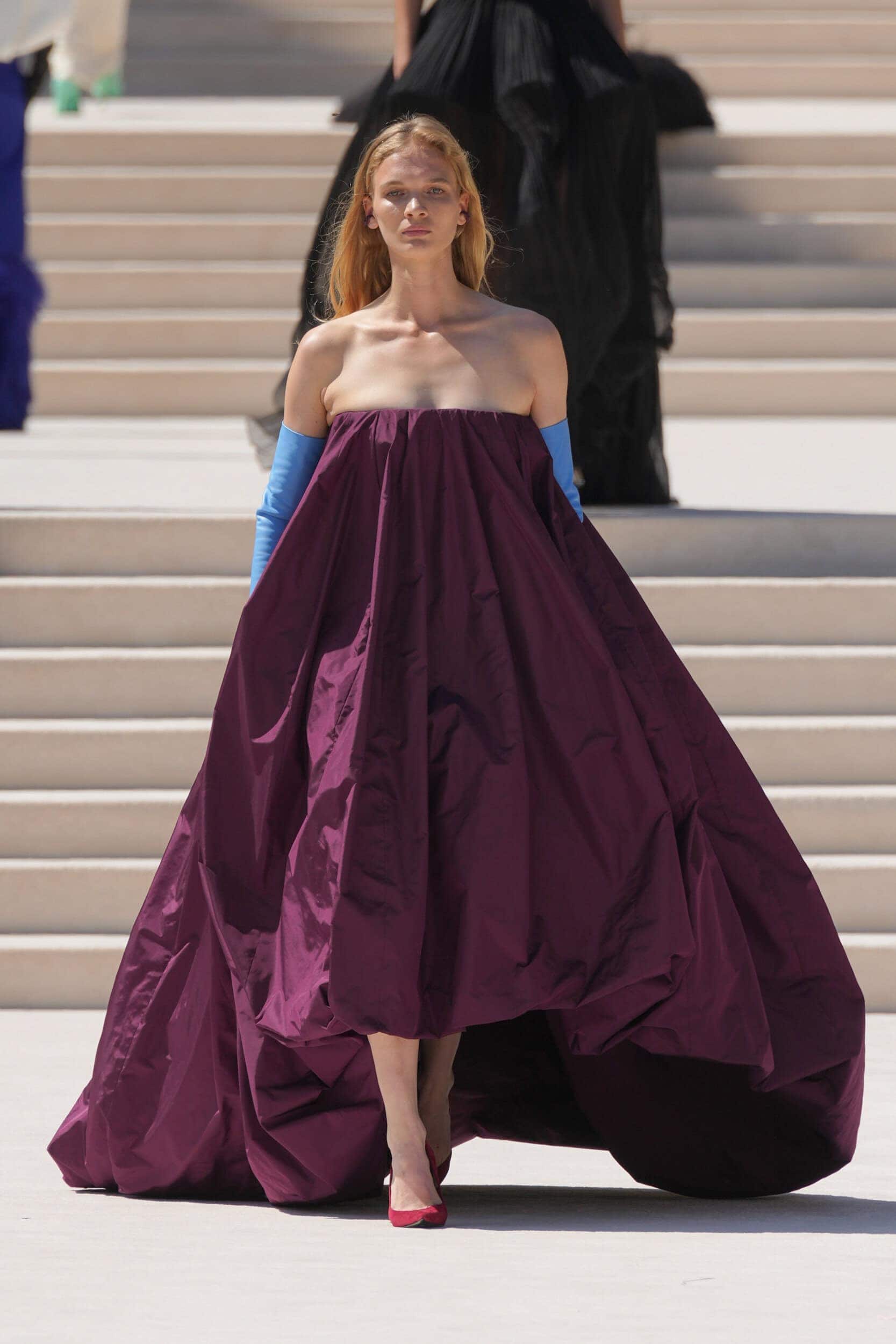
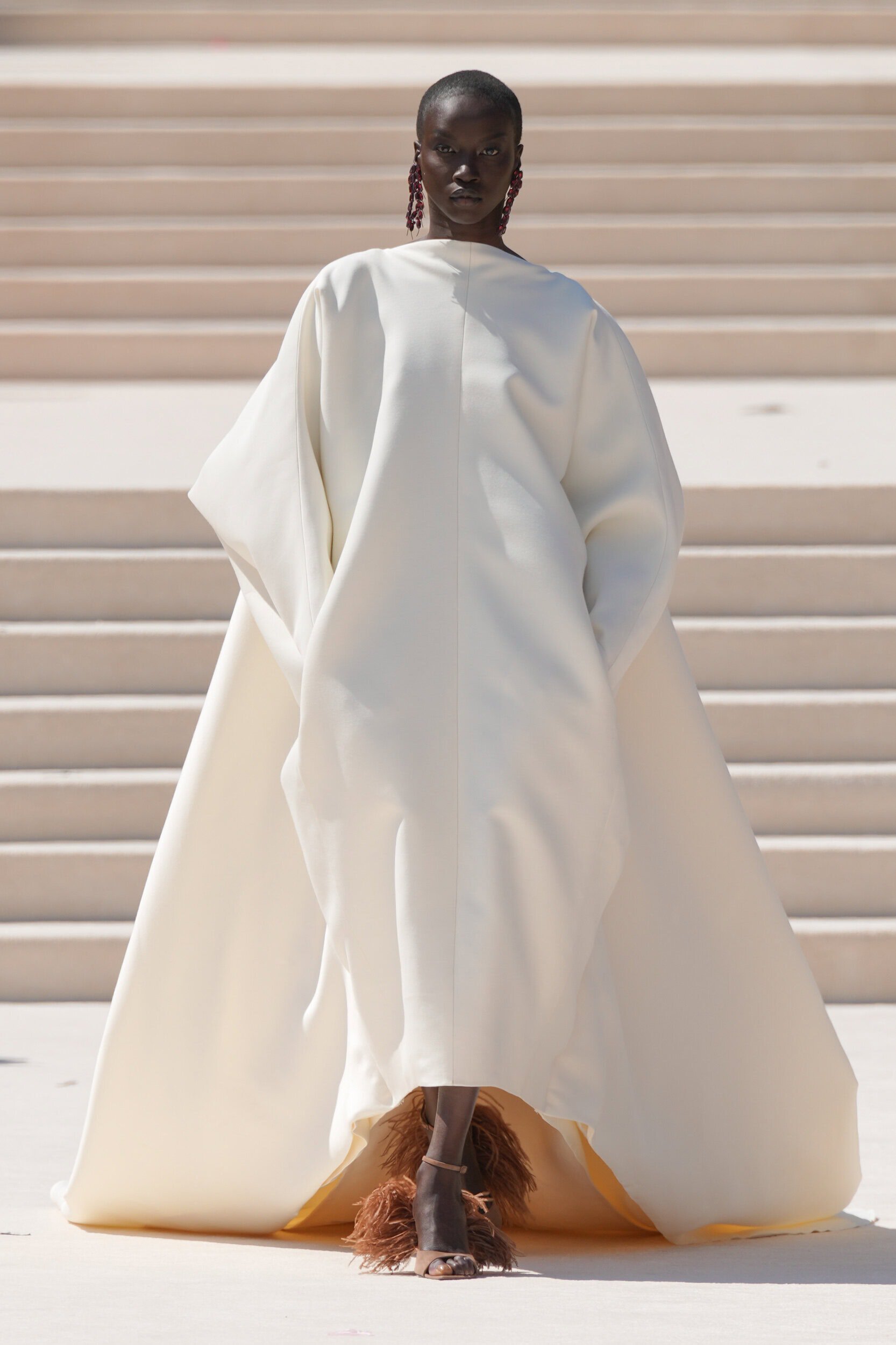
That idea came through in the most architecturally resolved pieces. Tailored coats and dresses in cashmere were built through three-dimensional body scanning, then shaped through internal leather structures that created volume without obvious heaviness. The show notes described these as internal carapaces, and the phrase was useful. The structure lived beneath the surface. The technique was hidden in pursuit of simplicity.
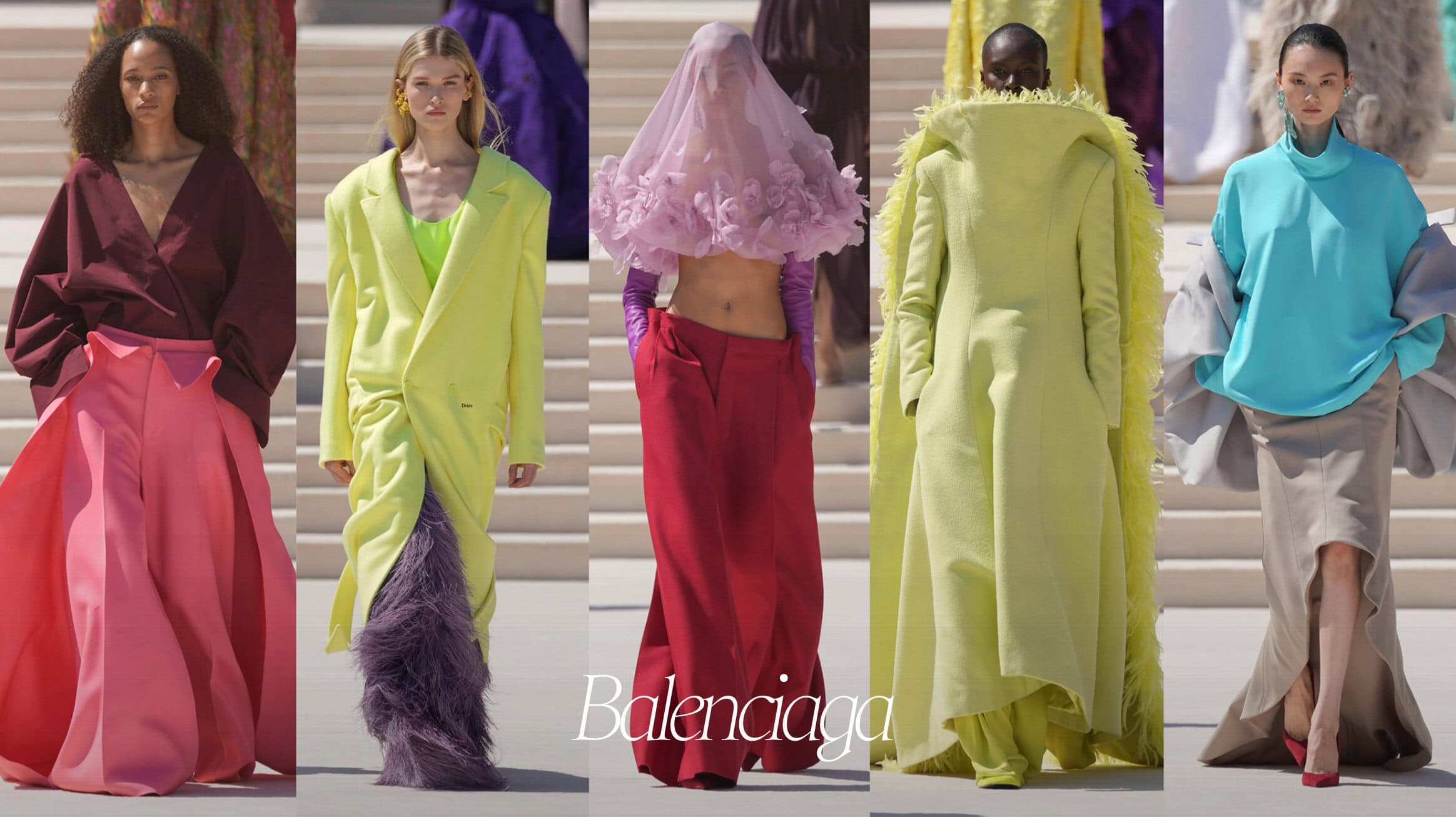
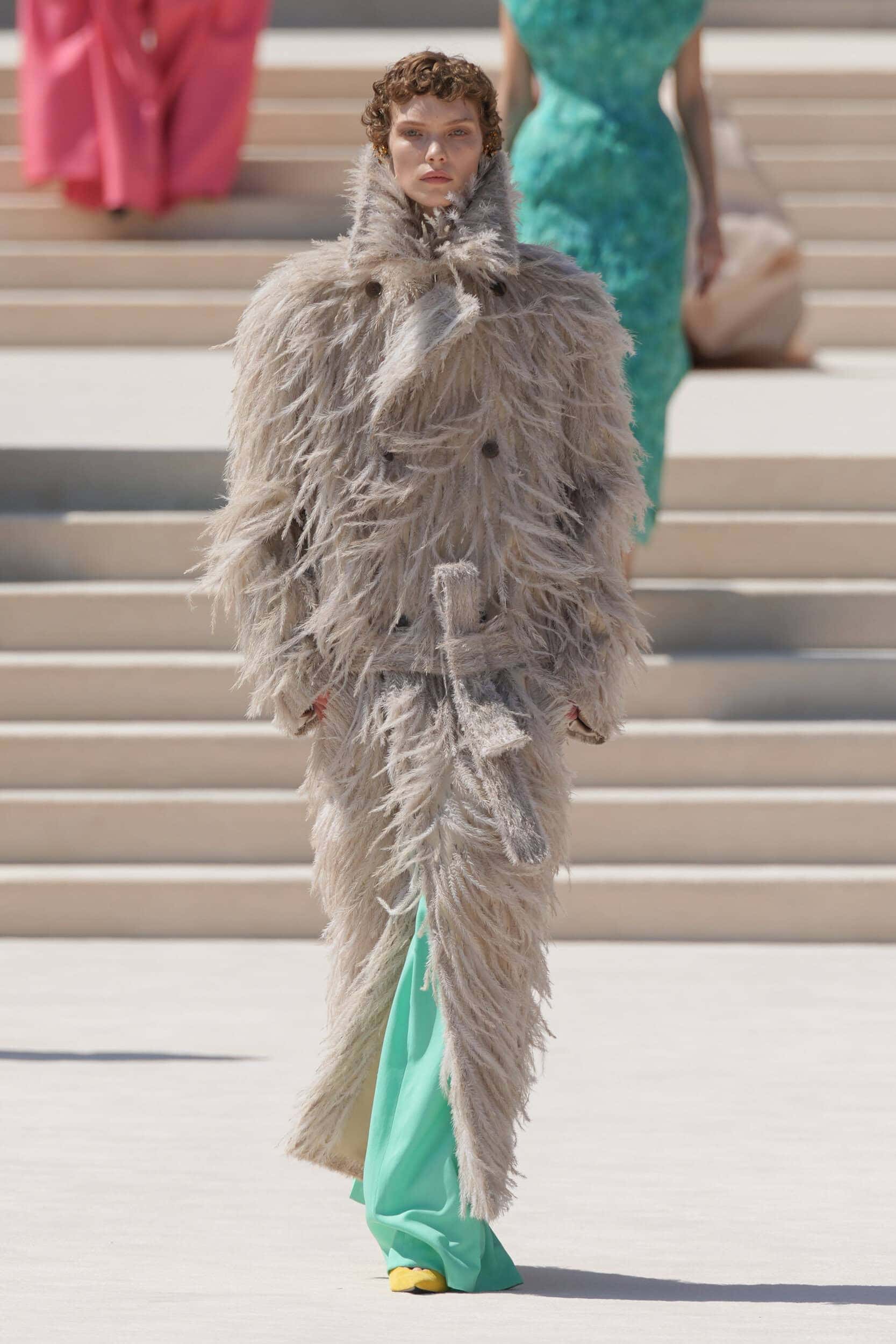
That pursuit of simplicity became one of the collection’s clearest ambitions. Piccioli spoke about experimentation that disappears into purity, and the best looks achieved that balance. A white cashmere coat, engineered through months of technical work, carried the quiet force of something that wanted to look inevitable. Elsewhere, neo-gazar gave the clothes a sense of lift and discipline, bringing Cristóbal’s textile innovation into a contemporary register.
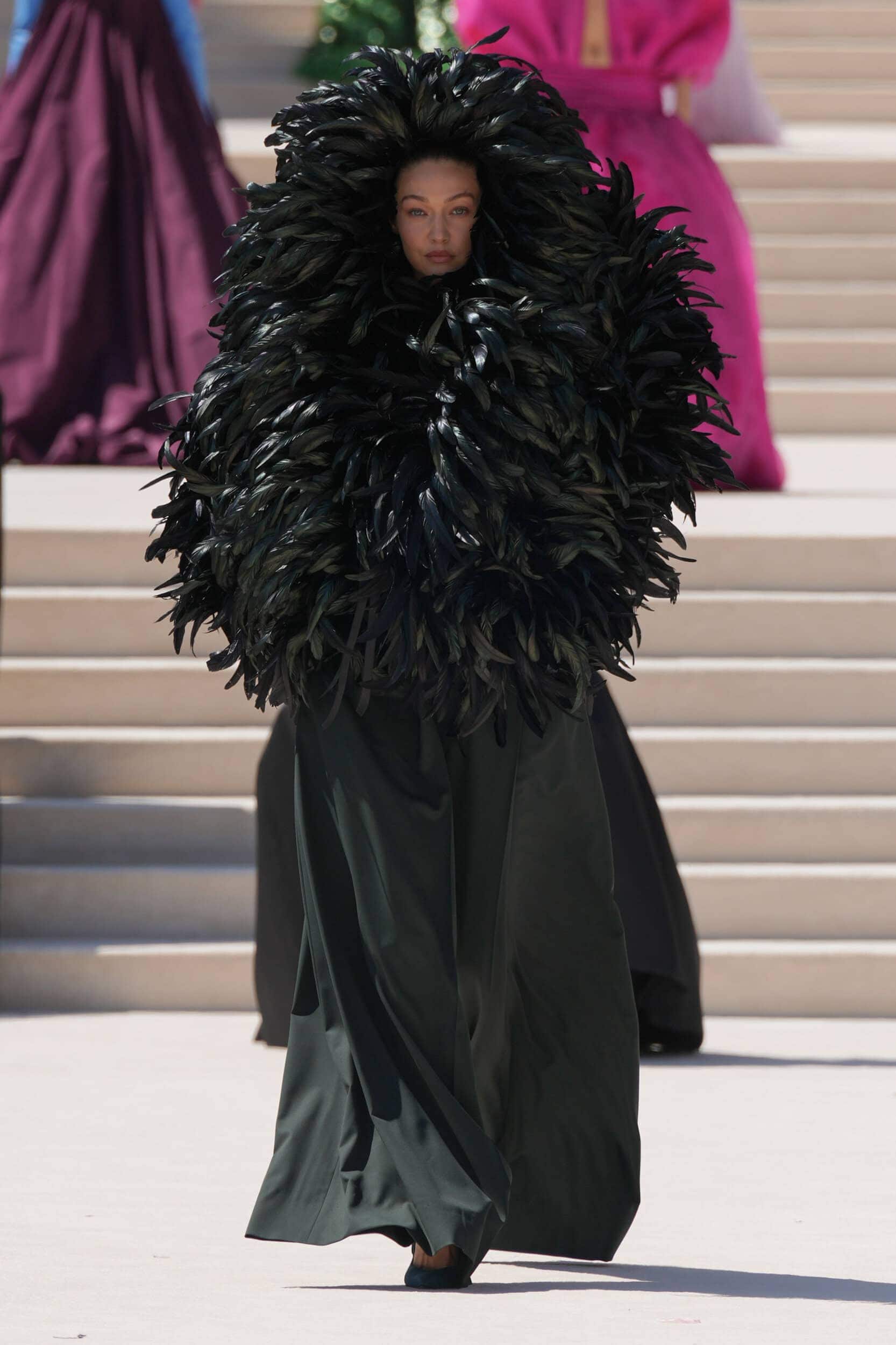
The feather work, developed with Philip Treacy, added another dimension. Feathers became architectural, forming sculptural volumes that questioned where millinery ends and garment begins. In those pieces, the collection found a more convincing Balenciaga tension: delicacy made structural, lightness made commanding.
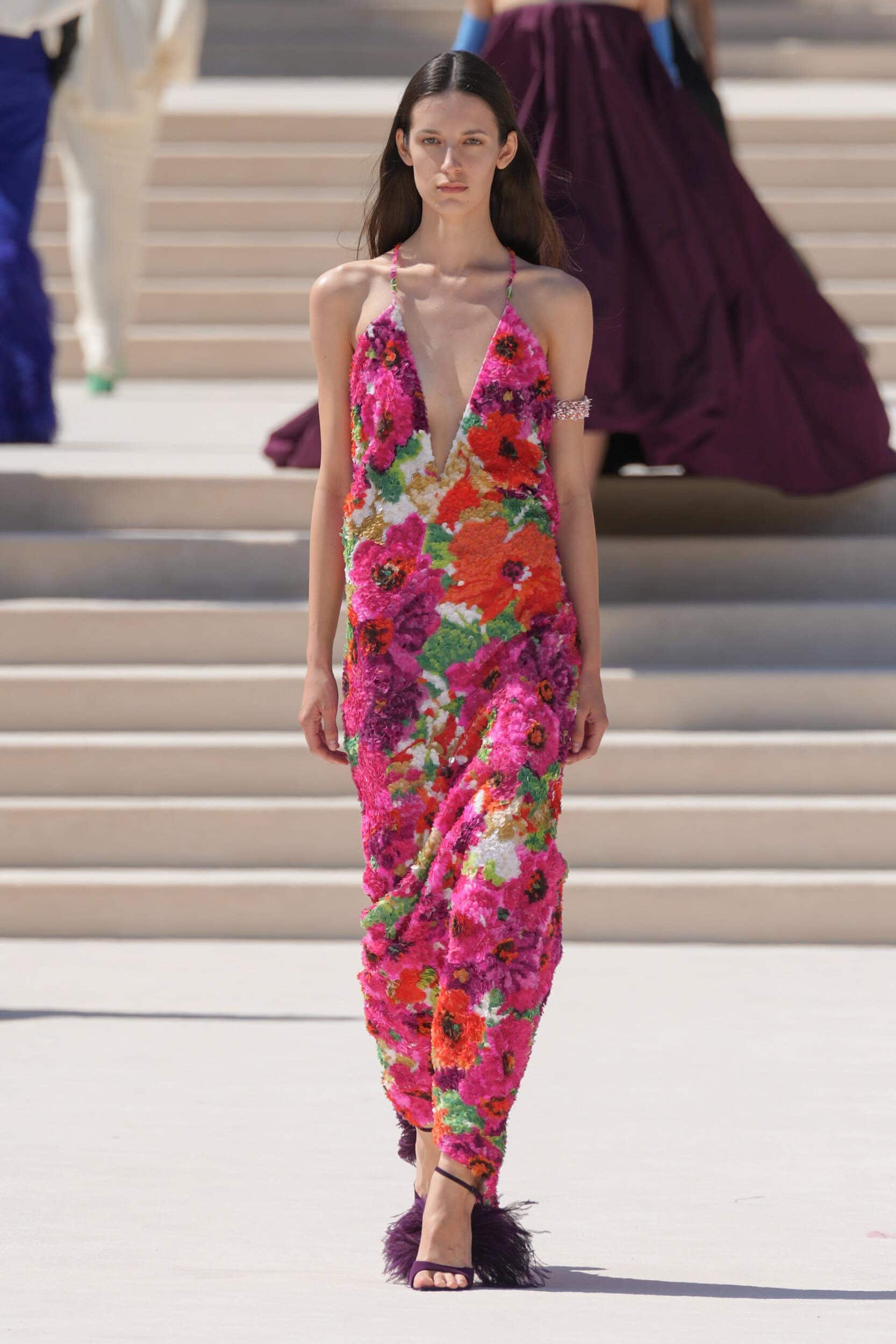
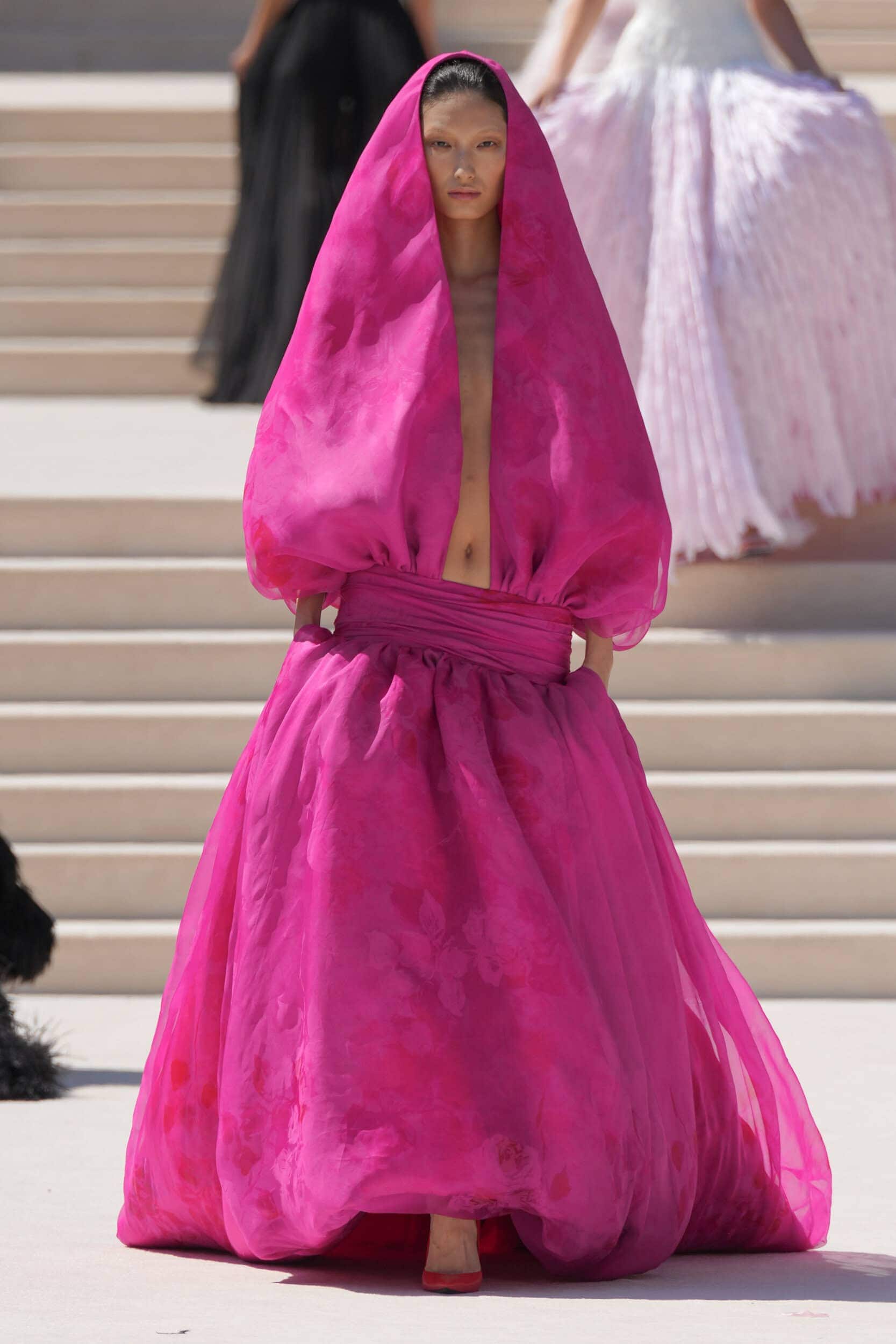
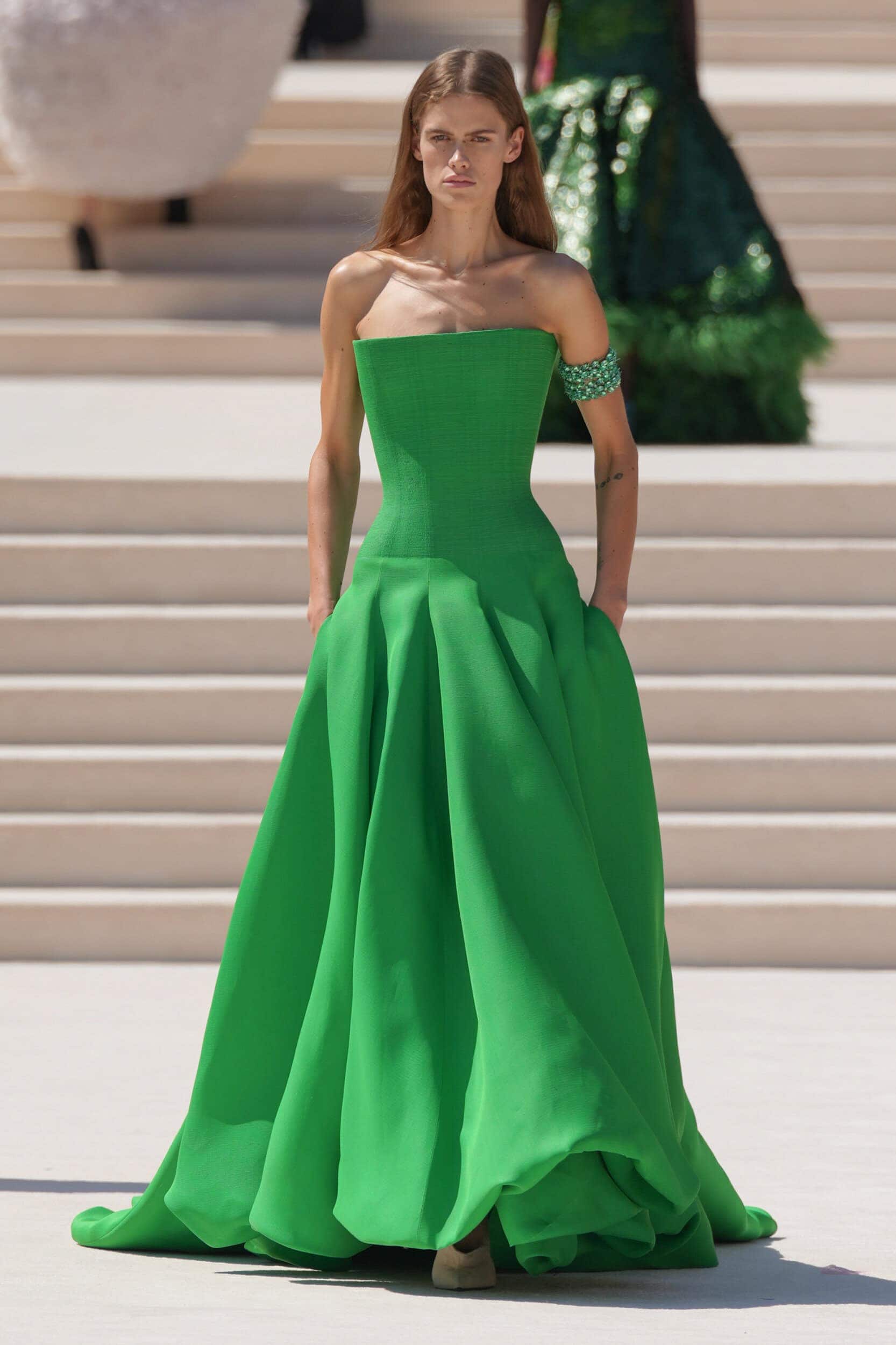
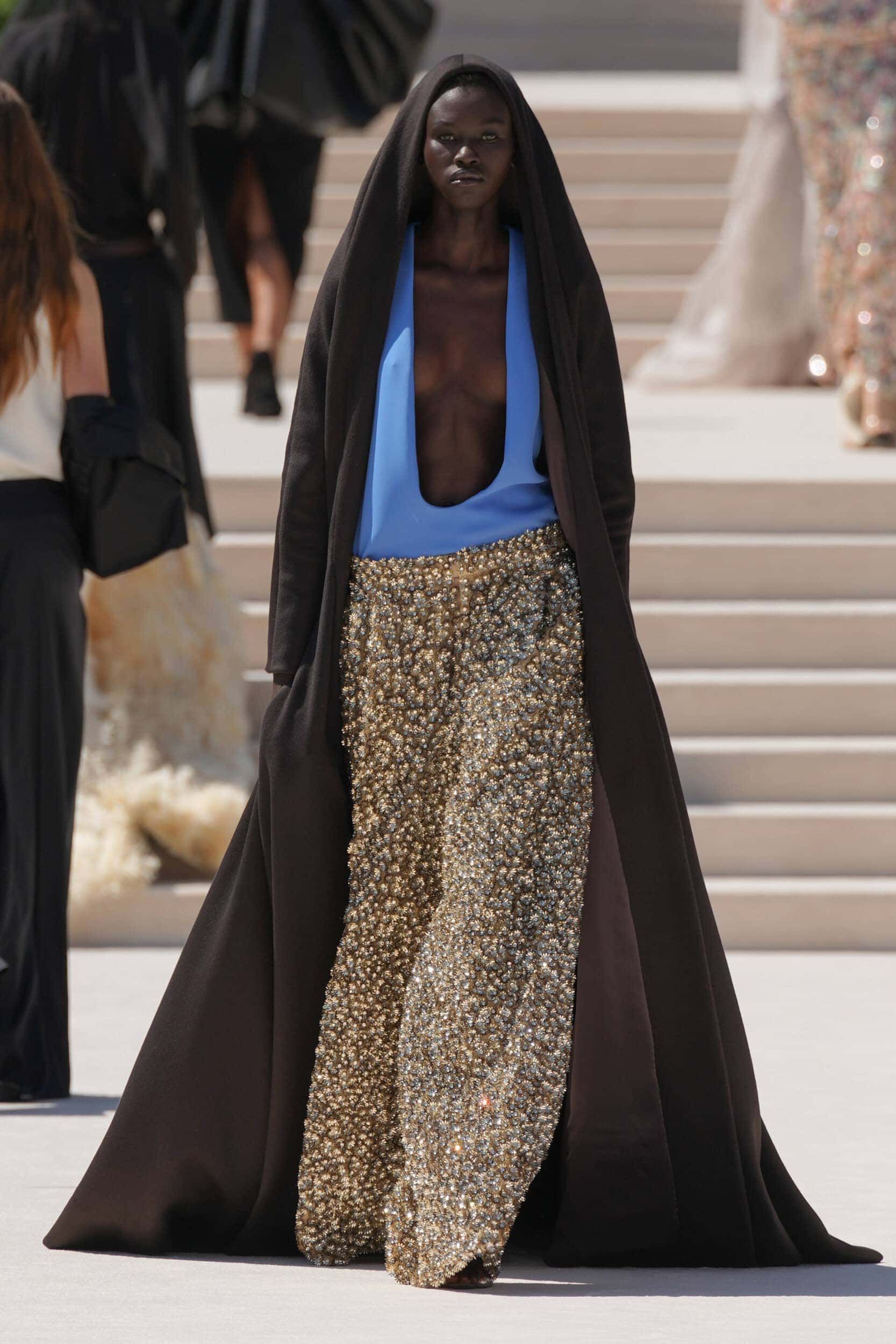
Color was the more complicated force. Piccioli’s color sense is one of his great signatures, and it gave the collection warmth, atmosphere, and emotional appeal. Color blocking and tonal contrast softened the severity of the shapes, bringing feeling into the architecture. At times, that was beautiful. At other moments, it pulled the eye toward the memory of his Valentino couture, where color carried so much of the emotional world.
That is the delicate challenge of this debut. Piccioli’s hand is deeply known. The industry has lived with his couture language for decades, and its codes are difficult to separate from the house where they were formed. At Balenciaga, color needs to become part of the architecture, part of the cut, part of the house’s tension between austerity and volume. When it did, the collection felt promising. When it sat more gently on the surface, the old memory became harder to escape.
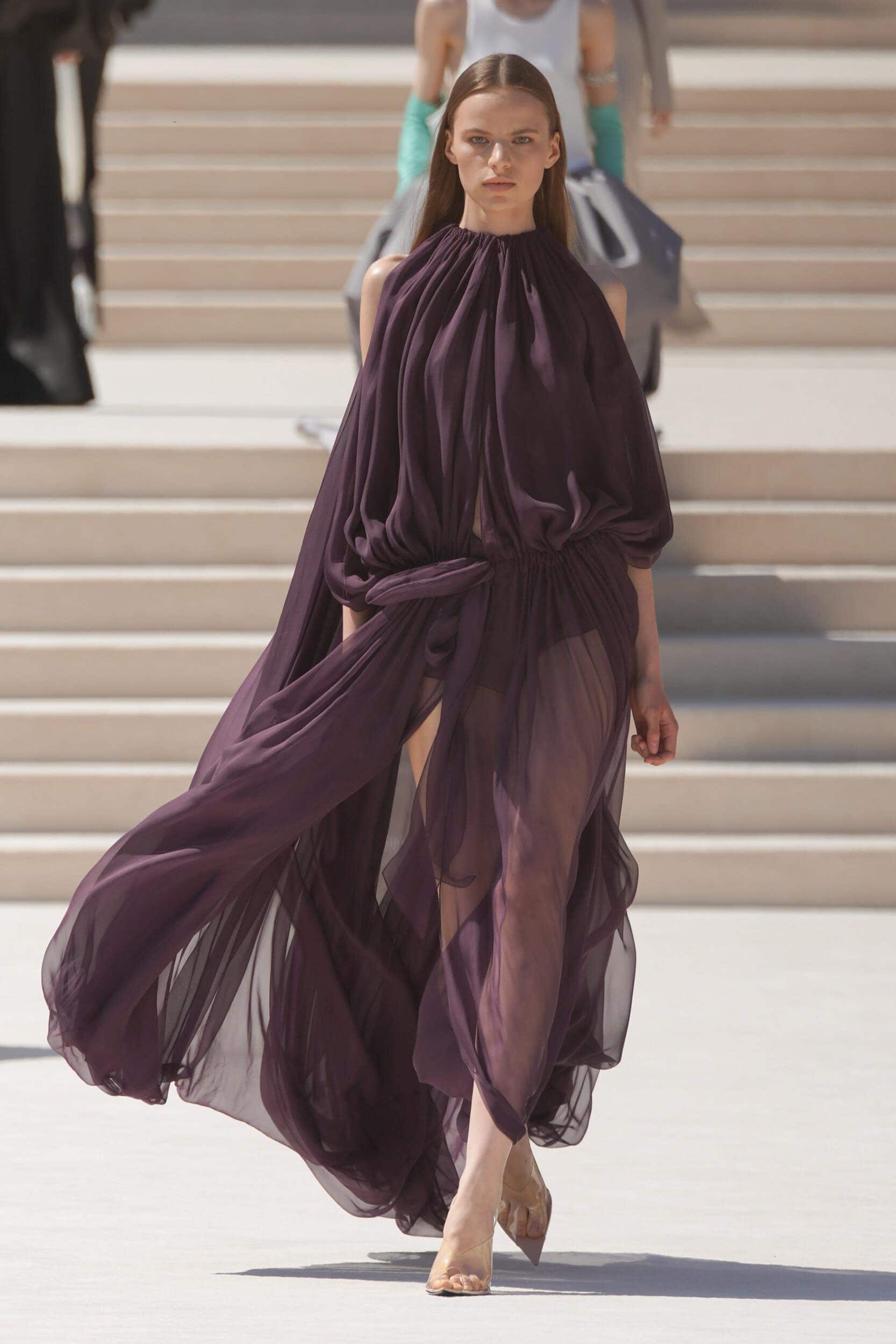
There was also a noticeable swing between high couture drama and pieces that read with the ease of an elevated wardrobe. That is central to Piccioli’s proposition: couture as a mindset that can inform many categories. Still, the collection would have benefited from a more persuasive middle ground. Some of the quieter looks were elegant, though they risked feeling too close to ready-to-wear in a context where Balenciaga couture carries such architectural expectation. The strongest pieces found the bridge: wearable in attitude, exacting in construction, and strange enough in proportion to belong to the house.
This debut was most convincing when it allowed warmth to enter Balenciaga without softening the house too much. Piccioli does not need to abandon his emotional intelligence. It may become one of his greatest assets here. The next step is finding how that emotion can be disciplined by Balenciaga’s severity until it feels newly sharpened.
THE WRAP UP
Pierpaolo Piccioli’s first couture collection for Balenciaga was a thoughtful beginning. It did the important work of placing couture back at the center of the house, which feels especially necessary after a period defined by cultural tension, provocation, and a very different kind of modernity.
His approach was respectful without becoming overly archival. He understood that Cristóbal Balenciaga should be treated as a belief system: cut, volume, body, lightness, experimentation, and the courage to invent shape. That is a strong foundation.
The harder question is how much of Piccioli’s own couture language can remain visible before it begins to cloud the house he is now leading. His color, softness, and emotional scale bring beauty to Balenciaga, but they also bring the memory of another world. This collection began the process of translation. It did not complete it.
That is understandable for a debut. The collection had craft, intelligence, and a sincere desire to understand the house from within. Its risk was restraint. Piccioli chose to build trust with the atelier, with the archive, and with the idea of Balenciaga couture as a living practice. In doing so, he delivered a collection that felt measured, sometimes beautiful, and occasionally too familiar.
The promise is there. Balenciaga could give Piccioli’s romance a sharper skeleton. Piccioli could give Balenciaga’s architecture a more emotional temperature. If that exchange deepens, the next chapter may become much more powerful.
For now, this was a beginning built on serious intention: couture as philosophy, color as feeling, and Balenciaga as a house whose future may depend on how rigor and emotion learn to inhabit the same form.