
In Biarritz, Where Gabrielle Chanel First Reshaped Fashion, A New Chapter Starts With Movement, Lightness, And Intent
To understand where Chanel might be going, it helps to return to where it first learned how to move.
Long before 31 Rue Cambon became the axis of the house, Gabrielle Chanel arrived in Biarritz in 1915 and quietly rewrote the rules of dress. Set against the Atlantic coast, her couture house emerged not from the rigidity of Parisian salons, but from a city defined by air, energy, and escape. Here, she introduced jersey into daywear, softened silhouettes, and proposed something deceptively simple yet entirely radical: that elegance could follow the body rather than restrain it.
More than a century later, Chanel returns to that same coastline for its Cruise 2027 show on April 28, marking Matthieu Blazy’s first Cruise collection for the house. The decision to stage it in Biarritz feels deliberate. This is not a nostalgic gesture or a picturesque backdrop, but a re-engagement with the house’s original idea of freedom — one that still underpins its identity.
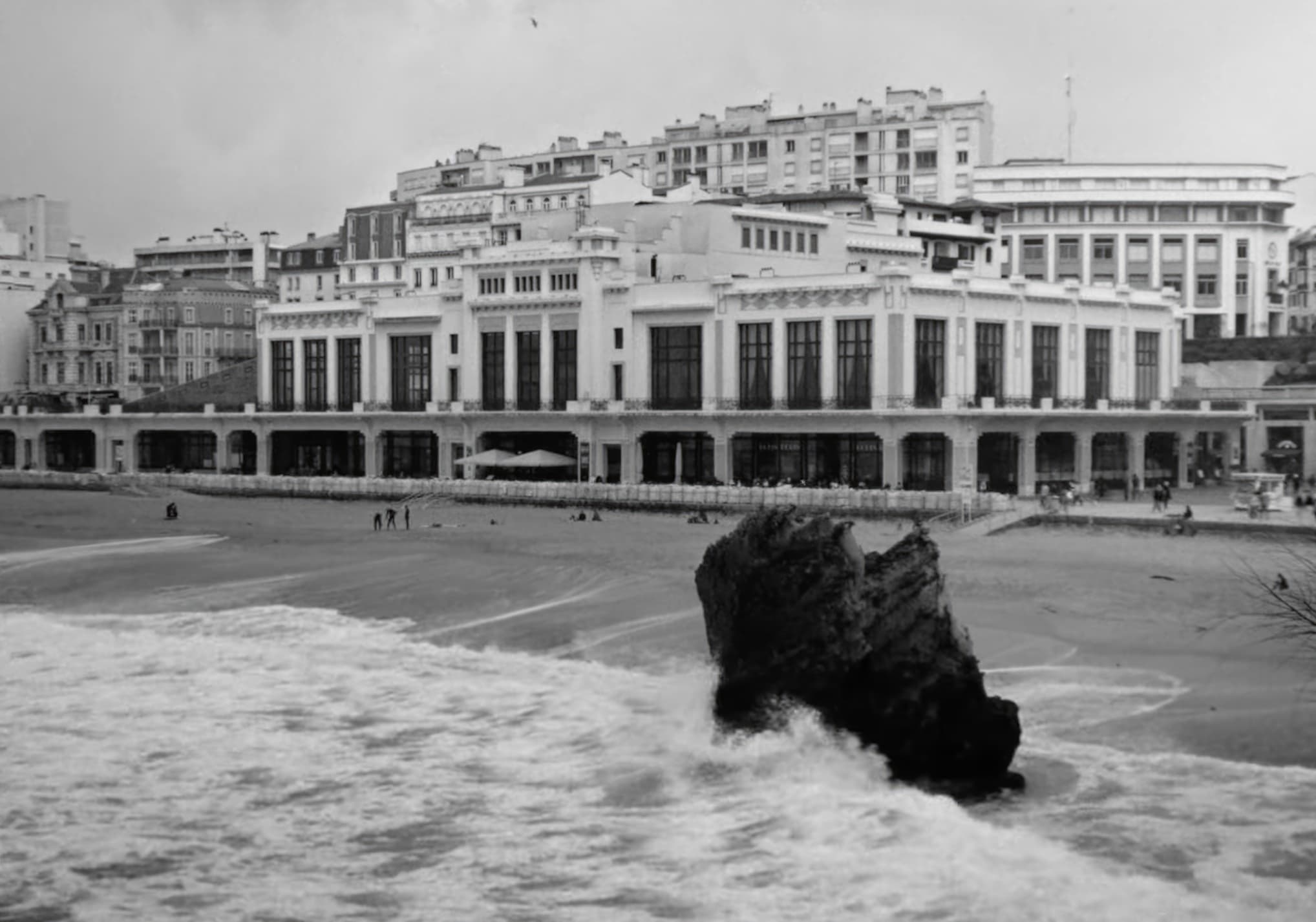
Blazy steps into this moment with notable momentum. His work has consistently demonstrated a sensitivity to craft and an intuitive understanding of how clothes exist in motion, qualities that feel particularly resonant here. Chanel’s legacy is often framed through its codes, but those codes were born from a break with convention. Beginning in Biarritz suggests an awareness that the future of the house may lie less in reiteration and more in reactivation.
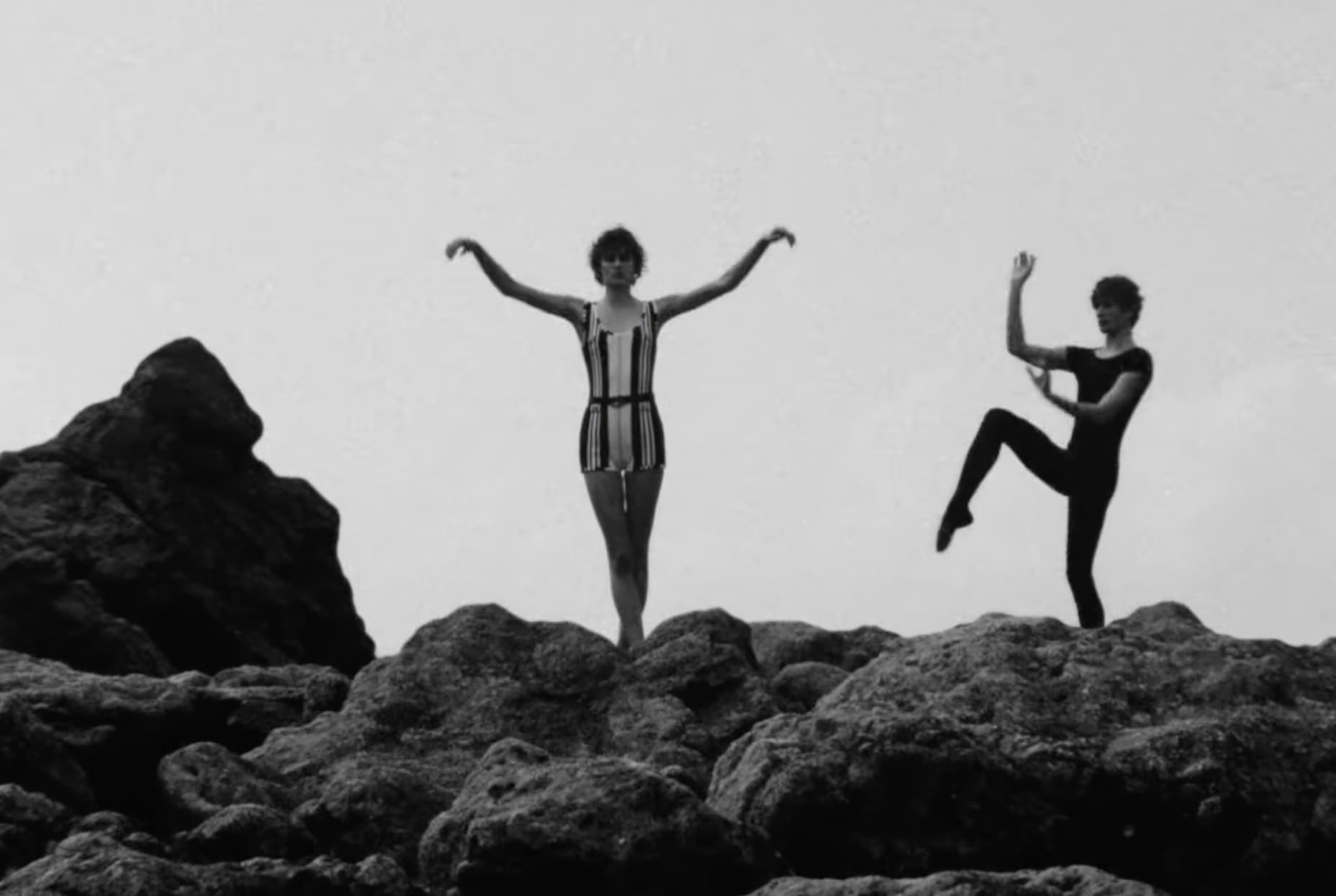
The first indications point toward a considered and quietly confident approach. To announce the show, Chanel released a black and white teaser film directed by Julien Martinez Leclerc that trades spectacle for atmosphere. Model Noor Khan moves through the seaside town in a striped swimsuit, her gestures suspended somewhere between choreography and spontaneity, while dancer Kirill Sokołowski appears as both partner and echo. The Casino Municipal, where the show will take place, is woven into the narrative rather than presented as a stage.
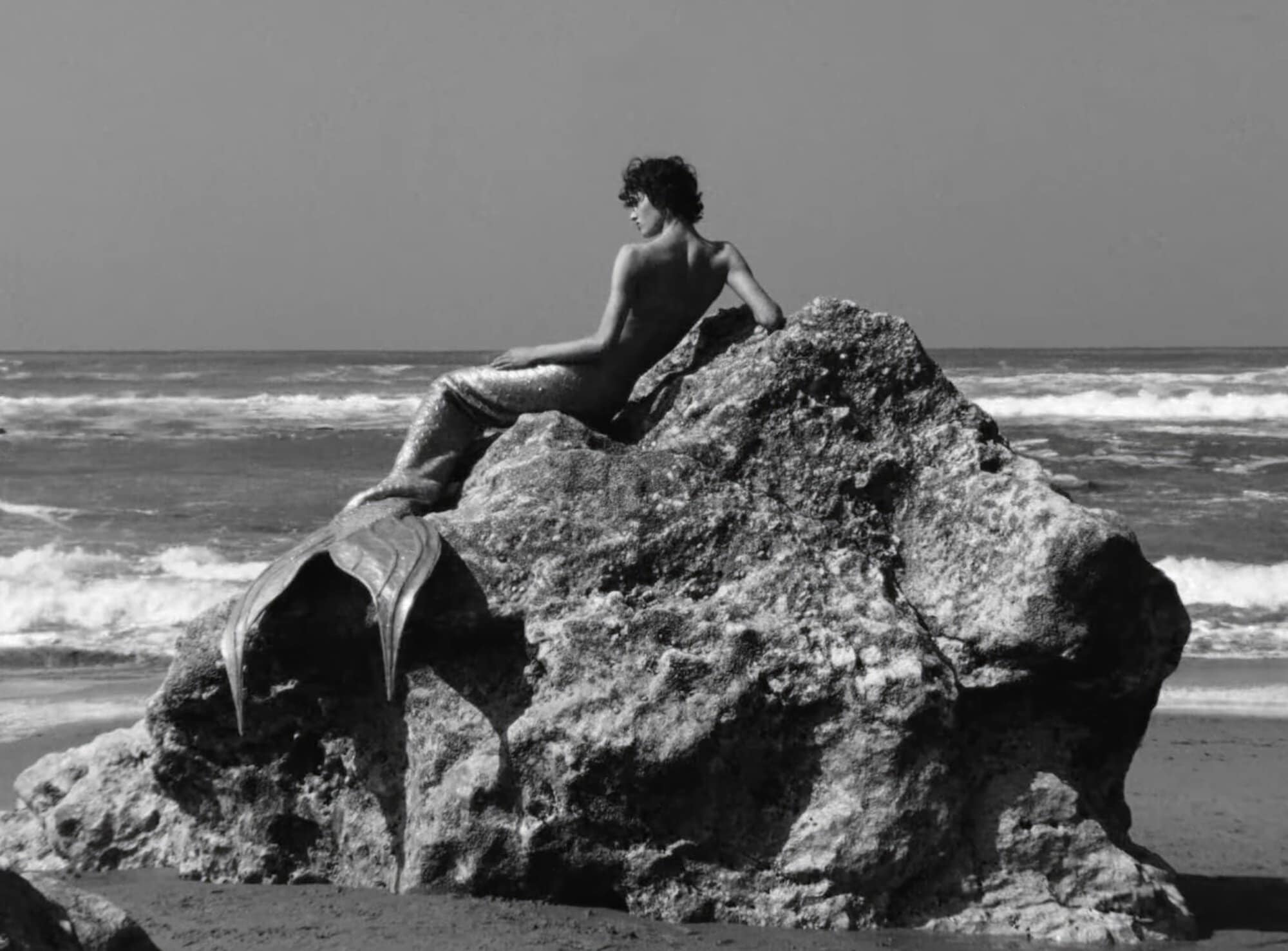
As the film unfolds, it begins to loosen its own logic. What starts as a coastal vignette gradually slips into something more surreal, culminating in a transformation that feels both playful and poetic. The tone is unexpectedly light, even gently humorous, offering a version of Chanel that feels less fixed and more fluid. It is a subtle shift, but an important one.
That emphasis on movement feels particularly aligned with the house’s origins. In Biarritz, Gabrielle Chanel was not designing for fantasy, but for a new kind of daily life — one that allowed women to move freely between spaces, from indoors to outdoors, from day to night. Over time, Cruise collections have often leaned toward spectacle and destination. Here, the setting quietly redirects the conversation back to purpose.
Biarritz itself remains a place defined by that duality. Elegant yet unguarded, it has long attracted artists seeking both stimulation and distance. Picasso, Cocteau, and Stravinsky all passed through, drawn by a city that encourages both expression and ease. It is this balance that now frames Blazy’s first step at Chanel, offering a context that feels both grounded and open.
Alongside the show, the Villa de Larralde will reopen as an ephemeral boutique through the summer, and the house will continue its partnership with the Biarritz Film Festival. These gestures reinforce a relationship that extends beyond symbolism, positioning the city not as a reference point, but as an active part of Chanel’s present.
Following a Fall 2026 season in which Chanel stood firmly at the forefront, anticipation for what comes next is naturally high. Yet the early signals suggest that Blazy may begin not with a declaration, but with a recalibration. The film offers impressions rather than answers — movement, lightness, a sense of play — hinting at a direction that prioritizes feeling over statement.
If Biarritz once gave Gabrielle Chanel the space to imagine a new kind of elegance, it now offers a compelling place to begin again. Not by looking back, but by returning to the source of what made the house matter in the first place, and allowing that idea to move forward once more.