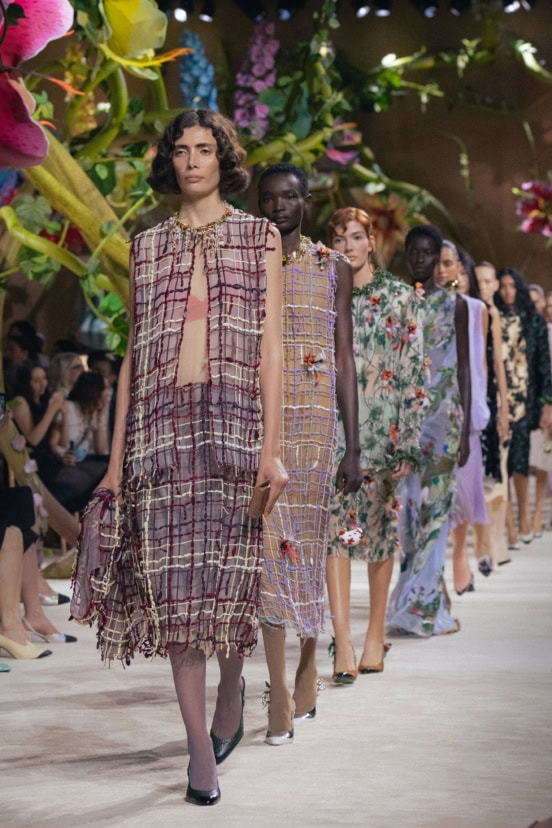
Once Upon a Time…
Review of Chanel Fall 2026 Couture Fashion Show
By Mackenzie Richard Zuckerman
At Chanel, the fairy tale began with a button.
Beans, golden eggs, castles, boots, cats, ducklings, swans: the smallest details carried the story before the beanstalk set made it visible. That felt like the right metaphor for Matthieu Blazy’s second Haute Couture collection for the house. Jack and the Beanstalk is a tale about belief before proof. A handful of beans must be accepted as magic before the castle in the clouds can appear. Couture asks for a similar faith: that a button can hold a world, that a lining can become a private story, that craft can turn the smallest gesture into something of enormous value.
Blazy’s title, Gaby and the Beanstalk, made the premise personal. In the press notes, he asked whether Gabrielle Chanel’s life might itself be read as a fairy tale, and whether the ateliers could make garments that “tell stories like a book.” It is a strong question because Chanel’s history already contains its own mythology: self-invention, discipline, elegance, refusal, independence. The risk with fairy tales at a house like Chanel is that they can become too sweet, too decorative, too easily reduced to charm. Blazy avoided that by grounding the fantasy in the way clothes are made, worn, touched, opened, lined, fastened, and kept close to the body.
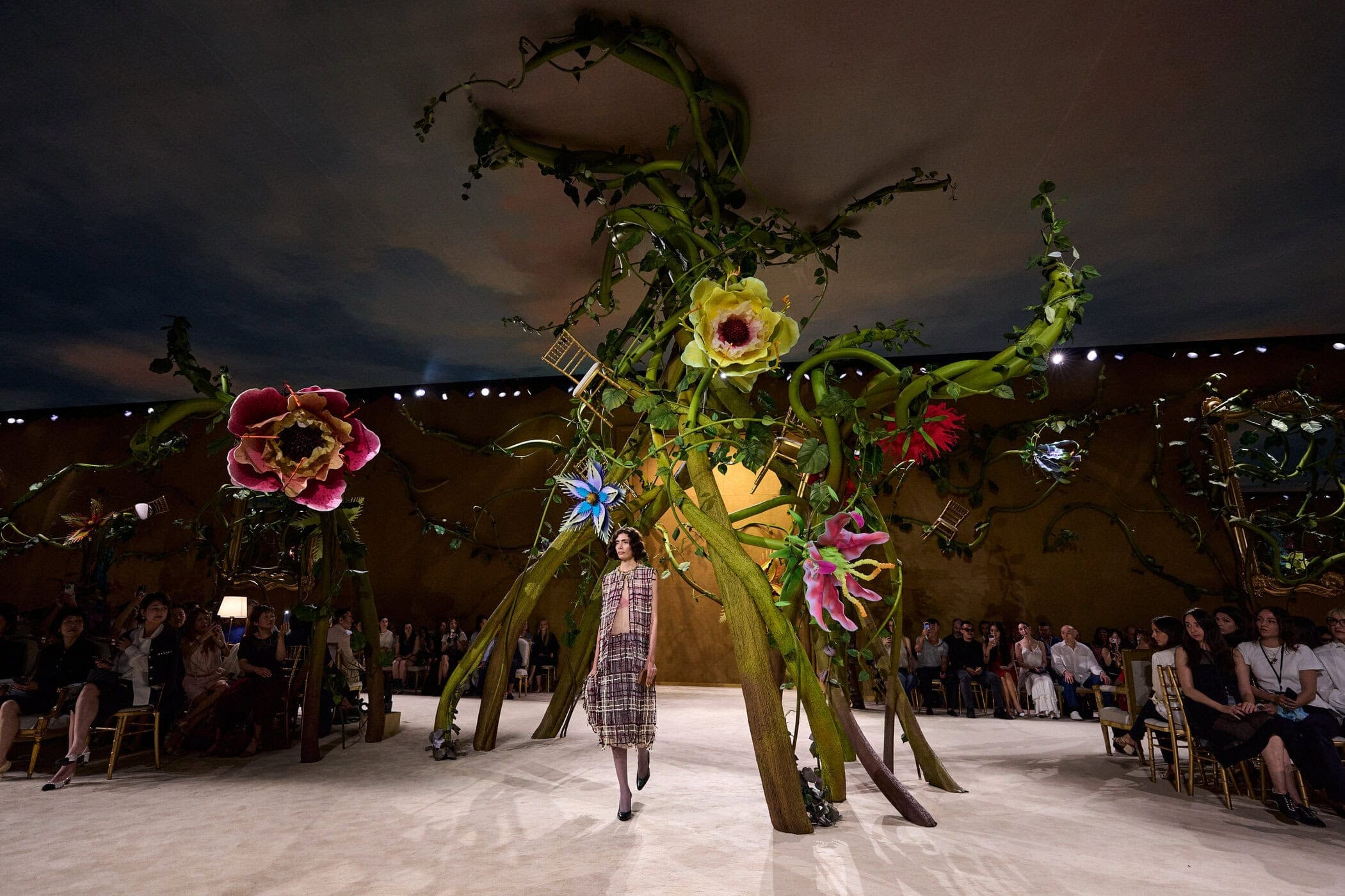
That is also where the collection felt most connected to women. These were heroines with character, motion, wit, and interior lives. They carried books, wore talismans, gathered charms, and moved through the show as if their clothes contained private evidence of experience. The fairy-tale frame gave them a shared cultural language, yet it did not flatten them into princesses. It suggested something more generous: women reclaiming their own ideals through stories that have moved across generations.
That multi-generational quality mattered. Folk stories endure because they belong to everyone while still feeling as if they were told to us alone. They connect children, mothers, grandmothers, founders, clients, and viewers through a common rhythm of danger, luck, transformation, and belief. For Chanel, the idea became especially resonant because the story led back to Gabrielle’s own library. Blazy was building a bridge between the founder’s imagination and the present, using references that are universal in memory and rarefied in execution.
The central question, then, was quietly ambitious: can Chanel make us believe in magic again, starting from the smallest detail?
THE COLLECTION
THE VIBE
Storybook Intimacy, Living House Codes, & The Magic of Detail
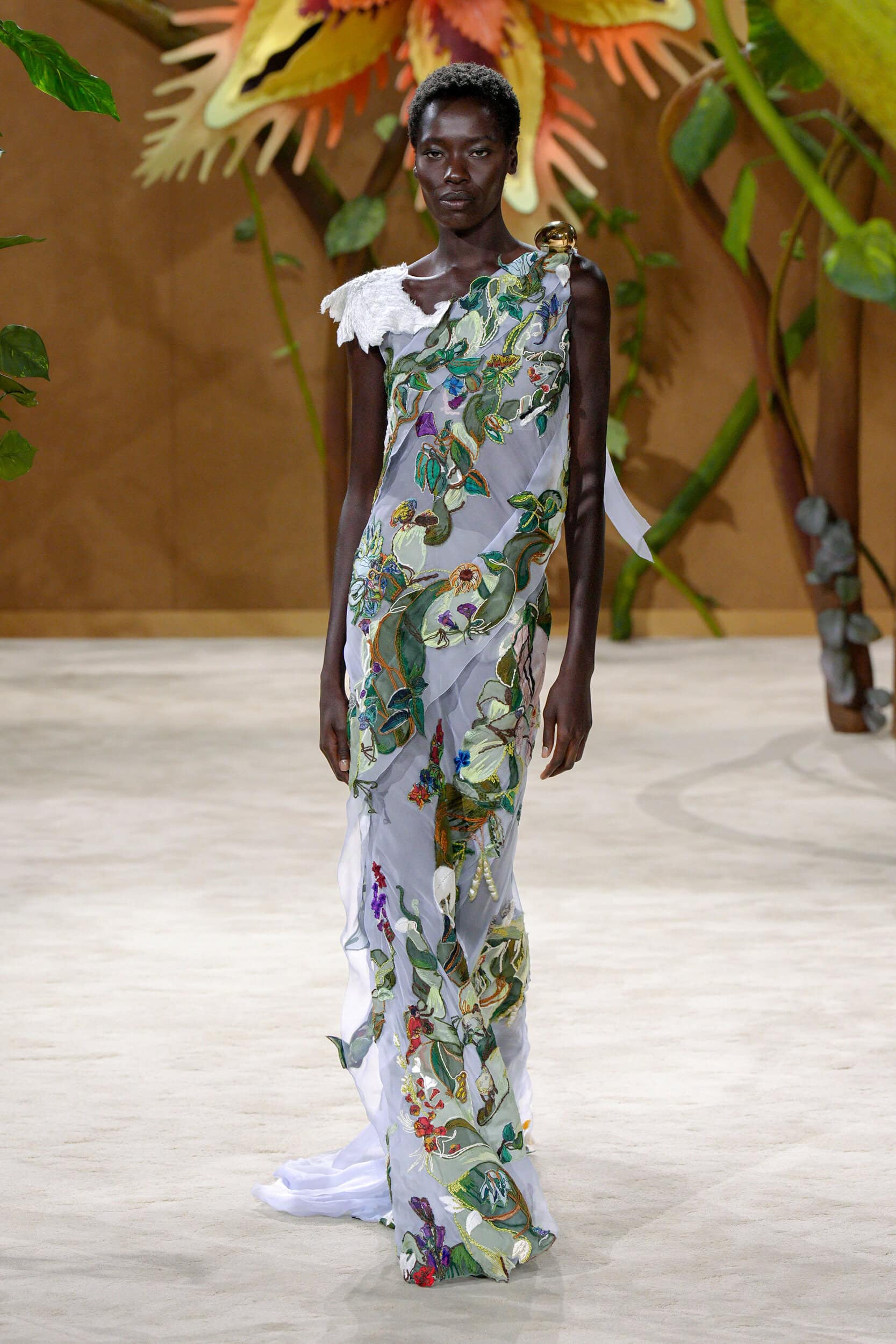
Blazy’s most persuasive move was to treat Chanel’s codes as a living grammar. The buttons, jackets, tweeds, skirts, braids, chains, and evening shapes were more than signs of heritage; they determined how the collection moved, what it valued, and where its wit could live. Season after season, this is becoming the clearest strength of his Chanel: he is allowing the house codes to generate new design, while his own taste for texture, ease, and material intelligence finds discipline through them.
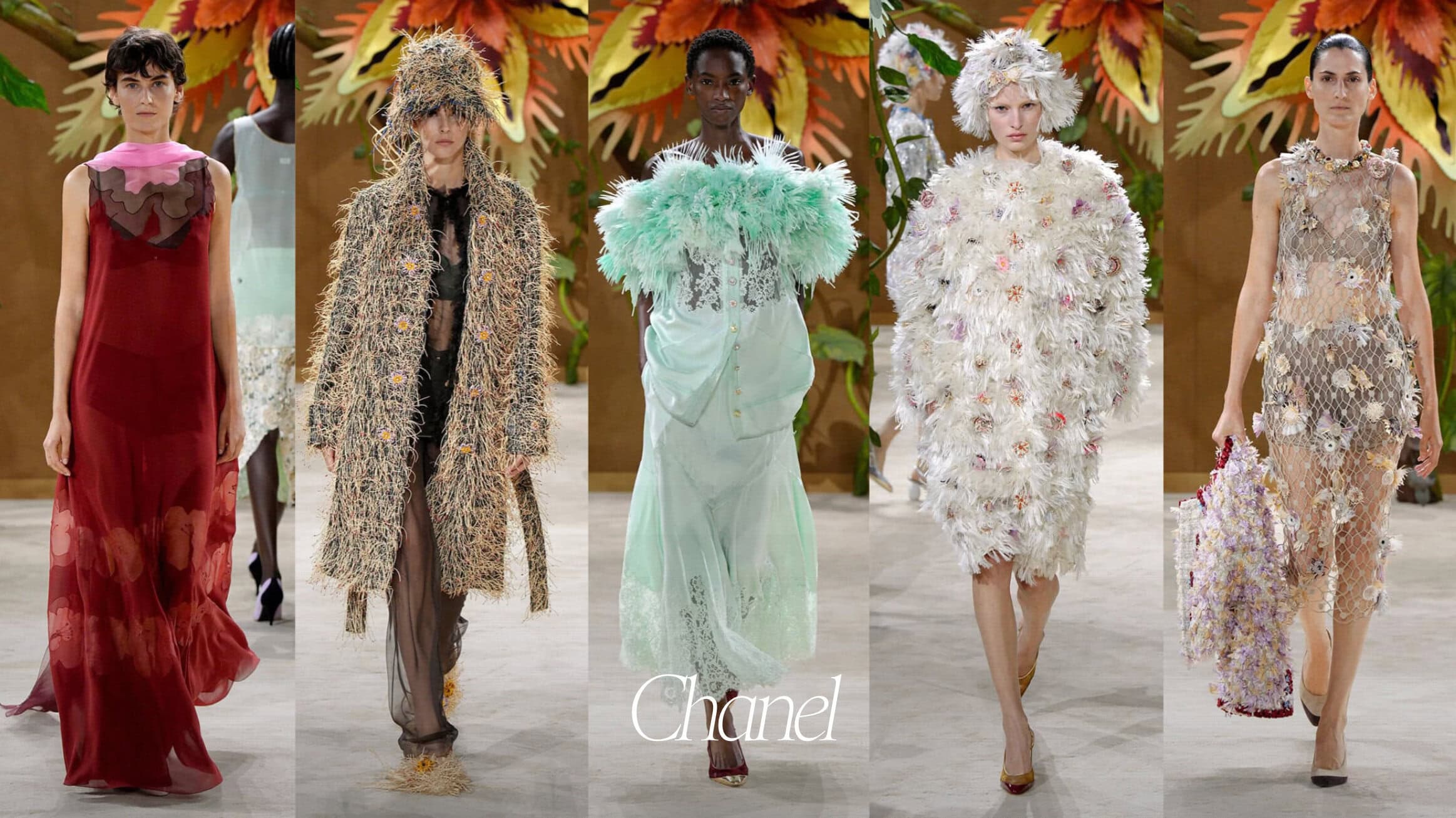
That gave the collection a strong internal logic. The beanstalk set created the spectacle, with chairs climbing upward and flowers enlarged into storybook scale, but the clothes carried the premise more intimately. A vine could creep up a heel. A minaudière could become a sleeping bear. A button could hold the logic of a tale. Linings, pockets, charms, and small interior gestures gave the collection a private life, which is one of couture’s most powerful territories. The outside world sees the garment; the wearer knows what is hidden inside it.
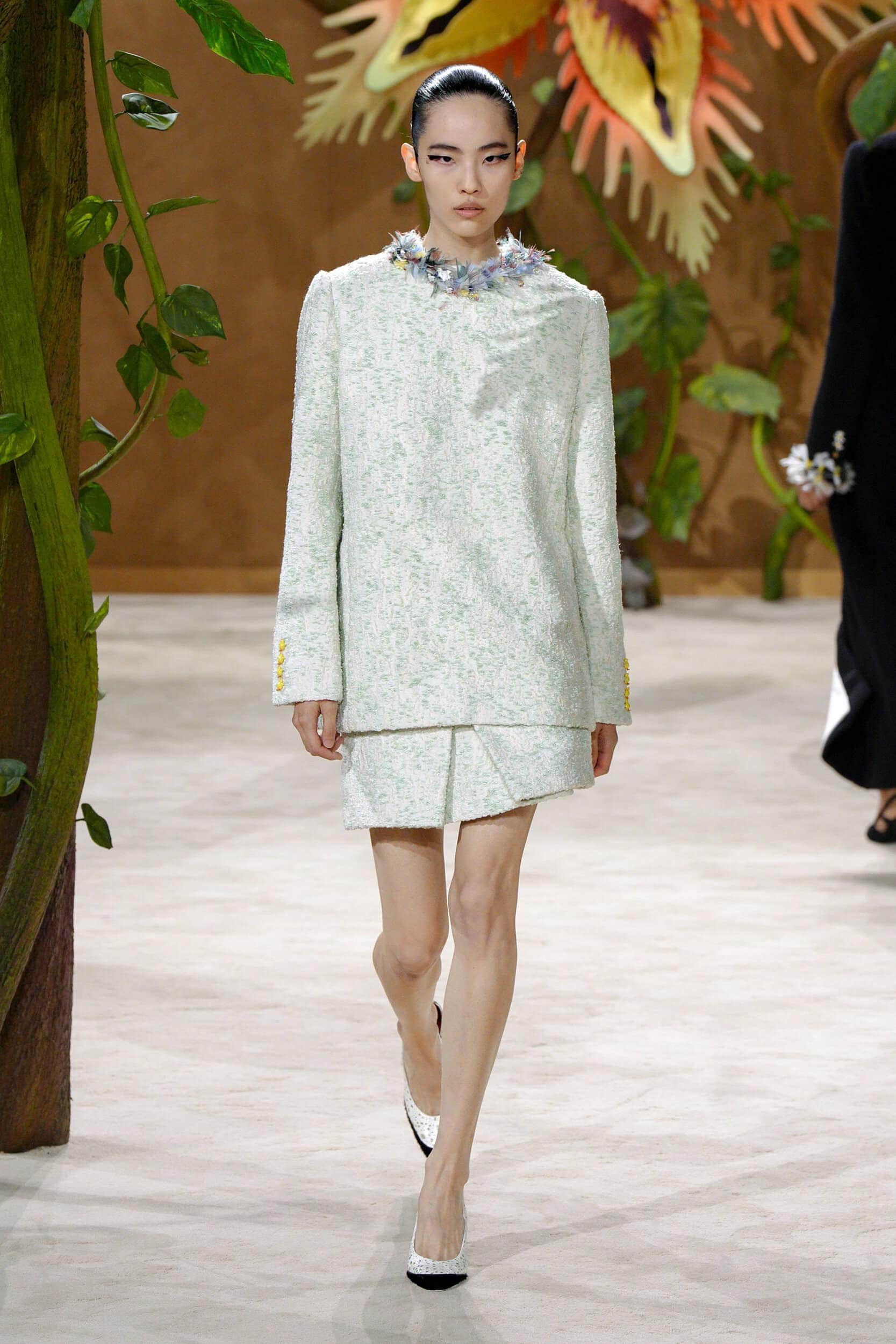
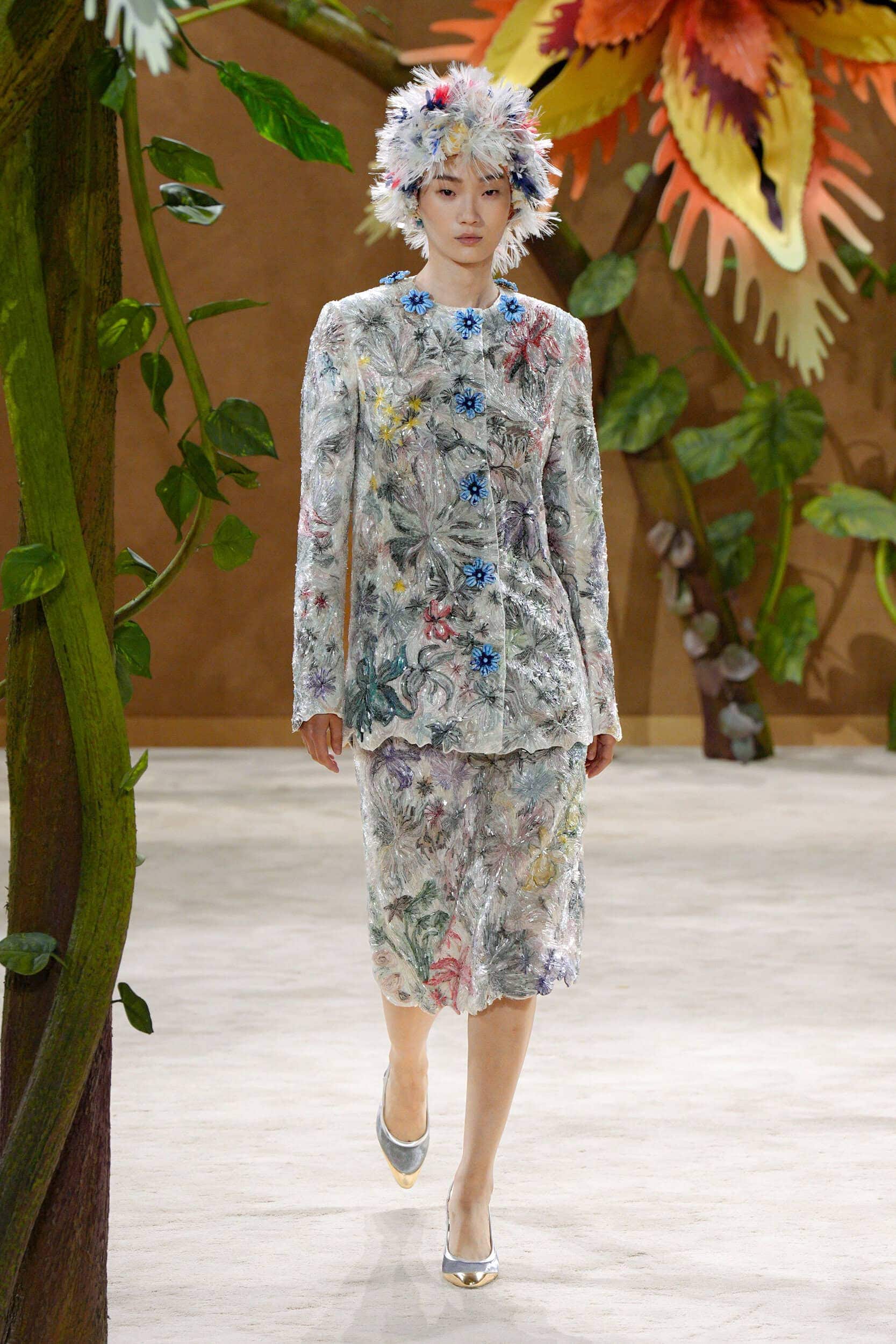
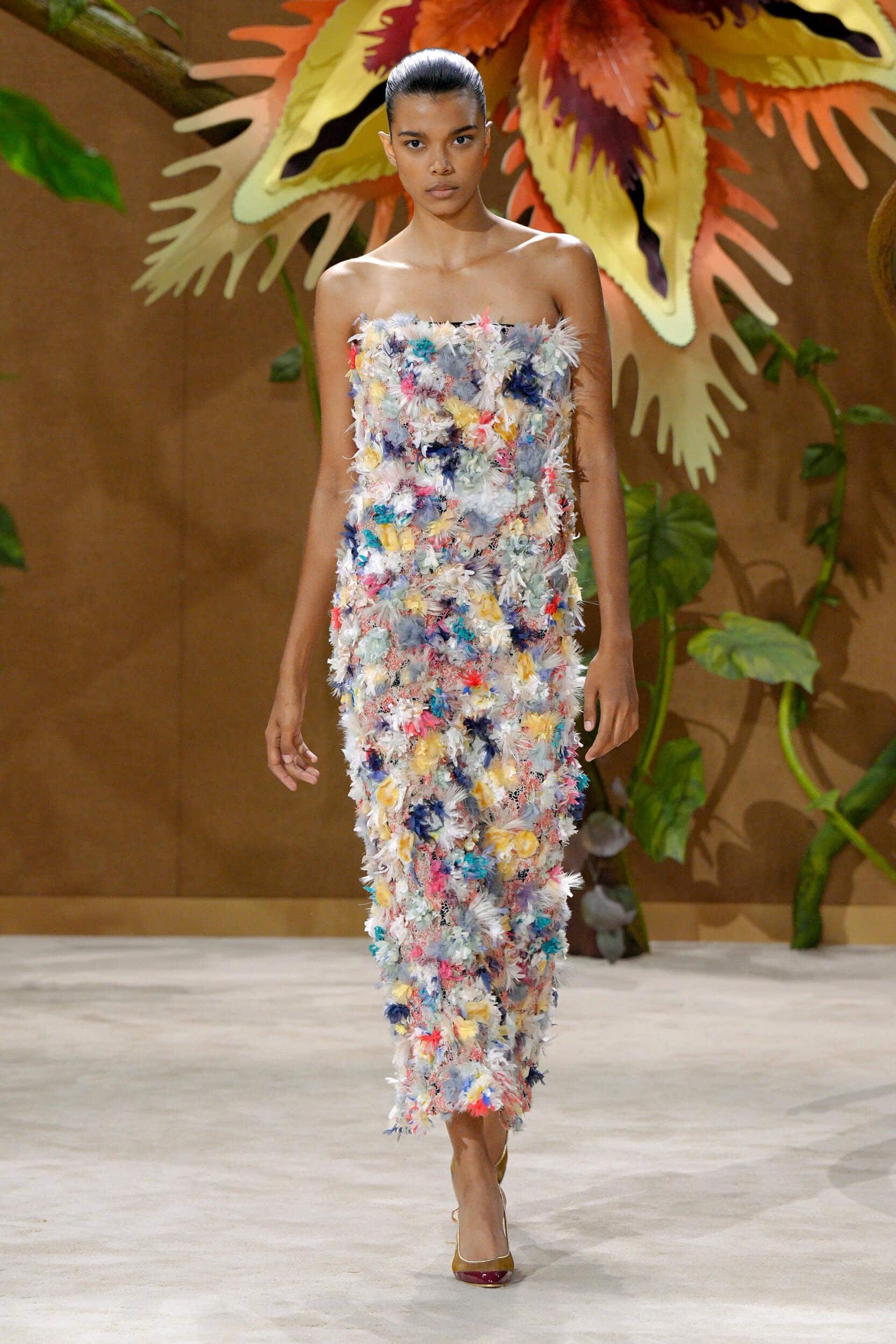
The silhouettes were recognizably Chanel, though handled with a looseness and tactile curiosity that felt very much like Blazy. Suits opened the conversation through cut and construction, with guipure, transparency, and surface work giving familiar forms a lighter, stranger atmosphere. Evening pieces moved between softness and storybook flourish: airy mousseline, embroidered florals, vine-like surfaces, feathered trims, and dresses that seemed to carry the set’s overgrown world back onto the body. The best moments understood that fantasy at Chanel works through precision. A small object can be playful because the cut around it is controlled.
There was also a meaningful tension between the everyday and the extraordinary. Chanel has always been strongest when luxury feels lived in, when the precious is made usable and the practical becomes almost philosophical. Blazy leaned into that inheritance through pockets, chains, notes, charms, make-do-and-mend gestures, and the idea of clothes made for motion. The collection had grandeur, but its emotional intelligence came from the way it valued use, memory, and private pleasure.
At times, the more literal fairy-tale gestures risked becoming charming punctuation, and a few passages leaned heavily into theme. The strongest looks were those where story shaped construction at the level of cut, surface, and object. Still, the collection’s sweetness had purpose. It softened Chanel without making it sentimental, and it gave Blazy a way to speak about belief, value, and inheritance with unusual warmth.
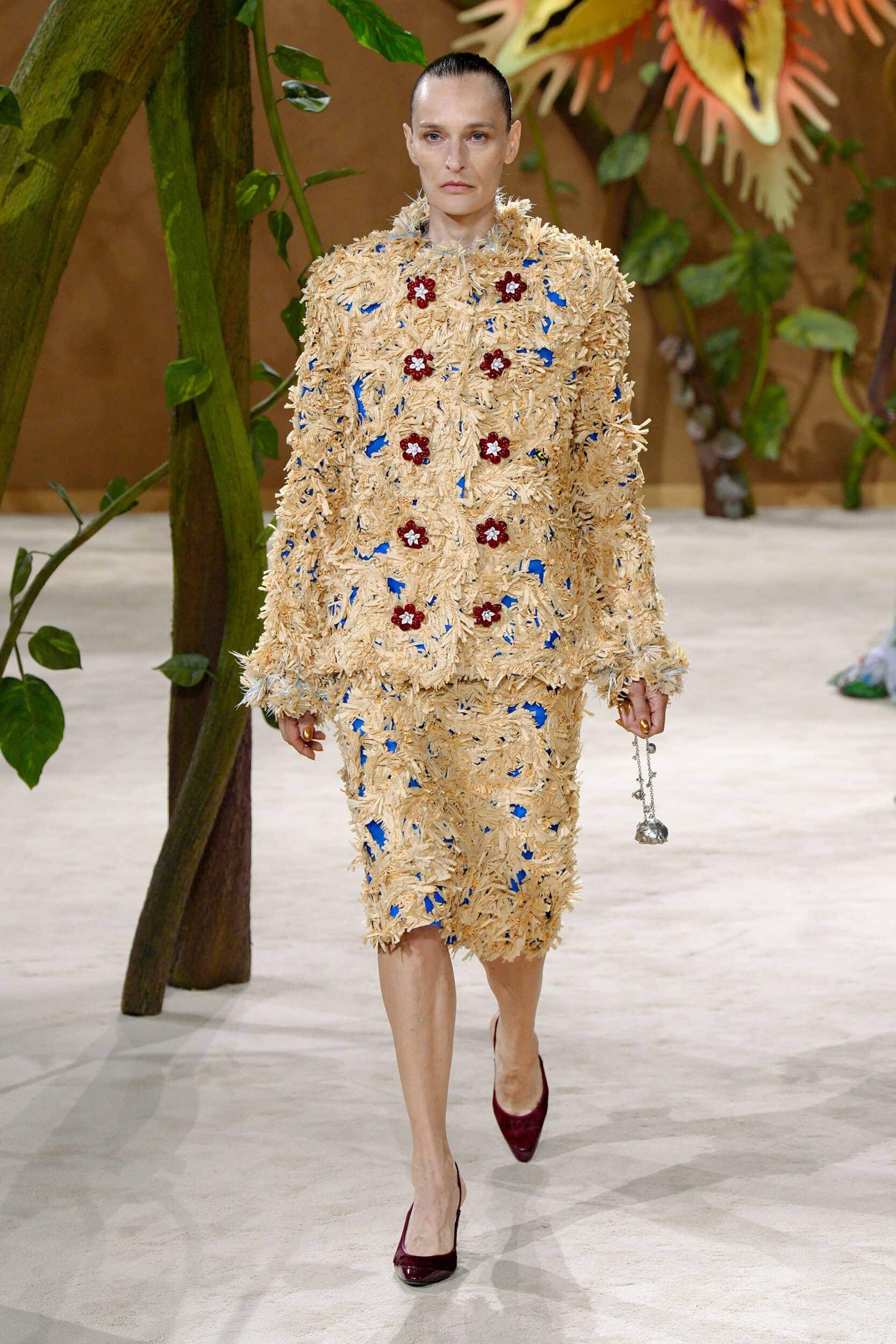
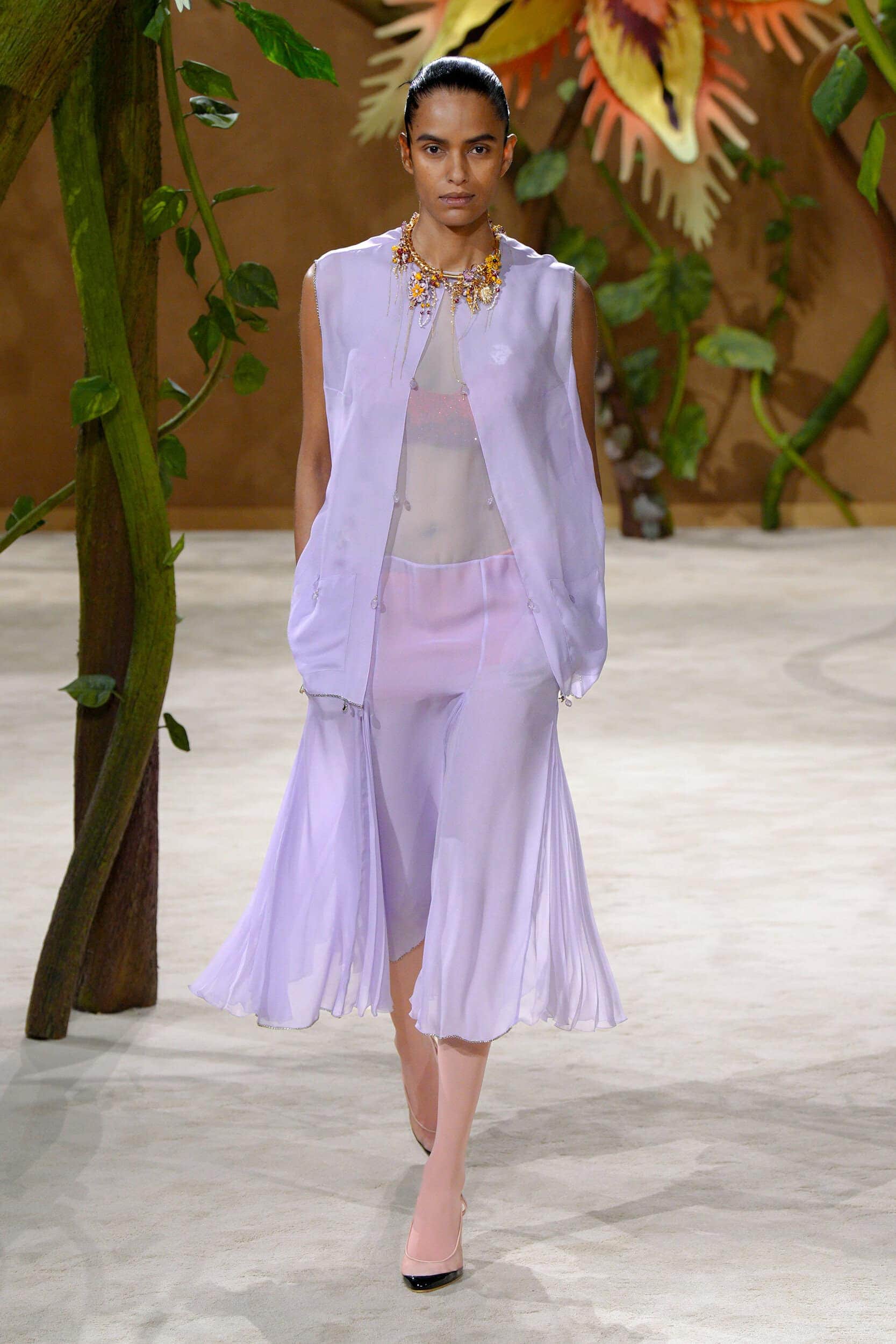
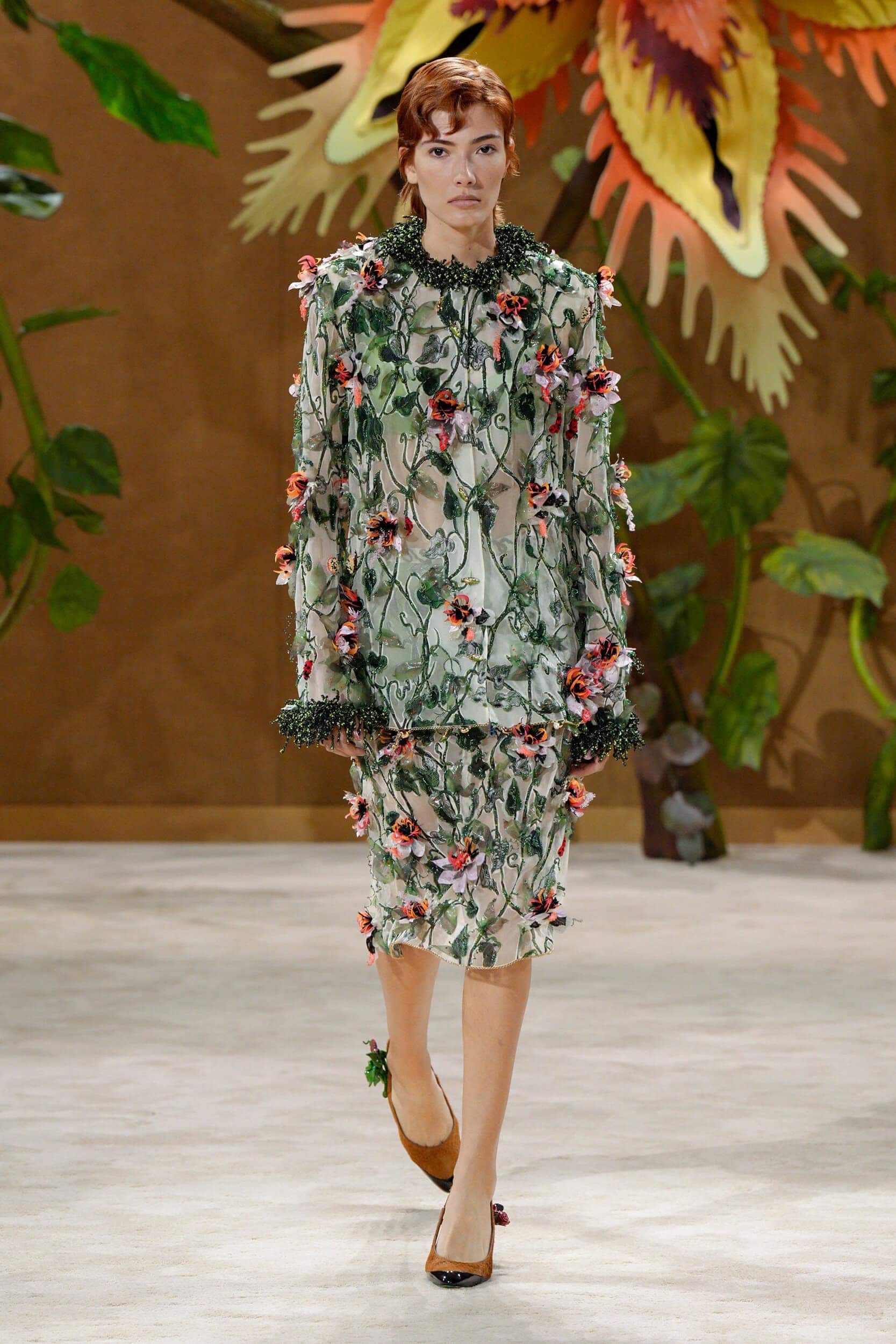
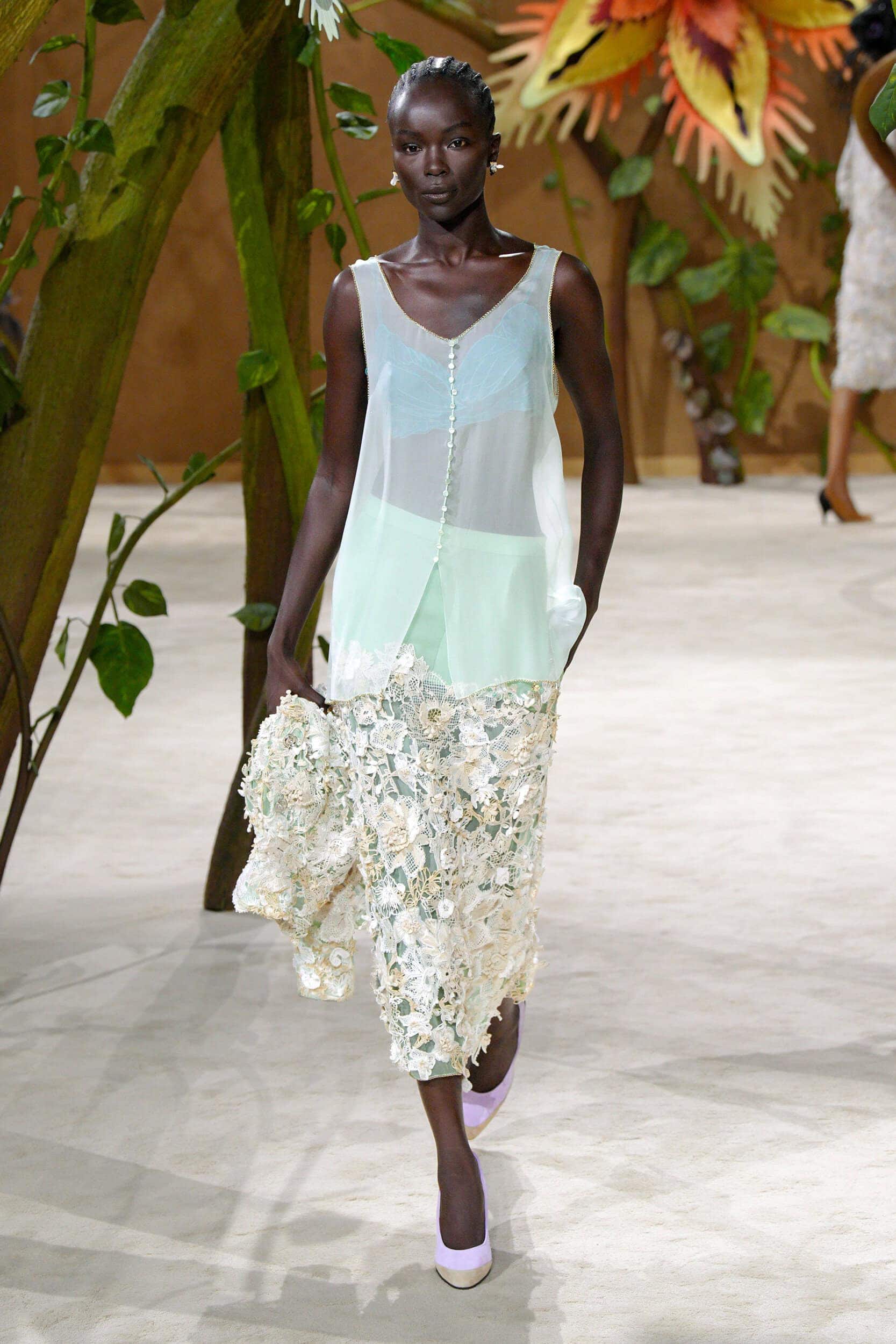
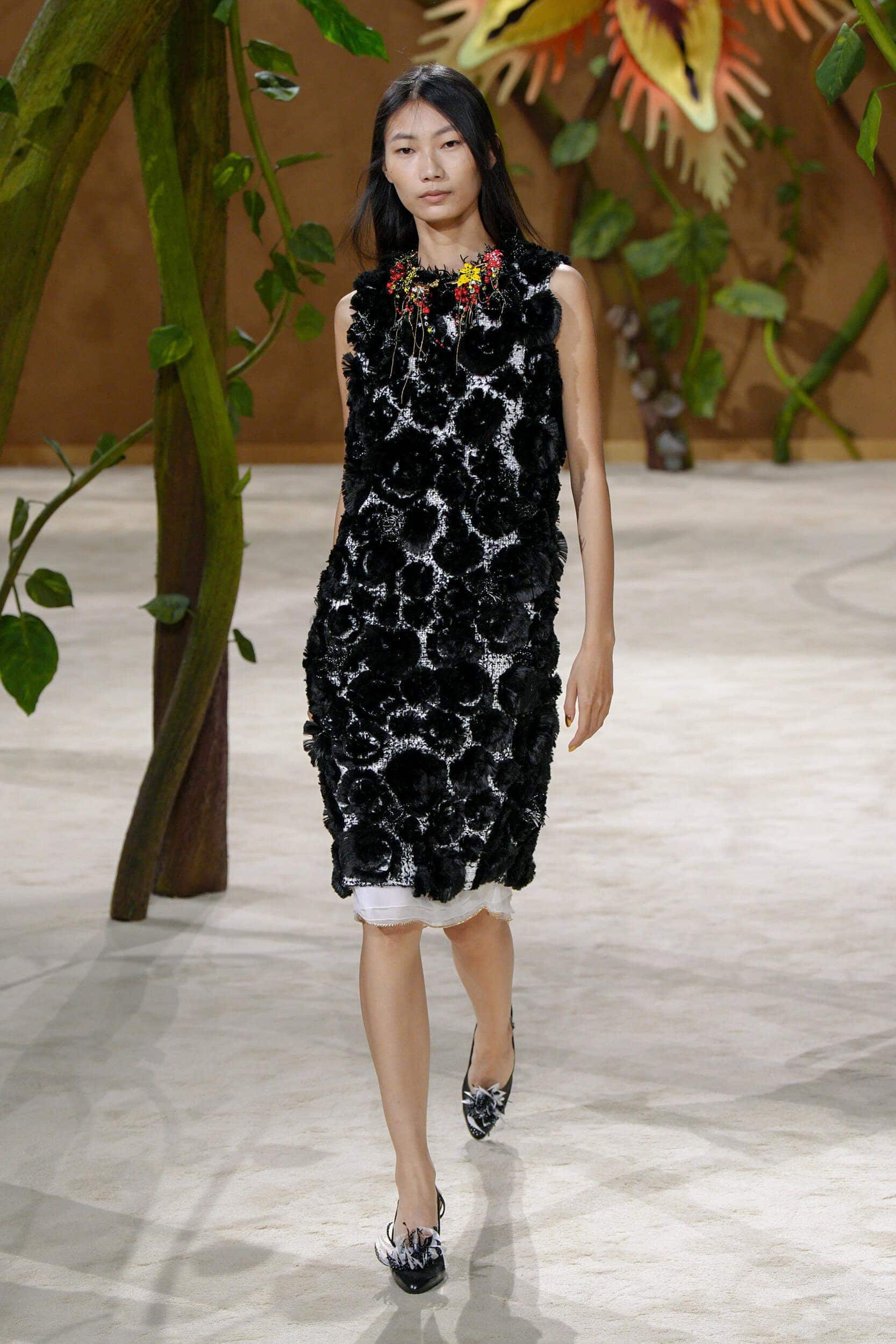
“I started to wonder, was Gabrielle Chanel’s life a fairy tale?” — Matthieu Blazy
That question explains the collection’s emotional register. Blazy was not simply staging a fairy tale around Chanel. He was asking whether Chanel’s own mythology could still be activated through story, craft, and the intimate intelligence of clothes.
THE WRAP UP
Fall-Winter 2026 Haute Couture felt like an important step in Blazy’s Chanel because it clarified how he is working with the house. He is reverential, but the reverence has movement. He understands that Chanel’s power lives in codes repeated across time, yet he is beginning to make those codes feel generative again. The collection did not need to force modernity onto the house. It found modernity by trusting the house’s own logic: construction, ease, wit, craft, interiority, and the strange authority of a perfect detail.
That is what made the fairy-tale premise feel deeper than decoration. Jack and the Beanstalk is a story of belief, scale, access, and transformation. A small thing becomes a path upward. A trade becomes an adventure. A bean becomes a world. For couture, that analogy is almost too good. This is a category built on details so precise and labor so rare that value becomes a kind of enchantment. Chanel understood that this season, and Blazy gave the idea a human scale.
The collection also suggested a larger cultural point. In a luxury landscape often dominated by spectacle, acquisition, and speed, storytelling offers a different kind of connection. These references were accessible before they were explained. Everyone knows something of the rhythm, even if the details shift from memory to memory. Blazy used that common ground to make couture feel less sealed off from life, while still preserving its height.
The result was a collection with charm, intelligence, and a clear sense of direction. It was strongest when the fairy tale became a method of design, and most moving when the smallest details carried the greatest amount of meaning. Blazy’s Chanel is asking us to believe again. This season, the magic began with a button and climbed from there.