The Monumental Constant
Review of Stéphane Rolland Fall 2026 Couture Fashion Show
By Mackenzie Richard Zuckerman
Stéphane Rolland knows his woman. He knows her entrance, her posture, her appetite for scale, and perhaps most importantly, the exact moment a cape should move behind her. For Fall 2026 Couture, that certainty remained the collection’s defining strength and its central question.
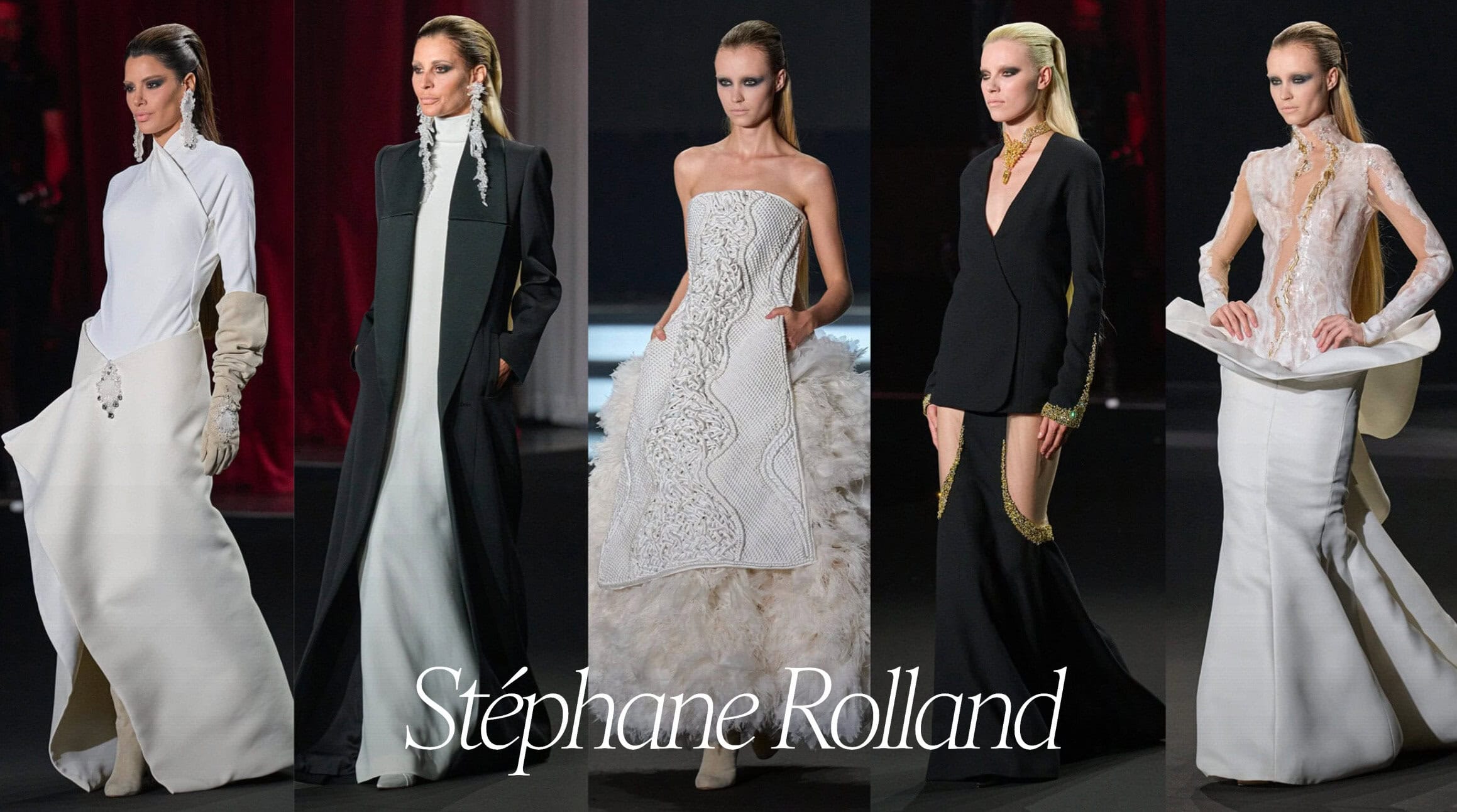
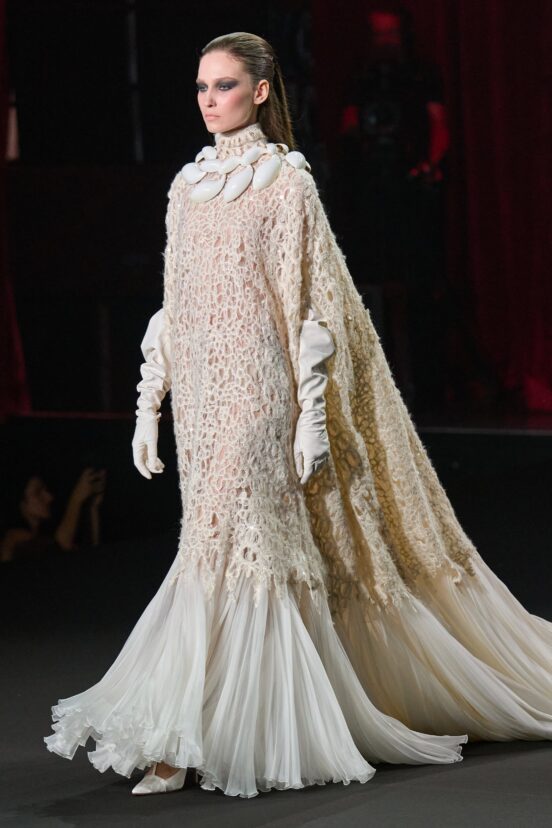
Rolland’s couture language is among the most consistent in Paris: long white columns, sculptural folds, high collars, architectural sleeves, liquid capes, flashes of gold, black as punctuation, and gowns built for women who understand the value of being seen from across a room. This season worked firmly within that vocabulary. The silhouettes were clean, elongated, and ceremonial, often moving between Grecian drape, modernist severity, and red-carpet grandeur.
That consistency gives Rolland’s work its confidence. It also raises the question of evolution. At a moment when couture is being asked to justify fantasy through experimentation, intimacy, and new forms of storytelling, Rolland offered something more familiar: the reassurance of a designer who knows exactly what his world looks like. The collection’s challenge was whether that world could still surprise.
THE COLLECTION
THE VIBE
Monumental Ease, Ceremonial Glamour, & The Familiar Grand Gesture
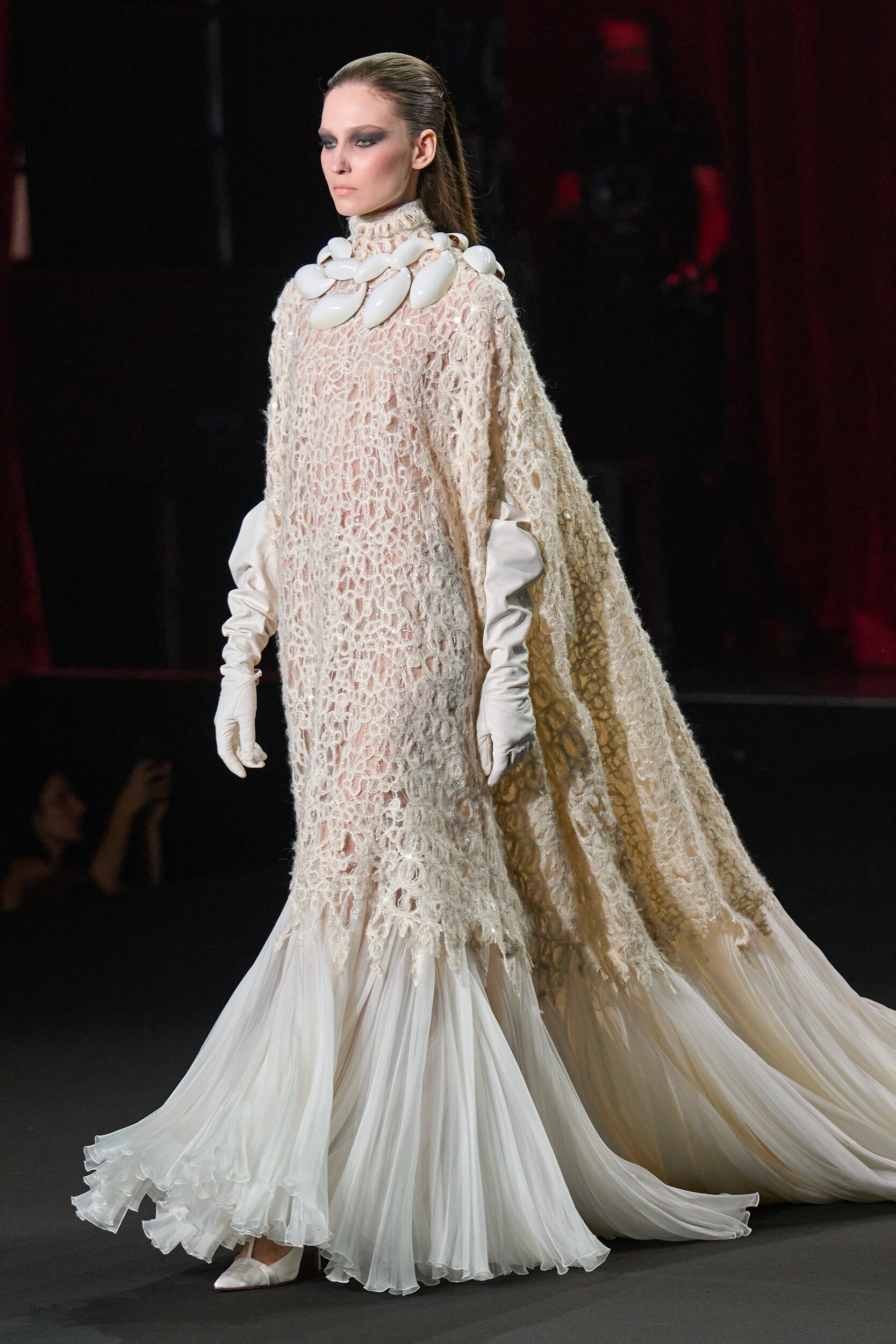
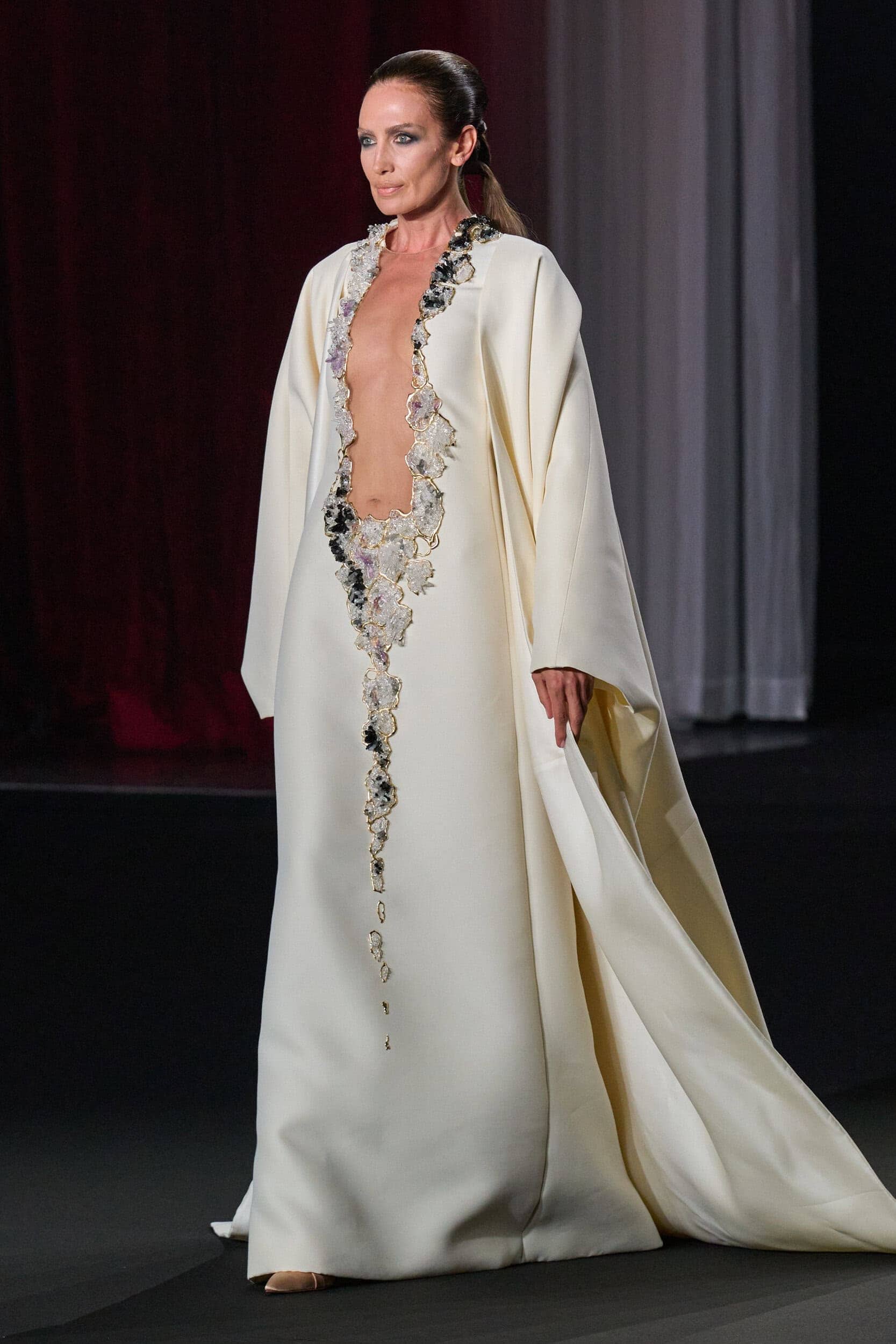
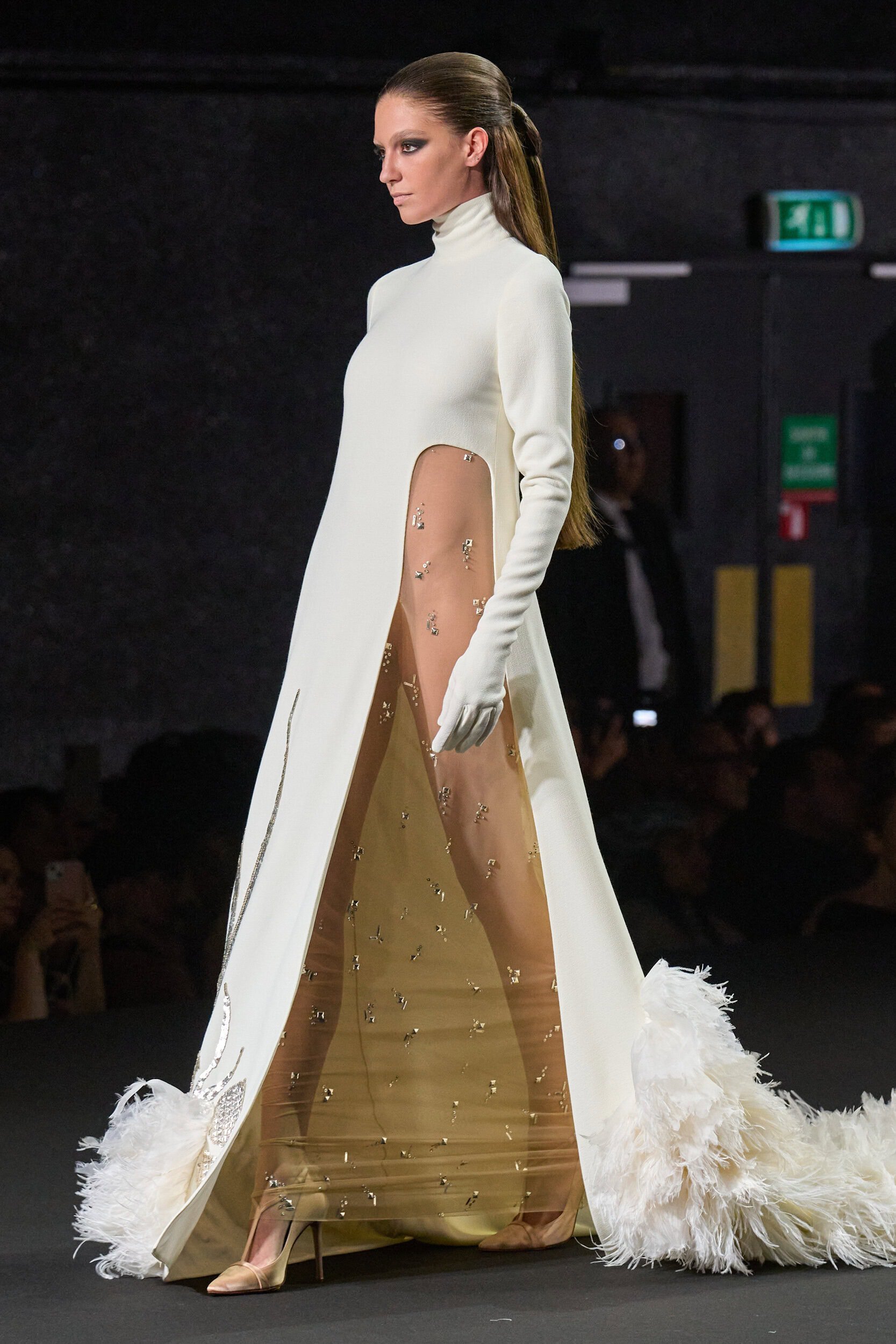
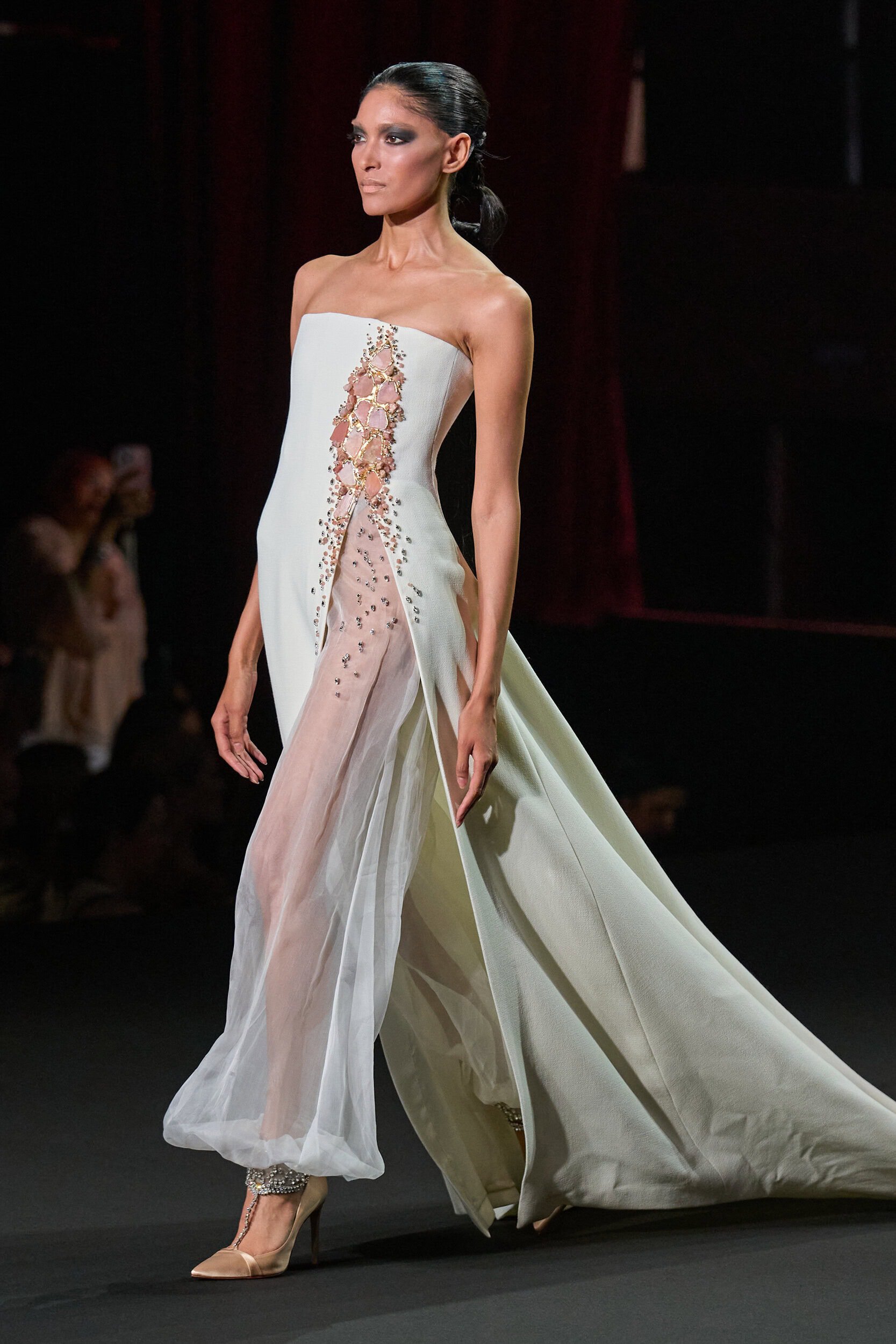
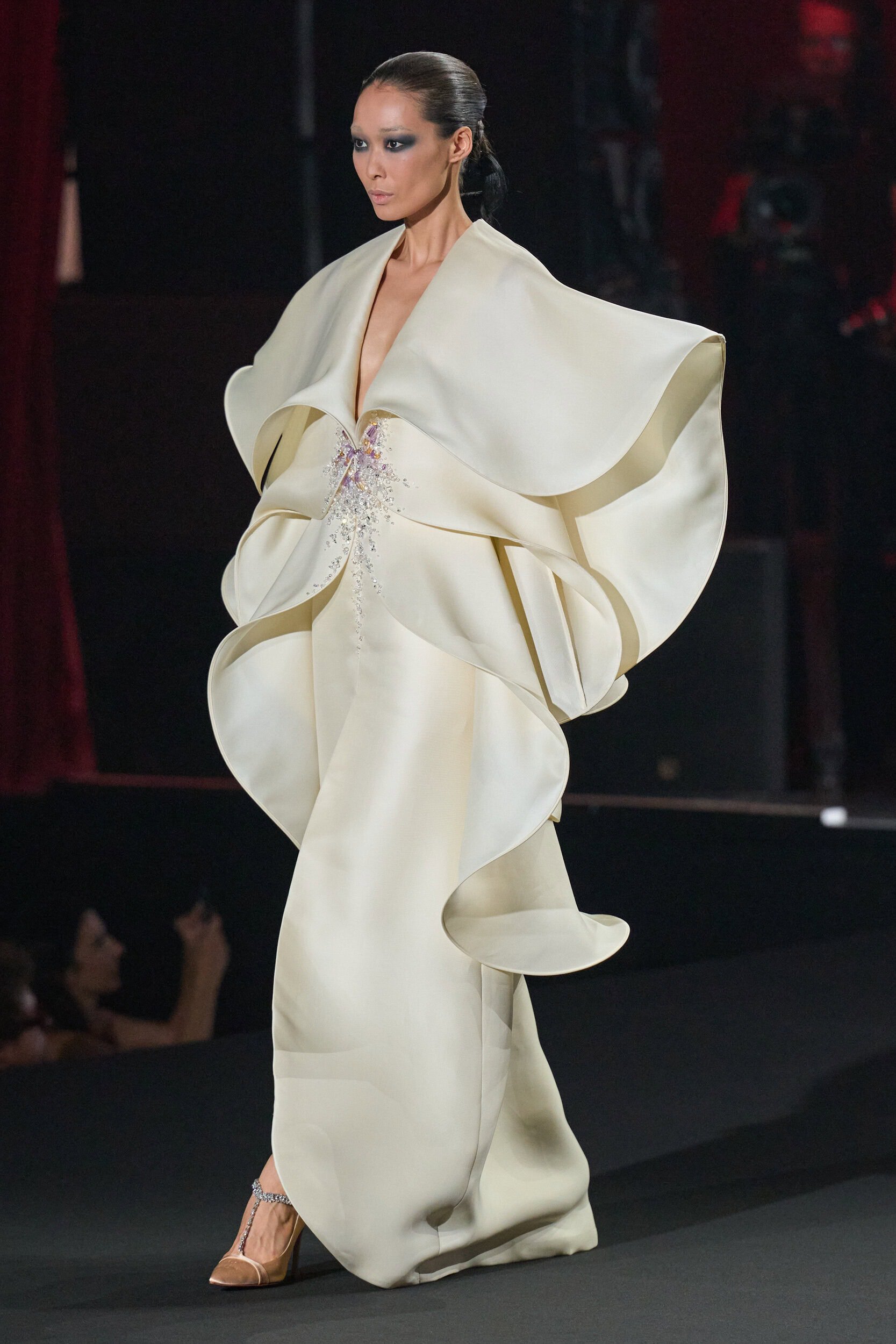
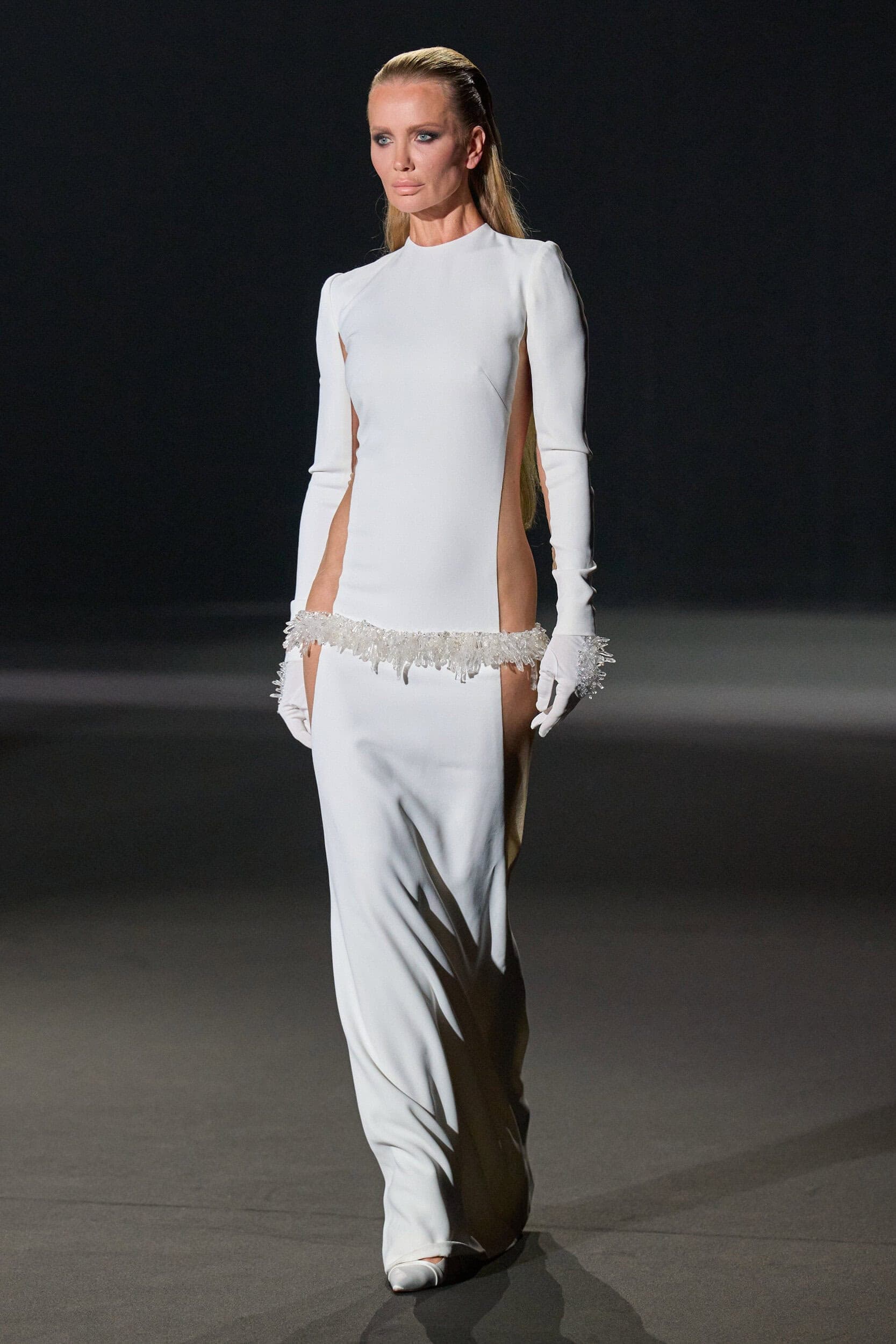
The collection was strongest when Rolland leaned into purity of line. A white gown with a high slit and cape-like back had the controlled drama he does so well. Another long white silhouette, wrapped at the shoulders and cinched with a pale belt, felt almost monastic in its restraint. The best pieces understood that volume becomes more powerful when it is disciplined.
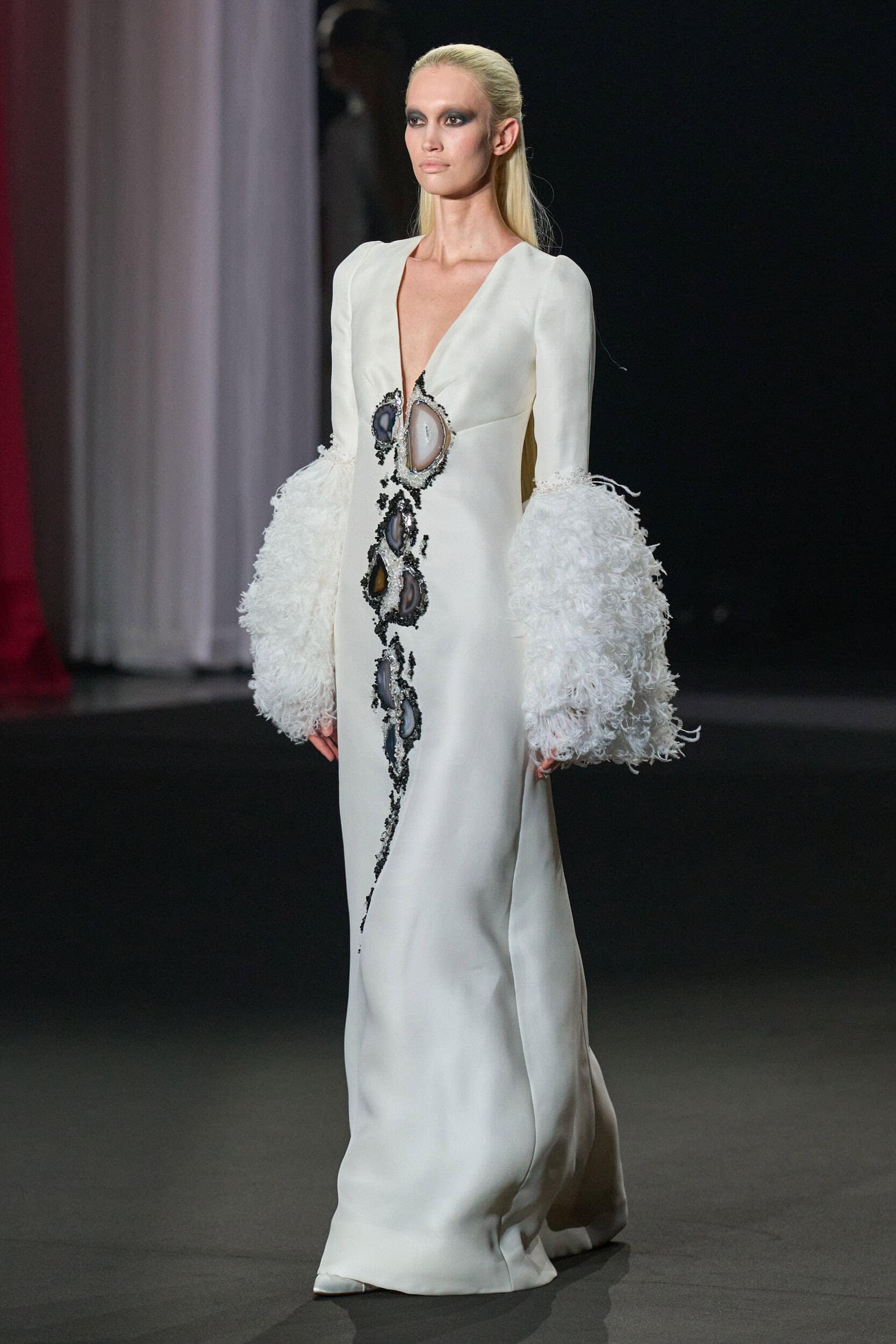
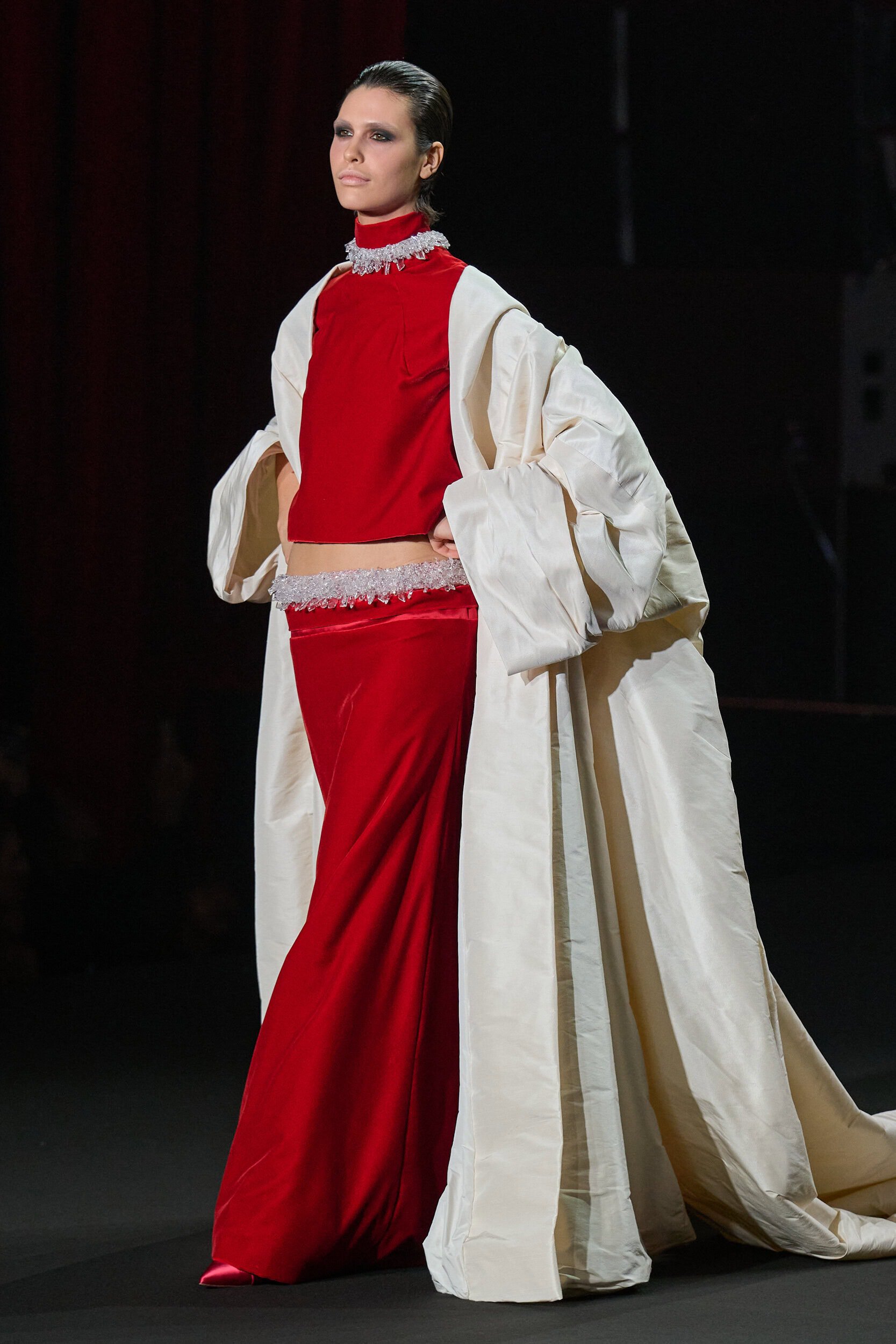
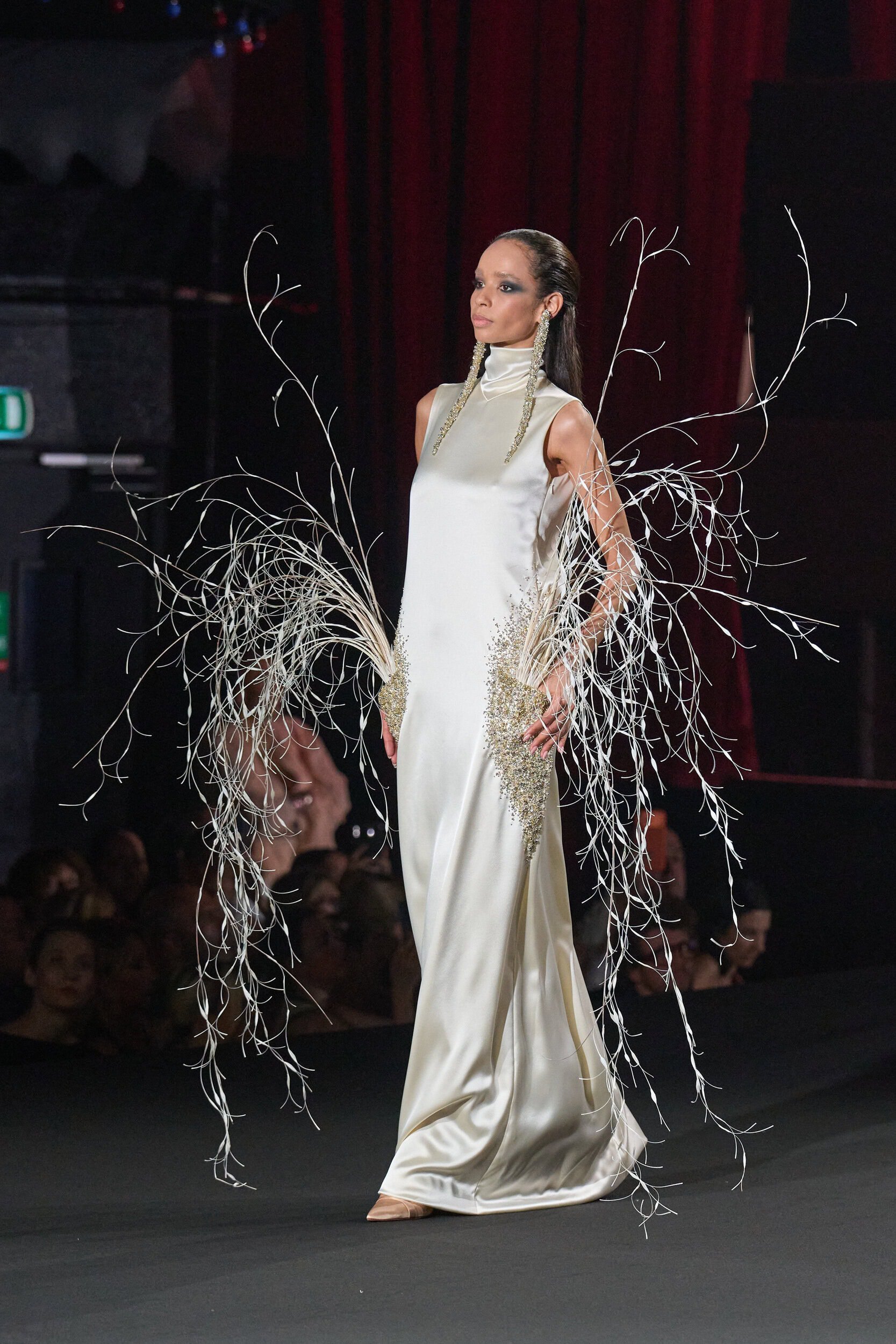
White dominated the show, giving the collection a sense of ritual and continuity. It also allowed surface and proportion to do much of the work. Feathered hems, embroidered panels, metallic appliqué, sculptural peplums, sheer inserts, and gold accents gave the clothes their couture charge. The palette’s occasional shifts into black, deep red, and cream helped break the procession, though the collection remained most persuasive in its ivory and white passages.
Rolland’s woman this season felt poised between priestess, screen icon, and high-society client. The clothes carried a kind of controlled theatricality: high necks, extended sleeves, floor-length capes, and dramatic cutouts framed the body with deliberate precision. There was glamour here, and plenty of it. The gowns understood the needs of the couture client who wants presence, elegance, and a clear visual signature.
The difficulty is that the signature can feel very familiar. Several looks returned to ideas Rolland has explored before: the long white column, the cape, the sculptural shoulder, the plunging line edged in embellishment, the feathered finish, the severe black gown. These are effective tools, and they remain beautiful when handled well. Still, the collection often confirmed the house language more than expanded it.
That predictability is also part of Rolland’s appeal. His clients come to him for a specific kind of drama, and he delivers it with impressive consistency. The question is whether consistency alone can keep the work feeling alive season after season. Fall 2026 suggested a designer in command of his codes, though perhaps less interested in unsettling them.
THE WRAP UP
This was a polished, confident collection from Stéphane Rolland, built on the qualities that have long defined his couture: architecture, restraint, elongation, and grand gesture. It gave clients a clear proposition and offered several strong red-carpet possibilities, especially in the white gowns where movement, cut, and volume found the right balance.
The collection’s limitation was also its identity. Rolland’s world is so established that even beautifully executed looks can feel anticipated. The drama lands, the silhouette is recognizable, the craft is evident, and the woman is fully imagined. What remains to be tested is how far that woman can move without losing the authority that makes her compelling.
For a house built on consistency, Fall 2026 did its job. It reaffirmed Rolland’s command of monumental couture. The next question is whether that monument can begin to shift.