Access, Creativity, Growth Framework Shifts Focus From Promotion To Sustained Support And Long-Term Business Development

The British Fashion Council has introduced a sweeping new strategy, BFC 2030: Access, Creativity, Growth, marking a structural shift in how the organization supports the UK fashion industry. Under the leadership of Chief Executive Laura Weir, the plan repositions the BFC from a promotional body into what it describes as an incubator for designers, businesses, and the broader creative ecosystem.
The strategy reflects a response to mounting pressure on the industry’s creative and economic foundations. While British fashion remains a global cultural force — contributing £67.5 billion annually to the UK economy — the BFC argues that talent alone is no longer sufficient without stronger systems of support, funding, and infrastructure.
“Fashion is not ornamental. It is strategic. What we wear speaks before we do. It shapes identity, expresses culture and signals what we stand for,” said Weir. “Yet the creative engine that drives this impact is under critical strain and if left unchecked, we risk weakening both the nation’s cultural influence and economic resilience.”
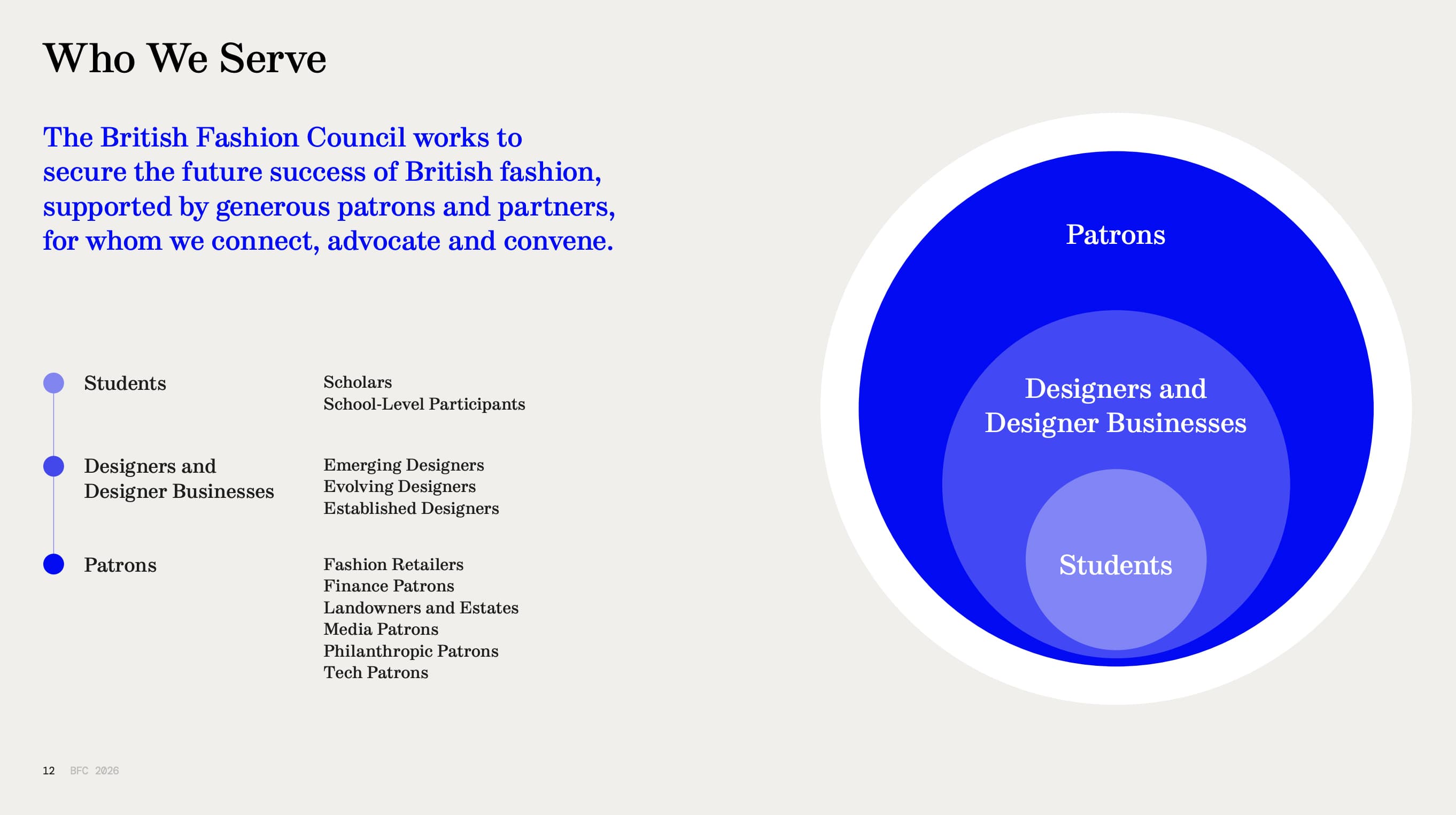
At the core of the strategy is a transition from fragmented, London-centric support toward a more connected, nationwide model. The BFC aims to integrate funding, education, skills training, physical space, partnerships, and global market access into a cohesive system designed to nurture creative excellence while strengthening commercial resilience.
This transformation is defined by a series of structural shifts: from an IP-led organization to an incubator-led model; from isolated initiatives to connected pathways; from events as singular moments to platforms that drive sustained growth; and from revenue tied to intellectual property toward a model focused on long-term value creation across the industry.
Central to this repositioning is the evolution of the BFC’s flagship platforms. London Fashion Week is set to become what the organization describes as a “laboratory for innovation and creative exchange,” while The Fashion Awards will be reimagined as a global fundraising platform aimed at amplifying British fashion’s international influence and authority.
Alongside these changes, the BFC will overhaul its internal structures, including modernizing membership and redesigning its Prizes and Programmes — formerly known as Designer Initiatives — with an emphasis on clearer pathways from education into industry. Scholarships aligned with British craft, innovation, and manufacturing will be accelerated as part of this effort.
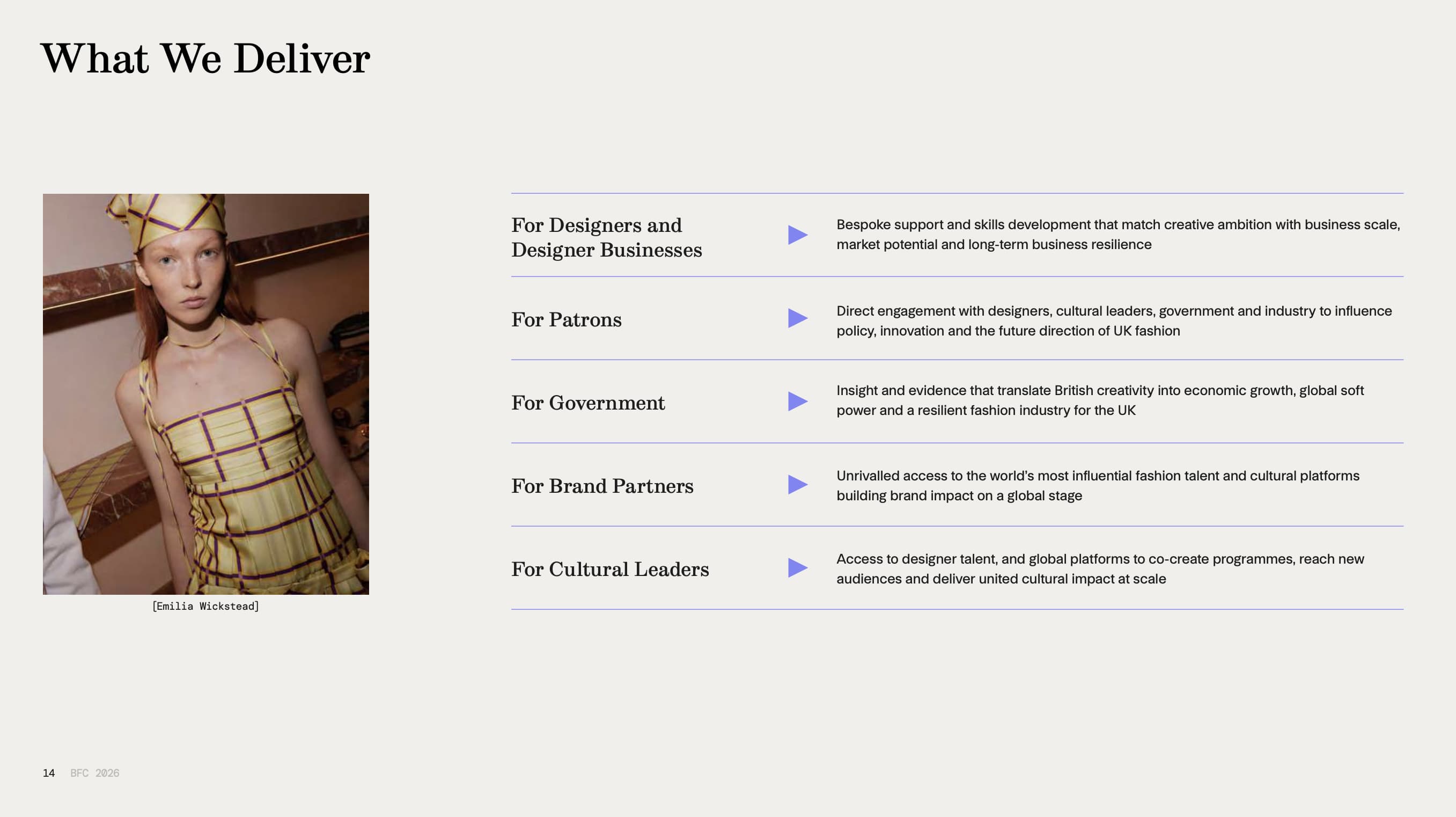
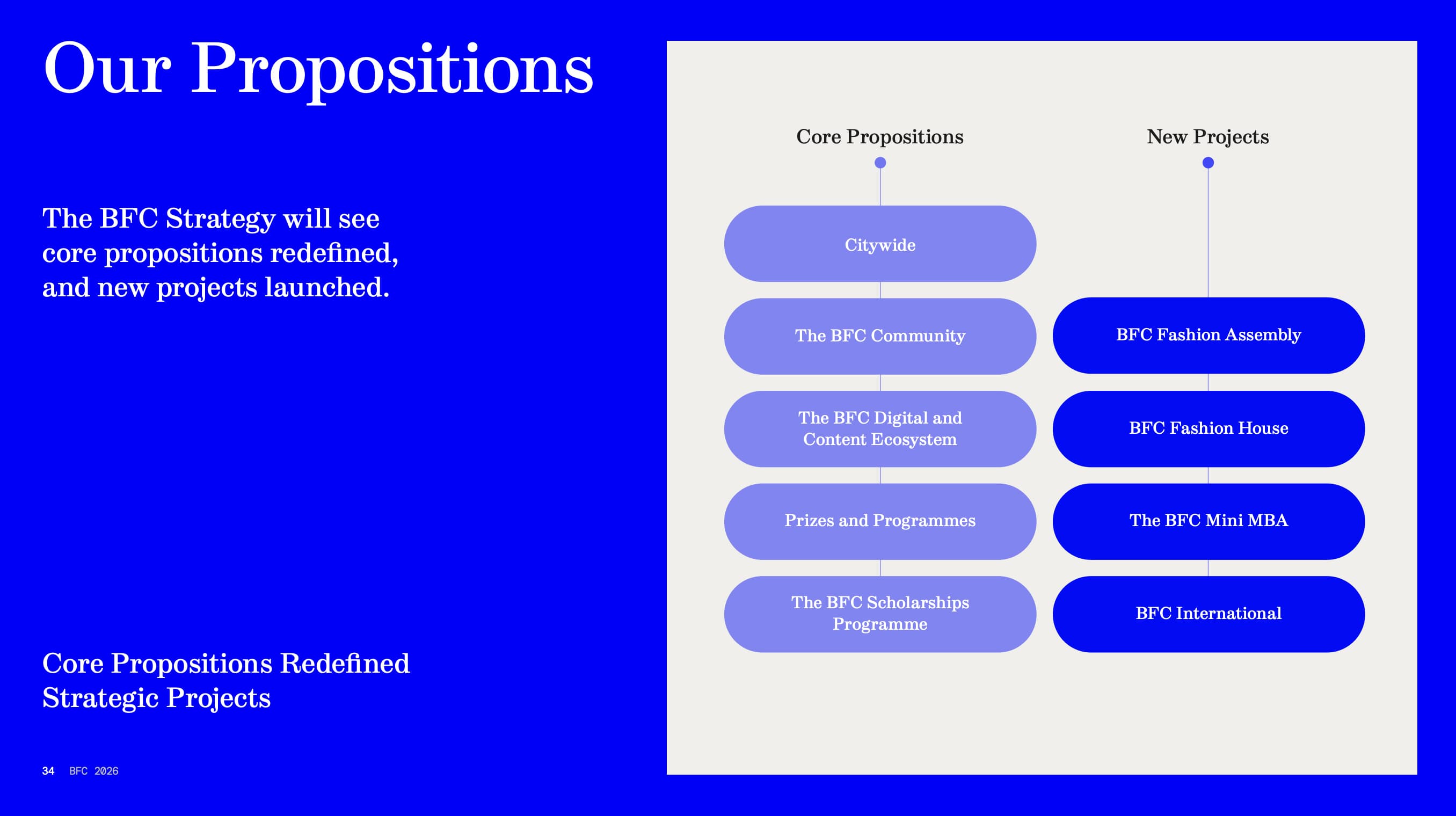
Four strategic growth initiatives will anchor the plan’s long-term ambitions. BFC Fashion Assembly will reconnect established designers with schools and communities, promoting arts education and widening access to fashion careers. BFC Fashion House will provide studio space, shared infrastructure, and cultural resources across the UK, addressing long-standing gaps in physical support. The BFC Mini MBA will focus on building business, technology, and sustainability expertise among emerging leaders, while BFC International will seek to unlock global fundraising, trade partnerships, and export growth for British designers.
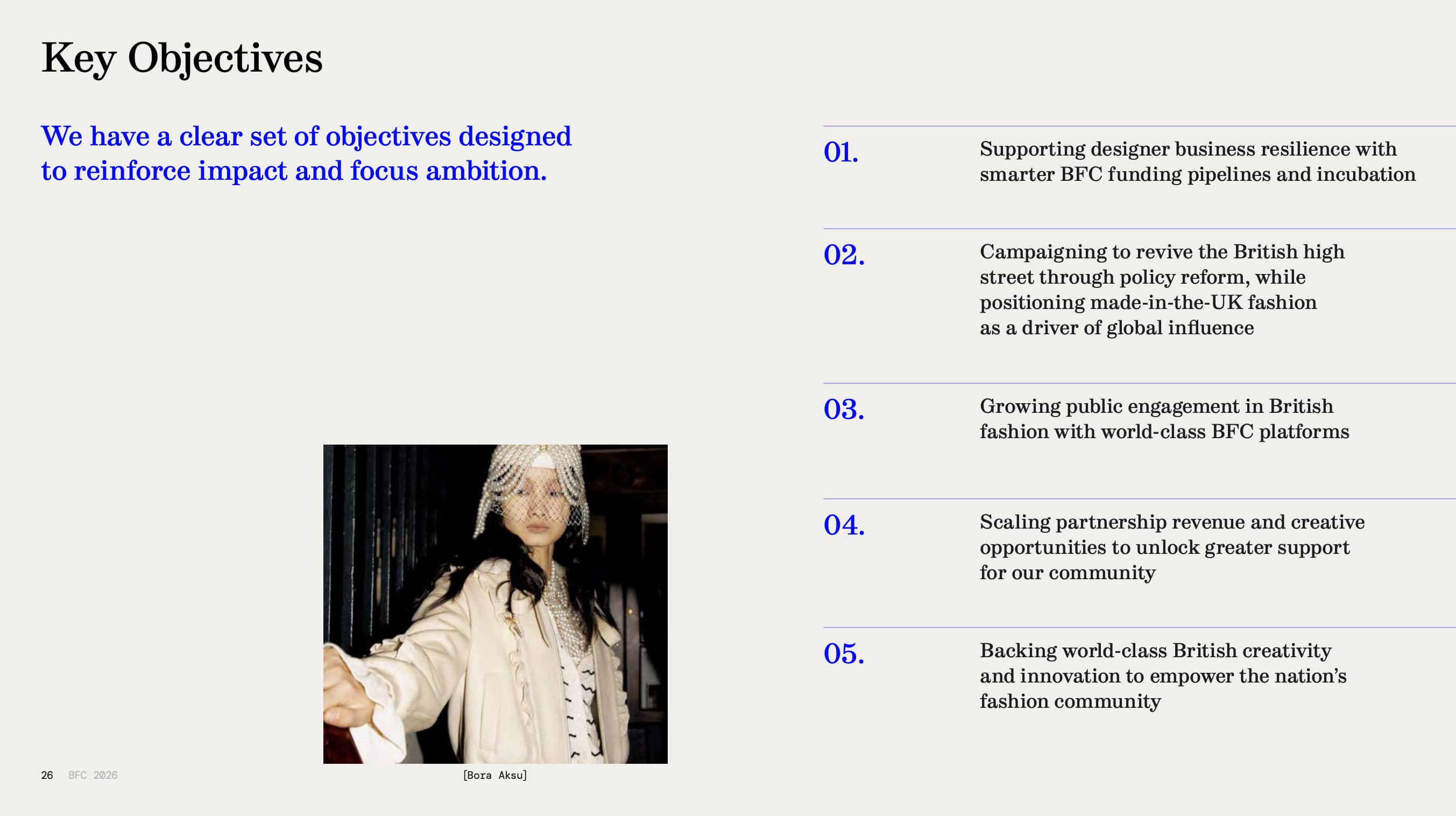
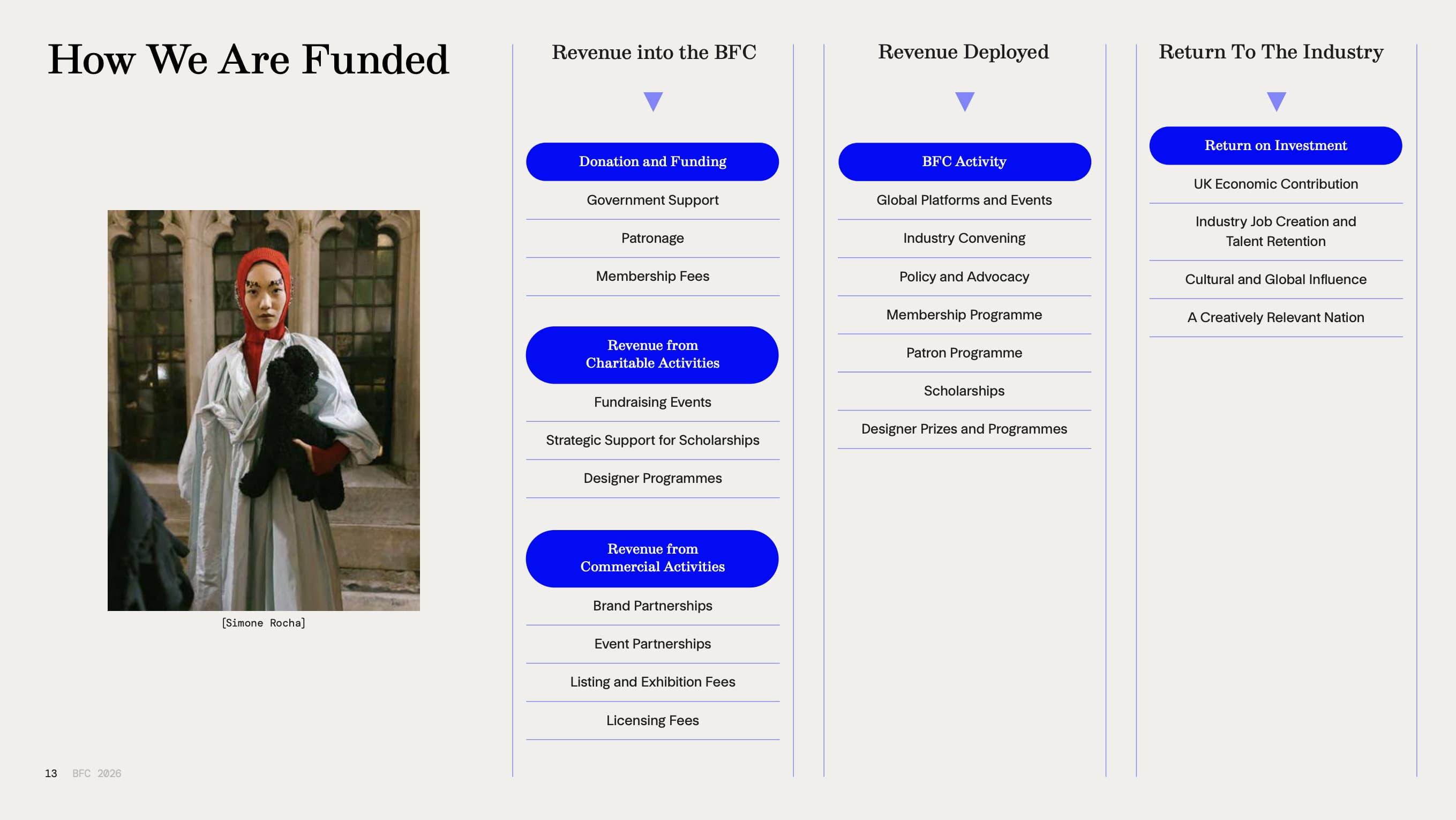
The strategy will be delivered through a three-year growth plan, followed by a fourth year dedicated to measurement and scaling impact. Financially, the BFC is targeting revenue growth to £18 million by 2030, signaling a shift toward a more commercially integrated model that invests in the success of designers and the broader industry.
Weir emphasized that the initiative is intended as a collective effort rather than a centralized solution. “This strategy sets out how we will act, unlocking smarter funding pathways, building stronger partnerships and supporting designers to create resilient, future-facing businesses. The British Fashion Council cannot deliver this alone. But we can convene, catalyse and lead.”
In reframing its role, the BFC positions itself not simply as a promoter of British fashion, but as a steward of a national creative asset — one tasked with enabling long-term growth, strengthening global competitiveness, and ensuring that the next generation of designers can build sustainable, scalable businesses within an evolving industry landscape.