Tailoring For The Times
Review of Soshiotsuki Spring 2027 Men’s Fashion Show
By Angela Baidoo
Winning the LVMH prize in 2025 has led to a measured, slow burn of recognition, and interest, from the wider world that exists outside of the fashion industry. And for the Japanese designer, Soshi Otsuki, spring 2027 was finally the moment to take to the stage and set out where he sees himself in the menswear fashion matrix – in fashion week terms.
But, this designer is no novice as he has been a founder for over a decade, creating his namesake brand in 2015. On a hero’s journey to evolve what the world thinks of when referring to Japanese clothing design, Otsuki wants to move traditional ideas around clothing from the his home country beyond the Kimono. A gargantuan task to be undertaken by one designer alone, but when your personal heroes are Giorgio Armani, you have no choice but to dream big when it comes to changing perceptions around the male dresses.
THE COLLECTION
THE VIBE
S-Curve, Soft Suiting, Category Disruption
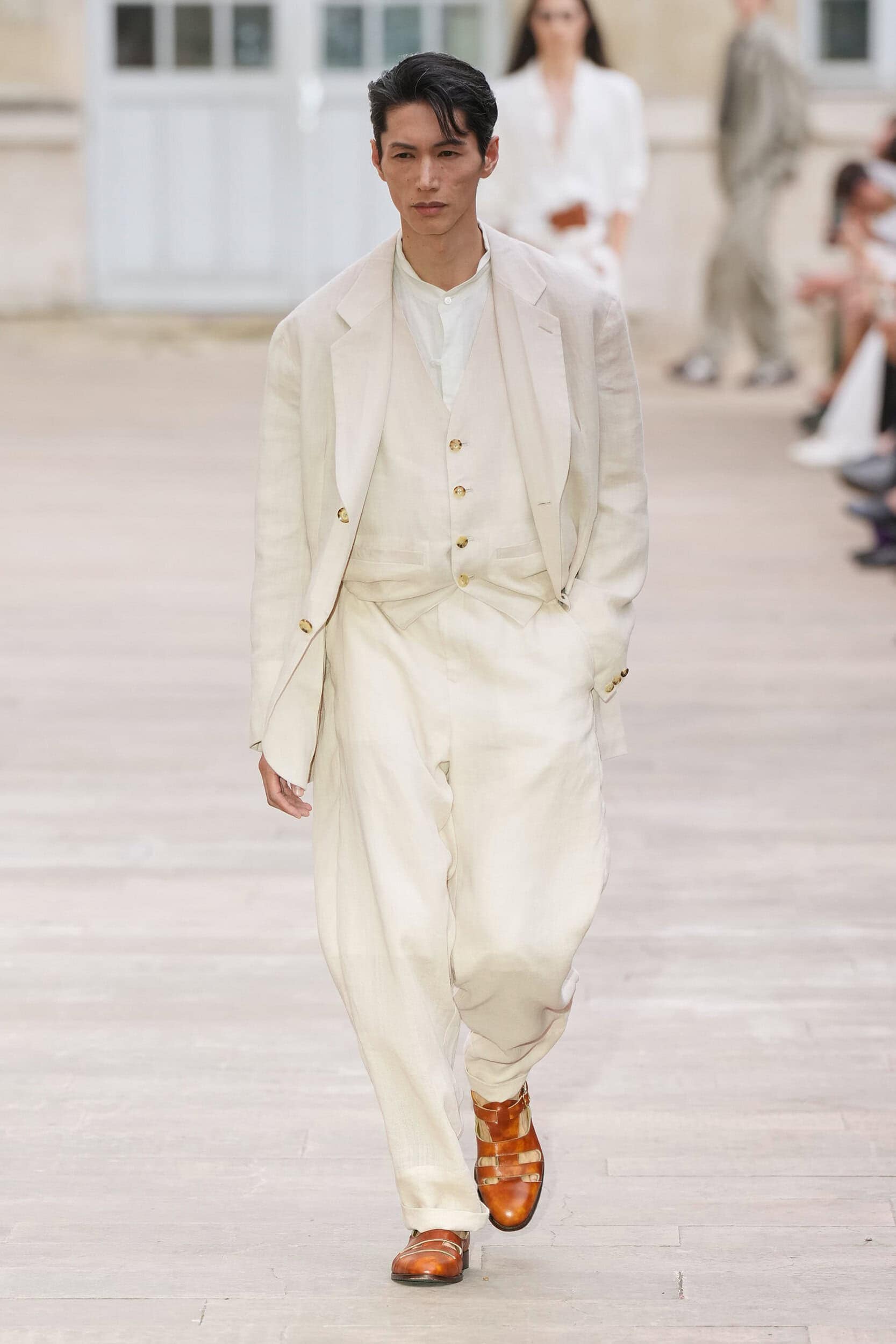
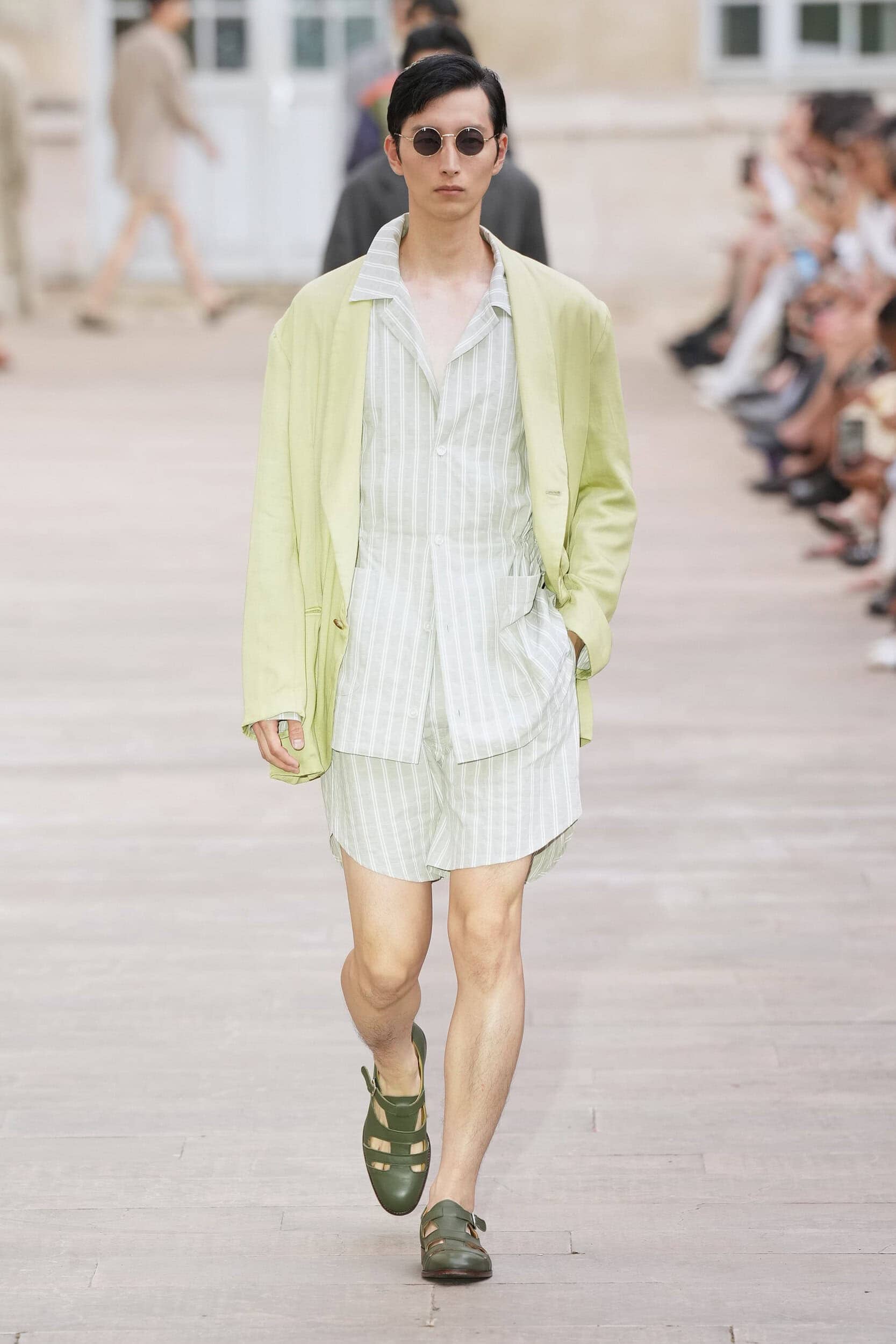
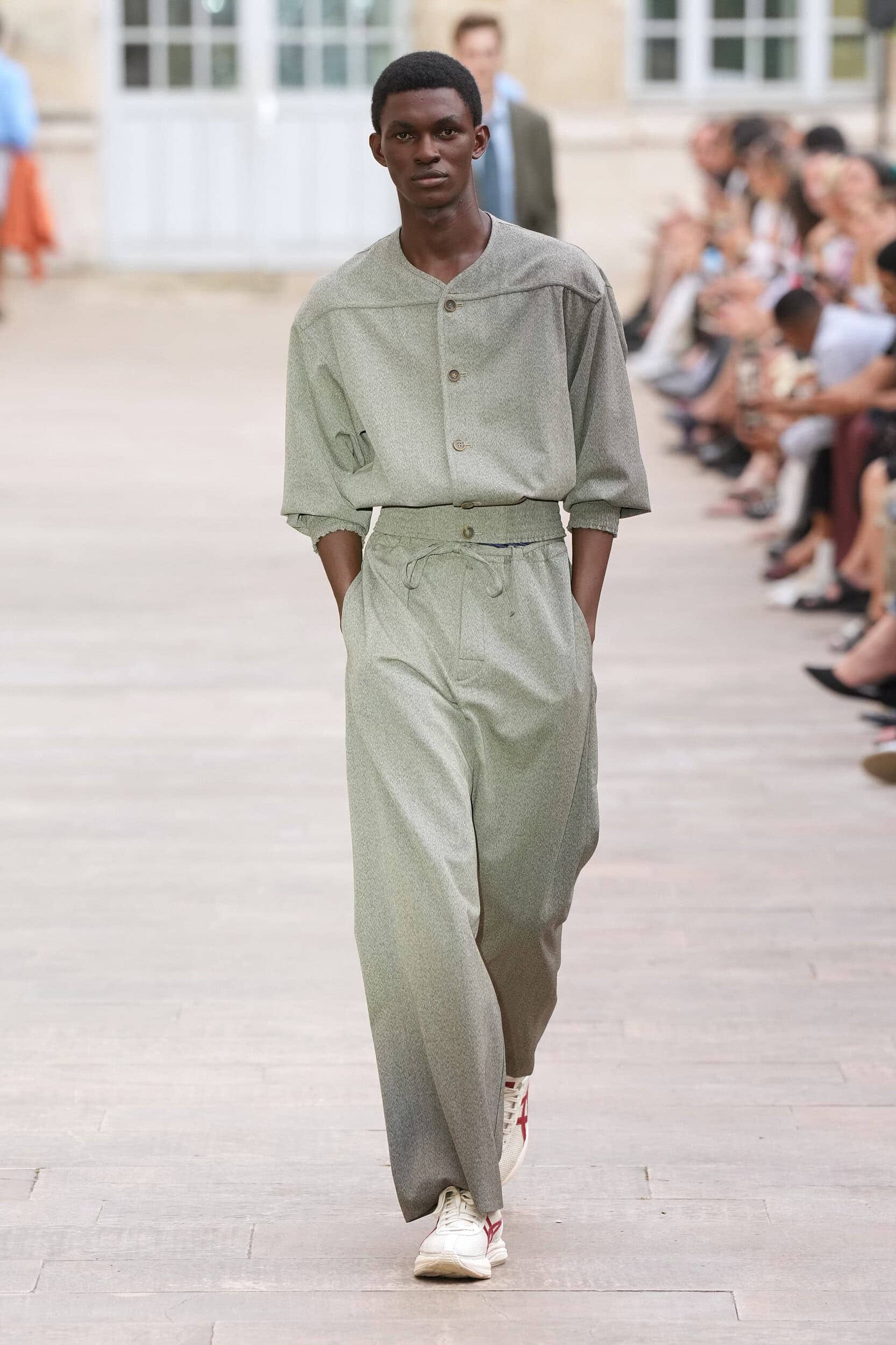
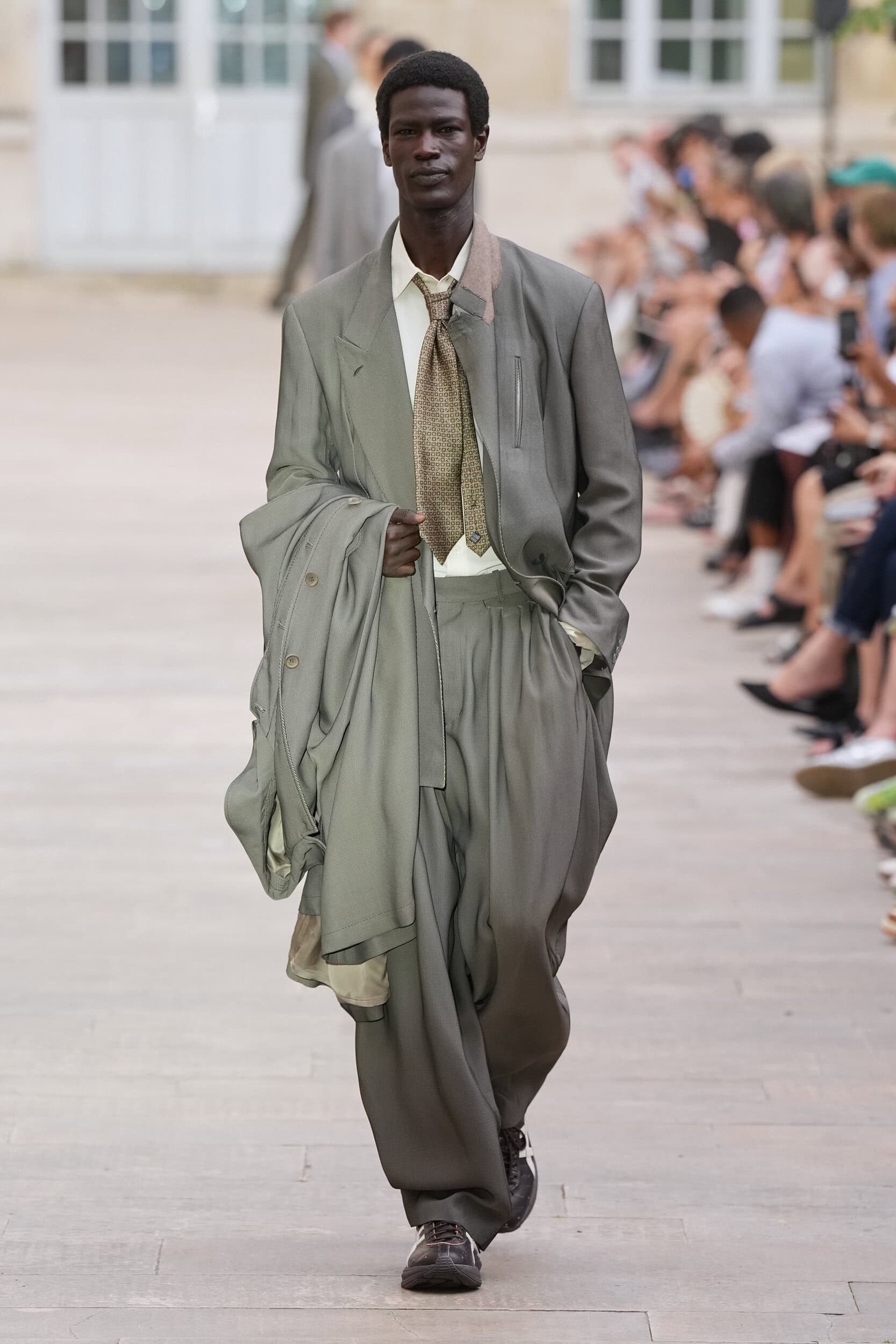
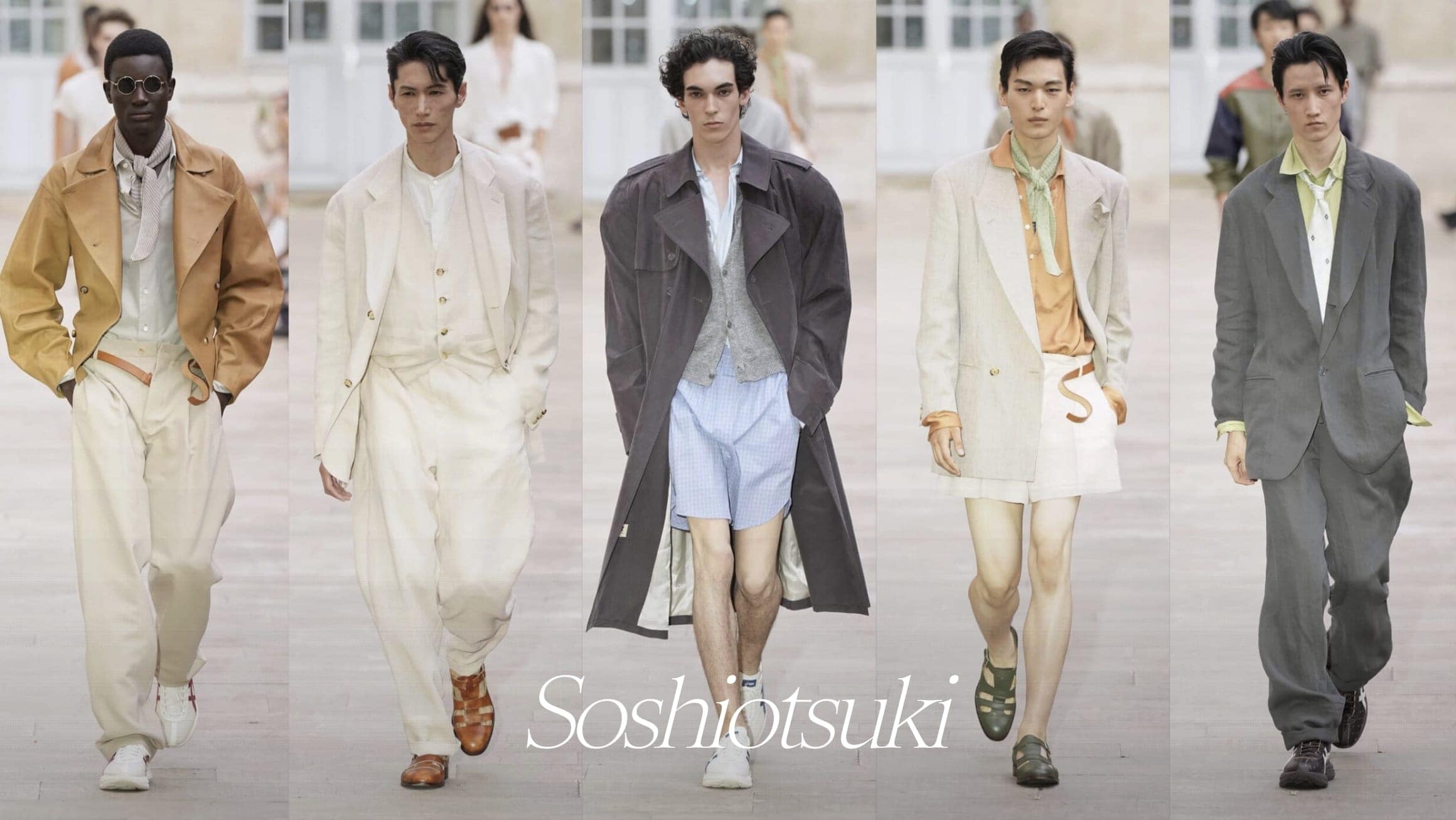
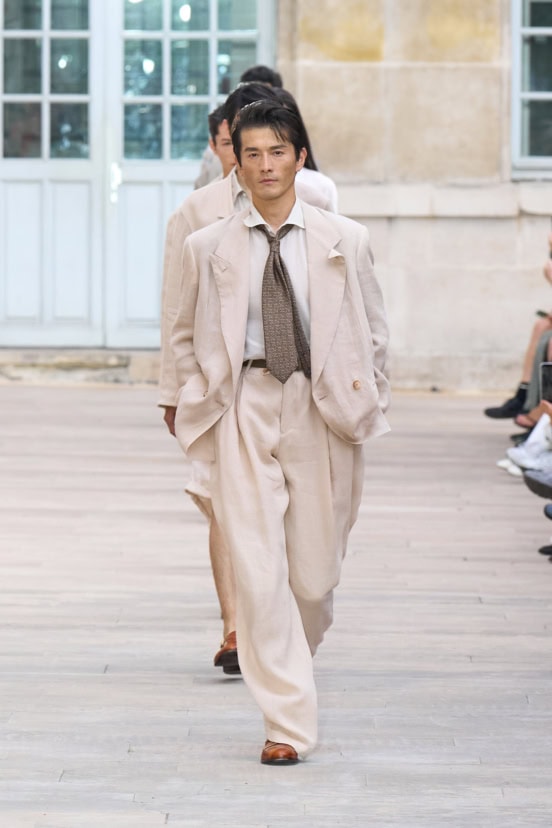
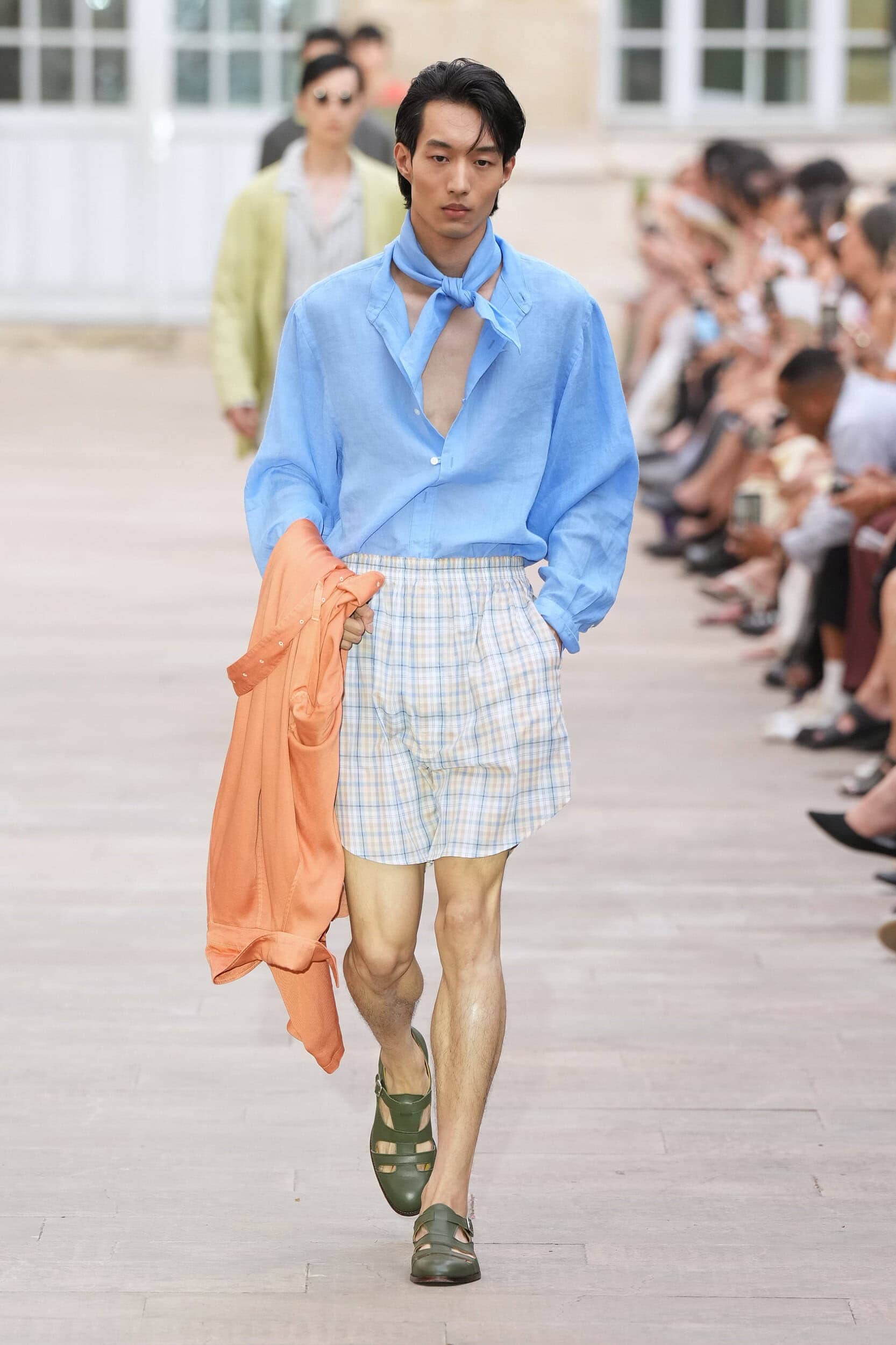
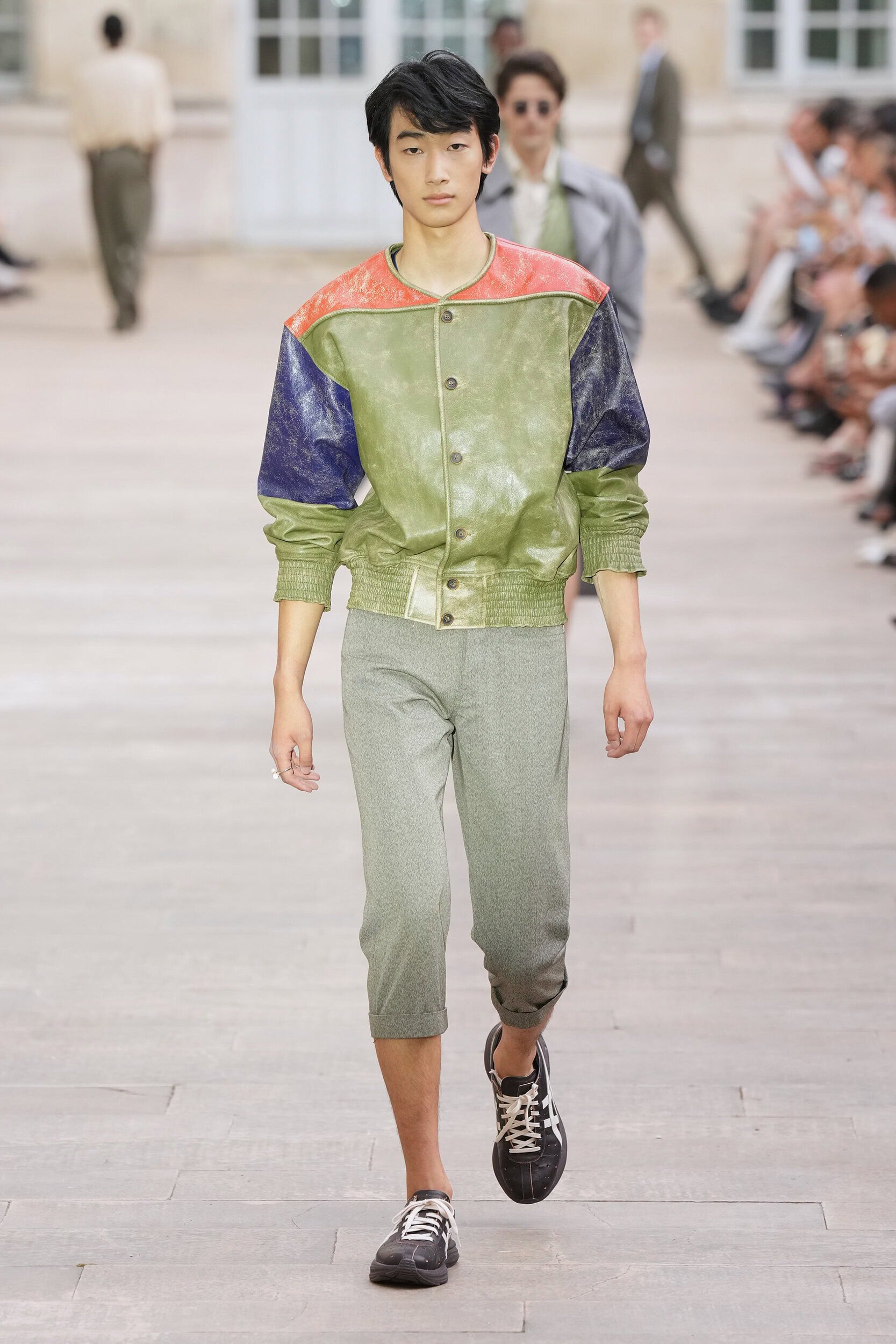
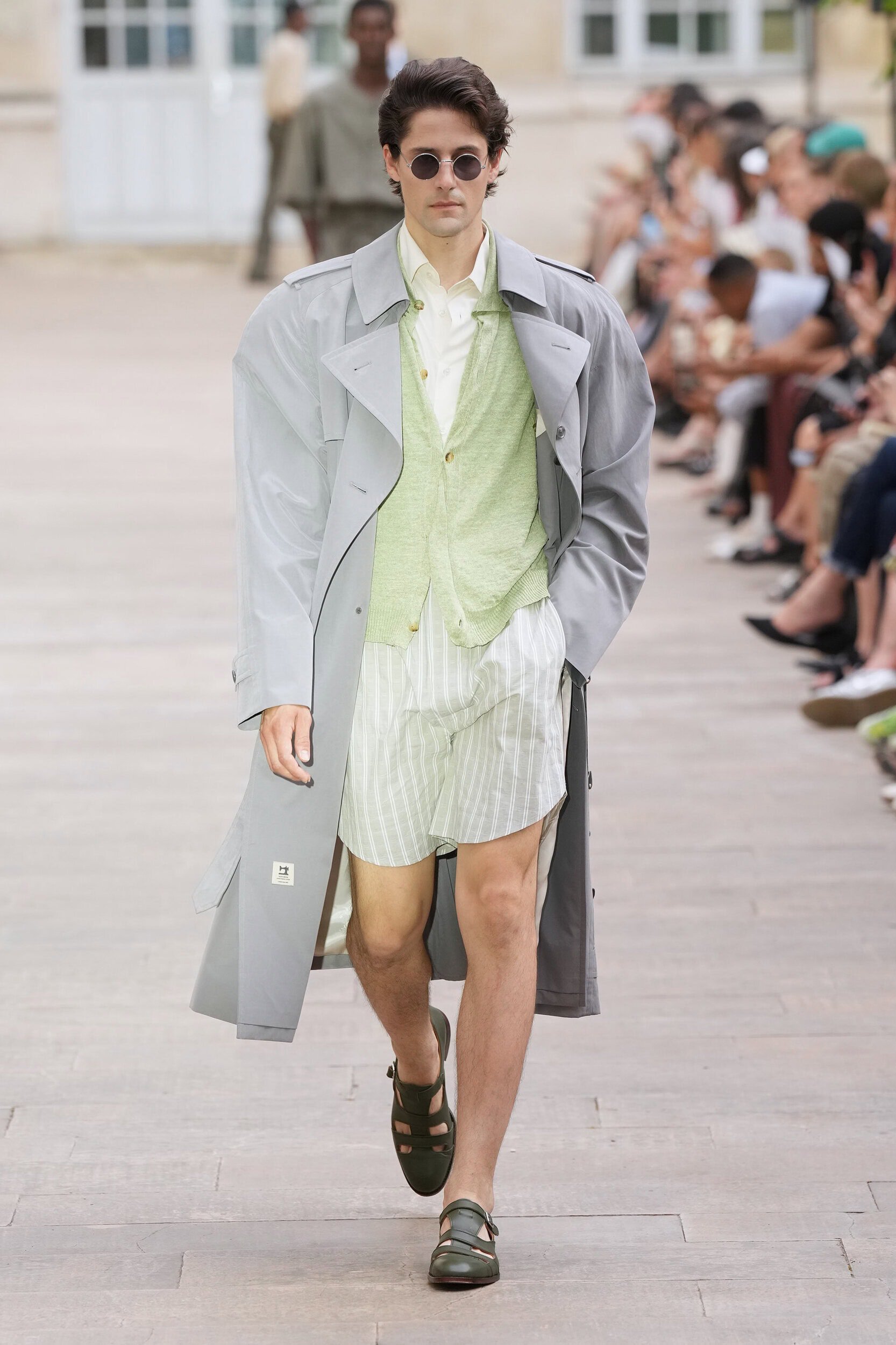
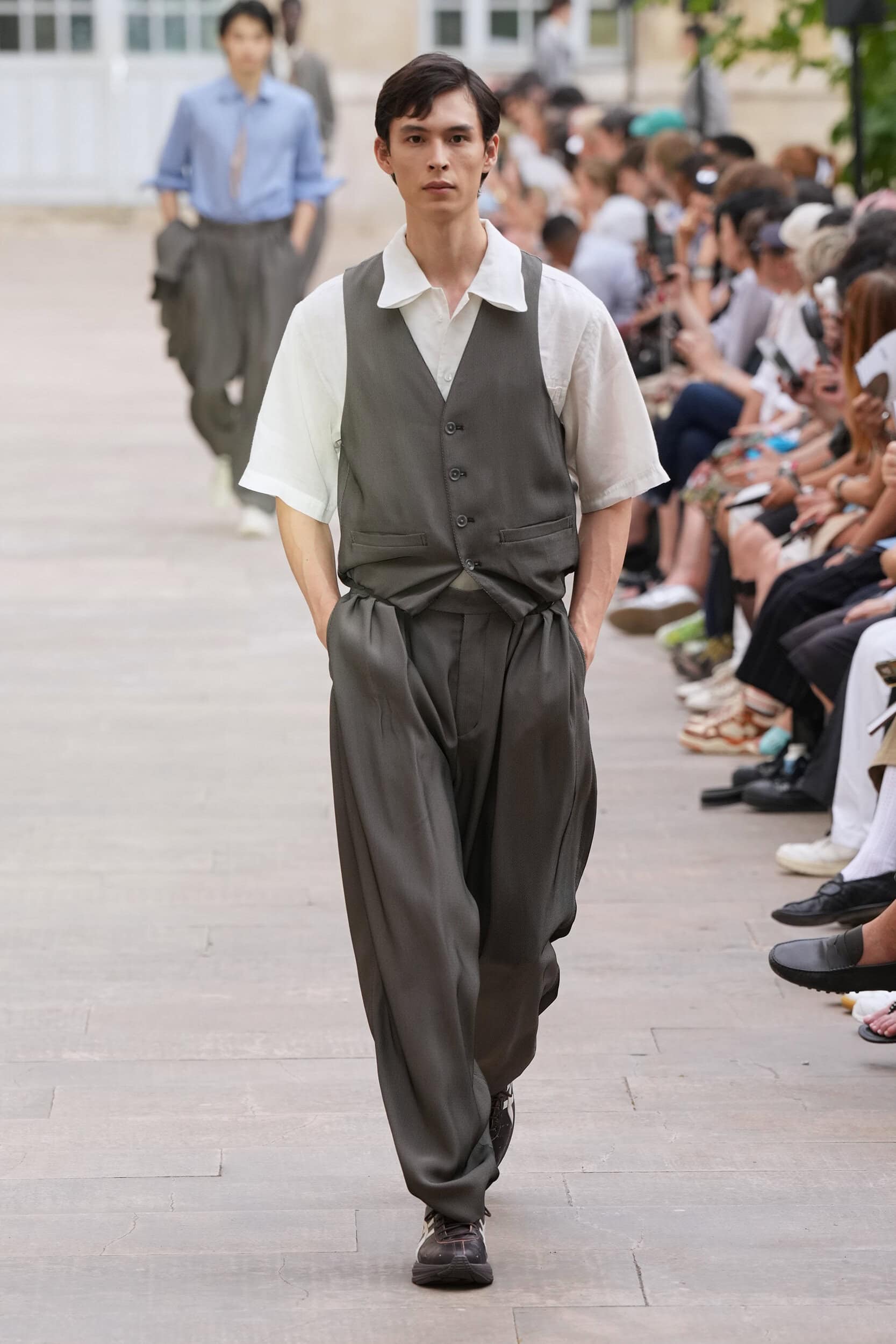
It could be said that today’s show had traces of the late tailoring maestro Giorgio Armani, but what Soshi Otsuki brought to the arena was an East-West sensibility. Echoing how Japanese businessmen in the 1980s would flock to Armani-coded tailoring, his spring show carried forth the idea that tailoring doesn’t have to constrict. It can be soft and unstuffy and pull references that go beyond the office.
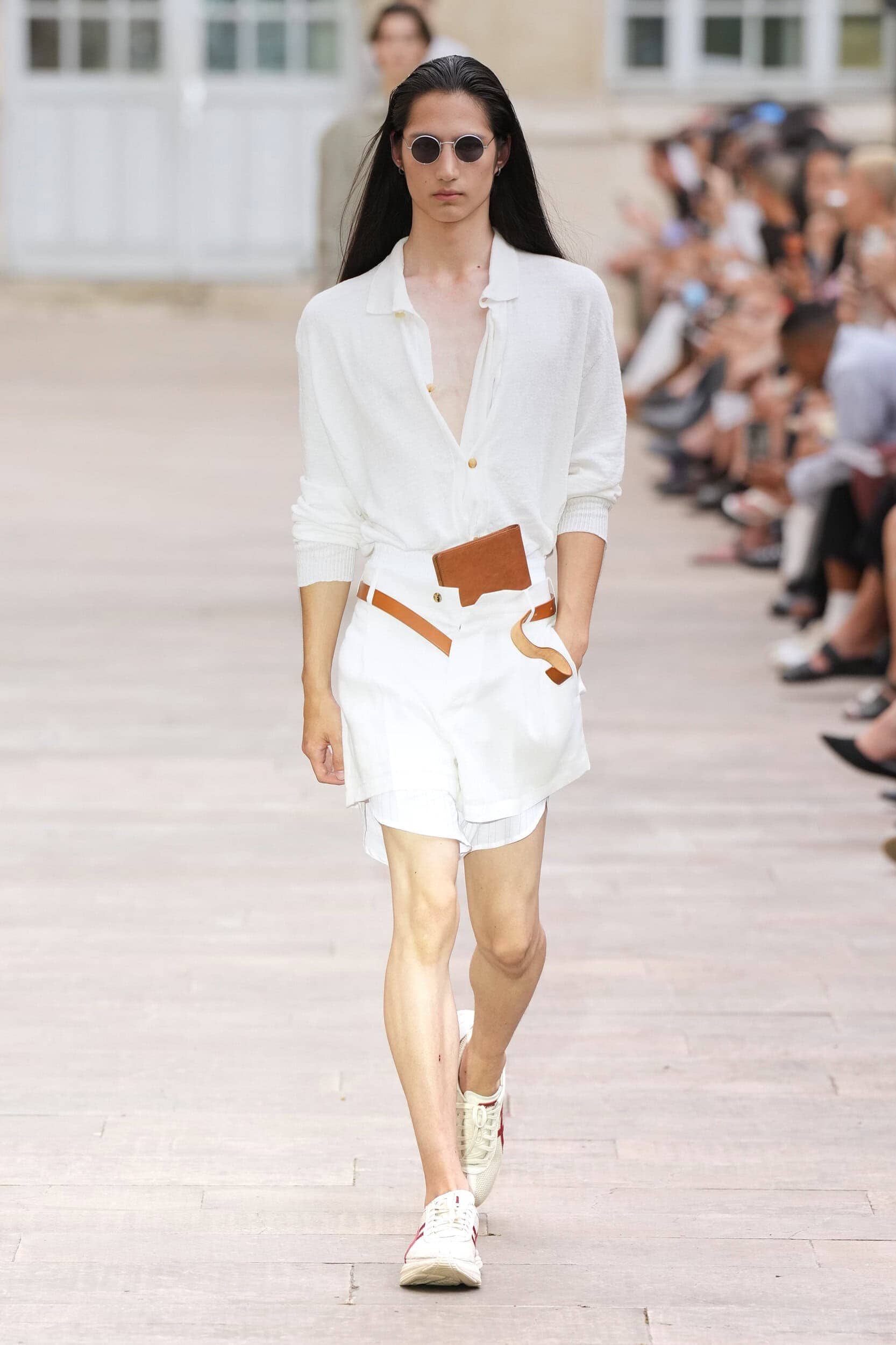
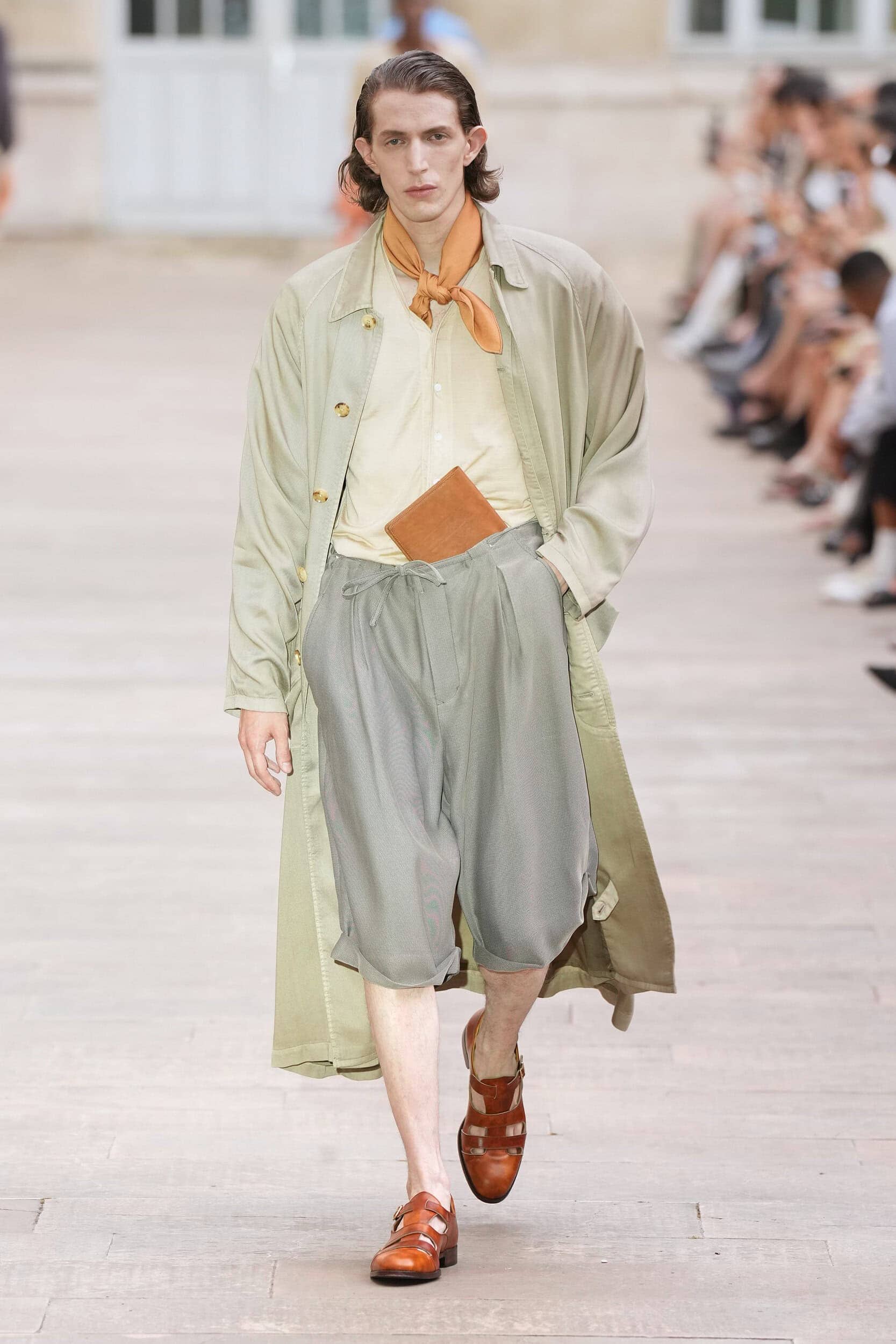
Speaking through an interpreter post-show, the designer told the story of how his Paris debut came to be. Drawing on the memory of a young friend travelling to Hawaii when he was a child, the designer wanted to imagine his collection as a vacation. Akin to how Leo Dell’Orco’s most recent outing for Giorgio Armani, shown only days ago in Milan, felt ready to roll into a suitcase and go globetrotting for all it’s embedding of the necessary fluid underpinnings. Otsuki took the idea and ran with it, as his tailoring was so relaxed it was almost coming undone. Or at least that is how he wanted it to appear with how each look was styled. When asked the reasoning behind the loose buckles of his belts (that were technically snaked around the waist and fly of both trousers and shorts) he said he liked the imperfection of the undone. It also helped to show the softness of the material used for his suiting and separates.
Speaking of his signature ‘soft’ suiting, that feels so right for now (as both a solution to extreme weather patterns and a softening of the male, who is in the midst of a ‘Manosphere’ storm), it was confirmed that it was not necessarily achieved through his selection of more malleable materials. During the product development stage the team were guided to create silhouettes that resembled an “S-curve.” This design detail could be seen, not only with how the belts were styled, but across the lapels of blazers, tie-neck shirts and the tapered trousers.
It has been a moment since tailoring was exclusively the raison d’etre of a new(ish) designer, but his selection as recipient and backing of the LVMH Prize could see the designer go on to revive the tailoring category outside of its corporate framework and create a new genre of semi-soft suiting in the process.
THE WRAP UP
Soshi Otsuki finds himself at an interesting crossroads in his career. The LVMH Prize has undoubtedly amplified his brand, but rather than chasing scale, his first show on the Paris fashion week calendar was a singular focus on refining his view. His belief that tailoring can become Japan’s next great contribution to contemporary menswear – one that sits alongside the country’s traditional legacy in kimono making – is an exciting proposition.
By softening the suits structure, embracing imperfection and rethinking how tailoring should move with the body, Otsuki is building a new language for the category, that feels globally relevant, and sure to grow him into one of the defining voices of his generation.