A Beautiful Exoskeleton
Review of Ashi Studio Fall 2026 Couture Fashion Show
By Mackenzie Richard Zuckerman
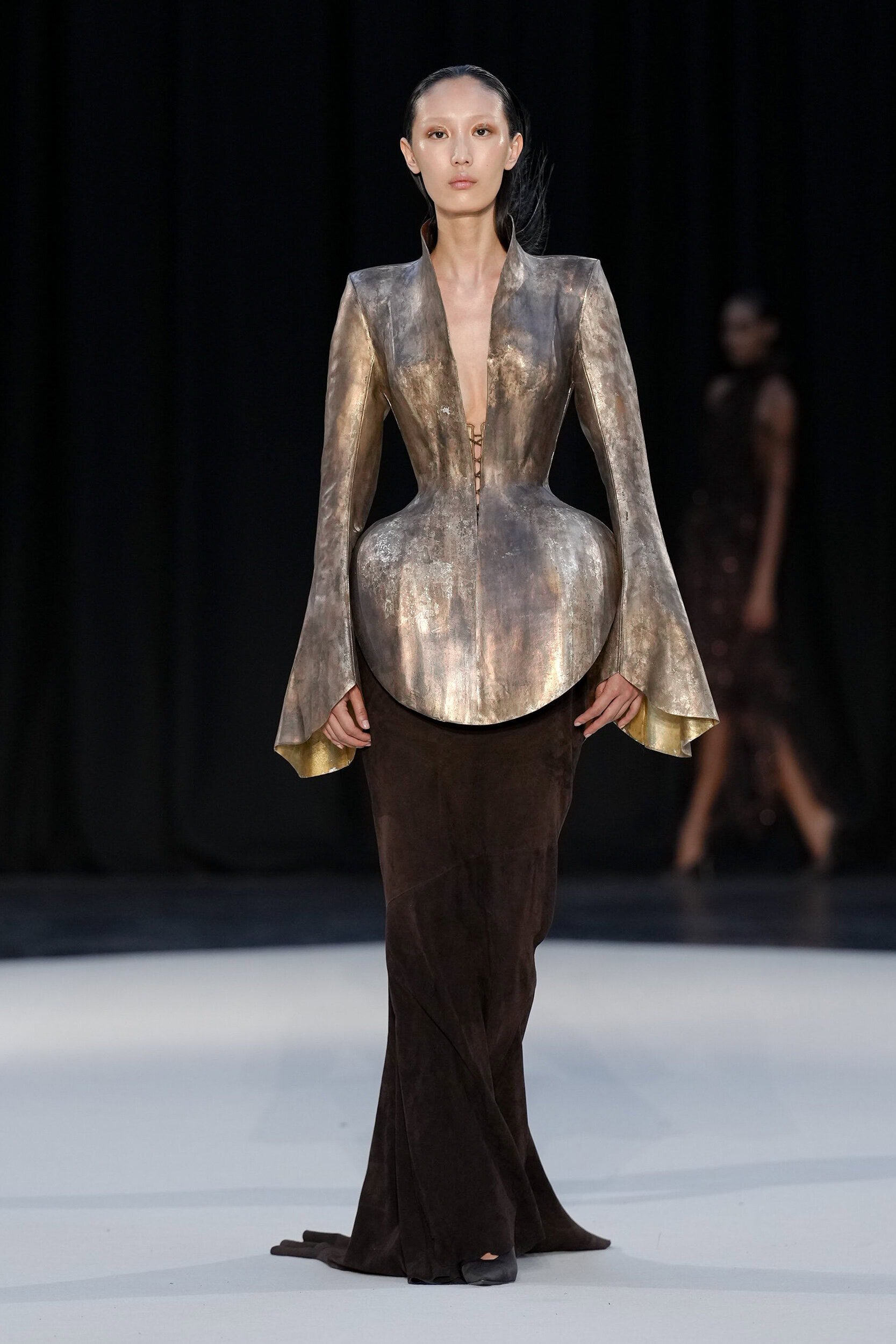
For Fall 2026 Couture, Ashi Studio entered one of the season’s most interesting conversations: the body as a site of transformation. Where other couture houses approached that question through mythology, house codes, or material experimentation, Mohammed Ashi built his world through protection. The collection seemed to ask what happens when beauty grows a shell.
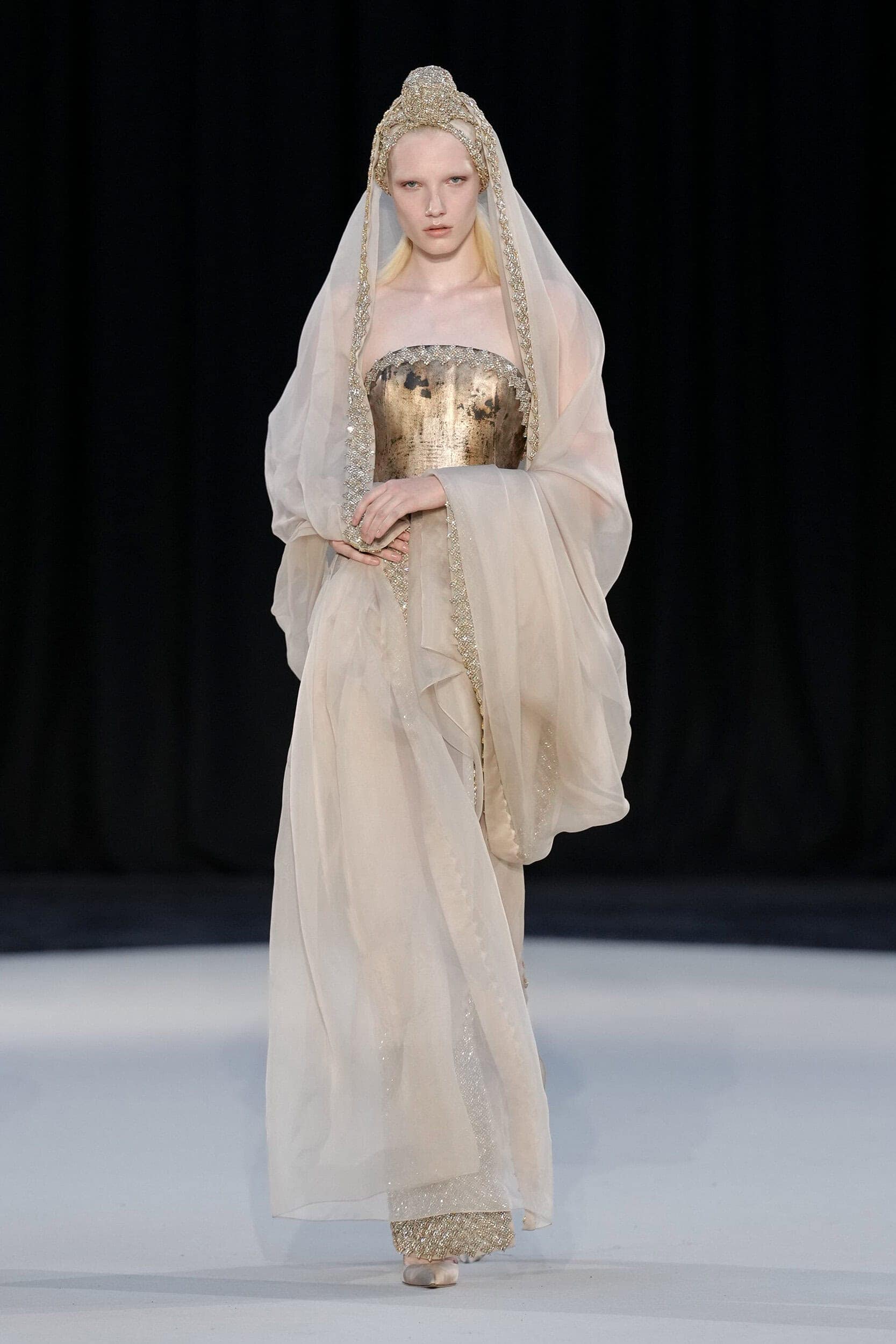
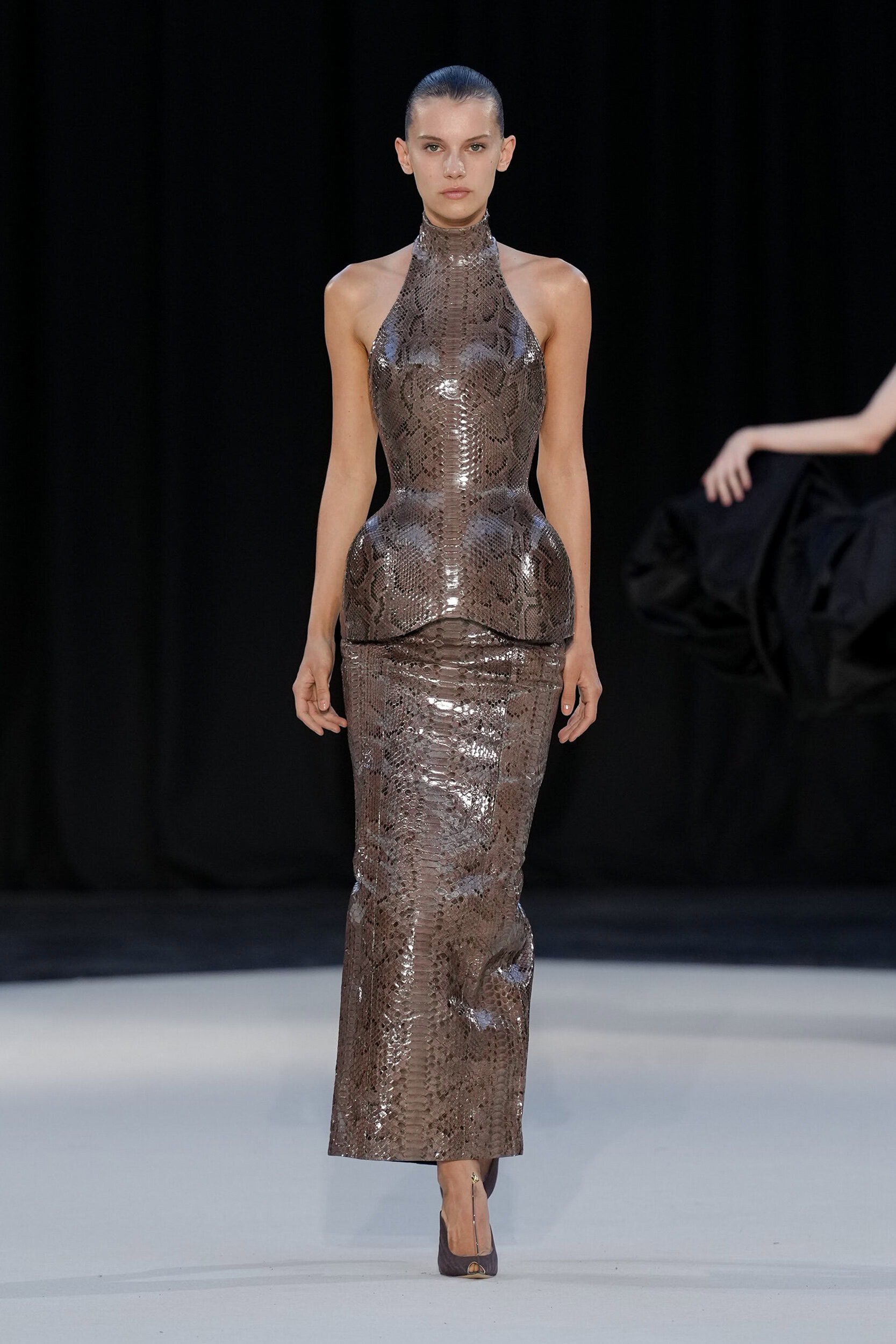
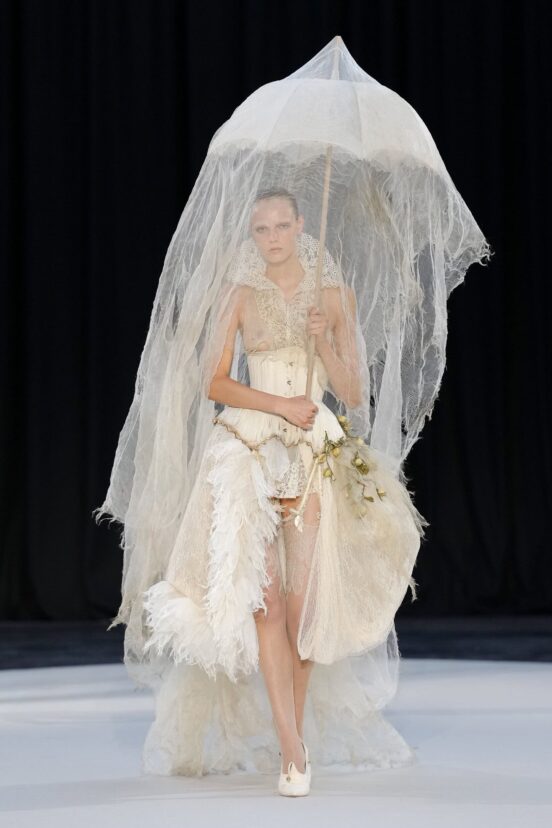
That idea gave the show its force. These were clothes of feathers, carapaces, corsets, fringe, veils, glossy skins, and sculpted waists. The body was heightened, narrowed, shielded, and adorned until it seemed to become something between woman, bird, insect, and apparition. It was theatrical, certainly, but the strongest pieces found a real emotional charge in that theatricality. Ashi’s couture has long understood drama. Here, the drama felt more specific: vulnerability made architectural.
The collection’s palette helped sharpen that mood. Ivory, bone, smoke, brown, black, tarnished gold, and pale metallics gave the show an earthy severity. Against the black curtain and white runway, the clothes felt almost specimen-like, as if each look had emerged from a darker natural world and been preserved through couture technique.
The central question was useful: can couture make fragility look powerful while still allowing the body to feel alive?
THE COLLECTION
THE VIBE
Armored Fragility, Creaturely Couture, & The Beautiful Exoskeleton
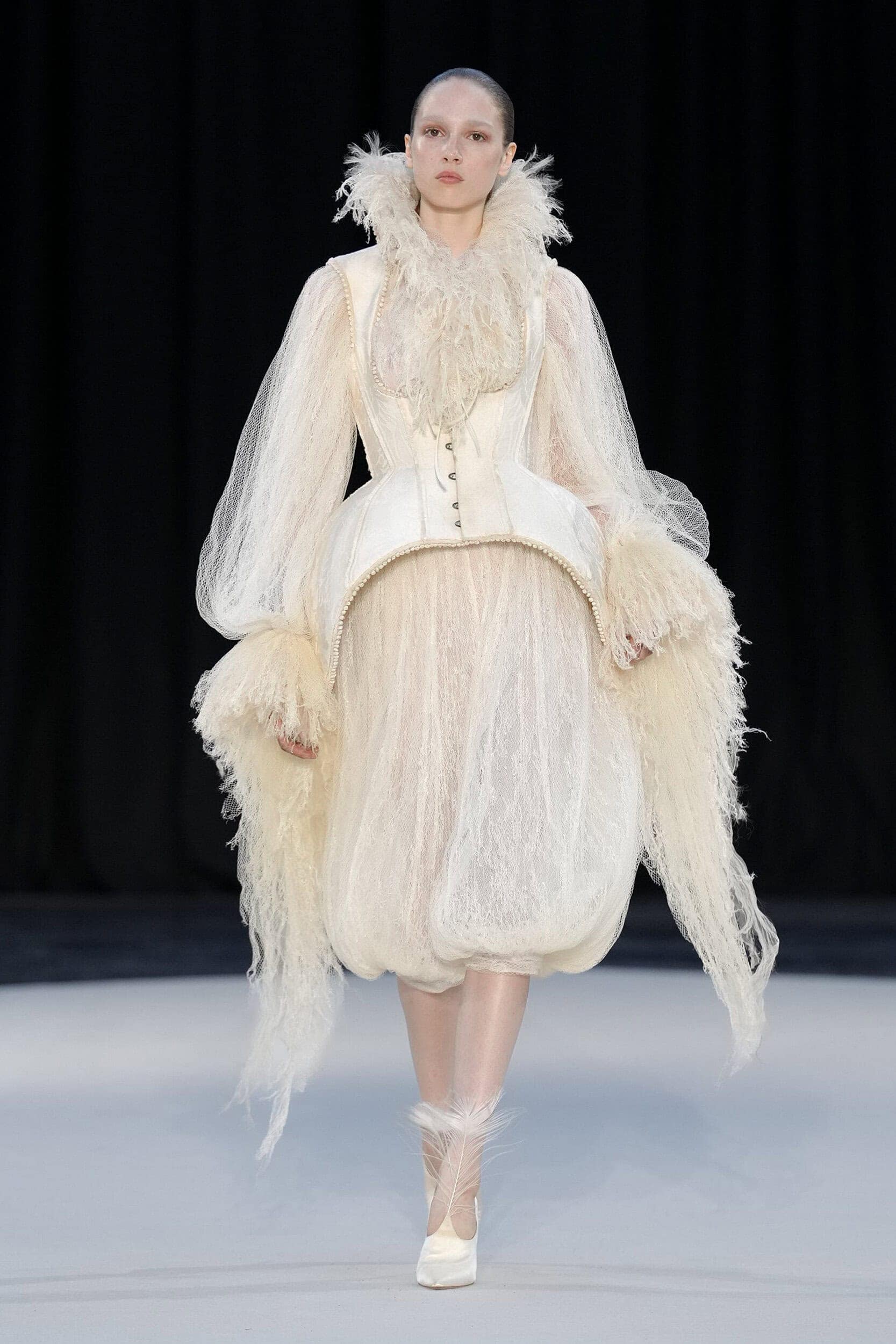
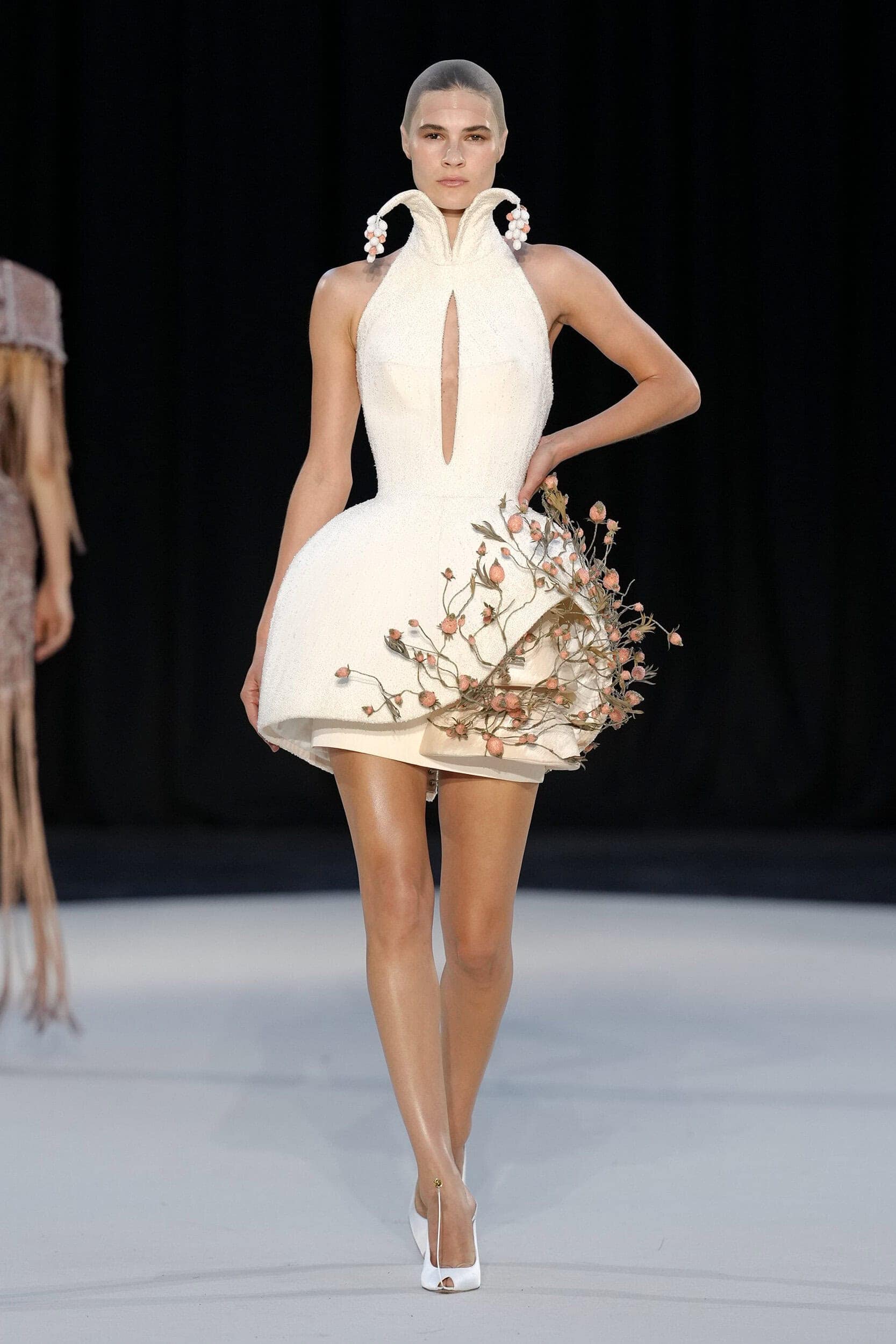
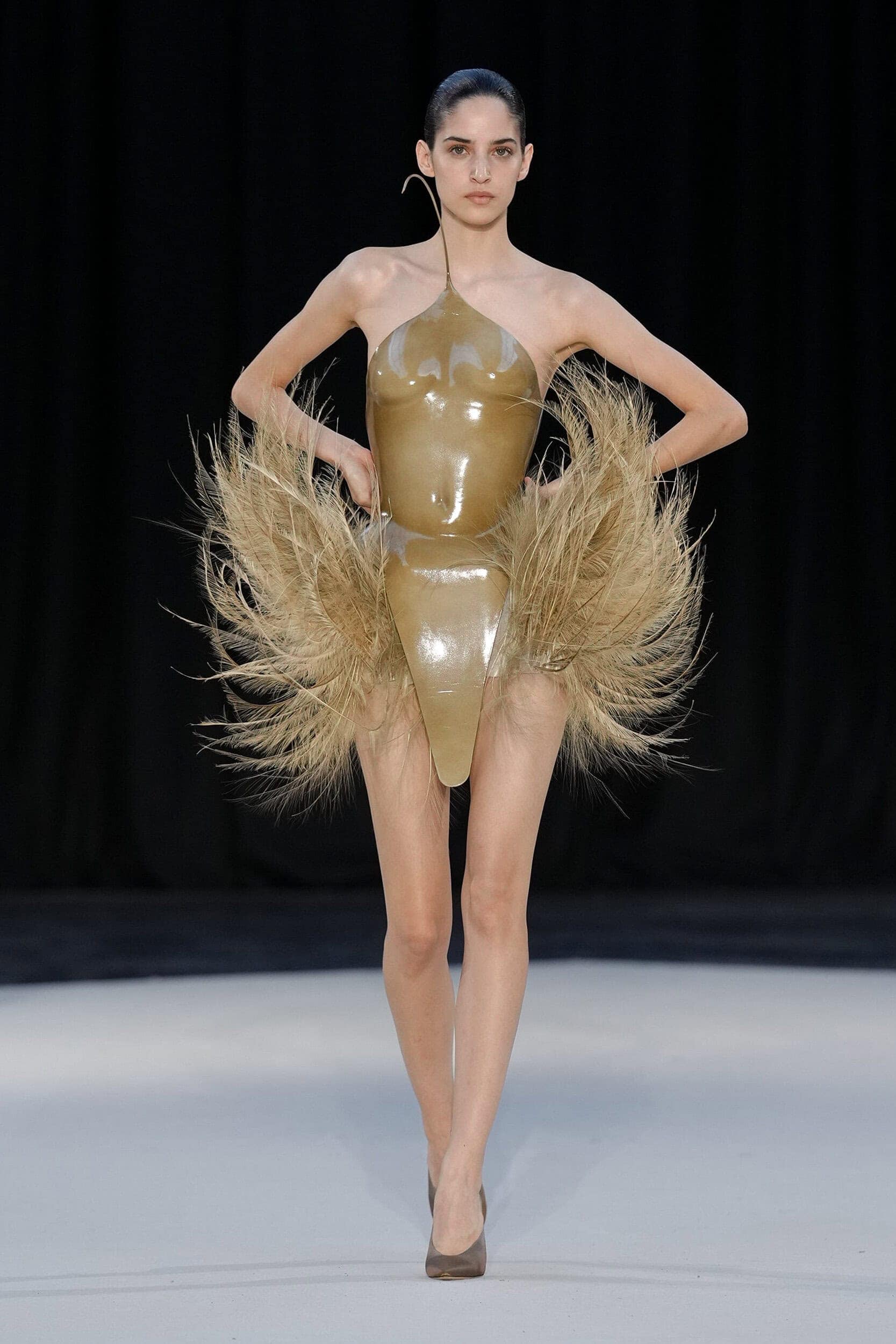
The collection worked best when Ashi let structure and delicacy hold equal weight. Corseted jackets with exaggerated hips, high collars, and feathered edges created a sense of armor softened by texture. Sheer veils, tulle, and plumes brought air into silhouettes that could otherwise have felt severe. Several looks played beautifully with the idea of a body protected by its own ornament: a feathered collar rising around the neck, a rigid bodice curving like a shell, a skirt fringed into movement, a jacket extending into sculptural volume.
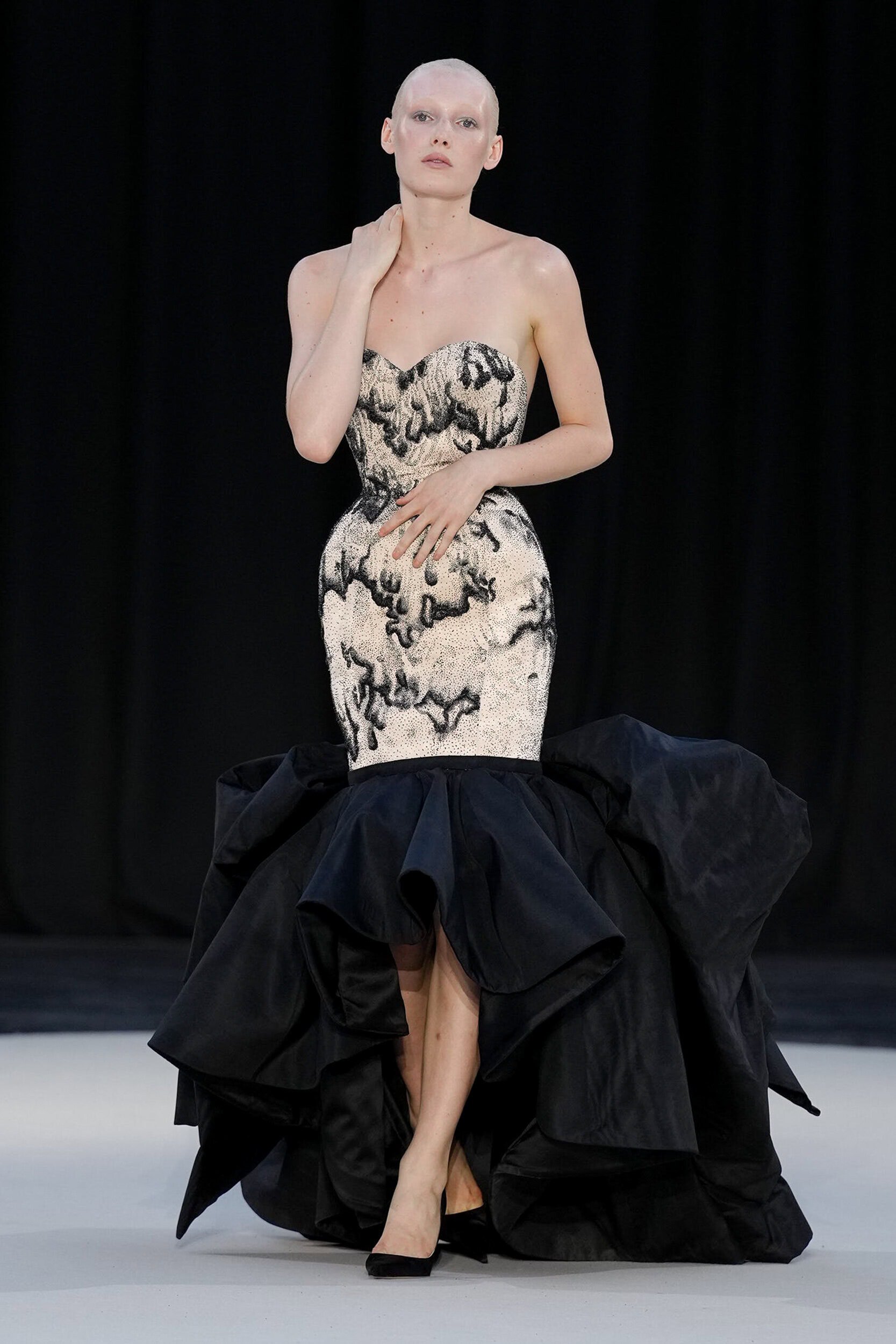
The strongest pieces were the ones where the creaturely references stayed embedded in construction. A dark, elongated gown with a sculpted surface had real quiet power. The ivory mini silhouettes with exaggerated hips and feathered edges gave the collection a sharper couture attitude. The glossy molded bodices and carapace-like forms pushed the body into stranger territory, connecting the collection to a broader couture season interested in anatomy, transformation, and the boundary between garment and skin.
There was also a strong sense of identity. Ashi did not soften his language for easy beauty. The clothes had severity, and the styling amplified it: close-cropped hair, direct gazes, minimal staging, bodies placed almost clinically against the set. That restraint around the presentation allowed the materials to carry the drama.
At moments, the collection’s own intensity crowded the eye. Some of the feather, fringe, and shell-like gestures moved close to costume, and a few silhouettes repeated the same hourglass-armored idea with only slight variation. A tighter edit might have allowed the strongest ideas to land with more force. Still, the repetition also made the world clear. Ashi was building a vocabulary of protection, exposure, and metamorphosis, and he stayed committed to it.
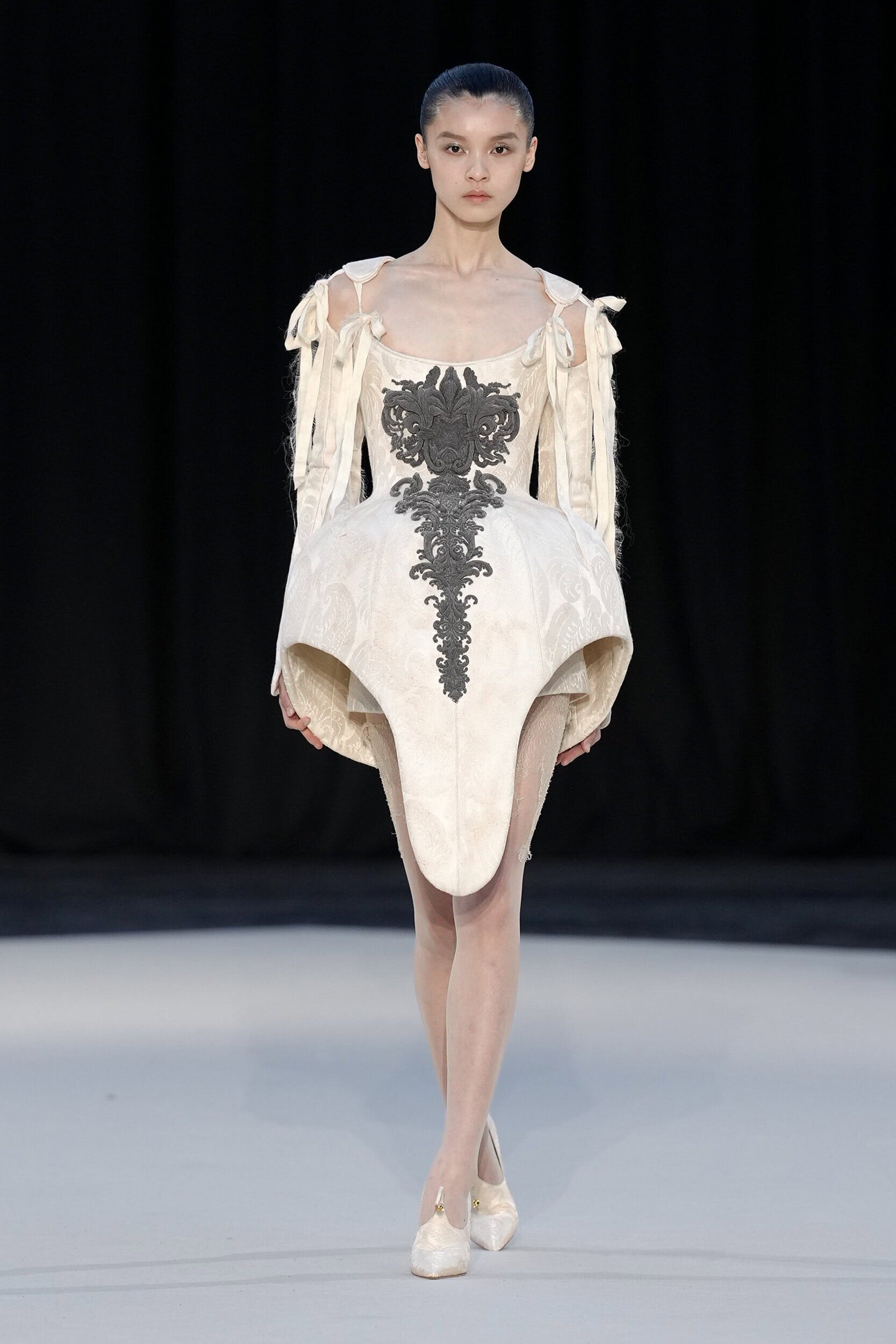
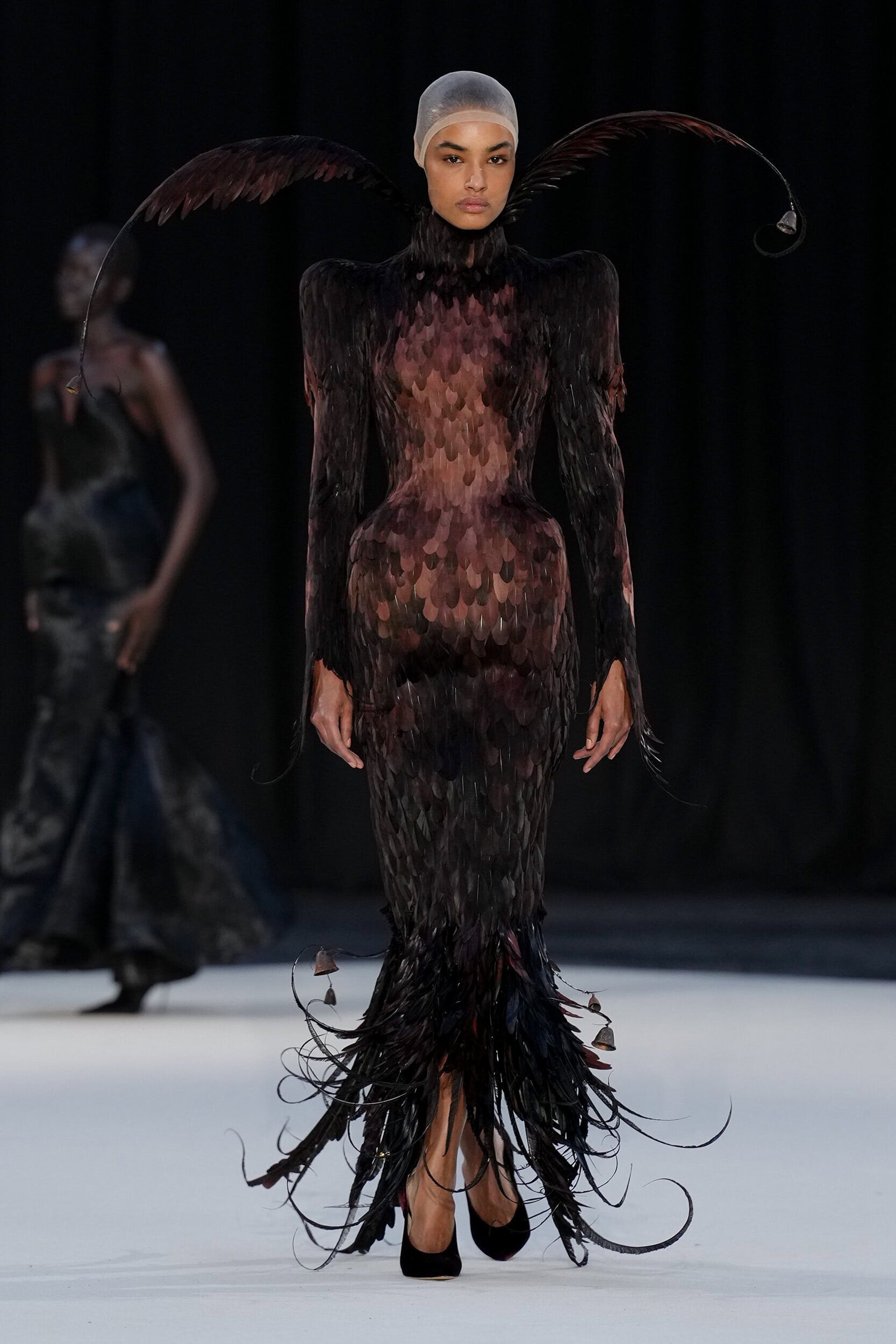
THE WRAP UP
Ashi Studio’s Fall 2026 Couture collection felt like a meaningful step because it clarified the house’s appetite for sculptural fantasy. The collection had the drama expected from Ashi, but it also had a more focused psychological atmosphere. These were clothes about defense, seduction, and transformation. They suggested that beauty can be guarded, tense, and a little dangerous.
The risk came through the collection’s proximity to costume. When the references became too literal, the mystery thinned. When the construction carried the concept, the clothes became far more compelling. That is where Ashi’s strength lies: in making the body feel altered through cut, surface, and volume, while preserving enough elegance to keep the fantasy desirable.
The result was visually coherent and emotionally sharper than a simple display of couture spectacle. Ashi gave us a woman who seemed armored by her own fragility, dressed for a world where softness has learned to protect itself. For couture, that feels like a persuasive place to be.