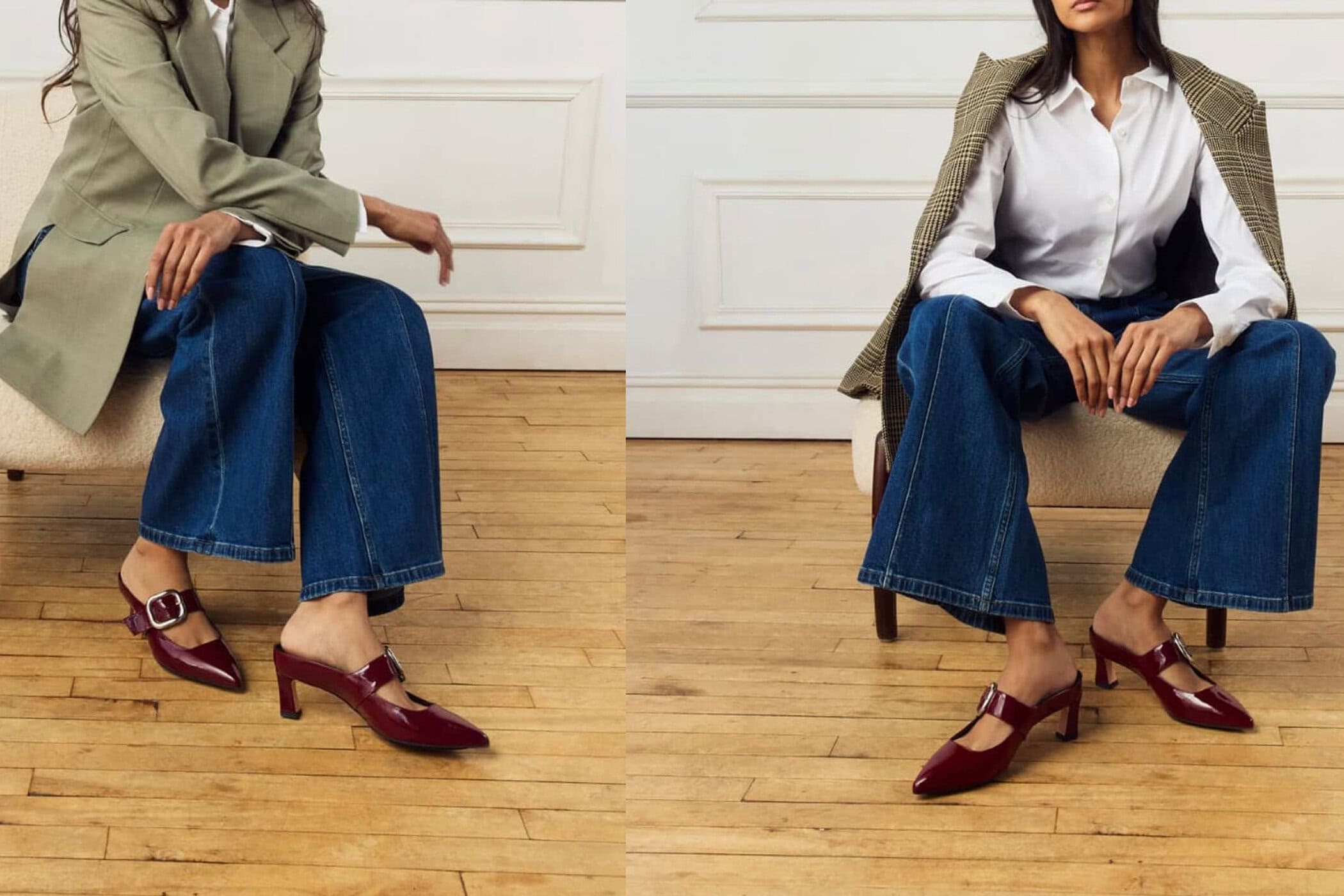
The brand’s biomechanical approach to heels reflects a broader shift toward performance, comfort, and elevated design for professional women
Founder Sandra Powers Murphy built Scarlett Chase around a problem she experienced firsthand. Years spent traveling for work in financial services left her calculating how far she could walk in heels and whether they would slow her down before a flight, a frustration that eventually led her to spend five years developing a shoe engineered specifically around a woman’s body rather than adapted from a men’s last. The result, launched in 2023, is a line of pumps, booties, and boots priced between roughly $400 and $925, built with orthotic-grade insoles, weight-transferring construction, and bunion-accommodating uppers under a proprietary system the brand calls SC360.
That positioning arrives at a moment when the office is quietly renegotiating its own dress code. As hybrid schedules blur the line between home and workplace, the categories that once separated formal footwear from everyday comfort are collapsing into something closer to elevated casual, where polish and wearability are expected to coexist rather than compete. Scarlett Chase is betting that professional women who spend entire days on their feet—in meetings, on flights, and moving between buildings—deserve shoes engineered to the same standard as the tailoring and accessories around them, rather than footwear that treats comfort as a downgrade from style.


The brand manufactures in the same European workshops that produce Jimmy Choo and Prada, a detail Powers Murphy uses to argue that comfort engineering and luxury construction are not separate tiers of the market. Cameron Diaz, Viola Davis, and Kelly Clarkson have all worn the label, giving it visibility beyond its core direct-to-consumer base, and the company reports a 50 percent repurchase rate alongside triple-digit year-over-year growth.
The broader implication extends beyond a single direct-to-consumer brand. For decades, women’s footwear was designed around aesthetic convention first and biomechanics second, a hierarchy that left an entire category of daily wear working against the bodies it was meant to serve. Scarlett Chase’s growth suggests that correcting that imbalance, rather than simply softening it with additional padding, is becoming a legitimate competitive position—one that places comfort engineering at the center of product design rather than treating it as an afterthought.